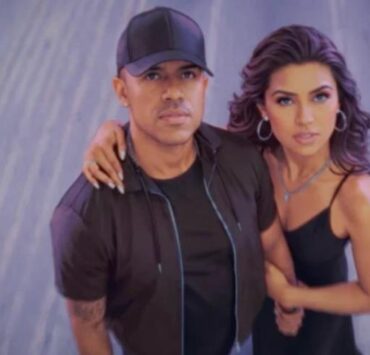
On December 5th, singer-songwriter Zen Mariano released “Contraste Emocional” (Emotional Contrast), a track available on music streaming platforms that blends pop sensibility and social critique to portray love stories that face barriers imposed by inequality. Inspired by real stories, the song begins with the image of a young man from the periphery trying to win over someone from a completely opposite world—an emotional encounter fraught with judgment, expectations, and distances created by the very fabric of Brazilian society. “It’s more common than it seems,” says the artist, who transforms this experience into direct and powerful poetry.
The sound accompanies the narrative of this clash of worlds, beginning with a flute that evokes delicacy before opening into a vibrant and contemporary pop sound. Produced by Luciano King — Zeca Pagodinho’s drummer — the track brings together Tony Cantisano (guitar), Liandro Goes (flute), Zamba (keyboard), and Ramom Torres (bass), creating an atmosphere that balances lightness, tension, and movement. The result was born from a three-year creative process, the time needed for Zen to hone lyrics that, although short, carry emotional and critical density: “The song speaks of a harsh reality, where financial and aesthetic standards still define who deserves to love.”
The release gains additional strength with the music video directed by Jacson Félix, filmed on the streets of Rio de Janeiro and marked by the spontaneity of encounters with local residents—as well as the symbolic presence of Christ the Redeemer on the horizon. The song and video come together to reinforce the central message: love marked by inequality should not be an exception or a taboo, and talking about it is as urgent as it is necessary.
“Emotional Contrast” stems from a story about love intertwined with social inequality. At what point did you realize that this was a narrative that needed to become a song—and how much does it resonate with real experiences you have lived or witnessed?
Vivi in 2018 – I got involved with a girl from a very different social class than mine and realized that she had faced many things alongside me. Her family is very well-off, her circle of friends is also very wealthy, and that was a source of inspiration. And I actually used to go to meet her by bus.
The song took three years to complete. What changed in you, as an artist and as a person, during this long process, to get the lyrics to the point you wanted them to be?
It took me this long to finalize the lyrics because I’ve matured a lot as an artist since then, and I see that other people go through the same thing. I rewrote it several times because I wanted to bring something modern while also expressing a scenario that separates many loving hearts.
The music begins softly, with flute, and evolves into a more energetic pop sound. Why was it important that the sound also reflect this contrast between such different worlds?
Yes, the music begins in a very soft style, the flute camouflages what is to come, the introduction of the song already conveys reality! In the chorus we have a mix of rhythms, pop, pop reggae, samba etc., which refers to my reality. The reality of the suburbs, we have a classic beginning and a popular resolution.
You brought together some heavyweight musicians for the arrangement, such as Luciano King and Tony Cantisano. What was it like working with such an experienced team, and how did this exchange help to amplify the emotional power of the track?
This point was crucial to the result. I sent the backing track to Luciano King, who is Zeca Pagodinho’s drummer, and when he called me to do the guide vocals, I was surprised. The feeling of recording with the band is wonderful, the atmosphere is very engaging. It was a fantastic team, Tony Cantisano is an incredibly talented musician, what a magnificent guitarist.
The song addresses a prejudice that is often silent but very present: the clash between social classes. Have you ever experienced this kind of barrier firsthand? What conversations do you hope to spark with this song?
Yes, I’ve experienced it and still do! Prejudice between social classes is still very strong, and often it’s not even from those involved in the romance, but often from family, friends, and close people. Because when love arrives, nothing can distract from the desire to be close to each other and be happy. I’m sure that Emotional Contrast will touch the hearts of many people and bring awareness that pure and true love is better than something done to please others.
The music video was filmed on the streets of Rio de Janeiro and featured spontaneous interaction with local residents. Was there a particular moment during filming that stood out to you, perhaps not in the script?

We filmed on Voluntários da Pátria street in Botafogo. Many people were curious, many people passed by and got involved in the atmosphere. One thing I remember was a young Angolan man passing by and participating naturally, and a lady who worked at the pharmacy came out of the store and watched the filming.
Christ the Redeemer appears as a backdrop in scenes from the music video. Was this symbol chosen purely for aesthetic reasons, or does it also represent a metaphor within the story you wanted to tell?
The Christ the Redeemer statue in the video represents equality, that regardless of social class, we are all blessed equally. It’s also the iconic landmark of Rio de Janeiro.
“Emotional Contrast” exposes social wounds, but it also speaks of hope. What do you believe you can still transform—in love, in art, or in society—so that these contrasts cease to be so painful?
I have hope that many good things are already happening; the cultural movement is breaking down barriers and uniting all social classes. I believe that the future will be much better and that these social, emotional, and cultural contrasts will one day be things of the past.
Follow Zen Mariano on Instagram