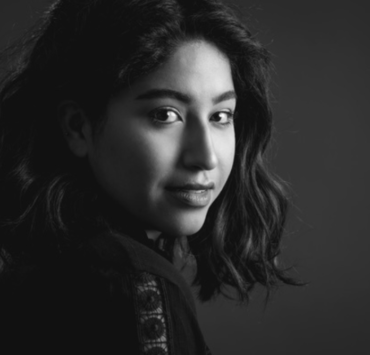
Married to El Chapo: Emma Coronel Speaks, the new true-crime documentary from Sony Pictures Television and Oxygen, now streaming on Peacock, offers the most in-depth look yet into the life of Emma Coronel, wife of Joaquín “El Chapo” Guzmán. Behind this unprecedented access is executive producer Cameron Penn, a bilingual filmmaker whose connection to the story began while he was still a college student.
During his senior year at NYU, Penn attended El Chapo’s trial in Brooklyn and became fascinated by the quiet figure seated in the defense gallery: Emma Coronel. What started as curiosity turned into action — he approached her, built trust, and eventually secured exclusive rights to her story. The project evolved into a years-long journey that took Penn deep into Sinaloa, where he lived for a time, conducted extensive interviews with Emma and her family, spoke with narcoculture experts, and even interviewed cartel members.
Penn and his team were also on the ground in Culiacán during the 2019 Culiacanazo, documenting the chaos as the cartel overwhelmed military forces to free El Chapo’s son. The result is a documentary that goes beyond headline-driven crime, revealing both an intimate portrait of a woman long defined by her marriage — and the extraordinary origin story of a young filmmaker who pursued the one perspective no one else had.
You connected with Emma Coronel’s story while still a college student. What gave you the courage — and perhaps the intuition — to approach her when no one else did?
In 2019, I was just finishing my final semester at NYU. And as I was getting ready to graduate, the El Chapo trial was happening in Brooklyn, right in my backyard. I had always been fascinated by El Chapo’s story and knew I couldn’t miss the “trial of the century,” so I skipped class and arrived outside the courtroom with my friends Noah Evans and Spencer Judd (who both helped produce the film). We arrived very early in the morning and amidst a group of dozens of journalists and civilians, we were the last group to be allowed inside the courtroom on the second day of the trial. After watching the witness testimony, we were hooked and proceeded to attend the trial every day we could. Each day was different, with topics ranging from presidential payoffs to multi-ton drug shipments sent via submarine. In fact, the only consistent presence during the trial was a woman dressed in all-black, seated alone in the second row. And it was El Chapo’s wife, Emma Coronel. As I watched her, my mind started to race. Who was this mysterious person, the woman who’d lived through it all? How could she stand by a man the prosecutors likened to Mexico’s antichrist? What was her story? As the trial went on, these questions continued to race through my mind, and they wouldn’t go away. I knew there had to be a story there. And finally, one day, Noah, Spencer, and I worked up the nerve to approach Emma and her attorney– and from there we began discussing the idea of Emma allowing us to tell her story.
Gaining the trust of Emma Coronel and her family was certainly not simple. How did that relationship develop over the years, and when did you realize she would truly allow such an intimate portrayal of her life?
The trust I built with Emma came rather quickly. It came from the genuine curiosity I had about her life. One of the first questions she asked was, “Why me?” She had been so accustomed to everyone focusing on her husband’s life instead of hers. And frankly, I think she was flattered that I took such an interest in her life story. But there were many challenges along the way, especially when Emma started to be investigated by the FBI for the role she played in El Chapo’s escape. You have to remember, originally, I developed this project as a scripted series. And so I spent a lot of time interviewing Emma off-camera, before the documentary was ever green-lit. While Emma was being investigated, I knew she would never speak candidly on camera. But after she went to prison and served her sentence, we stayed in touch, and she eventually became open to the idea of making a documentary.
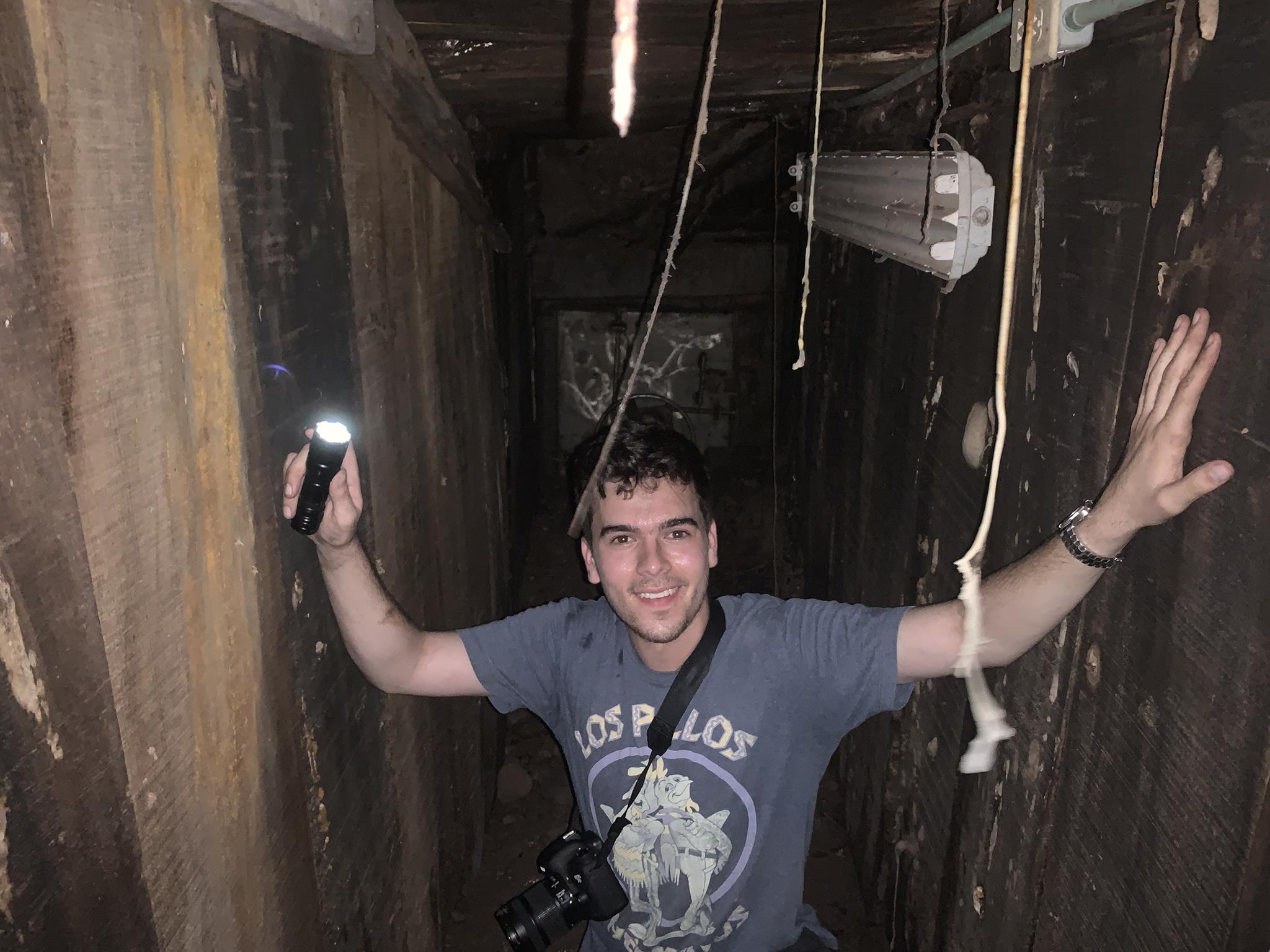
You lived in Sinaloa, interviewed experts on narco-culture, and even spoke with cartel members. What was the most challenging — or transformative — moment of that deep immersion?
Visiting Emma’s hometown in Canelas, Durango was by far the most impactful part of those experiences. Shortly after El Chapo’s trial, Noah and I actually attended the annual Coffee and Guava Beauty Pageant, which is an event that still occurs to this day in Emma’s hometown. It’s an incredibly significant event in Emma’s life, because it’s where she was courted by El Chapo when she was only 17. While there, I met so many people who knew Emma growing up, and I gained a much deeper understanding of who she was in her early years and how she could so easily be seduced by El Chapo. In the golden triangle (an opium growing region between Sinaloa, Chihuahua, and Durango Mexico), dating a drug lord is like finding a prince. I remember attending dances in Canelas, and watching mothers touch up their young daughters’ makeup, before sending them to the dance floor to mingle with soldiers from the Sinaloa Cartel. The narcos in some cases would literally have AK47’s slung over their backs, while dancing with the girls from the town. It’s an image that I will never forget. It was shocking to see parents allowing, and in some cases encouraging their daughters to flirt with cartel members. But drug trafficking is very normalized in those areas, and when the only alternative is to endure life as an extremely poor farmer, you begin to understand why and how narco-culture is so pervasive in the town where Emma grew up. Still it’s important to note that not everyone in Canelas is involved in drug trafficking, and many of the people who live there are incredibly kind, welcoming, and humble.
The documentary features scenes and accounts images from the 2019 Culiacanazo, which you captured firsthand. What was it like to experience that day in Culiacán, and how did it change your understanding of the cartel’s power in the region?
In order to better understand Emma’s story, Noah and I moved to Culiacán to study narco-culture at the Autonomous University of Sinaloa in Culiacán. Culiacán was relatively calm the entire time we were there, except for one day– which is the event you are referring to (El Culiacanazo). I remember I had just gotten home from the mall (El Forum), where I had been shopping for a hard drive. And five minutes later, my phone started blowing up with videos and images of shootings in the street, right outside the mall. There were rumors that several of El Chapo’s sons had been captured and possibly killed. But ultimately what happened was, Mexico’s National Guard captured one of El Chapo’s sons, Ovidio Guzmán. And within 20 minutes, El Chapo’s oldest son, Ivan Archivaldo, sent hundreds of sicarios to Culiacán to lock down the city, so that the Mexican Authorities could not take Ovidio out of Culiacán. And when the military tried to send a helicopter to fly him out, Ivan’s soldiers shot it down with an RPG. Ultimately the Sinaloa cartel took several Mexican soldiers hostage, and surrounded a housing complex where their families live. Mexico’s president was forced to order the release of Ovidio. It’s still surreal to think I was in Culiacán when this happened. I remember trying to comfort our neighbor, who’s husband was hiding in the bathroom at a restaurant very close to where the shooting had started. Luckily he survived.
After Ovidio was released and once the shooting stopped, I went out that night with my camera to photograph the aftermath. I remember this stillness. Culiacán was incredibly quiet yet almost post-apocalyptic, with cars burning and corpses in the streets, but no sound. You could hear a pin drop. I also remember news outlets were under-reporting the number of casualties at first, because they would say three people had died– but I had personally seen 5 corpses in just one small area of the city. The scariest part of this event was witnessing the sophistication of the Sinaloa cartel, and seeing how Ivan’s soldiers were able to lock down an entire city in a matter of minutes. And it was truly heartbreaking to witness how a criminal organization could terrorize so many innocent people within a moment’s notice.
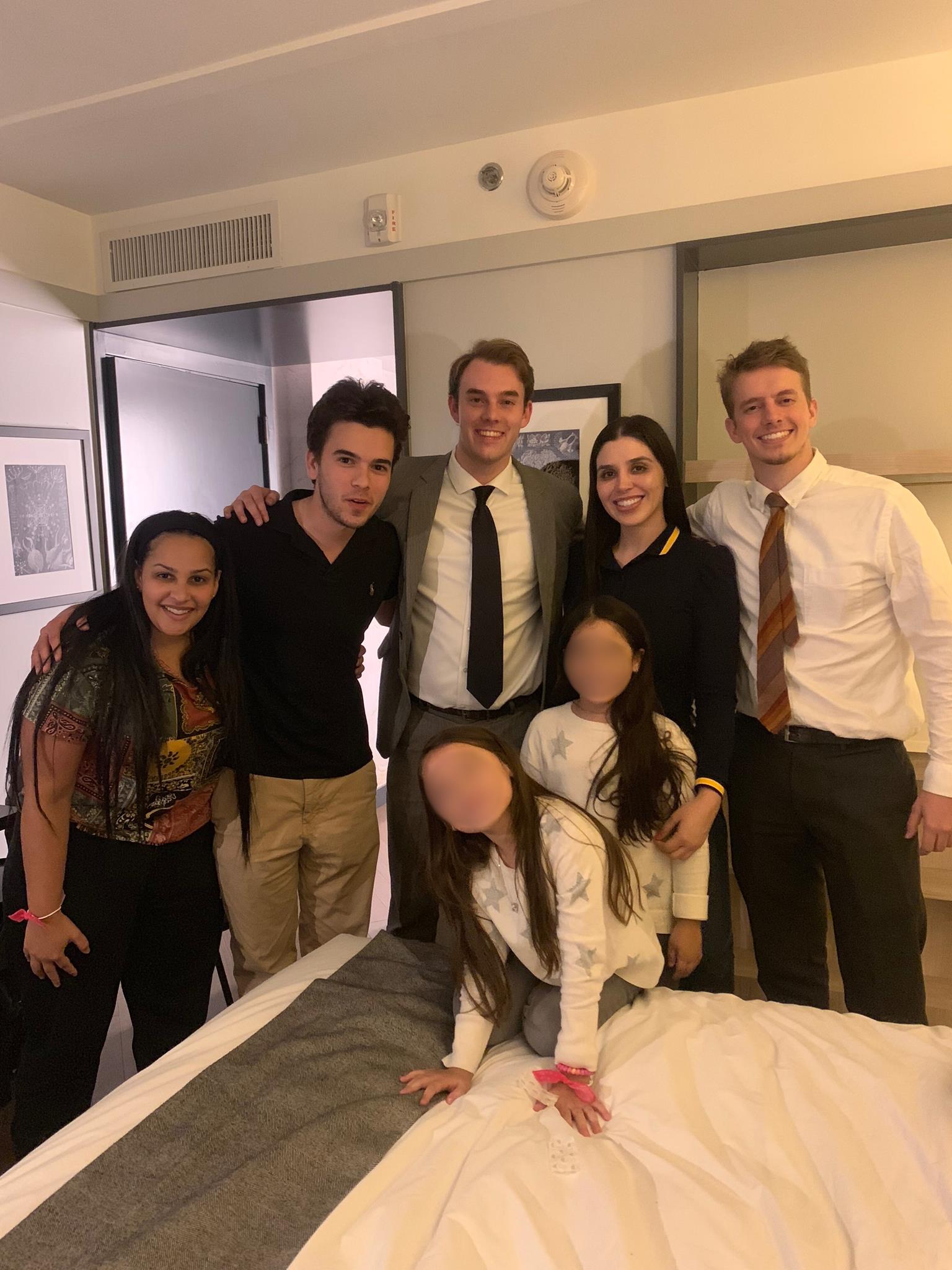
Married to El Chapo: Emma Coronel Speaks offers an unprecedented perspective on a previously enigmatic figure. What did you see as your greatest ethical responsibility when telling this story?
From an ethics perspective, it’s a tough question, because technically the film does give a platform to the wife of one of history’s most powerful drug lords. And I have witnessed first-hand the death and destruction brought on by the Sinaloa Cartel. But I still felt it was important to let Emma tell her story, without condoning her actions. And that’s why also featuring the perspective of great journalists like Jesús Esquivel and Emily Palmer or the retired DEA Agent Carl Pike was so important. There are several times in the film where Emma tries to mislead viewers, but the journalists are there to set the record straight. In my opinion this makes the film more interesting, because it allows viewers to draw their own conclusions about Emma’s authenticity. She struggles to come clean, and in many ways still maintains her image as a cartel-wife. But ultimately this film is a character study, not an endorsement, and keeping that at the forefront was very important while making this film.
You’ve worked with major studios, sold a series, and contributed to significant productions. What did this project teach you about storytelling, risk, and authenticity as a filmmaker?
My biggest takeaway from this project was learning the importance and value of conducting deep research. But reading articles and books is not enough, if you can, as a filmmaker you should go “live” the story you are going to tell. Visiting Emma’s hometown, living in Culiacán, and of course interviewing Emma provided me with such a rich tapestry of experiences to draw from when telling her story. And those experiences can help you not just on the project you are working on, but also they can allow you to grow as a person and an artist for years to come.
After conducting such an extensive investigation and producing a documentary of this magnitude, what kind of story do you feel compelled to tell next?
There are several I’m very passionate about, and one might just be another female crime story…
Follow Cameron Penn on Instagram