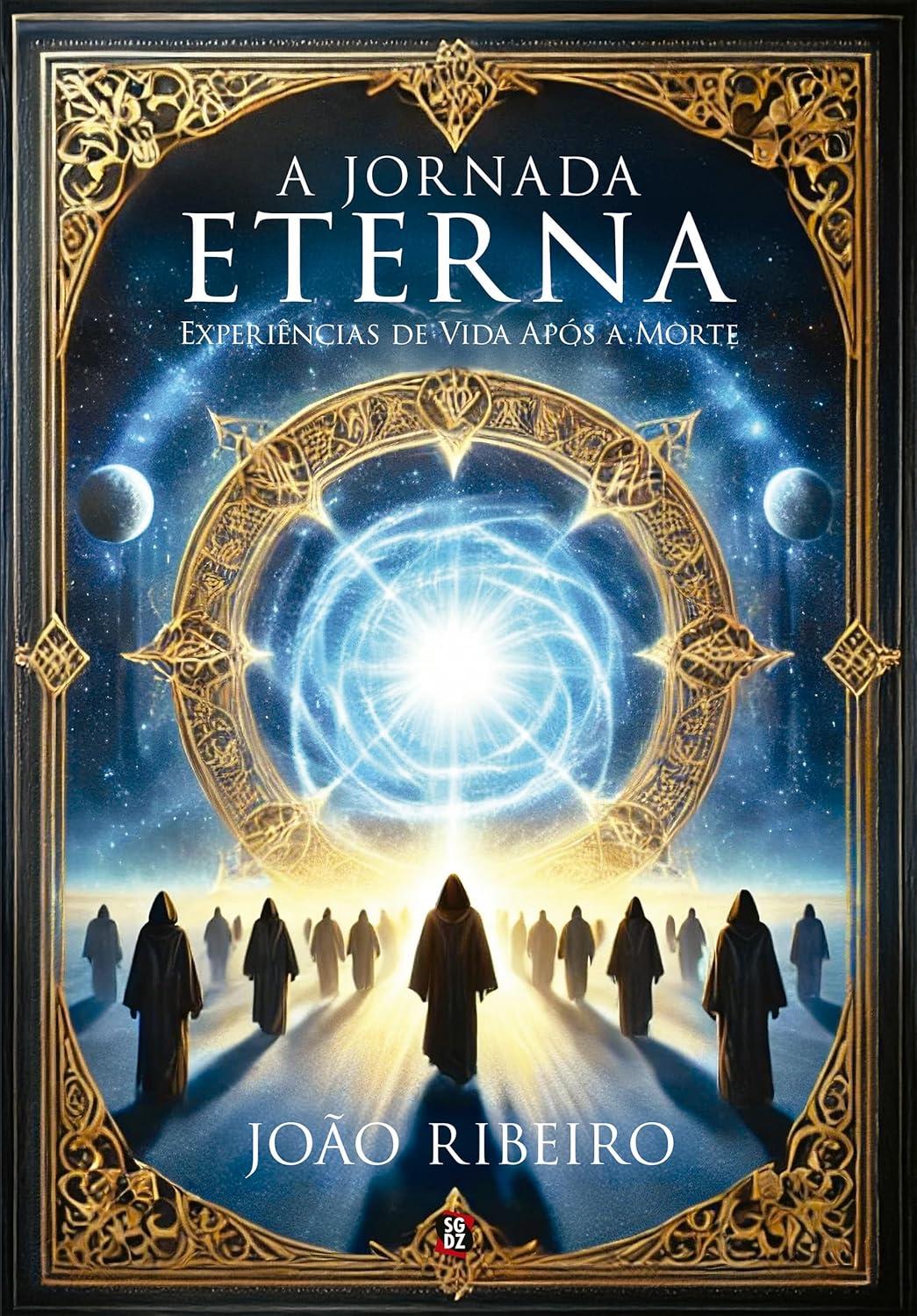
What happens to consciousness after the end of physical life? In *The Eternal Journey: Experiences of Life After Death*, João Ribeiro guides the reader to a territory where death ceases to be an end point and becomes a passage. The work brings together 35 spiritual accounts received in profound mediumistic connection, in which disembodied consciousnesses narrate their stories on Earth, their awakening in the spiritual plane, and their intimate confrontation with the choices, affections, and lessons that permeate their existence.
Your book presents 35 accounts that move between pain, lucidity, regret, and healing. What was the first moment, during the mediumistic process, when you realized you were receiving something that wasn’t just for you—but for the world?
The first account came right after a Home Gospel Study that I’ve been conducting every Monday since 2009. At the end, I clearly felt a presence and knew I was going to channel a message. When it finished, I realized it was a complete spiritual account, with a life story and post-death experience. From then on, I started receiving accounts weekly and understood that this wasn’t for me, but a larger project in which I had been chosen to be an instrument.
Spirits reveal truths that they often only understood after leaving physical life. Among all these accounts, what was the most transformative lesson you took to your own daily life?
The greatest lesson was understanding, in practice, that choices shape destinies. In no account is there a punitive God or a judge condemning souls. What exists are consciences reaping the effects of their own choices. When there is repentance and a reunion with oneself, spiritual help happens naturally. Divine mercy always acts, but it respects the timing of each conscience.
The book addresses zones of suffering and regions of light. How did you, emotionally, prepare yourself to navigate between these two extremes without becoming more shaken than necessary?
Moving between dense zones and more subtle planes has never been a problem for me. Even before the book, I was already performing astral projections and rescues in the lower astral planes. The impact never comes from the place itself, but from the pain of the other. I am fully aware that these zones are merely transitional states for spirits who still carry guilt and internal conflicts.
Many accounts mention the “mirror of the soul,” that moment of profound recognition. How would you describe this experience to someone who has never had contact with spiritual concepts?
The “mirror of the soul” is when consciousness sees itself without masks. Even those who have never had contact with spirituality carry within themselves the true understanding of what they have done, felt, and chosen. Self-knowledge reveals our weaknesses, and it is from this identification that acceptance and the transmutation of shadow into light occur. This is the true path of human evolution.
The chapters show that death does not make anyone equal—each consciousness arrives in the spiritual realm carrying its own moral history. What surprised you most about this diversity of paths?
The diversity of paths doesn’t surprise me. Earth is a school planet, and everyone learns in their own way. What surprises me is how conditioned and trapped the human mind is by preconceived notions. Many good people suffer after death not because of what they did, but because they cannot accept the new spiritual reality when it presents itself.
The messages were received in states of prayer and silence. How did you develop the confidence to differentiate personal inspiration from genuine communication, while preserving the ethical rigor mentioned in the book?

Even though I am an overt medium, everything is very subtle. Through experience, I can clearly differentiate between my own reflections and spiritual communication. When I write something personal, there is creative flow. When I am being inspired, the message comes fragmented, almost dictated, phrase by phrase. This has always been a clear criterion for preserving responsibility and ethics in what I transmit.
“The Eternal Journey” is a work about continuity, not about endings. For you, what changes in the way of living when one truly understands that consciousness does not cease with death?
Everything changes. Those who believe that life ends with death live more recklessly. Those who are aware of the continuity of life know that their own conscience will be their greatest judge after death. Making mistakes is part of life, but remaining in error is a choice. Every choice generates consequences, positive or negative, according to the intention behind it.
If you could choose just one message from all 35 experiences narrated for the reader to take away after closing the book, what would it be—and why?
The message is: “Say you love them.” That was the first account I received, and also the first in the book. It speaks of regret for not having expressed love in life. This directly touches my own story. My parents didn’t have the habit of saying “I love you,” but I always felt that love in their actions. I managed to say it to my father before he passed away, and I heard it from him afterward. The greatest regret isn’t for what we did, but for what we failed to say.
Follow João Ribeiro on Instagram