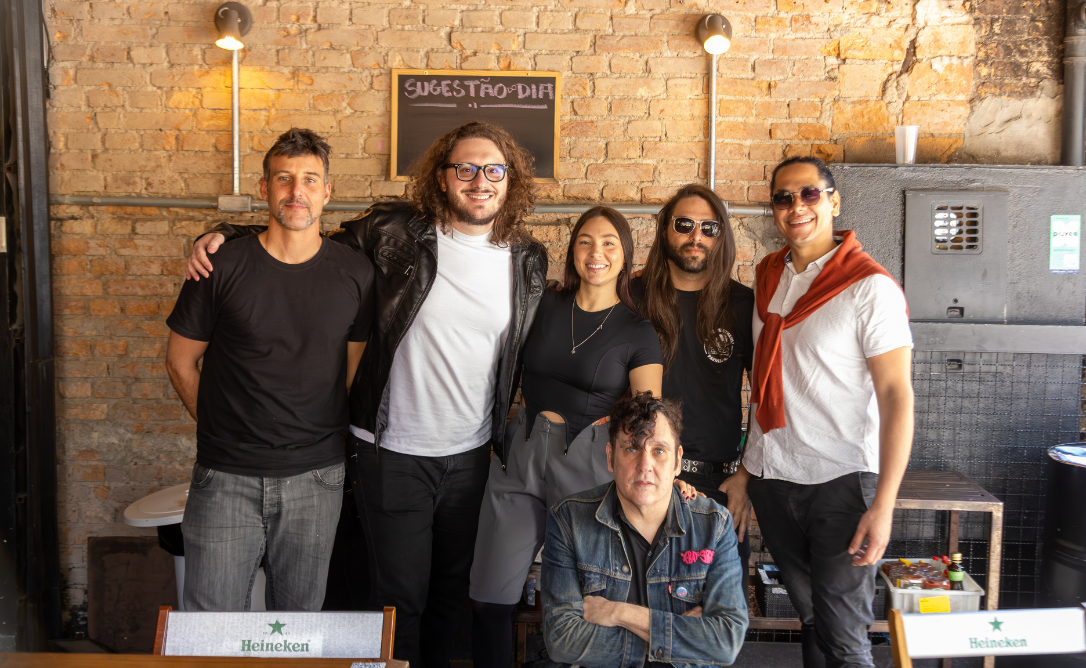
The band Broken Gate has broadened the reach of their single “Ramona” with the release of a music video in partnership with Autoramas, now available on YouTube after its national premiere on the Canal BIS program Setlist. With an ironic and lighthearted narrative—inspired by a critique of the “almost obsessive” search for the perfect partner and the stereotype of the Manic Pixie Dream Girl—the video features members of both bands as protagonists and also includes a special appearance by Jão, guitarist of Ratos de Porão, in a symbolic encounter of national rock references.
“Ramona” pokes fun at this idea of the almost obsessive search for the “perfect partner.” At what point did you realize that this theme deserved to become a song—and now also a video narrative?
This theme had been lingering in our songwriting ideas for some time. But when the connection between the theme and the figure of Manic Pixie Dream Girl came about, we felt we had lyrics that conveyed this message directly and with a good opening for audiovisual material that directly dialogued with the music. We felt that in this mix of criticism, irony, references to the world of cinema, and a simple and direct melody, we had hit the right spot.
You mention the Manic Pixie Dream Girl character as “something out of a movie.” What “real-life movies” (situations, conversations, behavioral patterns) inspired this critique in the lyrics?
Our own stories inspire a good part of the lyrics, which are somewhat about laughing at ourselves. More alternative people, like us and so many others, when idealizing a perfect partner, often tend to think of the figure of the “alternative and quirky person from the movies.” And the more you seek this “ideal figure,” the less things work out. Opposites don’t always attract, but it’s even less possible to create a perfect match a priori.
The music video was designed to be simple, ironic, and lighthearted. What was the challenge of creating humor without sacrificing social commentary—while simultaneously making the story accessible to those who just want to enjoy the music?
At this point, a good reference is music videos like those of the Foo Fighters. I think they’re a great example of how a music video can be humorous without emptying the message of the lyrics. Furthermore, in the end, the main criticism contained in the lyrics is that “sometimes, overthinking or planning hinders some natural processes.” So, we thought nothing could be more fitting than a music video that reflected that.
The message is there, naturally, and you don’t need to think too much to understand it. The lyrics and sound are direct and light. We wanted audiovisual material that followed the same line.
The track has a danceable, direct, and upfront vibe, and you say it brings together striking elements from both bands. In practice, what was pure “Broken Gate” and what was total “Autoramas” within the sound of “Ramona”?
I think the main typical elements of Broken Gate were the striking riffs and the fuzzy, octave-driven tone of the rhythm guitar, as well as some variations in the drums. On the Autoramas side, we can highlight the lead guitar with a very present vibrato, the female vocals, the bass line with plenty of fuzz and presence, and the danceable drum and percussion lines.
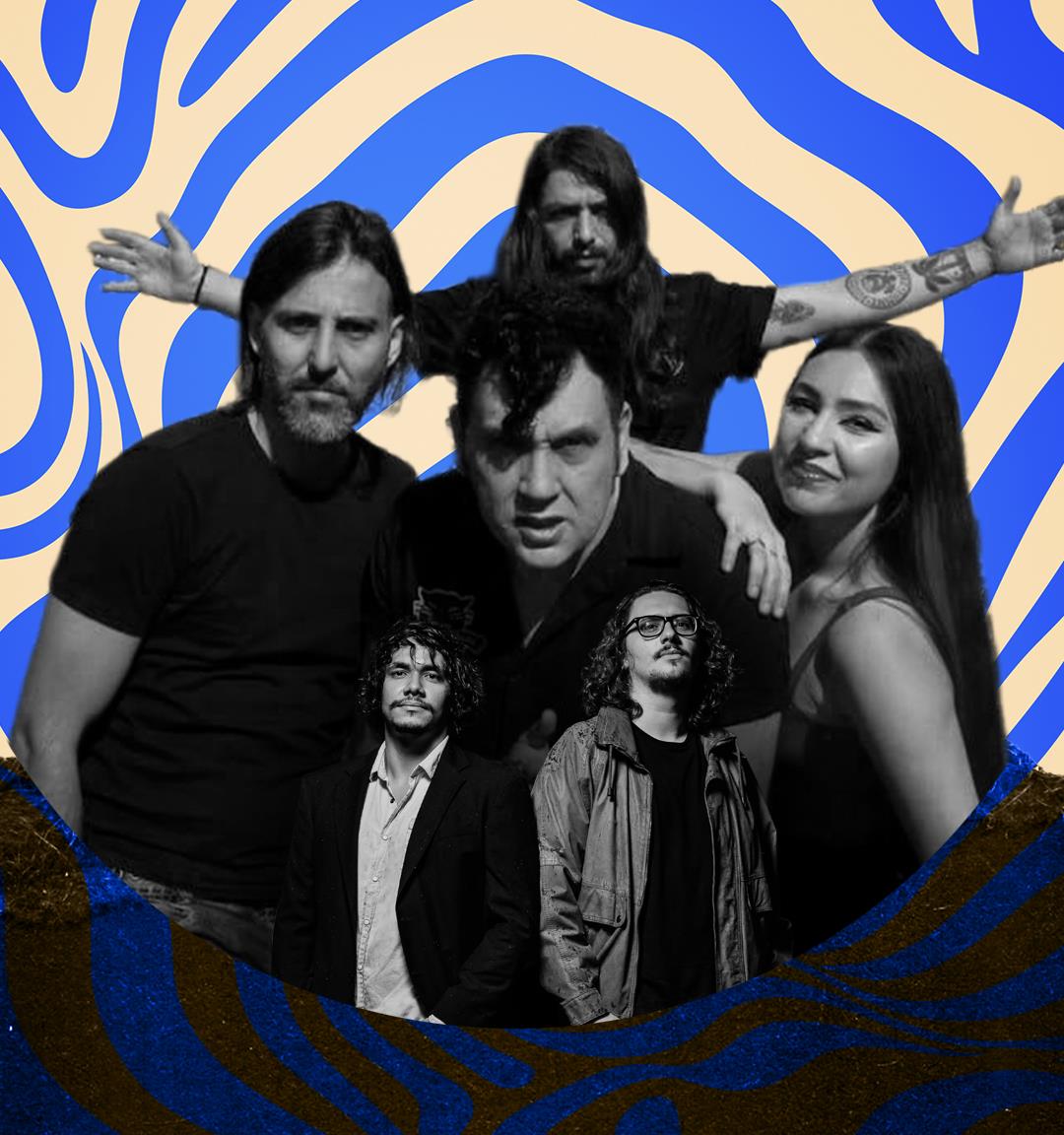
You’ve been fans of Autoramas for years. What was it like when you first met and had your first creative exchange? Was there any particular detail (a comment, an idea, an action) that made you think: “okay, this has really turned into a real meeting”?
One of Broken Gate’s first encounters with someone from the band was with Gabriel, on stage, at the 2013 edition of the Hacktown festival, participating in a show of his solo project, where we played some Autoramas songs together. Between the show and after the show, a really cool connection developed with Gabriel from then on.
Gradually, we had the opportunity to get to know the other members of the band. I think one of the main points was how receptive Gabriel was to us from the first time we met. That was a great incentive, making us feel comfortable enough to extend this invitation to Autoramas.
When we sent the demo of the song and received a response saying they liked the sound and accepted the invitation, that’s when it clicked and we thought, “This is really happening!” It was like a movie playing in the head of someone who, years ago, watched Autoramas’ music videos on MTV in admiration, without even imagining that they would one day have a band, let alone record a song with the band they had always watched from the perspective of a fan.
Besides Autoramas, the music video features Jão (Ratos de Porão) — several references brought together in the same project. At what point did it dawn on you that you were experiencing something “historic” for your career?
From the very beginning of this project, we had this feeling. When we got confirmation that we were going to record a song with Autoramas, we knew it was a major milestone in our career. We knew it was the most important song we had ever recorded. Having Jão from Ratos de Porão participate in the music video was the icing on the cake! So much happened that, a year ago, we never would have imagined.
You call the music video an audiovisual milestone, with several “firsts” (professional direction, TV debut, etc.). What changed in your minds after this process? For example: what were things you wouldn’t do before that you do now, and what have you come to value more?
I think what changed most in our minds was seeing, in practice, the role of the team in a project like this. Between location scouting, directing, and contacts with TV channels, having a team aligned with each other and with the bands is fundamental for everything to work as it should. Furthermore, it was really cool to see how much good original audiovisual material increases the promotional power and identity of a single.
Broken Gate has been going through a consolidation phase since the name change and the album Fake North, gaining radio airplay in Brazil and abroad. After “Ramona”, what’s the next door you want to break down: sound, stage presence, or narrative? And what do you want the audience to understand about the band when they see this music video?
We still want a little bit of everything. We always want to explore new stages, like now with our debut at Hangar 110 on January 18th, for example. But we also want to seek new sounds in new songs. The sound and the entire creative process of “Ramona” opened new perspectives in our songwriting process, taking us out of our comfort zone. We want to explore these perspectives in new compositions that we plan to work on soon.
We want the audience to understand that we’re a band that always likes to work with concepts in our music. But that doesn’t have to mean complexity, and we think it’s important to know when to take ourselves less seriously. And also, that this doesn’t detract from the message or the music, but rather blends what Broken Gate and Autoramas are on and off stage, in a good balance.
Follow Broken Gate on Instagram