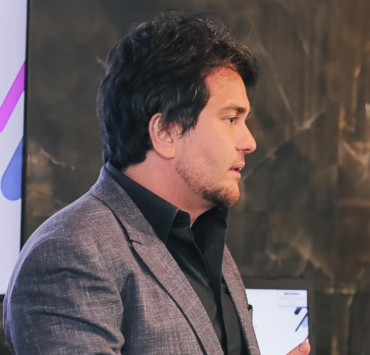
Specialist emphasizes self-awareness and emotional balance, warns about anxiety, social media, and misleading mental health references, and highlights how his books expand psychological care
January marks the January White Campaign, a global movement dedicated to mental health awareness. For psychologist and author Alexander Bez, the initiative is a strategic opportunity for individuals to begin the year by reflecting on their emotions, behaviors, and personal expectations.
According to Bez, January White represents a starting point for emotional realignment.
“Before pursuing change, people need to understand who they are, recognize their limits, and identify what needs adjustment. Mental health is directly connected to physical well-being,” he explains.
Emotional Expectations and Seasonal Vulnerability
Bez notes that January follows two emotionally sensitive moments: Christmas and New Year’s Eve.
“Christmas, despite its celebratory nature, often carries seasonal depression. New Year’s Eve, in turn, comes with unrealistic expectations and unresolved frustrations,” he says.
These themes are explored in his book What Was Sweet Turned Bitter, widely referred to by readers as “The Bible of Relationships,” in which Bez analyzes frustration, emotional disappointment, and the psychological impact of unmet expectations in personal relationships.
Anxiety: Clinical Disorder or Environmental Response?
The psychologist stresses the importance of distinguishing clinical anxiety disorders from anxiety caused by external circumstances.
“Anxiety disorder is a clinical condition that requires continuous professional monitoring. Economic instability, professional pressure, relationship conflicts, and public safety concerns generate situational anxiety,” he explains.
According to Bez, environmental anxiety alone does not automatically develop into a mental disorder.
“Pathological anxiety is usually rooted in emotional formation, often beginning in childhood. What we are seeing today is a society overwhelmed by constant external stressors.”
This phenomenon is discussed in his book Envy: The Hidden Enemy, in which Bez examines how social comparison, competitiveness, and emotional insecurity contribute to anxiety and emotional imbalance.
Urban Insecurity and Chronic Alertness
Bez highlights urban violence as a growing psychological stress factor.
“The constant fear of robberies, kidnappings, and violence creates a permanent state of alert, particularly among women. This is a factual reality with direct consequences for mental health.”
When to Seek Professional Help
Persistent emotional discomfort is the main warning sign, according to Bez.
“People may attempt self-diagnosis, but they know when something is wrong. When symptoms become distressing and uncontrollable, professional help is essential.”
He warns that untreated anxiety can lead to panic disorder, post-traumatic stress disorder (PTSD), obsessive-compulsive disorder (OCD), sleep disturbances, and eating disorders.
Social Media and Emotional Exhaustion
Alexander Bez offers strong criticism of excessive social media use.
“We live in a media-driven era that has stolen our peace. Social platforms have weakened human connection and created an unhealthy need for exposure and validation.”
These issues are reflected in his behavioral studies and in his literary work, where he analyzes how digital life amplifies comparison, frustration, and emotional exhaustion.
“People travel thinking about posting instead of experiencing the moment. Vacations no longer serve as emotional rest, which increases anxiety and depression.”
He also warns about nomophobia, the fear of being without a cellphone.
“Many individuals spend more time on screens than living their own lives.”
Treatment and Emotional Balance Strategies
For clinical anxiety, Bez explains that treatment is based on psychotherapy combined with anxiolytic medication, when indicated.
“Antidepressants do not treat anxiety disorders,” he clarifies.
He also recommends complementary strategies such as physical activity, cultural engagement, reading, reduced social media exposure, and conscious information consumption.
“Extreme polarization, especially political, has become a significant emotional trigger.”

Beware of False Mental Health Authorities
Bez issues a clear warning about unqualified professionals.
“It is essential to avoid psychological gurus, unlicensed coaches, and self-proclaimed therapists. Mental health demands science, ethics, and responsibility.”
He advises verifying a professional’s academic background and ethical stance.
“Those who deny science, mix ideology with therapy, or seek media fame should be approached with caution.”
Living in the Present and Reducing Self-Pressure
In closing, Alexander Bez delivers a message aligned with the spirit of January White:
“No one is perfect. Reducing self-criticism, living in the present, and letting go of others’ expectations are fundamental steps toward emotional health.”
According to him, focusing on what is within personal control is key.
“You cannot change the world, but you can protect your mental health.”
Instagram: @alexanderbezoficial
About Alexander Bez
Alexander Bez is a psychologist, researcher, and specialist in emotional disorders. He is the author of nearly ten books published in Brazil and internationally, including novels, self-help works, and behavioral studies. His literary work serves as an extension of psychological care, making complex emotional themes accessible to a broad audience.
Notable titles include:
- Envy: The Hidden Enemy
- What Was Sweet Turned Bitter
- The Enchantments of Women Trilogy (Juruá Publishing)
- What You Don’t Know About COVID-19 – The Mortal Virus (USA)
- Scientific Denialism – COVID-19 Vol. 2
- The Sexual Cult of Puff Daddy (Diddy): Fame, Power & Money (forthcoming, USA)
- The Magic of Female Sensuality
Alexander Bez holds a degree in Psychology, with specialization in Anxiety and Panic Disorder from the University of California and in Relationships from the University of Miami. He is also a professional model and actor, trained at Studio Fátima Toledo and the Wolf Maya School, holding DRT No. 43.106/SP.