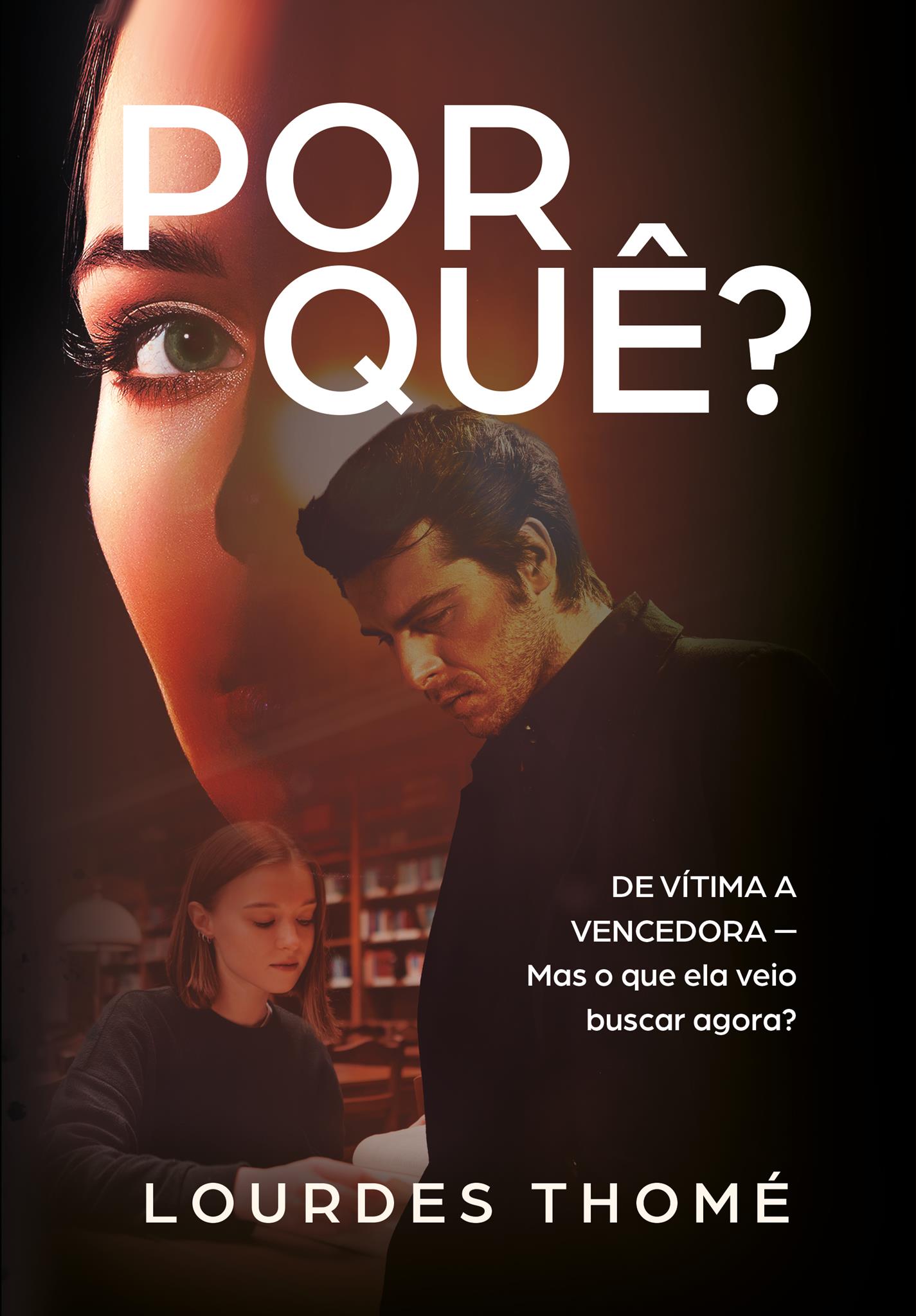
In Why? From Victim to Winner, Lourdes Thomé follows the journey of Cristine, a woman who overcomes bullying, trauma, relationships marked by violence, and family upheavals before starting over in the United States. With the pace of a television drama and raw emotion, the book transforms a series of setbacks and displacements into a narrative of reconstruction, in which the protagonist reinterprets the past, re-evaluates emotional bonds, and learns to survive—and to win—when fate seems to insist otherwise.
The title “Why?” already carries a very strong existential question. At what point in your journey—personal or creative—did this question begin to make more sense than any ready-made answer?
After finishing my working life, I began to reflect on my journey, questioning choices, mistakes, and the possibility of change. In the selection process, with several titles, the question that prevailed was “Why?”. It’s a normal question in our lives. The reader will probably identify with these questions. I poured my soul into these inquiries. Answers don’t always exist, or they aren’t always as we expect. Perhaps there is a need for acceptance and understanding.
Cristine goes through extremely painful situations, such as bullying, violence, and forced relationships. At some point during the writing process, did you feel the need to “protect” the character, or did you believe that it was precisely the confrontation with pain that would make her more human?
The character’s development was inspired by a real person, strong and resilient. She faces pain and experiences that lead her to maturity and the search for solutions, distancing herself from family demands. Motherhood and friendship are essential forces in her transformation. I rejoiced in Cristine’s challenges and victories, and her process of transformation and acquisition of emotional security. Confronting pain made her stronger, more human, allowing her to move from trauma and, in the process, transform from victim to victor.
The narrative shows how childhood traumas continue to echo into adulthood. For you, which wounds tend to heal with time—and which ones do we simply learn to live with?
Prejudice and physical disabilities can heal, provided they are treated, accepted, or given new meaning, and one learns to live with the emotional scars. However, it is necessary to prevent bitterness from prevailing. This is a path to overcoming them. In history, there is an element called destiny, where “that which is destined for us will find a way to reach us” (a phrase by Chico Xavier).
Moving to the United States is seen as an attempt to break social and emotional cycles. Do you believe that changing location truly transforms you?
We all have dormant feelings, hidden truths, things we don’t share; these constitute our secrets. Transformation occurs when we are prepared to accept ourselves with our physical and emotional characteristics, and it is up to us to modify them. A change of location can be an escape at first, when we need to distance ourselves from what affects us, what hurts us. It can be seen as a retreat, a pause, a time away, although we carry our feelings with us. However, for our fulfillment, it is necessary to confront what hurts us; however, this happens gradually, and when we are ready, we accept the emotions and their consequences. For the character, the change and the time were necessary to heal the wounds and accept herself as a complete, competent person. “What we don’t see, the heart doesn’t feel,” means that one can push away bad memories until one is ready to face them.
Despite its dramatic tone, the story avoids moral simplifications. Neither victims nor perpetrators are one-dimensional. Was it a challenge to write such contradictory characters without judging them?
The work delves into assessing and dealing with pain, and what meaning to give to the journey. The characters are imperfect, and the challenge was to guide them to the necessary adjustments, to understand that they were victims of a malicious plot, and that the serious mistake was unintentional. It is necessary to analyze the root cause of the event; error only occurs in repeated failures. The plot involves forgiveness: forgiveness of the mistakes of others, and, most difficult of all, self-forgiveness.
Raphael and Malu represent, in different ways, the consequences of silence and distance within a family. What interested you most in exploring these relationships: the weight of the past or the possibility of reconstruction?
Both. The past constitutes an experience that shapes our personality; however, reconstruction is possible. I am optimistic and consider hope a strong and necessary feeling for the balance of human experience. Another important theme addressed in the plot is family. The imperfect characters, after maturing, sought support in their families. Cristine’s mother, at a certain point, begins to play a relevant role in advising her daughter. She returned to meet family needs. Her daughter Malu wanted a complete family, and Rafael, feeling empty, sought to recover lost time through the paternal bond.

As the reader follows Cristine’s growth over the years, they realize that winning doesn’t always mean “overcoming everything,” but rather moving forward despite the scars. What, for you, defines this transition from victim to victor?
There are marks that cannot be erased; they remain in memory. We accept and reinterpret them, altering the way we analyze the facts. Forgiving is not forgetting, but rather accepting and understanding.
The character understood that her personal history could not be changed, as it was part of who she had become. Living with resentment and bitterness harms those who harbor these feelings and prevents them from experiencing new things. Fate was so powerful that it brought the couple together unexpectedly. From then on, it was up to each partner to make their own choice.
If the book prompts readers to ask “why?”, is there another question you hope they will take with them after the last page?
More than asking “why me?”, the work invites reflection on how to act in the face of pain, how to forgive and move forward. We are responsible for the meaning we give to our journey.Do I intend to be a victim or a victor? I invite readers to reflect on their own lives and their challenges. We are responsible for the meaning we give to our journey. The greatest and most difficult forgiveness is the one we grant ourselves. Life is cause and effect. I give and I receive in return.
Follow Lourdes Thomé on Instagram