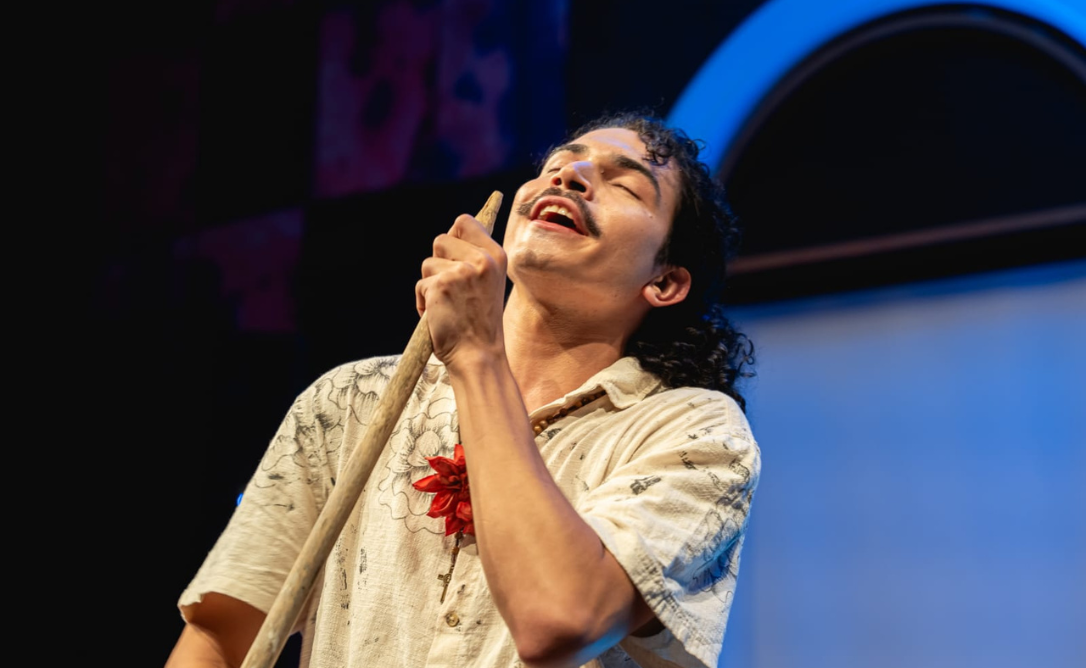
After touring Rio de Janeiro’s favelas and festivals across Brazil, the actor, director, and writer from Maranhão, Dudu Gehlen, returns to Rio de Janeiro with the farewell season of “Cadeira de Balanço” (Rocking Chair), a play that transforms the story of his great-grandmother, Dona Caçula, into theatrical autofiction. On stage from March 8th at the Teatro Cândido Mendes, the play explores memory, territory, and affection through a wake in the interior of Maranhão, weaving together reality and invention to reconstruct a trajectory marked by resistance and delicacy. In this interview, Dudu discusses the process of transforming family memories into literature and performance, the importance of preserving origins, and the impact of seeing an intimate story gain national prominence.
“Rocking Chair” was born from the desire to immortalize the memory of her great-grandmother. At what point did you realize that this story needed to be more than just a family memory and become a work of art?
“Rocking Chair” began as a diary; I used to write loose sheets of memories, outpourings, and confessions to my grandmother. Eventually, I decided to create a memorial book to immortalize all her memories, so that her great-grandchildren and great-great-grandchildren could have some kind of connection with who she was. I launched the book in 2022, and in 2024 it became a theatrical performance.
The show begins with a wake in the interior of Maranhão to talk about time, death, and affection. How was it to transform such an intimate and delicate moment into a performance without losing the emotional truth?
I perform this show with her on stage; I go in to greet the audience knowing that my grandmother is there too. So, being on stage is also about keeping alive this tradition of telling and listening to stories, something we had a lot of. It’s an autofictional piece, so it’s not a text where I need to find myself within it; I’m telling about my life, it’s my memories.
You’ve been exploring memory as a scenic possibility since 2017. What has Dona Caçula’s story taught you about the power of memory in theatre?
Within the theater, memory becomes fiction. There’s no way around it. In me, there’s a “it happened to me,” a “it’s me,” but memory also goes through a filter of stage choices, so it was necessary to investigate what part of me still belonged in a memory that was no longer so much mine, in a memory that was transformed into a work of art.
The work moves between reality and fiction, in the realm of autofiction. Did you ever feel afraid of exposing yourself too much or of touching on still-open wounds?
Yes! The play exposes a crime for the first time, a crime that my family has hidden for 50 years. So bringing this to the public, having my family in the audience, is very delicate. And I think that’s what makes the play important, the fear, the strangeness, because of the political nature it takes on.
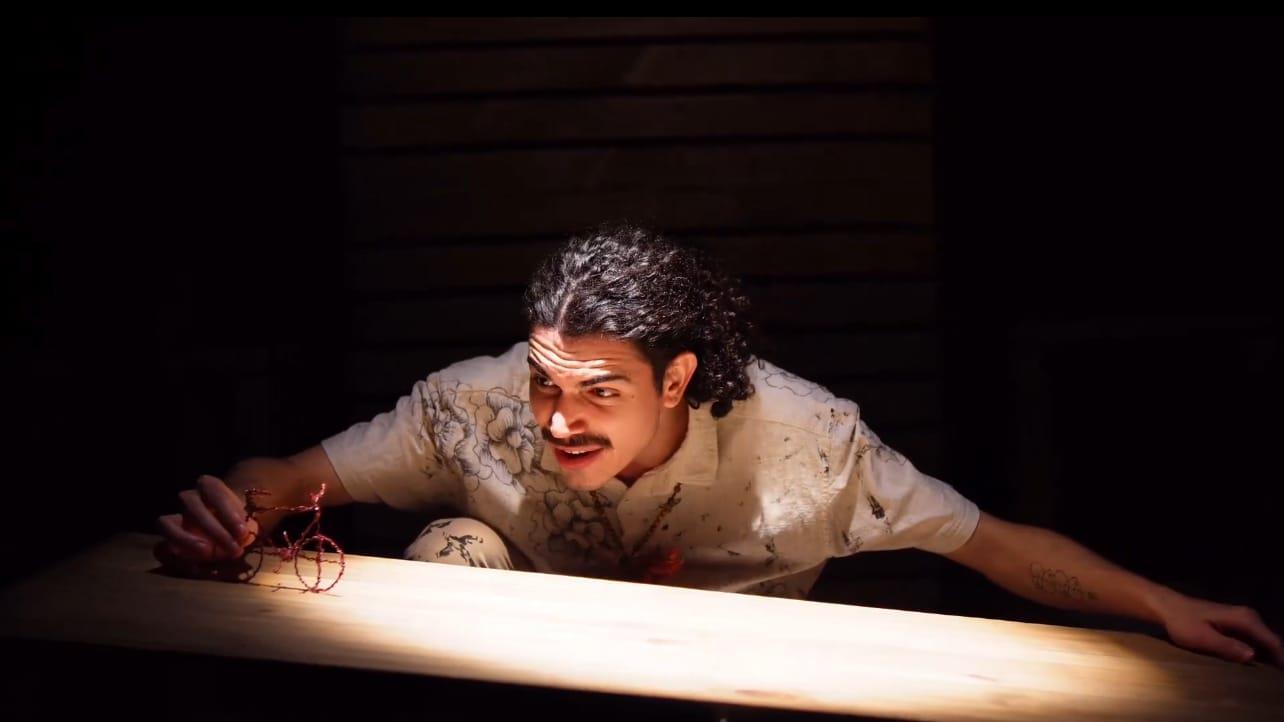
The show has already toured favelas, festivals, and different states. How did you feel realizing that such a unique story, from Cantanhede, can resonate with such diverse audiences?
The play is about grandmothers, and most people have a very strong connection with their grandmothers, or see in that figure a place of affection. I created the script thinking about my grandmother, but also so that the audience could recognize their own grandmothers.
You mention that you wanted the book to have simple language to reach your own family. How does this concern for accessibility also permeate the staging?

This play begins at a wake, set in the interior of Maranhão, in the home of a poor family. My family has been to the theater very few times; many municipalities/rural areas of Brazil don’t have theater buildings. I wanted this play to be democratic, with a simple set that could be performed anywhere, and for the words, the text, to be understood by those watching theater for the first time.
“Rocking Chair” is about rebuilding someone who is gone. Throughout this process, do you feel you have also rebuilt yourself?
Yes! From 2024 onwards, the play has also been transforming; I’ve been changing along with the work—the text, the set design, the directing style, the form—all being adapted. Because my own memories were also being adapted, sharing my memories with the audience and the feedback they gave also contributed to the play’s trajectory.
Now, with this farewell season in Rio, what feeling remains when revisiting this story once more: is it another goodbye, a new beginning, or a new way to keep Dona Caçula alive?
Grandma Caçula, it’s time to rest. I feel I’ve done my part; I’ve immortalized my grandmother in literature, on stage, I’ve introduced her to people she never expected to meet. This season has the taste of a farewell, of the end of a cycle. She says goodbye with the certainty that she lives on in everyone who watched “Rocking Chair.”
Follow Dudu Gehlen on Instagram