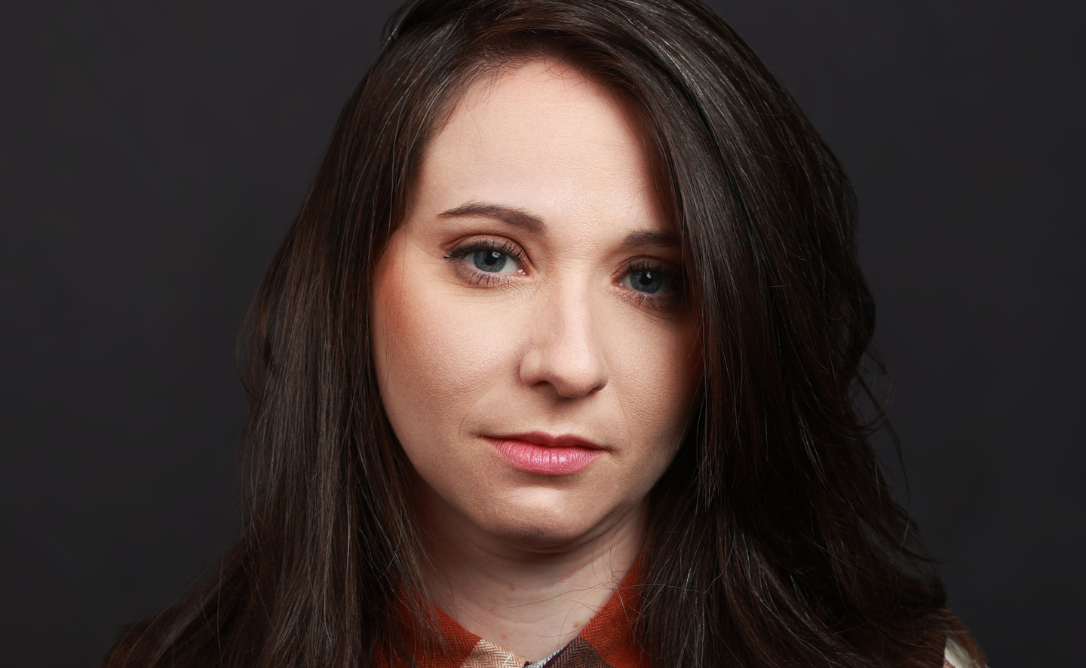
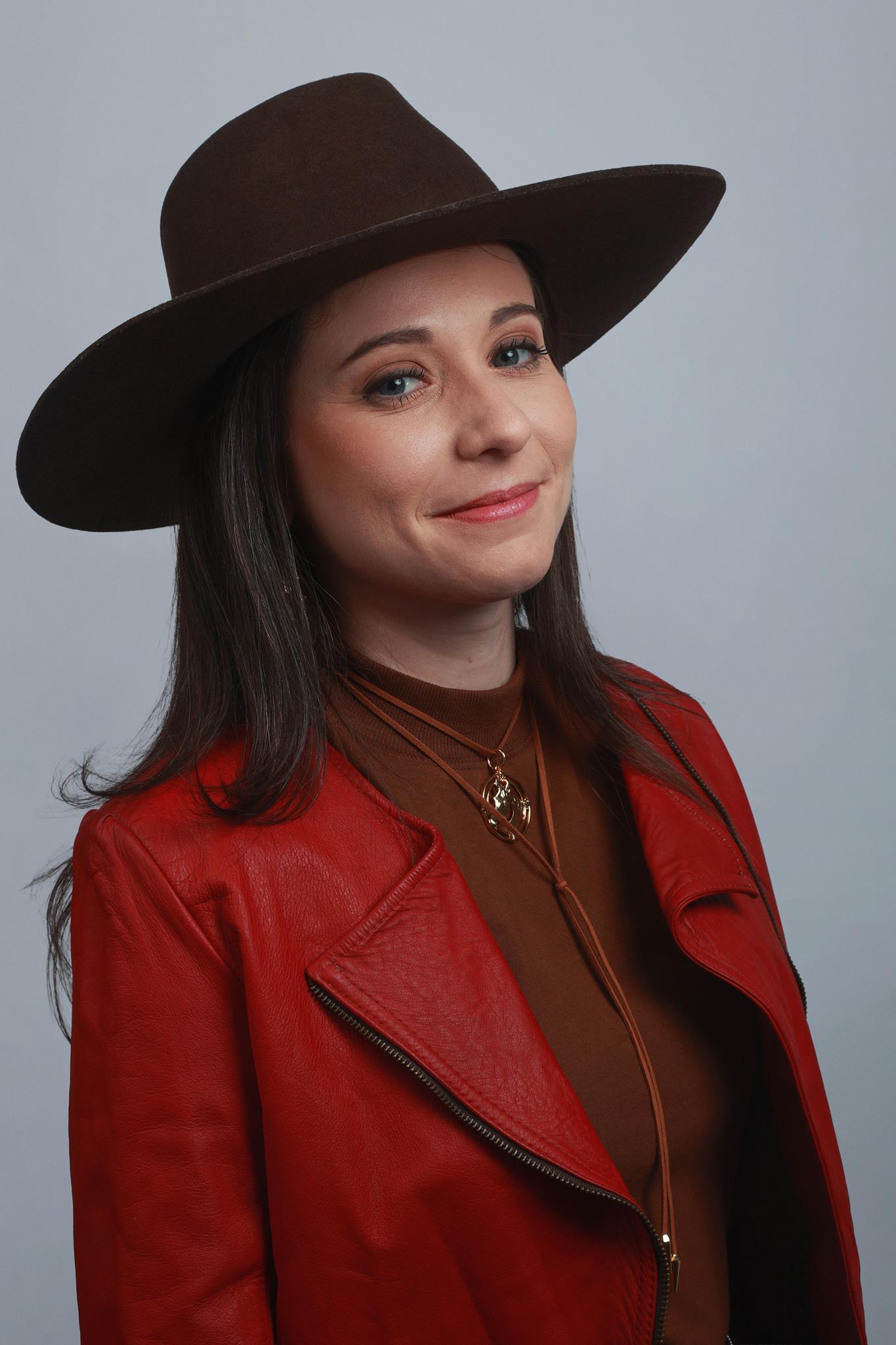
After years away from acting and facing decisive moments in her life, such as the loss of her mother and a stroke that almost interrupted her career, actress and comedian Yrla Braga is experiencing a professional turning point by playing Rosinha in the Globo telenovela “Coração Acelerado” (Accelerated Heart). Known for transforming difficult experiences into humor and connecting with the audience, Yrla talks about her reunion with art, the influence of comedy in her healing process, and the unexpected opportunity that brought her back to the stage and screen. In an interview, she recalls the challenges of her journey, the importance of believing in new beginnings, and her plans for a career that is now accelerating again.
You are currently experiencing a very beautiful moment with Rosinha in Coração Acelerado, but your journey so far has been marked by interruptions, pain, and new beginnings. At what point did you truly feel that art had regained its meaning in your life?
The day I actually stepped onto the stage to perform, not just to produce, not just to help, to write. The moment I stepped onto the stage, saw the audience, connected with them, made the first jokes, and started leading the comedy show, things just fell into place. I felt I should never have left, that that place welcomed me, made me feel good, while at the same time I was able to make other people feel good. And that exchange of energy between me and the audience made me understand that this was what I had to do, that this was my place. It was about living from my art, and that made sense. I shouldn’t have left this behind, as I did, as I abandoned it, when I ended up losing my mother.
The loss of her mother seems to have completely changed her relationship with the stage. How was it to rediscover art not from the perspective of absence, but as a possible path to healing?
My mother was the most important foundation of my life; she was my best friend, my confidante. I say that my mother didn’t just fulfill the financial role, the role of mother, of education, all that. She took care of me and my brother, and not only the two of us, but so many other people, in a much deeper way. Sometimes we say, “Oh, because she’s your mother,” but, in fact, my mother was very extraordinary, so much so that several of our friends considered her a mother, a second mother as well. But when I found myself without this person who encouraged me, who reassured me, who gave me that safe haven, for me, besides everything losing its meaning, it seemed that all the bad things in the universe could affect me. I no longer had that shield, that security of looking at the audience and seeing my mother. Then I was overcome by a very great fear: of failure, of not succeeding, of going on stage with the feeling of not having her there, of not having her to support me, of not having her opinion. I always relied heavily on my mother’s opinion when writing a text, when I was interpreting someone. I always did artistic preparation with her, you know? Even though she wasn’t an actress. And that helped me a lot. It helped me to ground my characters, my stories. So, I felt completely unsupported when I was without my mother. But, at some point, the universe pushed me back to that place, to understand that the stage, instead of bringing me fear and distancing me from my mother, would bring me closer to her, to a place of safety, of comfort, of solace, very similar to what I had with her. So, I think that, on stage, even though my mother—again, I repeat—wasn’t an artist, she was a teacher, and I think teaching is one of the most important arts we have. She laid the foundation for my entire artistic base, and I keep many of her advice, her tips, in my memory, in my character development and also as a human being.
You said you wrote your first stand-up show entirely about your mother. What has comedy allowed you to say about grief that perhaps no other format could achieve?
Comedy allowed me to talk about this grief without it swallowing me whole, without it dominating me. Stand-up comedy made me transform all of that, all that pain, all that stuff that paralyzed me, into something that could make sense. So, writing a show… I didn’t start by thinking about what it would be. As I wrote, stories from our childhood, from my life with my mother, from my relationship with her, emerged. And this whole show was a way I found to keep her alive. Instead of just talking about her absence, I could talk about her presence, the funny stories, the teachings, the quirks, which remain with me to this day. So, humor has this power to access deeper places without making everything unbearable, everything too painful. Comedy allows—and allowed me—to share this experience with other people. So, when someone laughs at a story about my mother, it’s as if, for a few seconds, she’s there again, present in memory and affection. And, at the same time, I can see that many people recognize themselves in these stories and also end up finding some comfort. Perhaps no other format gave me this possibility of crying and laughing at the same time. Stand-up comedy transformed this longing into an encounter. And it showed that grief doesn’t have to be just silence and pain. It can also be memory, love, and even laughter. Including laughter.
There’s something very powerful in your words about people approaching you after shows to say they recognized themselves in what you were doing. At what point did you realize that your healing process was also beginning to touch the pain of others?
I think that was one of the most unexpected moments in my journey in comedy. At first, I didn’t want to go on stage. Then I went on almost out of obligation to my schedule and because the people who wanted me there needed me. Later, it became a personal necessity to organize many things, to try to survive this grief, and comedy was, above all, a way for me to heal as well. But every time the shows ended, many people approached me, emotional: people who knew my mother, remembered her very well, or people who had never seen me in their lives, didn’t know my story, but who had also lost someone important. And they came to tell me that, by hearing those stories, they could laugh at a pain that, until then, seemed impossible to touch. It was at that moment that I realized that it wasn’t just about me anymore. I understood that when we tell a story honestly, we open up space for other people to feel welcomed and understood. My pain, which seemed so personal, so mine, ended up revealing itself as profoundly human and shared, because everyone goes through traumatic experiences during their lives. So, realizing this was very transformative for me. Healing ceased to be a solitary process and became a process of encounter. While I was trying to rebuild my own life, I ended up offering other people the possibility of seeing that, even after a devastating loss, it was still possible to find lightness, affection, care, and meaning to continue. And that was really cool, you know? It took me a while to understand that. Many people pointed it out to me, and therapy too, because I have a big flaw of not believing in the power of the things we can do, especially the things I can do. So, it was very important to realize and understand all of this, you know? And to comprehend the magnitude of the power of the art I was making—and am making.
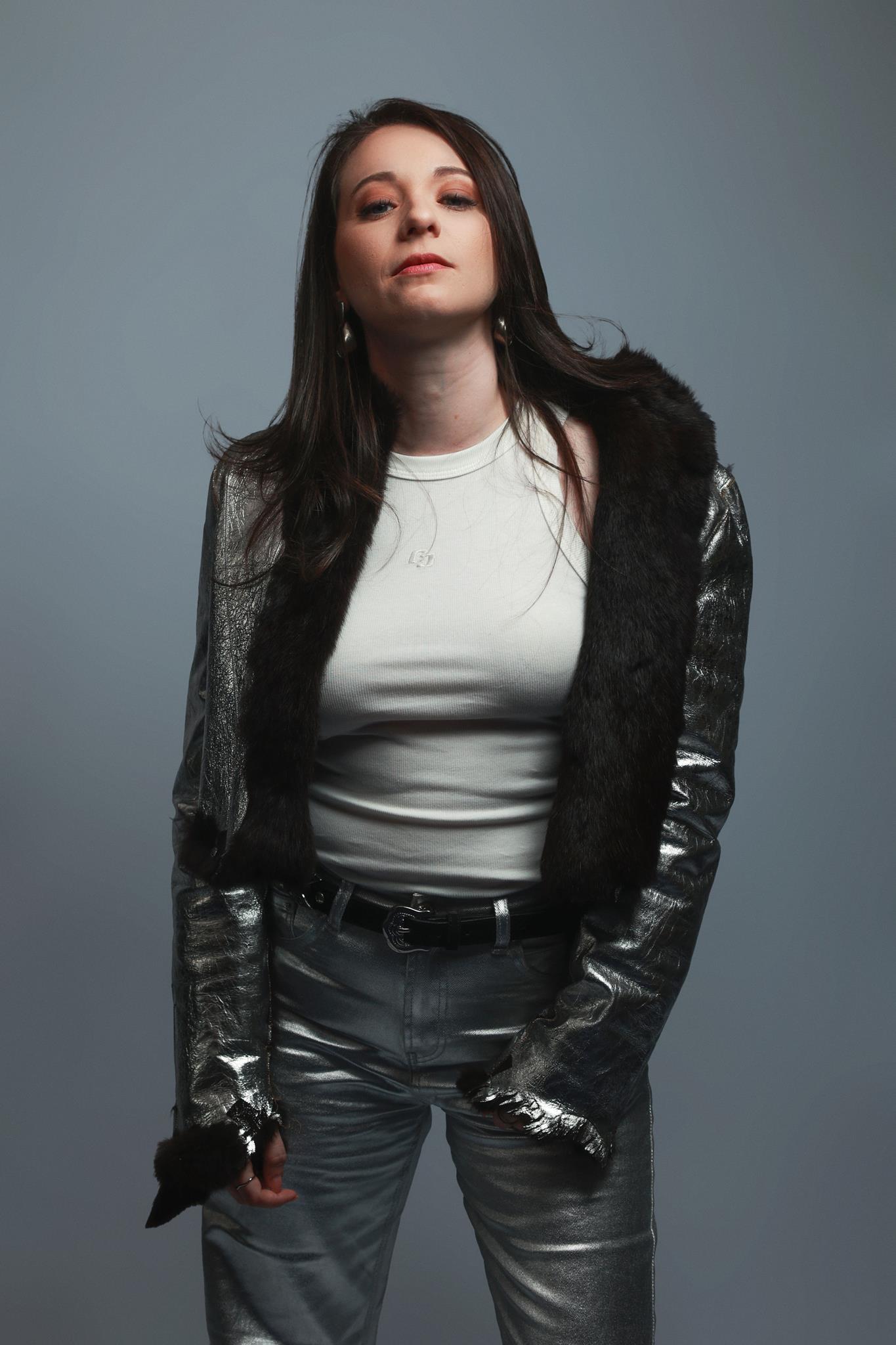
Suffering a stroke at age 29 appears in your story as a kind of definitive rupture, almost a call to live without delay. How did this extreme experience change you as a woman, an artist, and a human being?
Ah, it was kind of crazy, wasn’t it? But it changed me, I think, completely, because the trauma of losing my mother left me at a point where I needed to cherish people, because I thought they were finite and I had to take advantage of them, tell them I loved them, that I enjoyed being with them. If there was a problem, I wanted to solve it as soon as possible, because I needed to make the most of that person. That was something my mother already taught me. So much so that she made us read “The Minstrel” all the time, and that text is very beautiful. And so we always had this thing of saying “I love you” to each other all the time, especially when saying goodbye, because there was this idea from “The Minstrel”: it could be the last time you see that person, it could be the last “I love you” you’ll say to them. Because we don’t know what the next second will bring, right? But I had that a lot with the other person, not with myself. After the stroke episode, when I was in the ICU, I said: “Look, I’m finite too, I also have my time running out, and I need to enjoy this time with myself. I also need to be loved, I also need to love myself.” So, everything I used to do for others, I had to start doing for myself. And this ended up showing me a point my mother always talked about: you can love others as much as you want, but you have to love yourself even more, because you need to have that respect for yourself, you need to know your limits. I started to understand my limits and to take more risks too, because before I thought I didn’t have that right, that I always had to be there for the other person. And that’s when even my career started to take off. And that was very nice. I’m still in this process of loving myself, of enjoying myself more. Now, spending a lot of time alone, away from my family, here in Rio de Janeiro, I’ve had a lot of time to understand myself, to understand my fears, my anxieties, my yeses, my nos, with myself, just me with myself. And it has been really nice, really nice indeed, to discover myself in this world as a human being who, in addition to loving, also wants to be loved — and I understand that this is not only by others, but by myself as well.
Meeting Paulo Vieira seems to have happened precisely at a time when you were beginning to reposition yourself in life. How was it to receive this kind of support from someone outside the industry when you yourself no longer considered television among your achievable dreams?

I already had an image of Paulo as a brilliant, immense, wonderful artist. But we’re always afraid to meet artists we admire so much, and then find out they’re not what we imagined. But Paulo really wasn’t anything like I imagined, because he’s much bigger, much more generous, much more admirable, much more of a genius than I could have imagined. And this meeting with him was very good, because I was already in the process of doing shows and going to other cities, but I was still very afraid to face it, because I thought maybe I wasn’t at a good enough level for big capitals like São Paulo and Rio de Janeiro. And he turned to me and said: “No, you are. I think you should go. And if you want my help, I’m willing to help.” So it was very nice to hear that from someone who had never seen me before, who had no reason to flatter me or stroke my ego. Because, often, at home, people say: “No, but it’s really good,” right? A friend, someone who loves you, will sometimes find anything you do very good—even though my husband is a fierce critic and gives me wonderful advice, including about shows, jokes, and everything. So I was always suspicious, thinking: “Oh, these people like me, right? I don’t know, I don’t trust them.” And then, when Paulo came along, he really rubbed it in my face that I did have the possibility, the capacity to be at a level I didn’t think I was yet. And that was crucial for me, for me to have the courage to leave my comfort zone and go to São Paulo, Rio de Janeiro. And I didn’t let any of the opportunities that arose from then on pass me by.
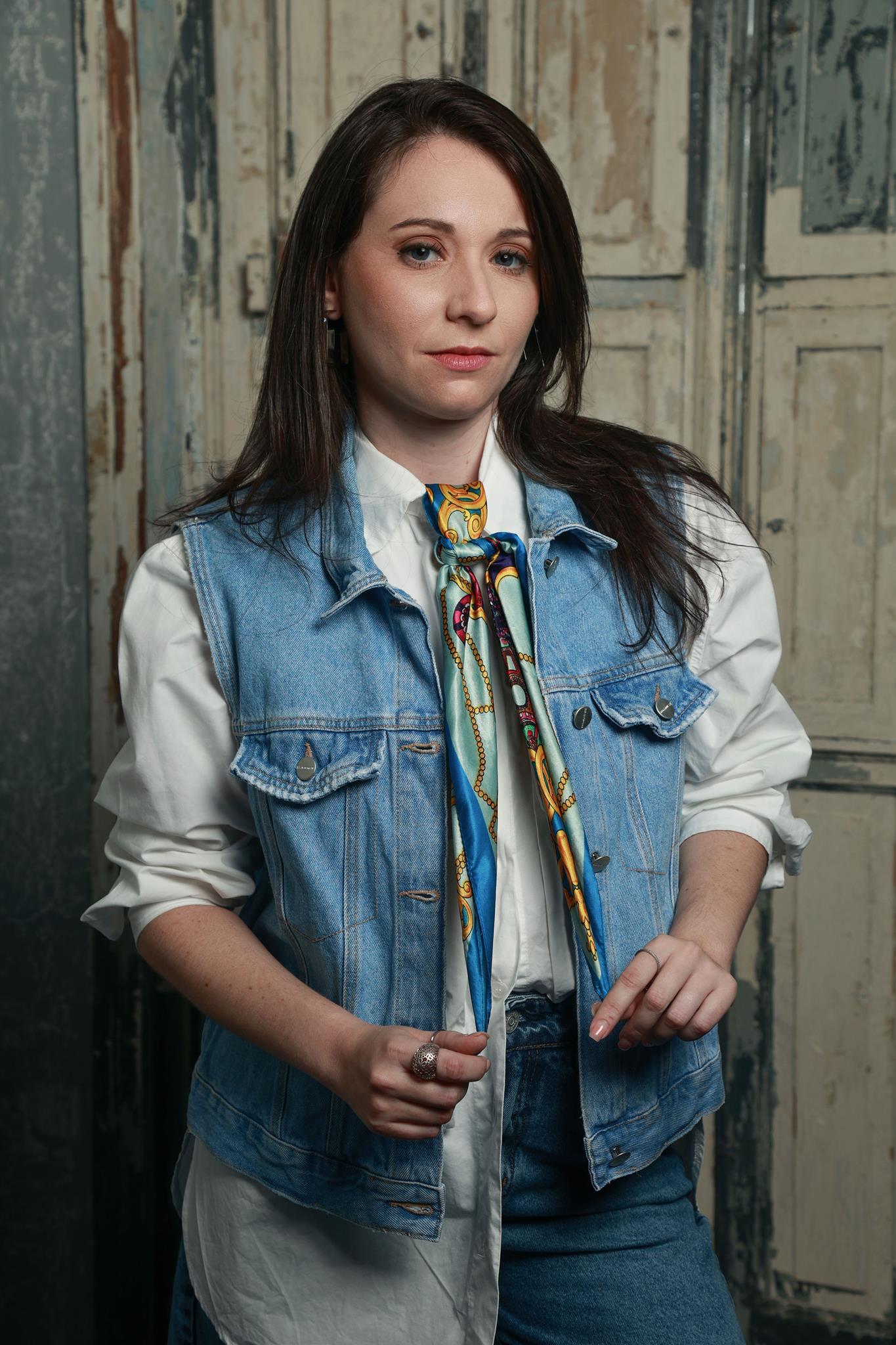
Rosinha arrived when you were no longer expecting that kind of opportunity. What is it about her that resonates with Yrla today, this woman who has regained her faith after so long?
Rosinha… Oh my, Rosinha. I don’t know if this is always how it works with the first characters we play on TV, but I’m really in love with her courage, I think that’s really cool. Because Rosinha says some things I don’t agree with, but when she realizes she’s gone too far, she backtracks and acknowledges her mistake. She knows she was wrong, she apologizes, she doesn’t have a problem with that, she doesn’t have that inflated ego thing, of constantly insisting she’s right, that what she said is correct. So, she saw that she was wrong, she goes and apologizes. I like that, that ability to recognize and not be afraid to speak up. I want that for myself. And I think Rosinha will show a lot of that side of her, that strong personality, that opinion of a woman who won’t let anyone tell her what she can or should do. And being able to do that with the recordings has been very enjoyable. Rosinha is definitely living in my heart. I’m in love with Rosinha, guys. It’s been so much fun playing this character. Of course I want to play other roles, but I think she’ll always be remembered as that first moment of experiencing all of this, of being a dazzled person who doesn’t hide her amazement, doesn’t hide the people she admires. And I think Ila and I also have a bit of that. I haven’t hidden my happiness. The cast even started joking around because every day I go to film I go to say good morning, good afternoon, good evening to Mr. Roberto. When I leave the studios, I also talk to Mr. Roberto, who is a statue right at the entrance of the studios, just after the turnstiles. We go in and he’s there, welcoming us. So I talk to Mr. Roberto, I joke around, and this ended up becoming an inside joke among some of the cast: sending this greeting to Mr. Roberto, out of respect for the company. So I started this joke because I’m not ashamed of who I am, of doing the silly things I do, and I think Rosinha has a bit of that too.
You say you want to continue doing comedy, even in a field that often still treats humor as something lesser. What drives you so much in this desire to defend comedy as a powerful and profoundly human language?
What truly motivates me is that comedy can reach places that other formats often can’t. For a long time, humor was treated as something superficial, as if making people laugh was less important than making them cry or provoking reflection. For me, comedy is precisely one of the most profound ways to talk about the human condition. It was through comedy that I was able to process and better cope with the grief of losing my mother, to give new meaning to very intimate pains, and to transform difficult experiences into something capable of generating identification and acceptance. So, when a person laughs, they lower their defenses, recognize themselves, allow themselves to feel. And, at that moment, it’s possible to talk about delicate topics with an honesty that might not be bearable otherwise. Perhaps, if you talk about grief directly with the person, or about a specific pain… I’ve met other people who had strokes very young and were also very angry with life, and, upon seeing the show, upon hearing the jokes, they began to see things differently. Because, perhaps, when someone tried to justify it by saying, “No, but look, at least you’re here,” they no longer wanted to hear it. So I started making jokes, and they understood that, calm down, there’s another side to all this too. So, defending comedy is defending this power of healing, of connection. Laughter doesn’t lessen the pain; it perhaps makes it more shareable. It creates bridges between people who might often be feeling alone in their own conflicts. And, through laughter, we connect. That’s why I really want to continue doing comedy, because I believe that making someone laugh can also be a way to offer comfort, to lead that person to reflect, to bring hope. And few things seem as profoundly human to me as the ability to transform one’s own vulnerability into a true encounter with another. So, I think comedy has this gigantic power, and I will continue fighting and trying to do comedy wherever I go.
Follow Yrla Braga on Instagram