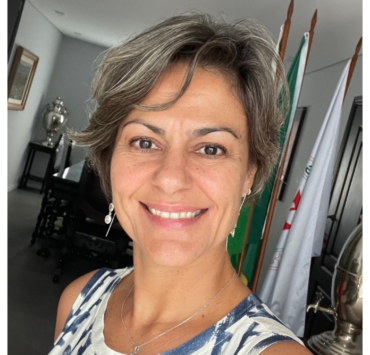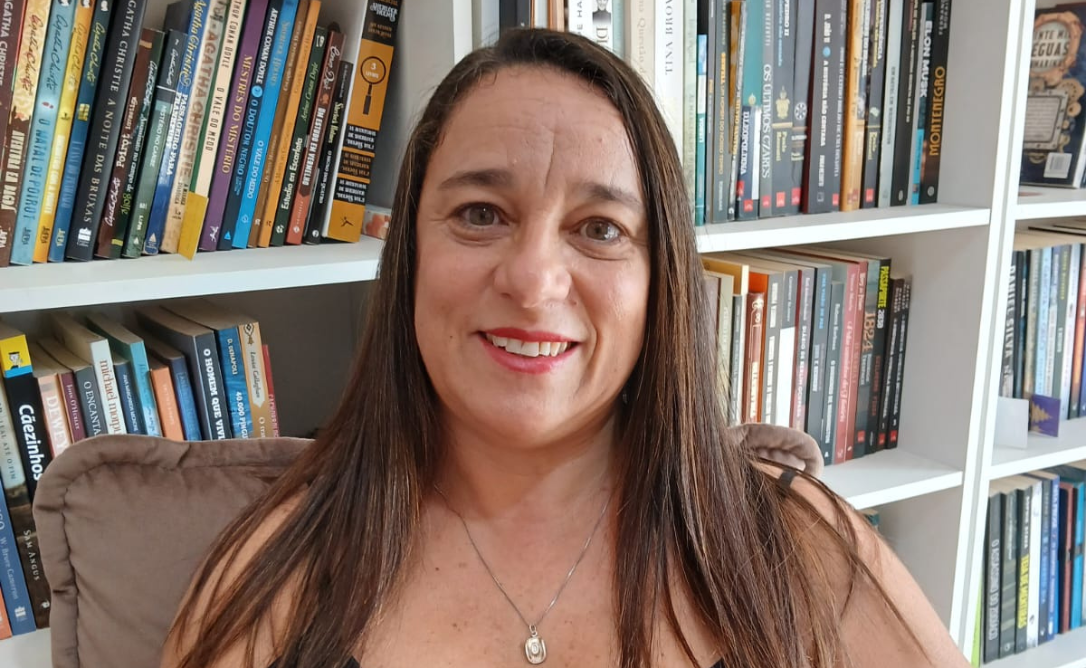
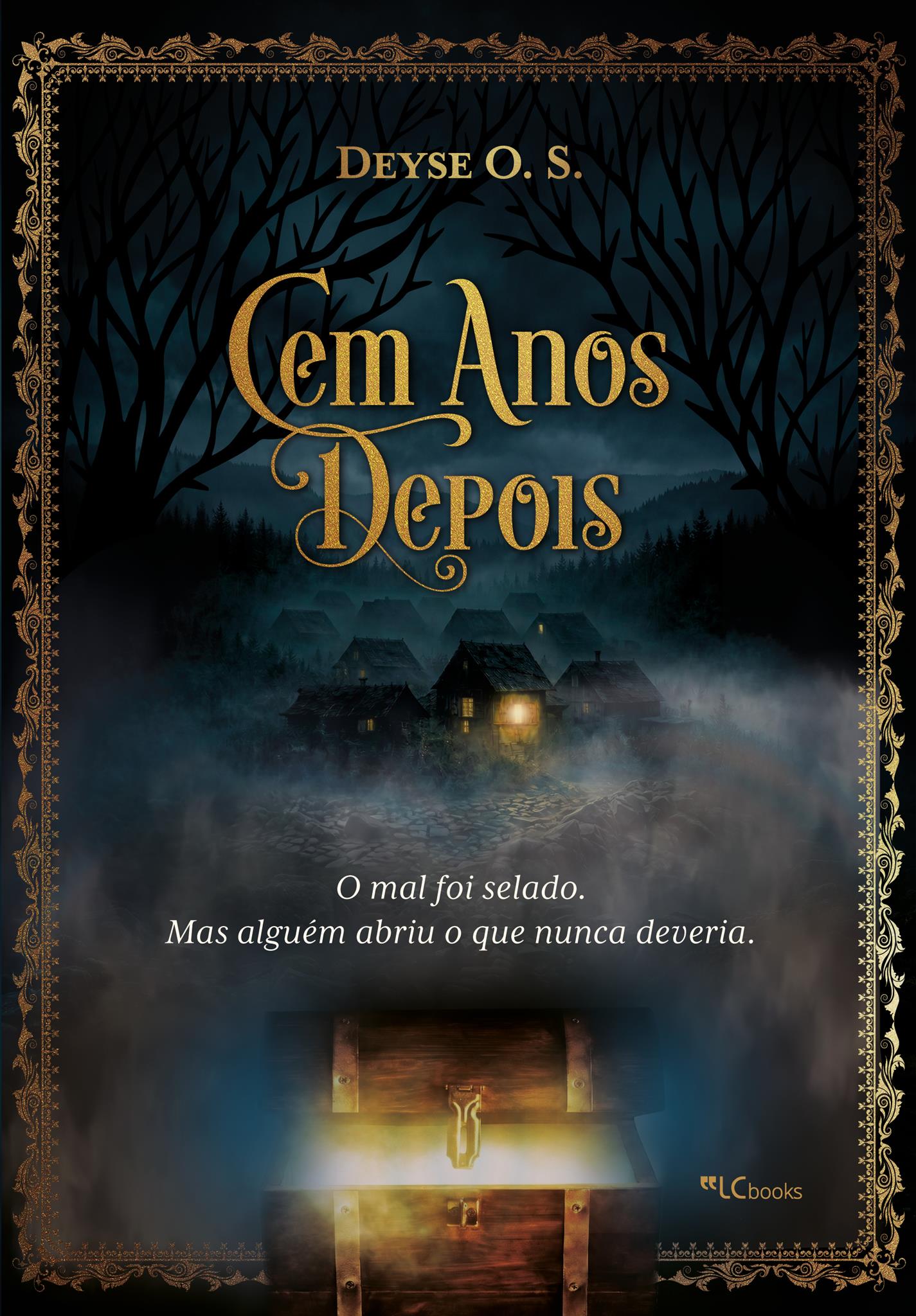
What remains of the Dracula legend a century after his supposed death? In One Hundred Years Later, author Deyse O. S. guides readers through an investigation shrouded in mystery, ancient documents, and unsettling revelations that expand the universe created by Bram Stoker. Set between Romania and the somber Village of Mists, the novel follows an expedition of researchers tasked with uncovering the traces left by literature’s most famous vampire. In an interview, the author discusses the research process behind the work, the challenges of engaging with one of the greatest classics of Gothic literature, and the construction of a narrative that explores the permanence of the past and the human fascination with mysteries that transcend generations.
“One Hundred Years Later” begins with a seemingly improbable mission: Norwegian researchers sent to Transylvania to investigate Dracula. At what point did you realize that this initial skepticism of the characters could be the ideal gateway to delve into the mystery?
I realized this early in the story’s development. I didn’t want characters who already believed in legends or who set out in search of the supernatural. I found it more interesting to follow researchers accustomed to working with facts, documents, and evidence as they encountered something they couldn’t immediately explain.
The characters’ initial disbelief also draws the reader into the narrative. After all, when faced with a mission to investigate Dracula, the most natural reaction would be doubt. But as they discover manuscripts, ancient objects, and increasingly strange events, they are forced to question their own certainties.
For me, the mystery becomes more captivating when it arises precisely at the intersection of reason and the unknown. It was this conflict that served as the gateway to the entire universe of “One Hundred Years Later.”
The work expands on Bram Stoker’s universe, but leans more towards suspense and mystery than classic Gothic fiction. How was it to engage with such an iconic figure without simply repeating the already known imagery of Dracula?
Dracula is a figure that is part of the collective imagination of many generations, and in writing “One Hundred Years Later,” my intention was not to retell the story created by Bram Stoker nor to alter the characteristics that made the character so iconic. In a way, I sought to take a different path from the original work.
What interested me was imagining what would happen a hundred years after those events. What if someone tried to find out if Dracula really existed? What if there were still documents, accounts, and traces capable of raising new doubts?
From this idea, the narrative’s focus shifted to the investigation. My characters don’t set out to find the vampire itself, but the truth behind the legend. This allowed me to engage with such an iconic figure without repeating already known imagery, building a story based on mystery, discoveries, and secrets of the past.
The Village of Mists has few spaces, but it conveys an intense atmosphere of silence, solitude, and awe. How did you build this village so that it also seemed to hold its own secrets?
From the beginning, I wanted the Village of Mists to be more than just a simple setting. The idea was for the village itself to convey the feeling that something had been forgotten or hidden over time.
That’s why I chose a small, secluded place surrounded by elements that spark curiosity: old buildings, little-explored trails, a castle on the hilltop, and residents who seem to know more than they let on. In such an environment, silence can be as revealing as a conversation.
I also sought to give meaning to the details. The village’s name itself wasn’t chosen at random; it’s related to the characteristics of the place and helps reinforce the atmosphere I wanted to create. I like the idea that places hold their own memories and stories. That’s why Vila das Brumas ended up becoming part of the mystery, almost like a character that also keeps its own secrets.
The book uses old documents, letters, diaries, scrolls, and objects as pieces of a large puzzle. What attracts you to this idea of investigating the past through fragments?
What appeals to me most about this idea is that the past rarely reaches us in its entirety. Historians and archaeologists often work precisely with fragments: a document, a letter, an object, or an account that needs to be interpreted and connected to other discoveries.
In constructing the story, I wanted the characters to go through the same process. It wouldn’t be interesting if all the answers were readily available from the start. The pleasure of discovery lies precisely in finding clues little by little and trying to understand how they fit together.
I also like to think that objects and documents carry stories. An old diary, a forgotten letter, or an artifact found in an excavation can reveal much more than they appear to at first glance. In “One Hundred Years Later,” each discovery represents a new piece of a larger puzzle, inviting the reader to investigate the past along with the characters.
You state that the past never completely ceases to exist. What kind of historical truth or wound did you want to explore by showing characters trying to uncover something that perhaps should remain hidden?
More than exploring a specific historical wound, I wanted to reflect on how the past continues to influence the present. Often, events are forgotten, hidden, or simply lost over time, but their consequences remain in some way.
In “One Hundred Years Later,” the characters believe they are investigating events very distant in time. However, as they delve deeper into the search for answers, they realize that some stories never truly disappear. They remain present in documents, memories, places, and even in the choices made by other people throughout the generations.
I believe there’s something fascinating about this idea. Not every secret remains buried forever, and not every truth ceases to exist simply because it has been forgotten. It was this relationship between past and present that I sought to explore throughout the narrative.
The narrative takes place in 1997, but spans different historical periods and required research into wars, archaeological discoveries, and technologies from various eras. How did you balance documentary rigor with fictional freedom?
Research was a very important part of the process because I wanted the reader to feel that the events could actually have occurred within that historical context. Therefore, I sought information about different periods, conflicts, locations, technologies, and aspects related to archaeology and history.
At the same time, I always kept in mind that I was writing a novel, not an academic book. The research served as a basis for giving credibility to the narrative, while the fiction allowed me to create characters, mysteries, and events capable of driving the story forward.
For me, the balance arose precisely from this combination. I sought to respect the historical elements that inspired the work, but I also allowed myself to imagine what might exist in the spaces that History does not fully explain. It was in this encounter between research and imagination that “One Hundred Years Later” took shape.
The researchers arrive at the mission with doubts, but gradually they are swallowed up by a universe far larger than they imagined. What does this journey reveal about the relationship between reason, myth, and fear?
I believe that reason, myth, and fear are not as separate elements as we usually imagine. Many legends arose precisely from humanity’s attempt to understand what seemed inexplicable at a given time.
Throughout history, researchers have tried to analyze everything logically and rationally, but end up encountering situations that challenge their certainties. This doesn’t mean abandoning reason, but recognizing that we don’t always have all the answers.
Fear also arises from this unknown. When we cannot fully understand something, our imagination begins to fill in the gaps. Therefore, the characters’ journey shows how reason, myth, and fear can coexist. In many moments, they are not opposites, but different ways of dealing with what we do not yet understand.
In the end, “One Hundred Years Later” seems to suggest that some legends remain alive because they still have something to tell us. What would you like the reader to feel upon closing the book: fascination, unease, fear, or a desire to investigate further?
I think, above all, I would like the reader to finish the book wanting to investigate further. I like knowing that a story continues to live on even after the last page, sparking curiosity and encouraging new questions.
If the reader finishes the book reflecting on the events, researching references, talking to other people, or creating their own theories, I believe the narrative has fulfilled its purpose. Many great stories stay with us precisely because they continue to provoke reflection and different interpretations over time.
Fascination, unease, and even a little fear can be part of the experience, but what I hope for most is to spark curiosity. After all, every discovery begins when someone decides to ask a question.
Follow Deyse O. S. on Instagram