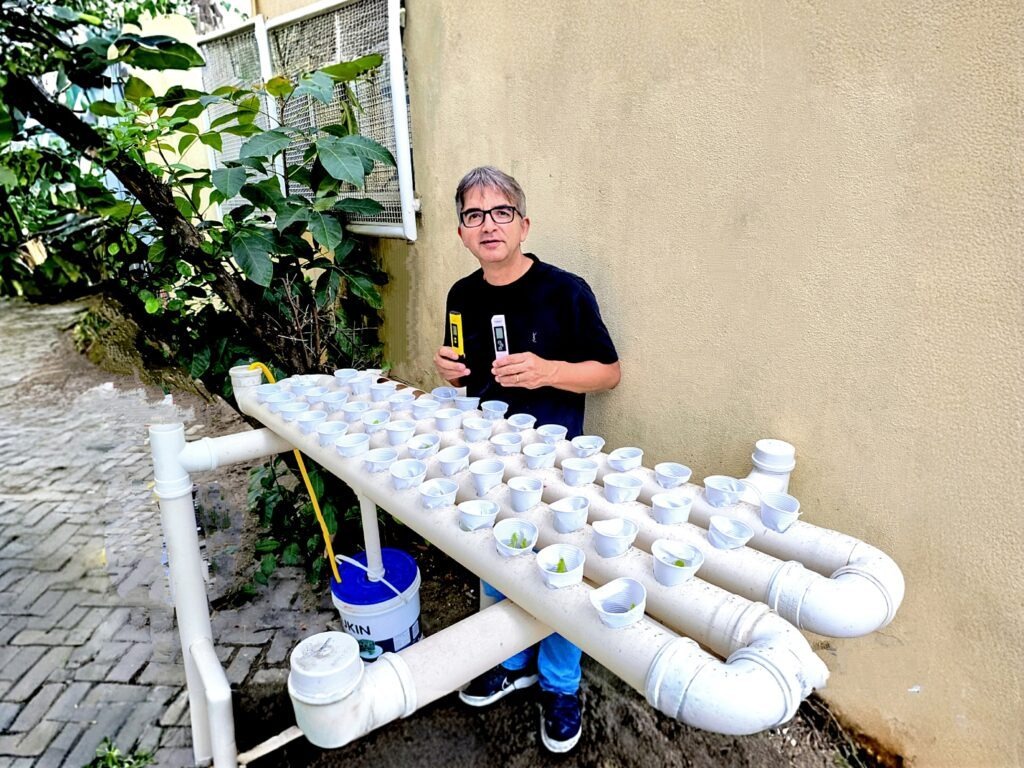
At Renascer Municipal Primary School in Cariacica, Science teacher Romério Cossi has introduced a hydroponic garden project that is reshaping the way science is taught to Year 9 pupils. The initiative combines science, sustainability, and entrepreneurship, bringing students closer to hands-on practice and sparking greater enthusiasm for learning.
Right from the start, pupils revisit topics such as the periodic table, pH scale, ions, and electrical conductivity — all applied directly to growing plants without soil, using only water and nutrients. “Our aim with this hydroponic garden is to teach chemistry content to the Year 9 class,” explains Romério.
In practice, students use instruments such as pH meters and conductivity testers to monitor the growth of seedlings. “A pupil is always more engaged when they can see things happening. They move from theory into practice,” says the teacher, highlighting the excitement of the class as they observe the results of cultivation.
The project also encourages entrepreneurship. Romério shows that it is possible to set up a hydroponic bench at home using PVC pipes, proper spacing between seedlings, and an aquarium pump to circulate the water. “They can grow lettuce, strawberries, tomatoes, coriander — and even make money from it,” he notes.
Beyond food production, the initiative reinforces the importance of sustainability and water conservation, since the system relies on a single reservoir to keep plants nourished. “Here we work with chemical elements, the pH scale, conductivity, and also the issue of sustainability,” Romério emphasises.
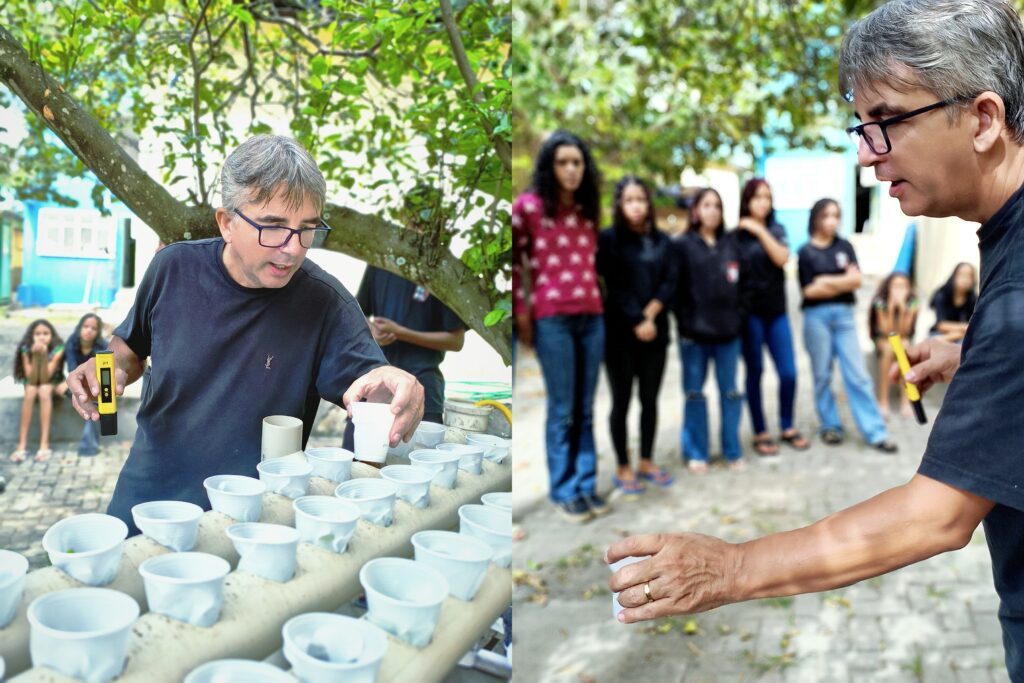
The teacher expresses gratitude to the school’s management and coordination team for their support, and adds that the results may be presented at practice seminars later in the year. At the same time, he also serves as supervisor of the Institutional Teaching Initiation Scholarship Programme (Pibid) at the Federal University of Espírito Santo (UFES), strengthening his commitment to inquiry-based science education.

“The pupil observes, asks questions, collaborates in groups. All of this is already part of the teaching and learning process,” concludes Romério Cossi. In short, the hydroponic garden demonstrates how science and practice can go hand in hand to prepare students to be more engaged and ready for the future.
Watch the demonstration video here: https://www.youtube.com/watch?v=Rje6YTeCrpQ