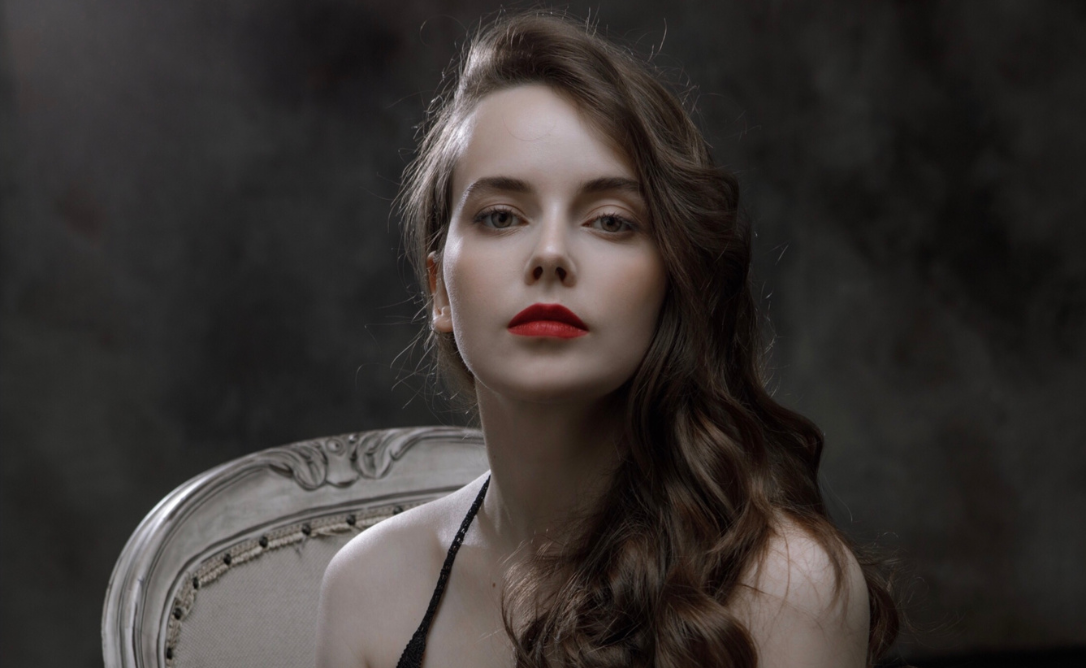
In Virginia Woolf’s Night & Day, Camilla Borghesani steps into a delicate and layered literary world through Cassandra Otway, a character defined by curiosity, lightness, and imagination. In the interview, the actress reflects on her classical training, her transition from theatre to film, and her fascination with roles that push her into emotional and psychological territory far removed from her own, at a moment of clear international expansion in her career.
Your classical training and your journey from Moscow and St Petersburg to international productions have created a very distinctive path. How has that background shaped the actress you are today?
My background has had a big influence on the actress I am today. I’ve been fortunate to work across a range of projects since my classical training and to encounter very different approaches to acting along the way.
I’m bilingual in English and Russian, with an American father and Russian mother, and I attended an international school in Russia, the Anglo-American School of Moscow. That early exposure to different cultures, later reinforced by working across multiple countries and playing characters in foreign languages, has shaped me as both a person and an actor. It’s given me a fluidity in how I approach work, being open to different methods, people, and ways of communicating on set.
When I moved to Los Angeles, I studied different acting methods, and much of it felt familiar to my classical training, even though the process was completely different. It reinforced my sense that there are many ways to approach the craft, something that also comes from growing up between cultures.
All of that experience has given me a real discernment in how I approach my work, quickly identifying what feels useful depending on the project.
Virginia Woolf’s Night & Day places you inside a very rich literary world. What drew you most to this project and to playing Cassandra Otway?
I was immediately drawn to the project because I’ve always loved Virginia Woolf’s writing. I was especially interested in Night & Day as it offers a glimpse of Woolf’s earlier development as a writer, before the works she is most widely known for. There’s something very special about helping bring that part of her work to life.
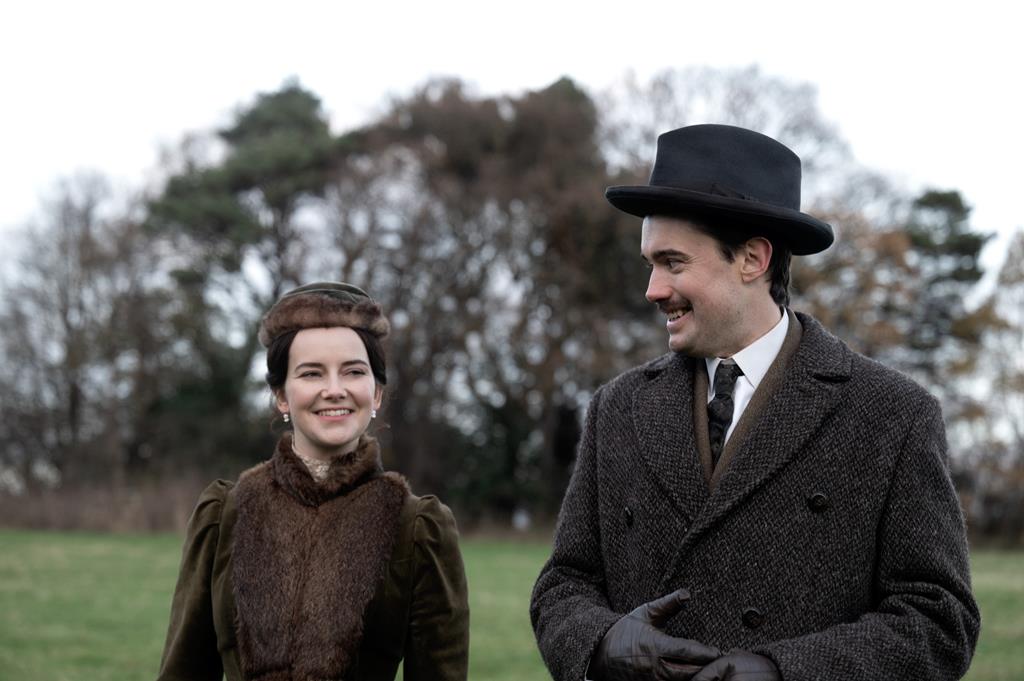
Cassandra fascinated me because she experiences the world with such openness and imagination. She’s free-spirited, impulsive, and completely absorbed by whatever captures her attention, whether it’s playing the flute, raising silkworms, or following a new interest.
I was drawn to that combination of spontaneity and unpredictability. She can seem whimsical at first, but there’s a shifting quality to her that makes her difficult to pin down, and I was excited by the opportunity to explore those different layers.

You have spoken about Cassandra’s lightness, curiosity, and sense of wonder. What was it like finding the rhythm of that character within a story that carries such delicate and layered themes?
What helped me find Cassandra’s rhythm was really just not overthinking her. She responds quite impulsively to what’s happening around her, and I tried to stay as close to that way of reacting.
Working on her also had an effect on me personally. I started to shift something in my own perspective, almost returning to a more childlike way of seeing things again, becoming more imaginative and getting excited by ordinary moments in my day-to-day life that I might normally have overlooked.
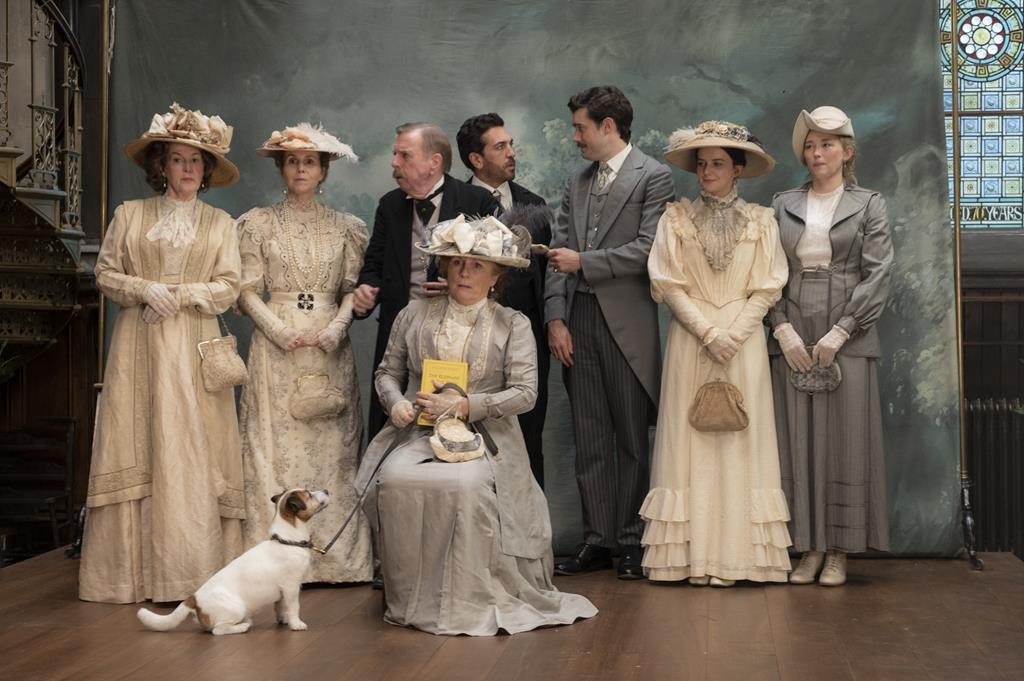
The costumes were also a very important part of the process. Our costume designer, Esther Waltz, put so much thought and attention into every detail, which really shaped how I understood Cassandra physically and helped me feel more connected to the character.
Working alongside names like Haley Bennett, Jack Whitehall, Timothy Spall, and Jennifer Saunders must have brought important lessons. What stood out to you most from that ensemble experience?
What struck me most was how different everyone was from the characters they were playing and how seamlessly they could move between themselves and their roles. Between takes, each actor had their own process. Some would quietly rehearse, some would focus inwardly in their own particular way, and then, the moment the scene began, they would transform completely.
Watching that level of concentration and discipline up close was remarkable. It reminded me that there is no single way to prepare or create a performance. Every actor develops their own path, and observing those different approaches was incredibly valuable.
Your path began strongly in theatre and is now expanding more and more into film. What changes for you as a performer when moving between stage and screen?
The most obvious differences involve voice and physicality. In theatre, those choices often need to reach the entire auditorium, whereas film allows for much smaller and more intimate adjustments. But beyond that, the biggest shift for me is learning to surrender a certain amount of control.
In theatre, the actor largely carries the performance from beginning to end in front of a live audience. In film, your work becomes part of a much larger process involving the camera, the editing, and countless creative decisions that happen after you’ve finished shooting. My job is to commit fully to each take, knowing that it may ultimately be used in a way I never expected—or not used at all.

Sometimes I think of it as the difference between creating a sculpture yourself and becoming part of a sculpture that is being shaped by many hands. Theatre gives the actor a greater sense of authorship, while film often feels as though you are being carefully carved into the story.
And, of course, there is the audience. In theatre, their energy can transform a performance from one evening to the next. A responsive audience gives the entire ensemble more colours to play with.
You seem especially interested in characters whose emotional logic is very different from your own. What challenges—and fascinates—you most about that kind of role?
Every character requires a different approach, and I often enjoy the preparation as much as the performance itself. What fascinates me is trying to understand a person’s internal logic, especially when it differs greatly from my own.
The challenge is discovering where their desires come from and rooting those objectives deeply enough within myself that they begin to feel natural. What makes this person feel alive? What experiences shaped them? Where is the meeting point between their perspective and mine?
I try not to intellectualise the process too much. For me, acting has always been a very intuitive journey. The techniques may vary from project to project, but ultimately I’m searching for a way to genuinely inhabit another person’s reality.
With projects like The Trek, The Retreat, Breathe Deep, and Virginia Woolf’s Night & Day, you are living a moment of international expansion. What kinds of stories and roles are you most eager to explore next?
What excites me most is that all of these projects are so different from one another. The characters, the worlds, and even the genres vary tremendously, and I would love to continue along that trajectory.
I’m drawn to stories that challenge me to step into unfamiliar emotional and psychological territory. Whether that takes the form of a historical drama, a psychological thriller, or something entirely unexpected, I’m most interested in roles that require transformation and offer a perspective I haven’t explored before. The more different the character is from me, the more curious I become about understanding them.
Follow Camilla Borghesani on Instagram