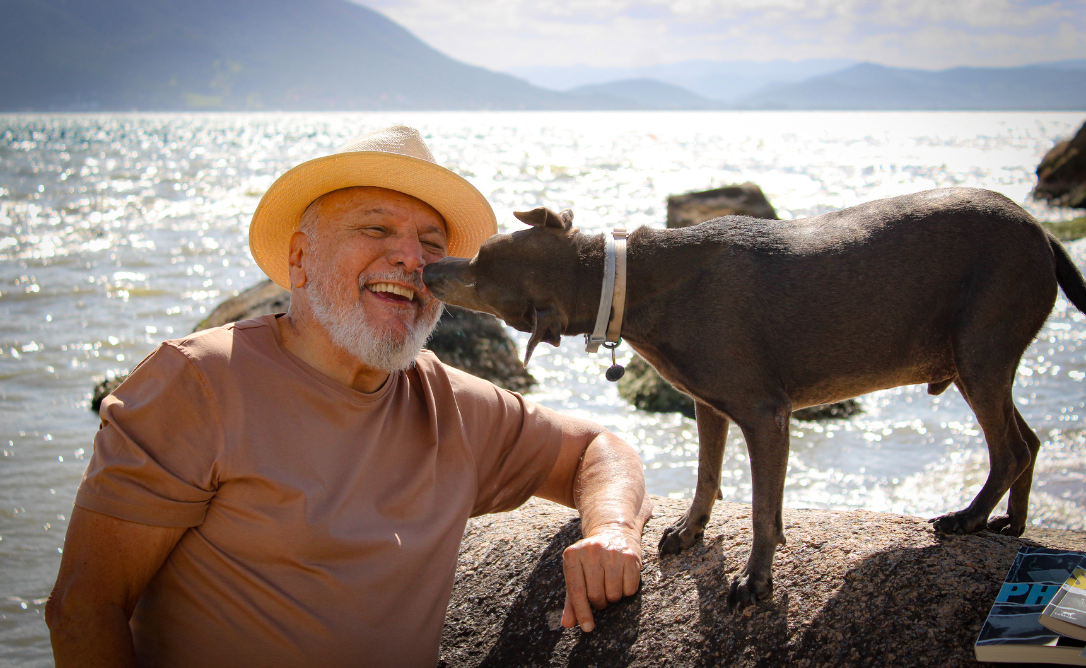
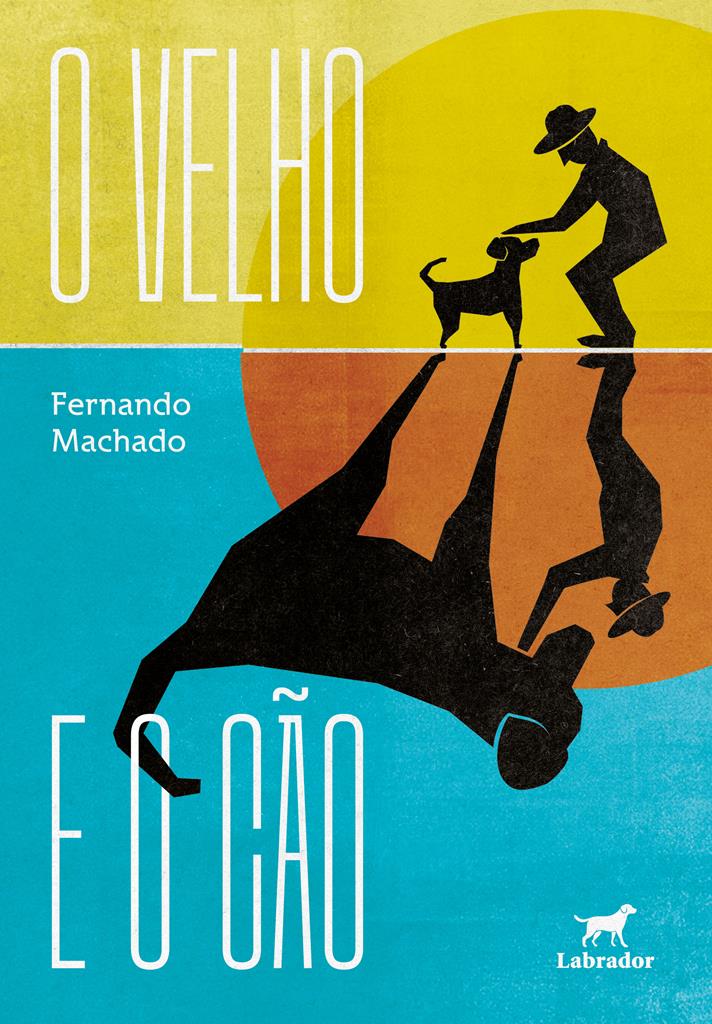
What if the deepest look at the human condition came precisely from someone who never needed words to love? In *The Old Man and the Dog*, writer Fernando Machado guides the reader through a sensitive narrative told by Brown, a dog who interprets the world through instincts, loyalty, and the search for belonging. By transforming the animal’s perspective into a powerful instrument for reflection on abandonment, affection, loss, and new beginnings, the work invites the public to question the complexity with which human beings deal with their own feelings. In an interview, Fernando talks about the inspiration for constructing this unusual narrative voice, the symbolism of the relationship between humans and dogs, and how literature can reveal, in the simplicity of small gestures, profound truths about life and emotions.
“The Old Man and the Dog” is born from a silent, almost intuitive wisdom that comes from the gaze of a dog. At what point did you realize that Brown should not only be a character, but also the narrative voice of the work?
It was during one of the revisions of the narrative that this became clear. I realized that Brown’s experience didn’t begin with understanding; it arose from the immediate perception of the body. He recognized what surrounded him by what he felt: a change in the tone of voice, a hand that moved away, an interrupted routine, a presence that didn’t repeat itself.
An external narrator could describe the dog sensitively, but would still be looking from the outside. Brown needed to take on the voice because only through him could the book achieve this way of feeling: less explained, more instinctive; less rational, more affective. With this choice, the story came closer to what sustains a dog’s life.
The book invites the reader to inhabit a more sensory, instinctive, and less rationalized space. What was the challenge of writing from a canine consciousness without over-humanizing the character?
More than a challenge, it was an inner transformation. Initially, the author was searching for the dog’s voice. Then, as the narrative progressed, this relationship began to reverse. The search was so long and so profound that, little by little, the author stopped observing the dog from the outside and began to perceive each scene through its eyes. The human voice receded. In its place, a more physical, more instinctive awareness emerged, guided by the body and the immediate signs of life around it. It wasn’t about imitating a dog, nor about transforming it into a person. It was about allowing the writing to set aside human explanation and enter into a more direct form of feeling.
Once this took shape, the narrative began to be guided by the dog’s own perception. The author was still there, giving literary form to the experience, but no longer directing everything from the outside. The emotion came from the creature; it was the dog that guided the gaze, the trust, the loss, and the affection.
Brown experiences homes, abandonment, silent violence, and frustrated attempts at belonging. What does this journey reveal about how humans often fail to perceive the emotional needs of an animal?
The problem begins when care reaches the body but doesn’t extend to the emotional life. Material care is indispensable, but not enough. The dog needs presence; without it, it may be protected on the outside but helpless on the inside. What often goes unnoticed is that these needs aren’t expressed in words; they appear in routine, in the repetition of gestures, and in changes in behavior. Without sharing daily life, the human only sees what the dog does; with attention, they begin to understand what the dog feels.
It was necessary to observe, anticipate situations, and recognize warning signs, insecurity, or fear. The dog reacts by instinct; the human, by reason. They are different ways of being in the world, and one cannot achieve the other without attention, consistency, and presence. The mistake lies in expecting the dog to adapt to our way of life simply through food, protection, and shelter.
The artwork seems to suggest that dogs experience the world directly, without turning everything into an explanation. What do you believe they teach us about presence, affection, and simplicity?
Sometimes, all it takes is seeing a dog lying on a small rug at the feet of a human reading the newspaper: its body still, its breathing calm, its gaze fixed on that familiar figure. There, happiness is entirely contained in being near. With this simple serenity, without fanfare or explanation, the dog reveals its presence, affection, and simplicity.
There’s no need for elaborate promises. He recognizes the truth of a bond in the voice that calls, in the hand that caresses, in the routine that repeats itself. In affection lies perhaps one of the greatest lessons. The dog loves without expecting anything in return. He doesn’t expect greatness; he recognizes constancy. He approaches, accompanies, trusts, waits. Life doesn’t need to be grand to be profound. For a dog, the essential can be a walk, an opening door, company at dusk. It is this tenderness that he carries in the narrative.
One of the most intense moments in the book occurs when Brown faces the possibility of losing the human who finally understood him. What was it like to write about this absolute despair from the perspective of a being who feels everything but cannot put it into words?
For Brown, the possibility of losing his old self doesn’t arrive clearly. It comes as disorder. The familiar voice is lost, the gesture is suspended, the walk loses its direction. He has no way of grasping the meaning of the loss, giving form to the fear, or understanding what has gone out of the known order. But he feels everything.
The scene is sustained by these signs: the fright, the unease, the smell of blood, the old human figure out of its usual state. Around them, everything seemed the same, but for Brown, everything was different. This contrast was perhaps the core of the despair: life around them went on, while the one who mattered seemed to slip away.
Brown doesn’t explain the gravity of the moment: he doesn’t transform fear into thought, nor pain into words. Everything in him responds before understanding. Despair lies in the sudden change, in the powerlessness, in the confused impulse to act and in the instinctive refusal to move away from the old. There, a very pure form of affection is revealed: one that doesn’t argue, doesn’t retreat; it simply remains.
The narrative emphasizes small events, gestures, silences, and subtle changes surrounding the protagonist. Why have everyday details become so important in sustaining the story’s emotion?

Everyday details became important because the story of the old man and the dog is not based on grand events, but on the small repetitions of their shared life. The house by the sea, the walks along the road, the beach in the back, the conversations with the residents, the short trips, the departures and the returns: all of this forms an intimacy woven little by little.
The most beautiful thing is that they both go through the same moments together, but the experience affects each of them differently. The old man perceives through memory, language, reason, and the marks of life. The dog receives everything through his body, his sense of smell, his hearing, his trust, and his restlessness. The emotion arises precisely from this difference.
Through shared experiences, these two ways of feeling converge. The old man learns to better read the dog’s signals; the dog increasingly recognizes the old man’s mannerisms. One doesn’t transform into the other, but both are modified by the bond. Therefore, everyday details are not merely scenery; they reveal anticipation, connection, and affection.
“The Old Man and the Dog” also provokes a certain unease by showing how much people hide behind justifications while life simply demands presence. What reflection would you like to spark about the way humans deal with affection?
Reflection can stem from a simple idea: affection is what makes one life matter to another. It doesn’t require being together all the time, but it does require consistency, care, and attention. A dog feels this very directly. It perceives the presence that remains and the presence that begins to fade. It recognizes who stays, who leaves, who cares, who distances themselves. It doesn’t follow human reasoning, nor the justifications that so often arise for distance, haste, or absence.
For an animal, affection is not confirmed by what is said, but by repeated gestures: the voice that returns, the hand that reaches out, the routine that is not broken without leaving a mark. What sometimes seems like habit to a person can be, for a dog, a profound sign of trust. Perhaps this is the reflection that Brown evokes: affection is simpler than humans usually imagine. It needs fewer explanations and more gestures that confirm to the other that they are not alone.
After following Brown’s journey, marked by suffering, connection, and transformation, what kind of courage do you hope the reader will find to feel more and explain less?
I hope the reader finds the courage to allow themselves to be touched, without immediately seeking an explanation for what they feel. Often, when faced with something moving, the impulse is to order, justify, or rationalize the feeling. Brown leads us down a different path: he feels before understanding, he remains before explaining. The courage I would like to awaken is perhaps this: recognizing emotion as a legitimate form of knowledge. Not everything needs to be translated into words to be true. There are affections that reveal themselves in silence, in presence, in repeated care, in fidelity in the face of the other’s fragility. After learning about Brown’s journey, perhaps the reader can look at their own relationships with less defensiveness and more surrender. Feeling more doesn’t mean losing clarity. It means realizing that certain meanings are only achieved when we stop justifying distances and accept remaining.
Follow Fernando Machado on Instagram