
With Awaiting Evaluation heading to the Edinburgh Fringe Festival, Alex Grech is reaching a significant moment in a career that moves across theatre, film, writing, and physical performance. In the interview, the actor, playwright, director, and stunt coordinator reflects on the long evolution of the play from its teenage origins, his desire to spark reflection on identity, purpose, and affection, and the way his journey between Australia, New York, and multiple artistic disciplines has shaped a storyteller drawn to restless, human, and ever-evolving narratives.
Awaiting Evaluation was written by you in 2017 and is now heading to the Edinburgh Fringe Festival. What is it like to see the play take on a new life at such an important moment in your journey?
This piece has had a life of its own for some time now, I’d say. It began with one of my best friends in high school and I piecing together our own adaptation of Waiting for Godot in our spare time, sneaking in extra time in a black box theatre to run new material. Now it’s evolved into an international team — a whole family behind the project. It’s crazy to me how far Awaiting Evaluation has come, and how far it still has to go. With such an amazing team, the project only continues to develop — there’s so much more than meets the eye with Awaiting Evaluation. I think that’s why I’ve always found myself coming back to it over these more developmental years of my life: leaving high school, traveling, training at NYU, to now living and working in New York City. This piece has grown and changed with me so in many ways, that, in all honestly, I feel like the real significance of Awaiting Evaluation’s journey — from the black box of a regional boarding school in Australia to the stages and audiences of the Edinburgh Fringe Festival — will only really sink in once I can look back on it.
The play follows two young people stuck in administrative limbo as they grapple with questions of identity, purpose, and affection. What interested you most emotionally about exploring that story?
I’m not sure there is any one thing. During my time at boarding school in Australia, I struggled to find a crowd that I felt I naturally fit into. I’m sure everyone experiences some version of this in their late teens, but I felt like I had outgrown the microcosm school had become. So, led by either a sense of maturity or ego, I began working on a version of Waiting for Godot that expressed some of the universal frustrations experienced by our peers. This piece sat with me for years as I traveled and studied, embracing the bigger world I had been so hungry for. It was the eight years of living my life and gathering other inspirations that truly gave Awaiting Evaluation the depth and personality it has today. This play isn’t about me working through my personal questions of identity, purpose, and affection, but is more about encouraging audiences to reflect on these questions for themselves. Whatever stage in life they may be at.
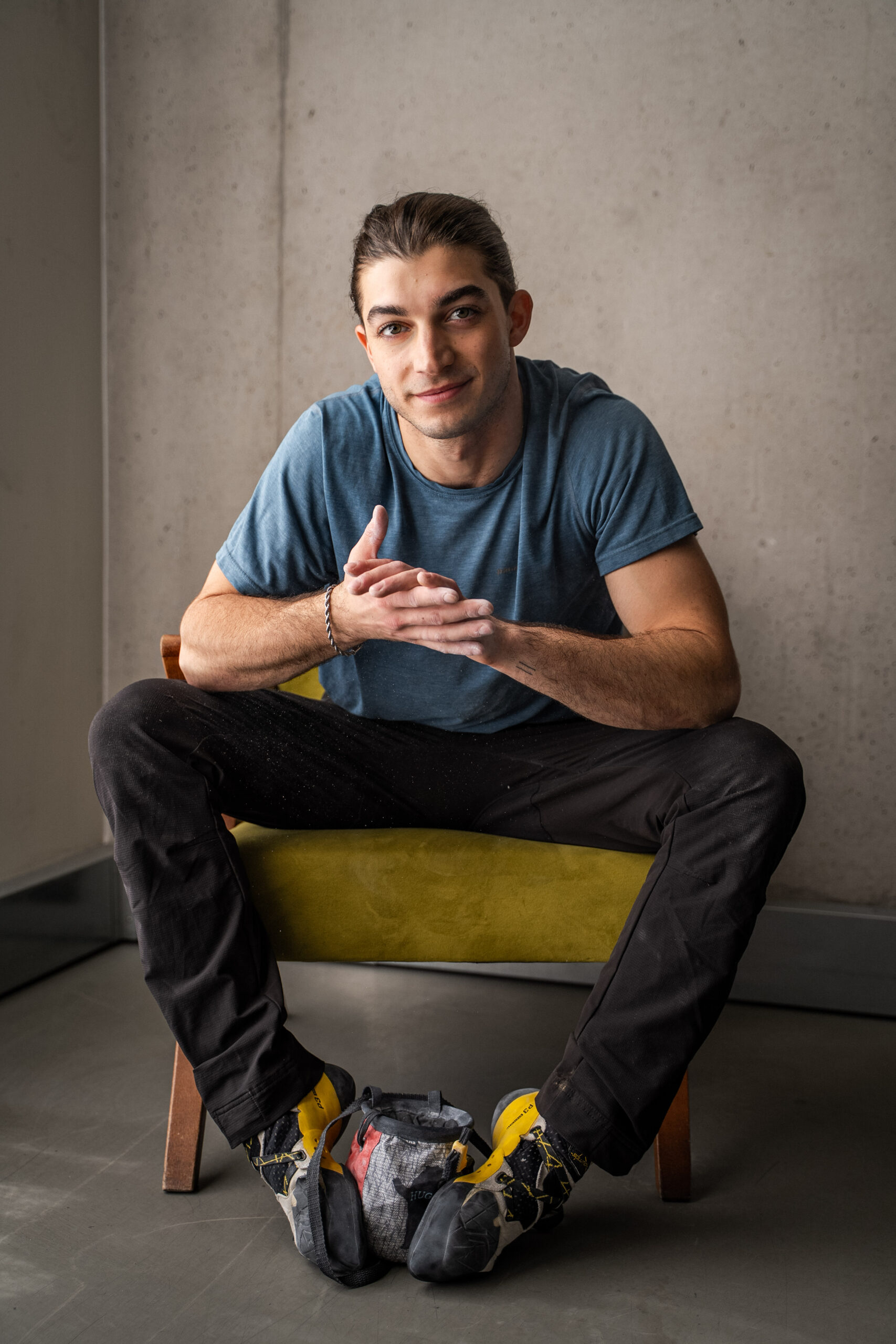
You work as an actor, playwright, director, and also have experience in stunt coordination. How do those different sides of your career inform one another in your creative process?
I think my experience and training as an actor have most significantly shaped my approach to other disciplines, such as writing, directing, and particularly stunt coordinating. I began performing on stage with the Victorian Youth Theatre at age six, and eventually gymnastics and martial arts followed me as hobbies into my adolescent years. Performance, writing and physical training of one kind or another remained consistent pillars of my life. A key part of my personal approach to stunt work, as a performer or coordinator, is the same sentiment as when I’m collaborating as an actor or director. Discomfort is expected; danger is unacceptable. The life of any artist is one that requires adaptability, and it’s immensely hard to be adaptable without a certain degree of comfort at being uncomfortable. In stunt work this line between discomfort and danger is less personal; it’s easier to quantify, identify, and preemptively mitigate. In the world of directing and acting this is something that requires mutual communication, respect, and trust throughout the process. But by understanding various perspectives I’ve learnt how to negotiate compromise and deliver consistent results that satisfy cast, crew, and audiences alike.
Your path includes a major move from Australia to New York, as well as your training at NYU. How has that international journey shaped the way you think about art and storytelling?
I would say that moving to New York and spending time at NYU Tisch opened up this vast ocean of opportunity — not just for education and work, but for collaboration and discovery. I love Australia, and the Great Ocean Road will always be my favorite place on earth, but for the life and career that I’m pursuing there’s no better place.

In Juliet & Romeo, you played Tommaso and also went through intense physical and stunt training. How did that preparation influence your confidence as a performer?
Honestly, I came into the process with a lot of confidence in my ability. I was well informed on what kind of physicality and stunt work they wanted from Tomasso and the rest of the Montague boys, and after talking with the director as well as the stunt coordinator, I knew that it was more than doable. The production team seemed to agree so when our Romeo, played by Jamie Ward, broke his ankle during our stunt training in pre-production, I was asked to work with Jamie as the Romeo stunt double. It was a unique opportunity to study Jamie’s performance and physically carry over his Romeo in choreography. The days where I was jumping between shooting dialogue and stunt scenes as Tomasso, and then doubling as Romeo for the stunt sequences, were certainly a little chaotic in moments. I can tell you that much!
Outside of performance, you are also deeply engaged with causes such as mental health, environmental preservation, and supporting young artists. How do those commitments shape the kind of art you want to make?

Well, conversations around mental health and support of young artists are very much part of Awaiting Evaluation — not only in content but also in its ethos and aspirations. As someone who has struggled throughout their life with their own mental health battles, I know there are certainly moments in my life where I wish a friend, a family member, or even myself, would’ve tried to lead with curiosity instead of judgment.
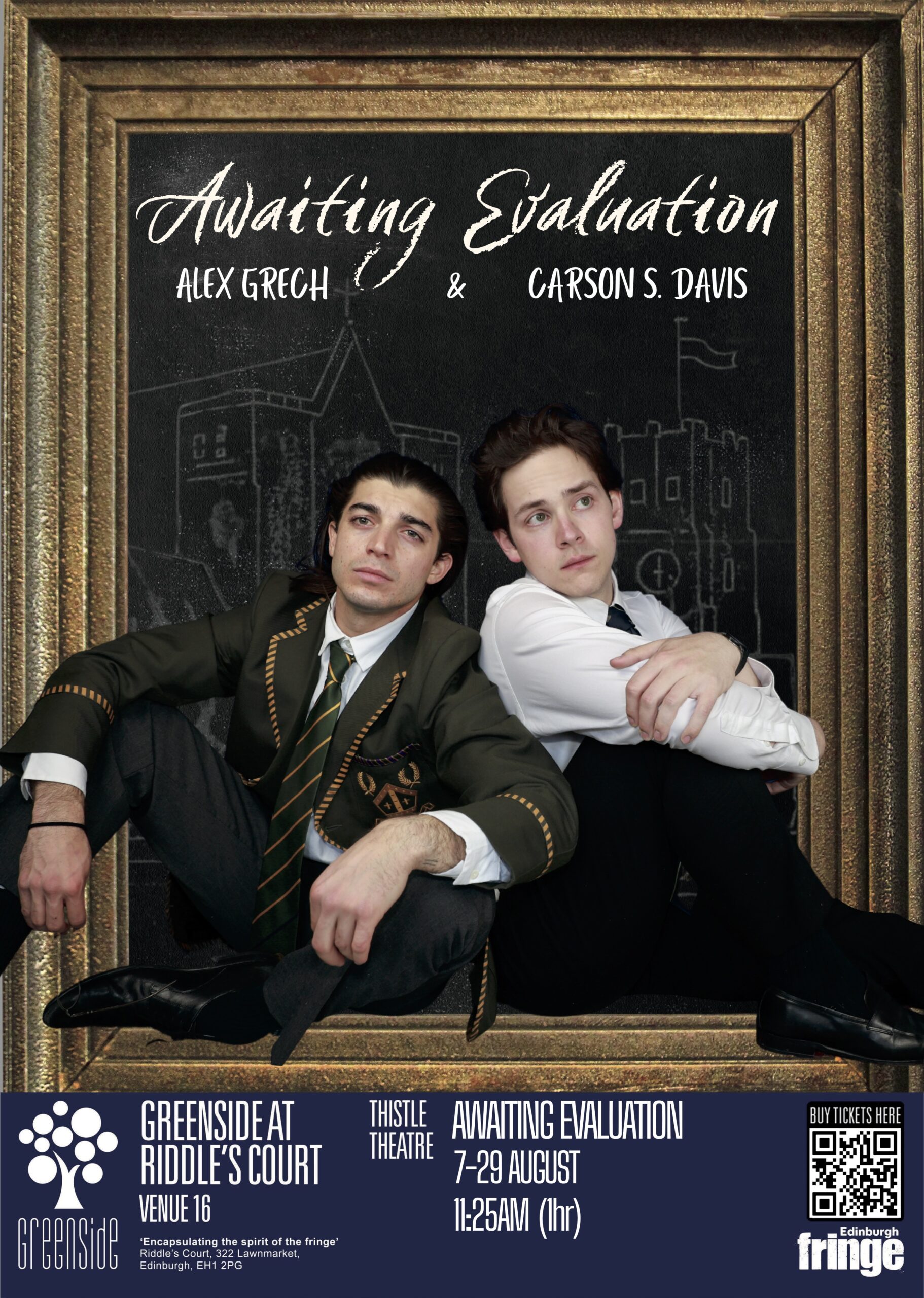
Looking at this moment in your career, between theatre, film, and so many creative pursuits, what kinds of stories do you feel most drawn to telling next?
I’ve got a few things coming up after Awaiting Evaluation has gained enough momentum. My producing partner, Jo Berenson, and I are currently focused on bringing the best show possible to Fringe. And while Fringe is far from the end of the road for Awaiting Evaluation, you can certainly expect more eclectic stories exploring our seemingly innate drive to form and imbue identity.
Follow Alex Grech on Instagram