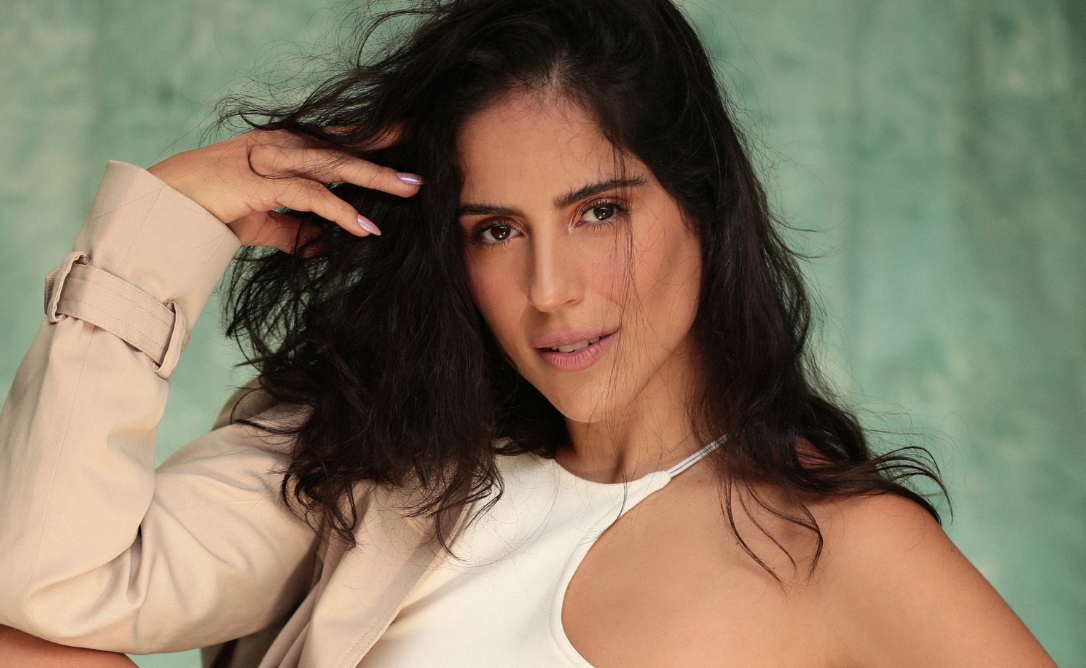
Actress Camilla Camargo celebrates two decades of her career in 2025, solidifying herself as one of the most versatile names of her generation. After concluding the season of the show “Aqui Jazz” in São Paulo, she is preparing for two new challenges in film: the thriller “A Caipora,” in which she plays investigator Débora alongside Kayky Britto and Nill Marcondes, and the musical drama “Coração Sertanejo,” set in the interior of São Paulo state, where she plays Bruna, a producer who bets on a couple of musicians seeking success. With more than 20 shows in her resume and memorable roles in productions such as “Zorro – The Musical,” “Carinha de Anjo,” and “Tudo Igual… SQN,” Camilla continues to expand her repertoire and reaffirm her artistic strength on and off the stage.
Camilla, completing 20 years in your career is a remarkable achievement. When you look back, what was the moment that transformed you the most—as an artist and as a woman?
First of all, thank you! Truly, celebrating twenty years in my career is a very significant and meaningful milestone for me. I think that, when I look back, there are several moments that marked me and transformed me as an artist. It’s difficult to pinpoint the exact moment because I think this transformation happens over the years, with the work, with maturing as a person, with age, with experiences, with exchanges, with other artists, with the research for each character… I think all of this transforms us as artists over the years. As a woman, it would be the same, but I would say that motherhood is a very impactful point that truly transforms any woman’s life.
In “A Caipora,” you delve into a world of suspense and the supernatural. What challenges did this atmosphere present for you as an actress—especially playing an investigator facing the inexplicable?
‘A Caipora’ brought me several challenges. First, because it was my first thriller, and then because I was playing a character with borderline personality disorder, which made me go down a different path. I confess that I didn’t know much about it, and it made me delve deeply into this disorder, which is very difficult. And the film also gave me the experience of being able to go to a real indigenous village and live with them, learn. It brought me many opportunities, and it’s this kind of example that I set that transforms us as people and as artists.
In “Coração Sertanejo,” the atmosphere changes completely. How was this transition to a musical drama, and what touched you most about the story of Bruna, your character?
“Coração Sertanejo” was a different kind of work. Bruna made me relive a bit of my experience as a Radio and TV graduate, since she dealt more with these production issues, as she’s the one who produces the story’s contest. So, it made me revisit that past of mine, back in college.

You’ve been balancing theatrical productions, such as “Aqui Jazz” and “O Livro Vivo,” with audiovisual work. What does the stage offer you that cameras don’t—and vice versa?
I think they’re different languages, right? Theater brings you the live experience: you interact with the audience in the moment, you learn to deal with the improvisations that often happen on stage, and that’s very enjoyable. The live performance is a delightful experience, with that nervous feeling before the show starts. Sometimes a joke works one day and not the next; sometimes the audience reacts in a completely unexpected way. All of that is enchanting. Audiovisual media, especially television, allows you to enter people’s homes, their daily lives. While in theater the audience goes to the show, in audiovisual media you reach out to the people, which expands the reach and the possibility of contact with a much larger number of viewers, especially today with streaming services, which allow films from cinemas to reach these platforms and reach even more people.
There are over 20 shows and several memorable roles on TV and in film. Is there any character that still lives within you, even after the lights go out?
Ah, there are so many, many characters. They’re like children; it’s hard to choose just one. But, of course, there are those that really leave a mark on you, like Luiza, whom I played in “Zorro – The Musical,” my first leading role in a musical, with Jarbas Homem de Mello and directed by Roberto Lage. It’s a role I hold dear. Another was “Caros Ouvintes,” which I also love very much. It was an incredible story, and I had the opportunity to play a very different character, from the sixties, who faced great prejudice for being divorced, smoking, and being a radio singer. There are characters that truly leave a mark, like Diana from “Carinha de Anjo,” which brought me great popularity, especially for working with and for children. They are very beloved characters. There’s also Marina from “Travessia,” where I got to play a woman from Salvador, learn a lot, and interact with the people of Bahia. It’s a less verbose role, which gave me a different perspective. And now Marina from “Aqui Jazz” was a great gift, one of the most delightful characters I’ve ever played, who challenged me to sing jazz and to deal with the dramatic complexity of the character itself. She is a figure for whom I now have immense love and affection.
“Travessia”, “Carinha de Anjo”, “Intervenção”, “Tudo Igual… SQN” — your career mixes drama, action, and productions aimed at a young audience. What makes you choose a project these days?

Several things influence my choice of project: the moment I’m living in, the challenge of that character, how that character distinguishes me from others I’ve played, the overall script, and often, who’s involved in the project… There are many such contexts that influence my choice of work.

Looking at the current entertainment landscape, how do you see the role of women in the industry and the importance of telling stories from new female perspectives?
I think it’s incredible. I think the market has opened up to women. I see more women in productions, in directing, in high-level positions, as protagonists not only in front of the cameras but behind them, and I think that’s fundamental, it’s incredible. I think the female gaze brings another perspective that is fundamental, that is necessary in the work, and it’s very good to see this scenario changing over the years. May more and more women be protagonists of their own stories, may we be able to tell the stories of these women and have them, both in front of and behind the cameras, shining.
To conclude, if you could summarize these 20 years in one word—and choose another to define the future—what would they be?
I think to summarize these twenty years, it would be “resilience.” And another, to define my future, it would be “determination.” I don’t know if my future could be just one word, but I think, in reality, it would be “determination,” “focus,” and “faith.”
Follow Camilla Camargo on Instagram