
In the third and final volume of the saga created by Mandi Castro, Irmãos Lafayette transports the reader to the vibrant Brazil of the Diretas Já movement, amidst crowded streets, voices in turmoil, and a country in search of democracy. Combining adventure, fantasy, and historical events, the work marks the epic conclusion of the trilogy, following Martim and Nina on their most challenging journey: confronting enemies who wish to manipulate time while grappling with discoveries that transform not only the past but also their own destiny.
Mandi, throughout the Lafayette trilogy you almost turn time into a character. In the saga’s conclusion, what does time represent to you—a villain, an ally, or a mirror of our own choices?
I see time as an important supporting character in our lives. An ally to help us walk together, but one we shouldn’t depend on.
The twins Martim and Nina live between eras and dilemmas, but in this latest book it seems that the reader is the one who travels the most—between memories, feelings, and the history of Brazil. What did you learn about the country while writing this journey between fantasy and reality?
In my research for my third book, the history of Brazil showed me a crucial point: the struggle for democracy.
The setting during the Diretas Já movement portrays a vibrant Brazil, full of voices and hope. Why did you choose this historical moment for the trilogy’s conclusion—and how does it relate to the present?
The fight for democracy will always be a relevant and necessary topic to revisit.
Nina takes on a more prominent role in this part of the story. Would you say that her maturation also reflects a shift in the female perspective on time, power, and destiny?
Nina’s maturation is strongly influenced by time, power, and destiny, but even more importantly, it reflects the maturation of a young woman seeking self-understanding.
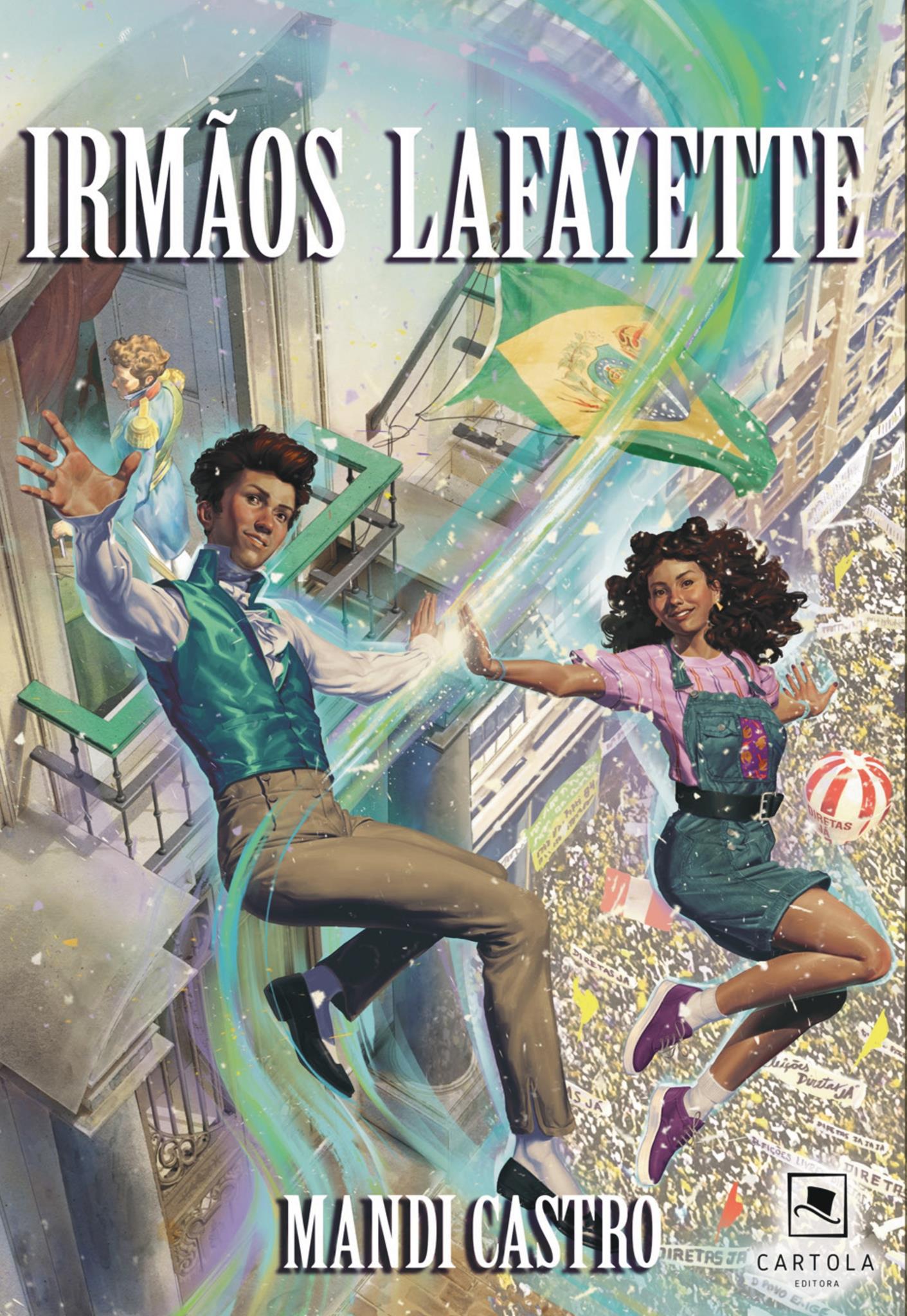
Martin’s “time ring” is a powerful symbol—it represents control, power, but also loss. Is there something of that object in you, as an author, when dealing with the challenge of writing about time and the end of a saga?
I’ve always wanted a time ring! The possibility of traveling through time, seeing past history unfold, reliving historical moments, is something I would love to experience.
His work combines historical fiction and fantasy with sensitive, yet critical writing. How did he balance the historical rigor of the Diretas Já movement with the creative freedom of an adventure and magic narrative?

Something I really enjoy about writing fiction is the poetic license I can take, especially with historical facts. I don’t get hung up on exact dates, but rather on the events and the people involved.
“Irmãos Lafayette” marks the end of a cycle. What was the most emotional—or painful—moment of saying goodbye to the characters who have been with you for so long?
The impossible romance between Martim and Estefania is a narrative thread that left me sad to see come to an end; they are such beloved characters.
You are one of the most active female voices in Brazilian fantasy literature. Looking to the future, what legacy would you like your work to leave—for women writers and for readers who believe in the power of imagination?
May my works bring strength to women to dream and to write.
Follow Mandi Castro on Instagram