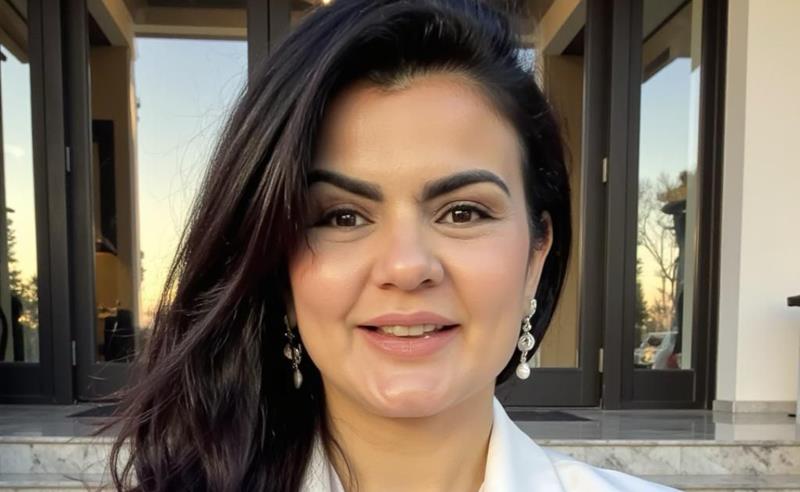
In a landscape where debates about mental health often fragment between purely technical views and unmediated religious discourse, Lianny Grimm stands out uniquely. A Christian psychotherapist with a background in Law, she develops a practice that doesn’t stem from a competition between science and faith, but from the understanding that both can dialogue when the goal is to promote genuine emotional balance.

Her work is based on the premise that human suffering is not limited to symptoms. For her, each person arrives at the office with a complex architecture: neurological patterns, accumulated experiences, memories that condition reactions, and, at the same time, spiritual convictions that shape perception and meaning. Ignoring any of these dimensions would be, in her words, to reduce the person themselves.

Lianny’s approach doesn’t rely on quick fixes. Neuroscience, which guides her clinical practice, offers a map of the body’s responses to pain, anxiety, fear, and relationships. Faith, understood responsibly, functions as a central axis of meaning, capable of reorganizing choices, strengthening identity, and sustaining change processes that demand more than just technique.

“Taking care of the mind is also taking care of what sustains the mind,” she often says. This phrase summarizes her method, which doesn’t remove God from the therapeutic process, but also doesn’t use spirituality as an emotional shortcut. Instead, it integrates two lenses: one that observes the functioning of the brain, and another that illuminates existential direction.

Lianny rejects both the scientific reductionism that disregards the spiritual dimension and the superficial use of faith as an anesthetic for deep pain. For her, emotional maturity arises when a person understands what happens within themselves and, at the same time, revisits their beliefs honestly. There is no healing without truth, and there is no truth without a willingness to face what has been avoided for a long time.
This stance contrasts with contemporary trends that transform mental health into an instant product or faith into a narrative for quick consumption. Lianny takes the opposite approach: she works with technical rigor, spiritual sobriety, and ethical commitment. Her purpose is to build a form of care that treats the mind without distorting faith and strengthens faith without neglecting the body.
In her practice, science and spirituality do not compete for space. They complement each other to reveal different layers of the same human reality. It is in this encounter that Lianny sees the possibility of consistent, lasting, and holistic emotional reconstruction.