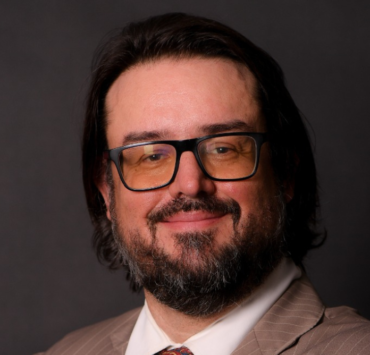
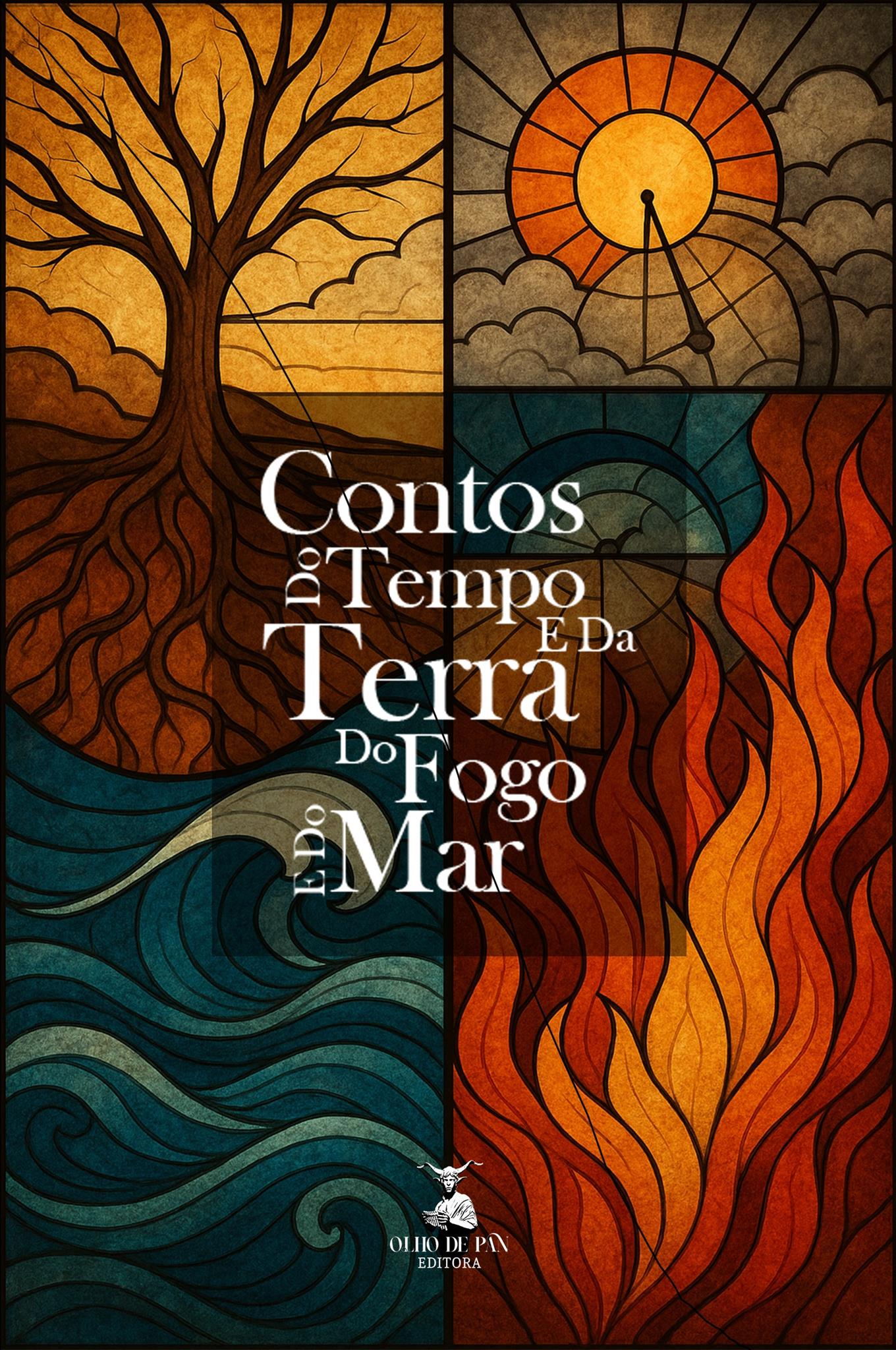
In Tales of Time and Earth, Fire and Sea, Ricardo Pegorini guides the reader on a journey that unites the real with the mythical, exploring how human experience intertwines with the four elements of nature. With 30 narratives that range from subtle humor and philosophical reflection to lyricism and social critique, the author composes a poetic mosaic about memories, losses, epiphanies, ancestry, and reinvention. From the transformative power of fire to the profound silence of the sea, Pegorini offers a hybrid work that delves into the fragility and grandeur of existence—and invites the reader to discover, in each story, a piece of themselves.
The idea of elements as metaphors — how did it originate?
This idea was born almost without me realizing it. When I started collecting the stories, I noticed that many of them revolved around the forces of nature, not just as a setting, but as driving forces for the characters. Earth, fire, water, and time are, above all, forces that shape life—and also propel the imagination. Gradually, I realized that they were also lenses through which I viewed the world. So there wasn’t an initial “project”: there was an intuition. And, when I realized it, the collection already breathed on its own, anchored in these elements.
The extraordinary in everyday life — where does this sensitivity come from?
Perhaps it comes from habit—or necessity—to look at the world seeking a new perspective, a new interpretation not as obvious as the first reading suggests. I’ve always been fascinated by the moment when something that seems to be a membrane of an event, an entity, or an absolutely ordinary situation breaks and reveals a marvelous truth hidden within. The flood, the rain, the silent street… all of this holds a narrative power. Life is extraordinary when we allow it to be. I just try to decode this murmur that normally goes unnoticed.
Personal experiences turned into fiction?
Yes, several—though diluted, disguised, reinvented. Some stories were born from small episodes that affected me: a conversation I overheard, a gesture that moved me, an old memory that insisted on returning. I never do literal transposition, but I’m sure that every writer writes with what they carry within them. There are stories there that revisit places from my childhood, very intimate fears, losses that taught me how to walk. Fiction is a kind of emotional translation: each text is a window into the soul of its author.
The “emotional atlas”—what is the biggest challenge in giving the book unity?
The biggest challenge was accepting that unity wouldn’t come from theme or style, but from the value of perspective. Each story is a territory, and I need to trust that the reader will, at some point, realize that these territories explored in the book belong to the same map. The metaphor of the “emotional atlas” helped me: I didn’t want chapters, I wanted affective countries, each with its own climate, geography, and light. Finding this invisible stitching was perhaps the most meticulous work of the editing process.
Which element represents your current stage of life?
Today, without a doubt, the crossing—or rather, the sea. I’m in a moment of creative and personal displacement. There are new projects, paths opening up, risks I need to take. The sea represents me because it has this ambiguity: it is promise and it is uncertainty. And I think that creating—writing, composing, dreaming—requires accepting this constant movement. A beautiful metaphor for life in its broadest and most adventurous sense, isn’t it?
Balancing literary rigor and creative freedom in short texts — how?

It’s almost a breathing exercise. The short story demands precision, but it also demands space for the unspeakable. I try to work with language that is both economical and poetic, a writing style that doesn’t over-explain, but also doesn’t leave the reader adrift. It’s about finding combinations of terms and expressions that don’t normally go together and that, now placed in the same sentence, corrupt the bureaucratic and lazy meaning of the words that compose them in their routine usage.
The importance of competitions and anthologies in their career path.
These recognitions were important because they offered me a kind of dialogue with the world. When one of my texts is selected or awarded, I don’t interpret it as a medal, but as a sign that my voice has found resonance. This gave me the courage to continue, especially during periods when writing seemed like uncertain territory. It taught me to see the creative process with more generosity: writing is about persistence. And anthologies also motivate us to write more frequently. They are great springboards for motivation.
What do you hope the reader will take away from this experience?
I hope I have stirred something within the reader that will lead them down a path—perhaps the familiar one—but with a different pace, a different perspective, a different attitude. If the book manages to create that moment of pause, reflection, affection, and connection between the things of life in a creative way, then I feel the journey was worthwhile. For me, literature is this: a way of making small maps so that people can find themselves—or reinvent themselves—a little more.
Follow Ricardo Pegorini on Instagram