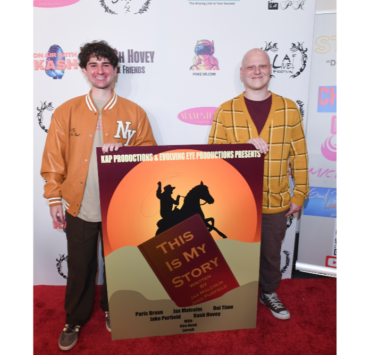
Kash Hovey reaffirmed his impact on the independent film scene as the Kash Hovey and Friends Film Block returned to LA Live for its seventh consecutive year at Film Fest LA. Produced by Hovey and Michelle Beaulieu, the event brought together filmmakers, actors, digital creators and industry voices for a night marked by premieres, creativity and community energy.
As host, Hovey guided the audience through screenings, conversations and special moments that highlighted both established names and emerging talent. His presence helped shape the evening’s collaborative spirit — a celebration of storytelling at its core.
Hovey also celebrated new achievements during the festival. His series On Air with Ka$h won two awards: Best Podcast Host and Best Web Series, adding to the success of a program that has already welcomed guests such as Tim Burton, Paula Abdul, Mikey Madison, Whitney Cummings and Rob Lowe.
Beyond his work as a podcast host, Hovey continues to expand his acting career with roles in Plastic Daydream, Undateable John, Rebound, Jack and Cocaine, A Unified Theory of Love and Cognitive. He also uses his platform to speak openly about mental health, serving as a Celebrity Ambassador for the Heart Safe Neighborhood Foundation.
With a growing presence across film, digital media and live events, Kash Hovey continues to shape the voice of modern independent cinema — and Film Fest LA once again showcased the depth of his creative influence.
This is the seventh year of the Kash Hovey and Friends Film Block. When you look back on this journey, what still moves or surprises you about seeing so many independent artists sharing the same space?
When we started this in 2018, the industry was in a completely different place. I was still at WME, I had produced and acted in a couple of features, and there was this major creative shift happening. Web series were emerging, short form content was taking off, and podcasts were only beginning to find their voice. I had done a project with Funny or Die that screened the year before at Film Fest LA at LA Live, and that experience inspired the very first Kash Hovey and Friends.
What surprises me most today is how the industry has finally caught up to what we were doing organically back then. We were just a group of friends and artists bringing music videos, shorts, pilots, and whatever we were creating into the same space. There was no roadmap. Yet every year the event grows, the work becomes more daring, and I am consistently moved by the incredible voices that gather in that room.
It is truly the community that moves me. Seeing artists who met at those early blocks now thriving in their careers, collaborating, and supporting one another is the most rewarding part of all of this.

You often say the event is about artists coming together to share stories that move and inspire. Was there a moment during this year’s edition when you felt that message come alive right in front of you?
Absolutely. This year, when the lineup came together and we were all in the theater, I felt it immediately. The energy was aligned. Everyone was present, engaged, and genuinely rooting for each other.
What struck me was how seamless the evening felt. Each filmmaker and performer had their moment. It became a shared space of acknowledgment, celebration, and respect. I could literally watch new friendships forming and new collaborations unfolding as the night progressed.
That is the heart of the event for me: connection. Giving artists a space where their work is seen and valued. This year embodied that more strongly than ever.

On Air with Ka$h has welcomed guests like Tim Burton, Paula Abdul, Rob Lowe, and Beverly D’Angelo. Which conversation changed you the most, and why?
My conversation with Beverly D’Angelo, without question. Beverly has been a close friend for years, and she is someone I have always admired. She carries an extraordinary amount of history, both personally and in the industry, and she brings a depth and groundedness that is rare.
That episode was one of the first times I opened up about growing up in this world, about the expectations and projections that come with being connected to certain people, and about navigating highs and lows from a young age. Beverly created such a safe and honest place that I found myself sharing things I had never talked about publicly.
It was a transformative moment for me, both as a host and as a person. It reminded me that real conversations, the vulnerable ones, are where connection and healing happen.

You have spoken publicly about mental health and personal loss, including the passing of your cousins Lisa Marie Presley and Benjamin Keough. How does this commitment to healing shape the conversations you bring to the show?
I have always been very private about my family. Even as a kid, people around me knew who I was related to, but I did not understand the weight of that or how others projected things onto me. Some even tried to get close to people in my life through me, and that started very early.
With Lisa and Ben, we shared many different chapters together, and those moments stay with me. I started the show about a year after Ben passed, and when Lisa passed, I was at a major turning point in my life. Before I ever spoke about any of it publicly, I needed time to sit with everything.
For many years, especially after my first two features, I did not mention my extended family publicly at all. I wanted to build my own identity, my own career, and my own legacy. But the unexpected losses brought a lot of reflection, especially because of the sudden media attention surrounding them. With Ben, I waited two years before saying anything publicly because I needed to internalize the grief. I had survived a lethal arrhythmia at twenty two and had an out of body experience, and that fundamentally changed the way I looked at life. I needed to process all of that privately.
With Lisa, the attention was unavoidable. People I knew and even people I did not know reached out. It was overwhelming. I did not feel obligated, but I felt that the most respectful thing to do was acknowledge it. I did not want to be held in anyone else’s narrative. I just wanted to speak truthfully and handle everything with care. Doing that gave me a sense of closure I did not realize I needed.
When I started On Air with Ka$h, I was not trying to tell my entire story. I was simply speaking from a place of authenticity and reflecting on situations I had lived through, including things I had witnessed from a young age in Hollywood. Lisa had really looked out for me during those early years. She had been through similar experiences at the age I was, and she took me places, introduced me to people, and helped me understand the world I was stepping into.
Today, everything is different. With the internet, people can search your name and decide they know your whole life. But the truth is that many of us grow up in circumstances we are still trying to understand. So on the show, I try to bring an honest perspective shaped by what I have lived through. The experiences, the losses, the lessons, and the journey of finding my own identity while navigating other people’s expectations.

If On Air with Ka$h can be a space where someone feels understood or seen, then that comes from everything I have walked through.

You navigate film, podcasting, producing, and advocacy. When you think about purpose, what connects these areas for you?
For me, storytelling has always been a way to understand the world. As a kid, movies were both my escape and my education. I would watch Back to the Future and suddenly want to have adventures, or watch Jerry Maguire and become fascinated with the business side of Hollywood. Film opened my imagination to possibility.
Acting, producing, and podcasting are all extensions of that same curiosity and desire for connection. Acting is therapeutic for me. Producing allows me to collaborate and bring the groups vision to life. The podcast creates a space for honest conversations that I hope will resonate with someone when they need it most.
The thread is connection. If a role, a film, or a conversation helps someone feel inspired or less alone, then that is the purpose, and that makes everything worthwhile.

Your acting credits include Plastic Daydream, Undateable John, Justice for Hire KASH, and Rebound. What new creative territory are you eager to explore?
I am stepping into a new chapter right now. Along with acting, producing, and podcasting, I recently took on the role of heading the voiceover department at PKA, which feels like a full circle moment. After college, my first job was at WME in the voiceover department, and that introduced me to the business side of the industry.
Creatively, I want to explore roles that push me into emotional and psychological territory I have not played yet. I want to deepen what I have learned from my own experiences. I am also excited about developing material that blends genres or challenges traditional formats. The industry is evolving rapidly, and I want to be part of the next wave of storytelling.
The Film Block blends established names with rising talent. What advice would you give to someone attending for the first time who hopes to build a career like yours?
Be authentic, stay curious, and surround yourself with collaborators who inspire you. This industry can feel overwhelming, but the most important thing is to keep creating. Make short films, record content, start a podcast, write something, experiment. Every project helps you find your voice.
And do not underestimate the power of community. Many doors opened in my career simply because I showed up, supported other artists, and built real relationships. Festivals like the ones I’ve been involved in are not just screenings. They are opportunities to connect with people who may become lifelong collaborators. And above all, remember that everyone’s path is different. Trust yours. Your voice is your greatest asset.