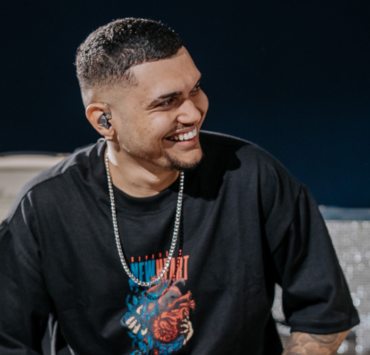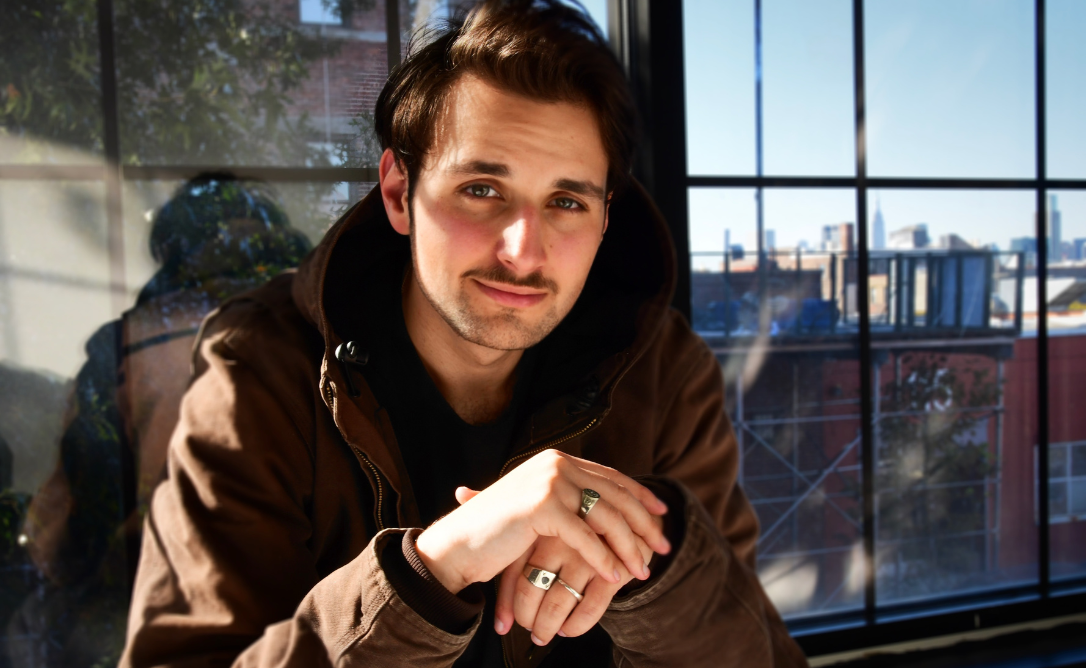
Max Bartos stands out as one of the most dynamic young voices in American performing arts — a multifaceted talent who moves seamlessly between musical theatre, film, and original music. Best known for originating the role of Darren in Sing Street on Broadway and off-Broadway, he has built a career defined by resilience and artistic intensity. After surviving a life-altering bike accident at age 11, Max discovered his musical abilities and embarked on a path that includes pre-Broadway workshops, film roles alongside stars like Adam Sandler, and an expansive body of original work ranging from operatic rock to modern indie. Now, as he prepares to release his upcoming album Waiting At The Crossroads and kick off a national tour, Max continues to affirm himself as a bold, inventive, and rapidly rising creative force.
You survived a life-changing bicycle accident at age 11, which ended up revealing your musical gifts. Looking back now, do you see that moment as trauma, rebirth, or the first chapter of something that was always meant to happen?
Honestly, it was all three: trauma, rebirth, and a plot twist. At 11, I definitely didn’t think, “Ah yes, this is my superhero origin story.” But looking back, it was the first moment life shoved me toward music. When you can’t bike, can’t run, and can’t do much else, you start getting curious about the guitar in the corner. And suddenly the thing that felt like it broke me actually healed me. So, in hindsight, it wasn’t just an accident; it was an unexpected opening number.
You originated the role of Darren in Sing Street, both Off-Broadway and on Broadway — an experience very few artists ever have. Which part of you still lives in Darren, and which part of Darren still lives in you?
Darren is the part of me that’s still permanently stuck between big-dreamer confidence and “Wait… what are we doing again?” chaos. I think he still lives in me in the way I approach new projects: with “Sure, why not?” energy. And the part of me that still lives in Darren? Probably my sense of humor — that instinct to find the joke in the moment, even when the moment is a complete disaster.
You’re currently helping create new musicals, including adaptations of The Invisible Man and Spoon River Anthology. What happens inside you when you decide a story deserves to become musical theatre? What’s the spark?
If a story has characters who are feeling something too big, too strange, or too beautiful to stay inside regular dialogue, that’s when I know it needs music. It’s always the moment a character practically begs to sing… before I’ve written a note. And sometimes it’s not even a spark; it’s more like a polite tap on the shoulder from the universe saying, “Hey, this one’s yours. Don’t mess it up.”
In film, you’ve acted alongside names like Adam Sandler and Paul Logan, while also being part of independent projects. What shifts in your artistic mindset when you move from stage to camera? Is there a different “Max mode” for each medium?
Oh absolutely. Stage Max is like, “Project! Commit like your life depends on it!” because the nearest audience member is six rows away and you need them to feel it. Film Max, on the other hand, whispers. He’s like, “Relax. Blink slower. Don’t scare the camera.” Onstage I’m painting a mural; on camera I’m drawing a single, extremely detailed eyebrow hair. The shift isn’t about personality, it’s about scale. But both versions of me just really want to tell the truth… one just does it a bit louder.
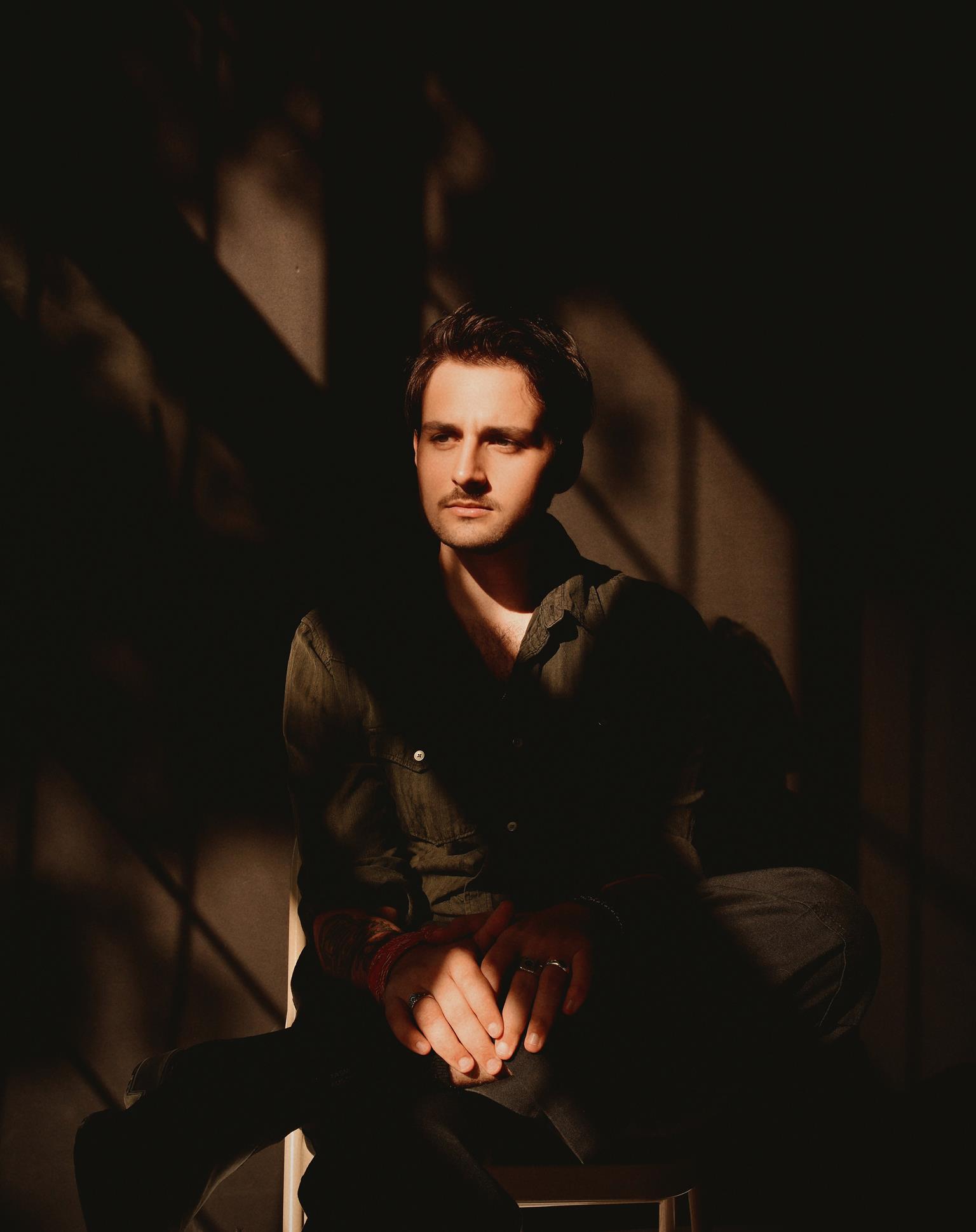
As a self-taught multi-instrumentalist and producer, you have a rare creative autonomy for someone your age. At what moment in the process do you feel that a song finally becomes “alive”?
There’s always this moment when the song stops feeling like a task and starts feeling like a creature with its own opinions. Usually it’s when the melody suddenly clicks with the lyric, or when I accidentally play something I couldn’t repeat if you paid me but the song remembers it. It’s like Frankenstein but with fewer torches and villagers: one second it’s a pile of pieces, and the next it sits up and starts breathing. And sometimes it judges me. Songs can be rude.

Your upcoming album, Waiting at the Crossroads, carries a title that suggests decision, change, and multiple paths ahead. Which personal or artistic crossroads inspired this project?
The title came from that weird life phase where every path feels simultaneously right and terrifying. I was juggling theatre, film, writing, producing, and being a functioning human being all with the grace of someone trying to carry too many things at once. The album comes from the feeling of being pulled in different directions but realizing the waiting itself is the important part. The crossroads isn’t where you choose to go, it’s where you actually figure out who you are before you do.
Between boxing, magic, and building Lego creations, your hobbies are quite unique for someone rooted in musical theatre. What do these activities reveal about you that your audience might never guess from the stage?
Boxing shows that I’m weirdly competitive with myself. Magic reveals that a small part of me still believes the world runs on wonder and misdirection. And Lego proves that I like building things only to take them apart and build them better- which, now that I think about it, is exactly how I approach developing new songs and characters. Also, these hobbies make me seem way more chaotic than I actually am. Or maybe they reveal that the chaos is the point.
Follow Max Bartos on Instagram