


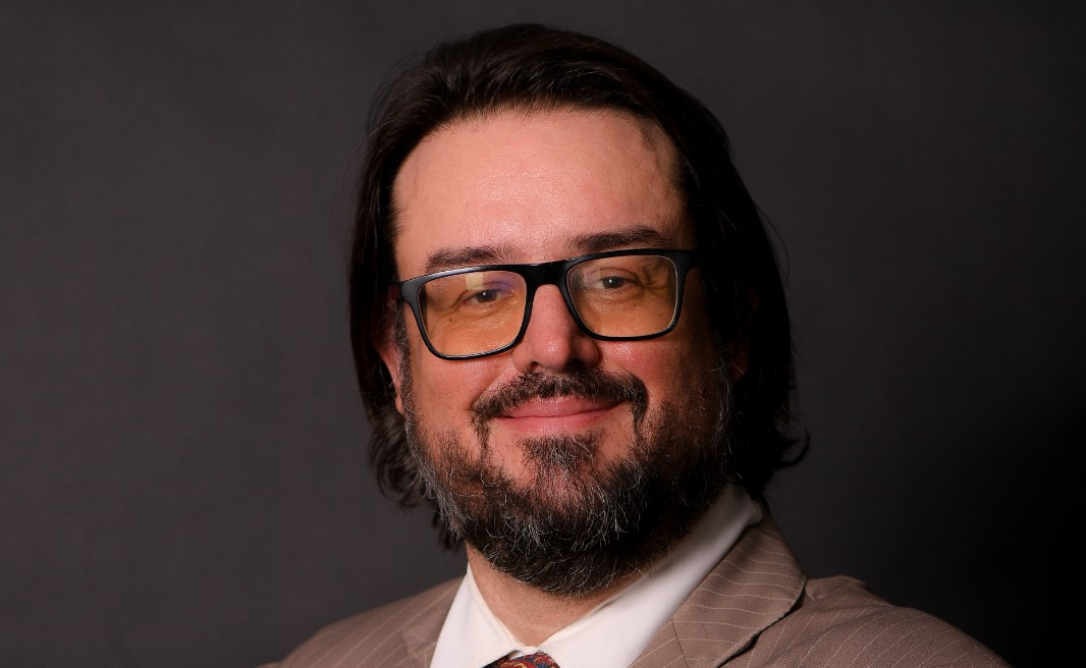
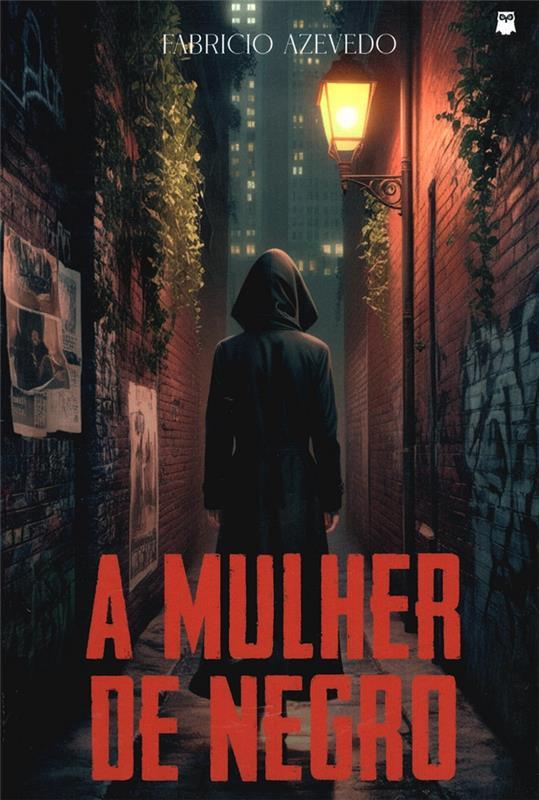
In The Woman in Black, Fabricio Azevedo transforms São Paulo into a stage where hybrid creatures, ancestral shadows, and secret hunters silently share the same territory. At the center of this urban fantasy, we follow Lucius—a nurse marked by the gift of sight and a turbulent past—who finds himself pursued by an entity extinct for centuries, triggering a hunt that threatens to shatter the fragile balance between the human world and the subterranean universe of the alapados.
Its protagonist, Lucius, is someone who carries gifts, traumas, and diagnoses. What came first in your creation—the man or the mystery? At what point did you realize that your story needed to be told from such a human and vulnerable perspective?
Lucius plays two major roles in the plot. The first is his ambiguity, raising doubts about whether things are really happening as narrated. Another important point is that he introduces the reader to a reality separate from our own, hidden from us by illusions. So he is that borderline person. He sees what no one else sees, but people see in him someone strange, who has plunged into a parallel world.
The work presents São Paulo as a stage for beings who live “in plain sight.” Why was this city, with its grandeur and chaos, the ideal setting to house the “allapados” (a term used to describe people who live in seclusion)? And how do you see the relationship between the real metropolis and this fantastical São Paulo that you have constructed?
São Paulo is already fantastic. It alone has a larger population than Portugal and an area larger than a country like Singapore. To me, few places could conceal a population of hidden beings and, even more so, integrate them into the city’s society and economy. The creatures even pay taxes! Complaining, of course. I didn’t “invent” a city, I just increased the population of a place that’s already incredible with some “little monsters.”
The narrative is non-linear and shows the same event from different points of view. What attracts you to this way of telling stories? Was it a challenge to maintain coherence while simultaneously surprising the reader with each change of perspective?
Our culture today is punctuated by information in “small packages,” like short TikTok videos. You scroll and see completely different things. I wanted to reflect this “accelerated consumption” of information. I also wanted ambiguous characters, who aren’t “know-it-alls” or invincible. Constantly changing the point of view makes the narrative dynamic and leaves the reader a little disoriented, until they reach the point where the pieces fit together. Maintaining coherence was difficult and required reading and rewriting several times to avoid plot holes, and I had to throw a lot of things away.
Joana and Lilith, two characters who arrive to “turn the key” in Lucius’s journey, have a striking strength. How did you develop these complex and powerful female figures? Did any woman in your life influence their creation?
I can say that I owe almost everything I am to women. Starting with my grandmother, my mother, and my aunts. All of them strong women, to whom I owe a great deal. I also greatly admire my sister and several women with whom I’ve had relationships. I didn’t want the traditional role of women who would be “saved” by the hero or would only be the romantic interest. My characters have a life of their own.
The story blends fantasy, social commentary, and biting humor. How did you find the balance between such different—and yet so human—worlds? Where does this desire to juxtapose fantasy and reality within the same narrative thread come from?
For me, fantasy is one of the genres that speaks most about humanity. Lord of the Rings is about corruption through power, Star Wars is very much about politics and authoritarianism, Dune is about “oil”—in the books it’s the “mélange.” Even with robots, laser beams, or dragons on top, fantasy is an expression of the author’s reality, a reflection of the cultural environment. I just intertwined the real and the fictional a little more closely.
You incorporated references to songs, urban legends, history, and real figures. Did any of these references have a special significance during the process? Is there something hidden in the book that you hope readers will discover over time?

I’ll give you a spoiler: In this book and the next ones, I mention the results of soccer games. Whoever figures out which game it is discovers the exact date when the scene takes place. I hid A LOT in the book. I think this adds layers and opens up various possibilities for interpretation for the reader. I have a predilection for using song lyrics, chemical elements, and literary characters.
The book addresses inequality, prejudice, and what lies behind the city’s facades—deeply relevant themes today. How did your experiences as a journalist and researcher influence this social layer of the work?
I often say that it took me 51 years to write this book. Every text you write touches on all your experiences, even if indirectly. I’ve worked in newspapers, press offices, and today I serve in a court. I’ve always read many newspapers and magazines and followed the news. That’s in addition to reading a lot. All of this ends up bringing me ideas that I weave into my texts. Journalism is a profession that, by its very nature, demands a lot of critical thinking, seeing reality from more than one perspective.
The Woman in Black inaugurates a saga, and the sequel, Joana and the Fifth Goddess, already has a release date. What can you reveal—without spoilers—about the expansion of this universe? What new things will readers find in this continuation?
I can tell you a few things: People will encounter old characters, old gods will place their bets, urban legends will enter the game, and there will be a major plot hole. To understand it, you’ll have to read the sequel.
Follow Fabricio Azevedo on Instagram