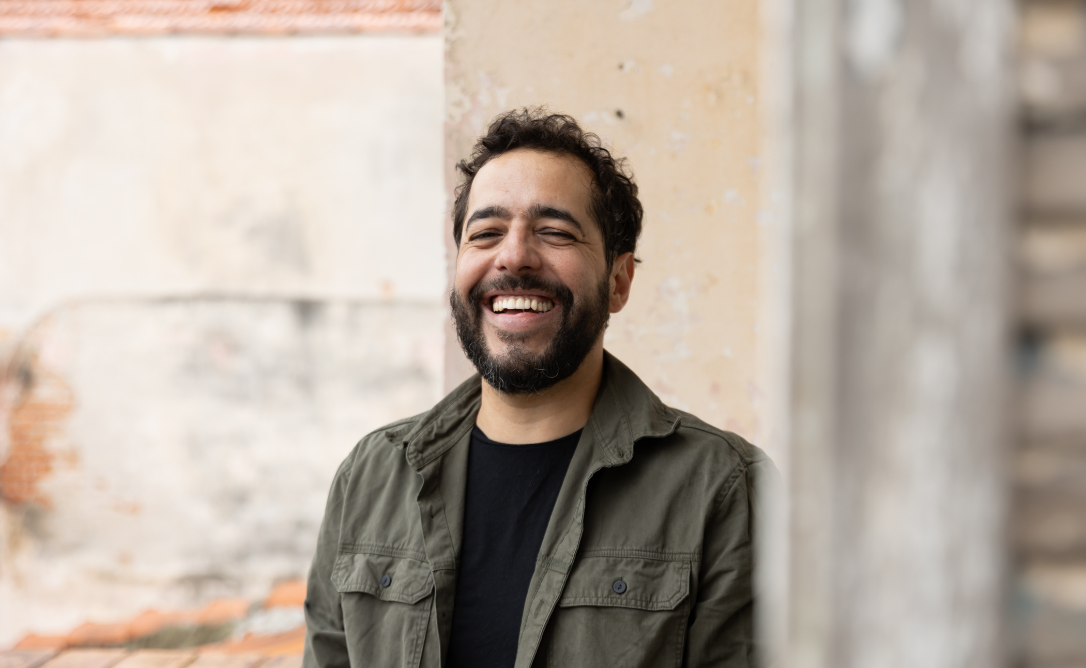
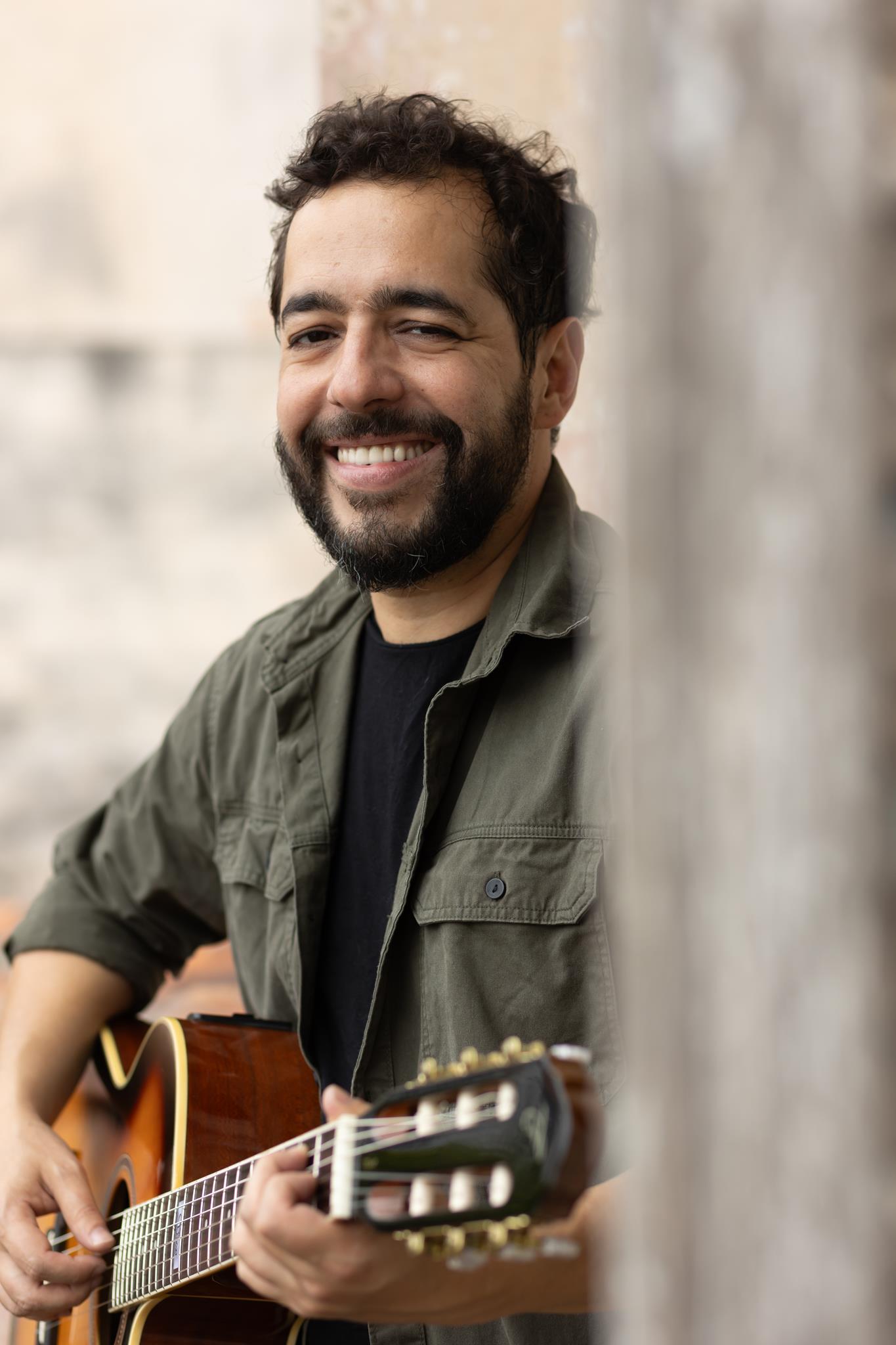
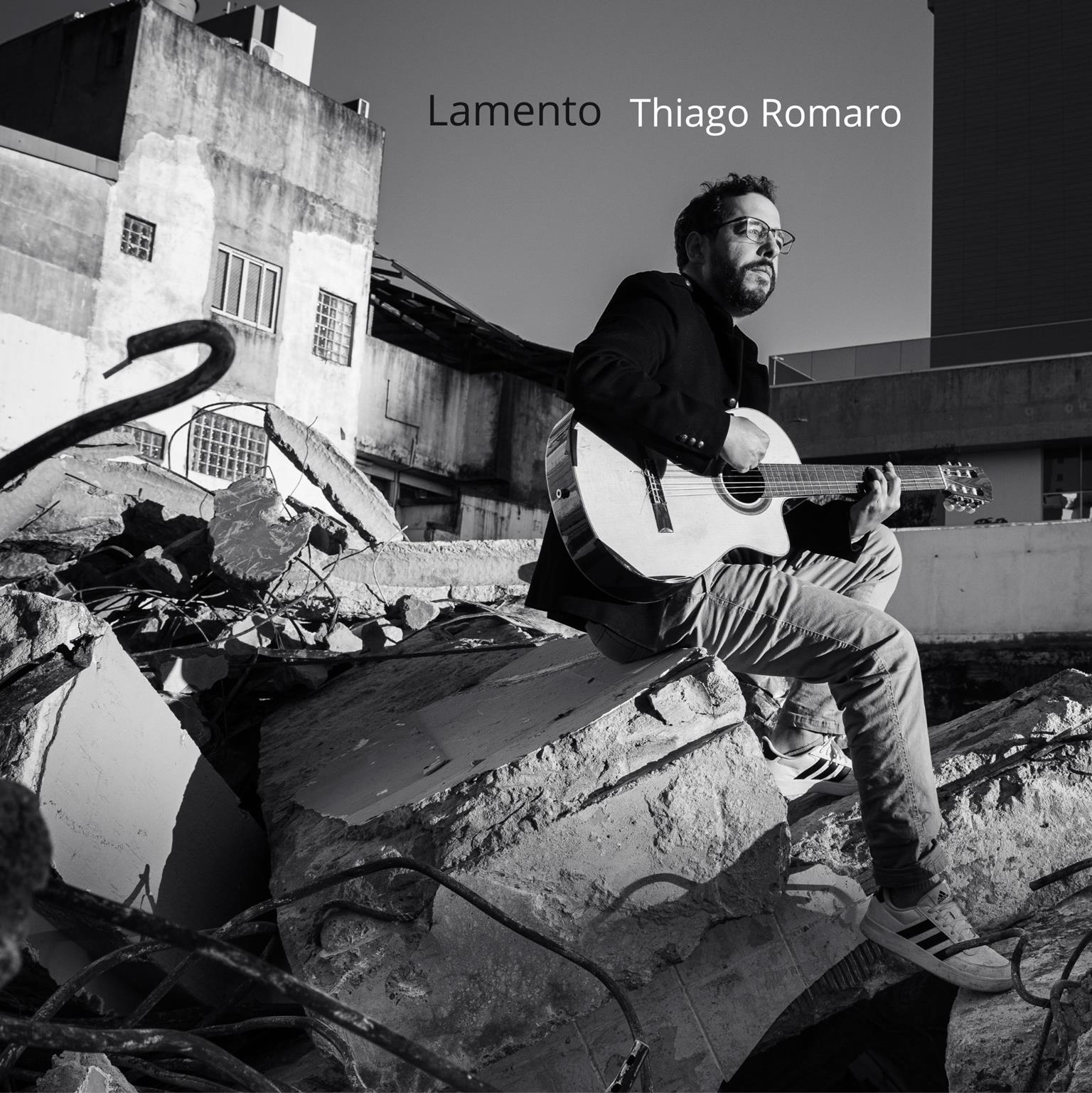
Singer-songwriter Thiago Romaro released the single and music video “Lamento” in November, available on all platforms through Marã Música. The song marks a moment of artistic synthesis in his career: melancholic, yet pulsating with hope, it revisits the artist’s youth, his first bands in the 90s, and the belief that the future would be brighter. Between nostalgia and critique, Romaro transforms personal memory into a reflection on a world that has become more unequal, more violent—and yet still capable of producing beauty.
Written amidst news about the wars in Ukraine and Gaza, “Lamento” (Lament) was born on the guitar and grew with the power of words, inspired by protest ballads and the folk aesthetic of artists like Bob Dylan. Recorded with an organic sound at Estúdio Mínimo, the track brings together Thiago on vocals and guitar, Márcio Lugó on arrangements, Arthur Kunz on drums, and Malu Maria on backing vocals. The result is a nostalgic, almost timeless rock song that echoes songs created in times when people still sang for peace.
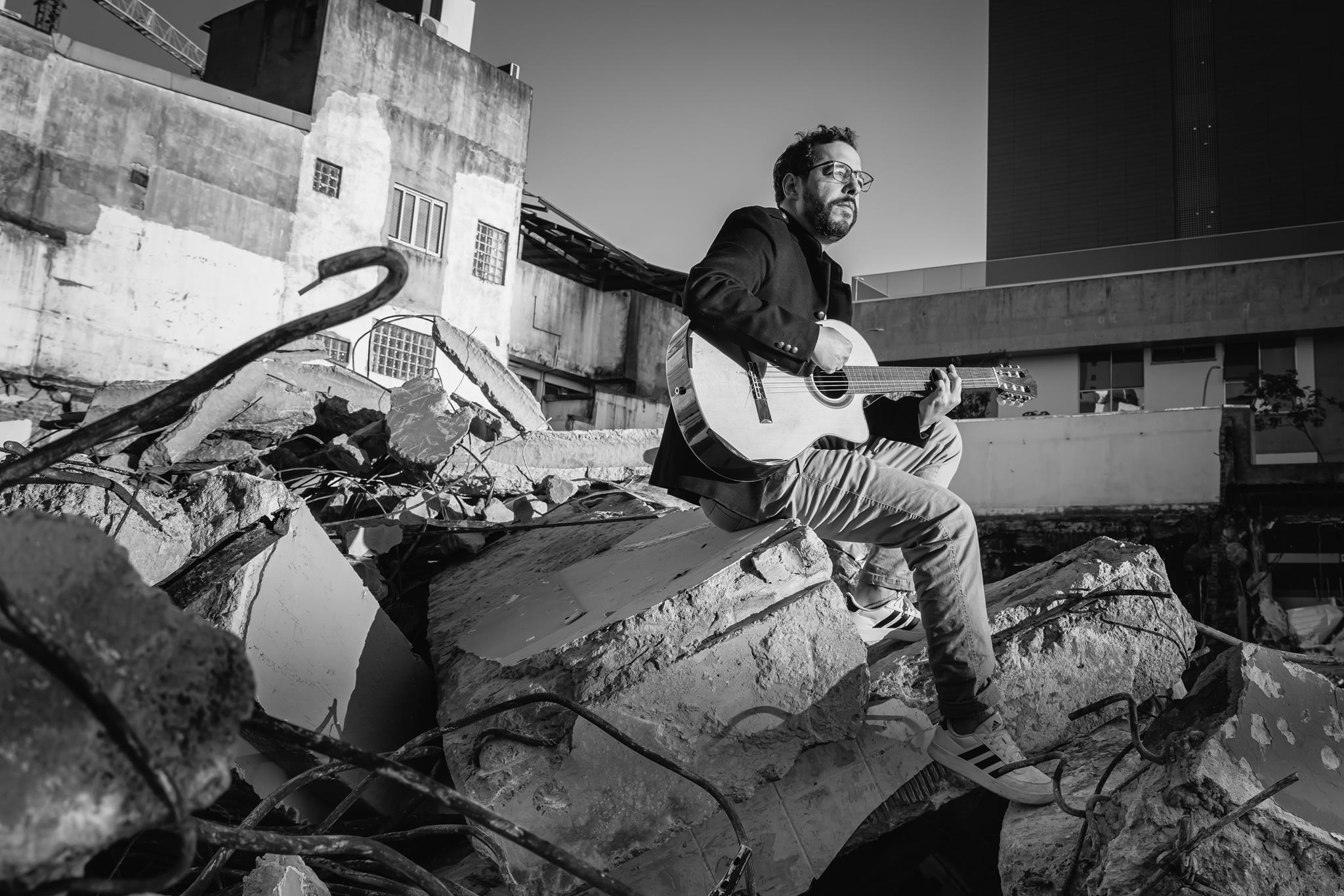
The music video, directed by Thiago de Mello, expands the symbolism of the song by depicting the ruins of the city and the mansion where Romaro lives, both on the verge of disappearing under urban expansion. Filmed with technical simplicity and a strong emotional charge, the video mixes images of real demolitions, performance scenes, and moments of spontaneity. “Lamento,” therefore, becomes more than a song: it is an intimate portrait of loss and persistence, an invitation to find poetry even in scenes of rubble—internal or external.
In a sentence, youanddefine“I’m sorry“like a muSad, but hopefulwosa. At what point do youandrealized that the canhereontheIt would not just be a venting of frustration, but alsoandin a gesture of resistanceandncia?
The day I started writing “Lamento” (Lament), I sat down with my guitar in my lap, started humming the melody, and the first line that came out was “The world is at war, but we’re going to the streets, another carnival has arrived.” I didn’t yet know what it would become, but it was a day I woke up, got ready to go out to carnival, and the news in the newspaper was talking about wars. That made me uneasy; I needed, I really needed, almost like it was vital, to write, to talk about how things aren’t as I dreamed they would be, but I didn’t know, and I still don’t know if it was something I wanted to write as a protest, as a venting, it was a lament, really. When the song was ready, I started showing it to people close to me, and they told me what they felt when they listened to it, and that’s when I realized I had a song I wanted to record, that it had feelings that weren’t just mine, but that other people identified with, and that I wanted to share it with more people.
The song was born from a longing for a world that seemed impossible.iold in the 90s. If youandIf he could talk to his teenage self, forming his first band, what would he say to him about the future he has found?
I’ve been thinking a lot about this question, what would I say to my teenage self? And I think in the end I wouldn’t tell him anything, because he truly believed that humanity was moving towards a more beautiful place, that there was still, of course, a lot of struggle, but that humanity seemed to have learned from its mistakes and that now it was about repairing injustices, sharing wealth, and that music, the rock band, would be a way to help with that. So, I think that if I met him today I would just say, go ahead, follow your dreams and ideals, because, to have hope, history can’t be written. He imagined a world different from the one we have now, but I also imagine a different world for future generations. We fight, dream, and keep vibrating because we have hope, and for that, there can’t be spoilers. So, that’s it, I think I would leave him without an answer so he can find his own.
YouandIt mentions that, despite the wars, rubble, and misinformation…hereOh, we can still sing. Whichandthe role of muDoes life still save lives in times when the world seems to be falling apart?
Music, and not only music, the arts in general, I believe have the power to heal, to transform. There’s a concept from psychoanalysis, from Freud, which is sublimation. Freud explains art as a product of this concept. Basically, sublimation consists of transforming unconscious content that we repress to avoid suffering into something else. For example, someone who loses a loved one in a car accident and creates an NGO to raise awareness about drunk driving, the person manages to give meaning to that pain and transform it into something positive, and thus manages to cope better with their own grief, even without knowing it. So, thinking along those lines, composing a song about something that is hurting us helps us move forward, and in the case of the arts, this transcends the artist because it is capable of touching other people and from there helping us to move on. In this sense, music saves, music heals.
The music video was filmed in demolished houses and an old mansion.theabout to turn into prandDio. How this landscape transformshereit reflects the sensationherethe idea of a future that seemed promising and, in a way, slipped away.theyou?
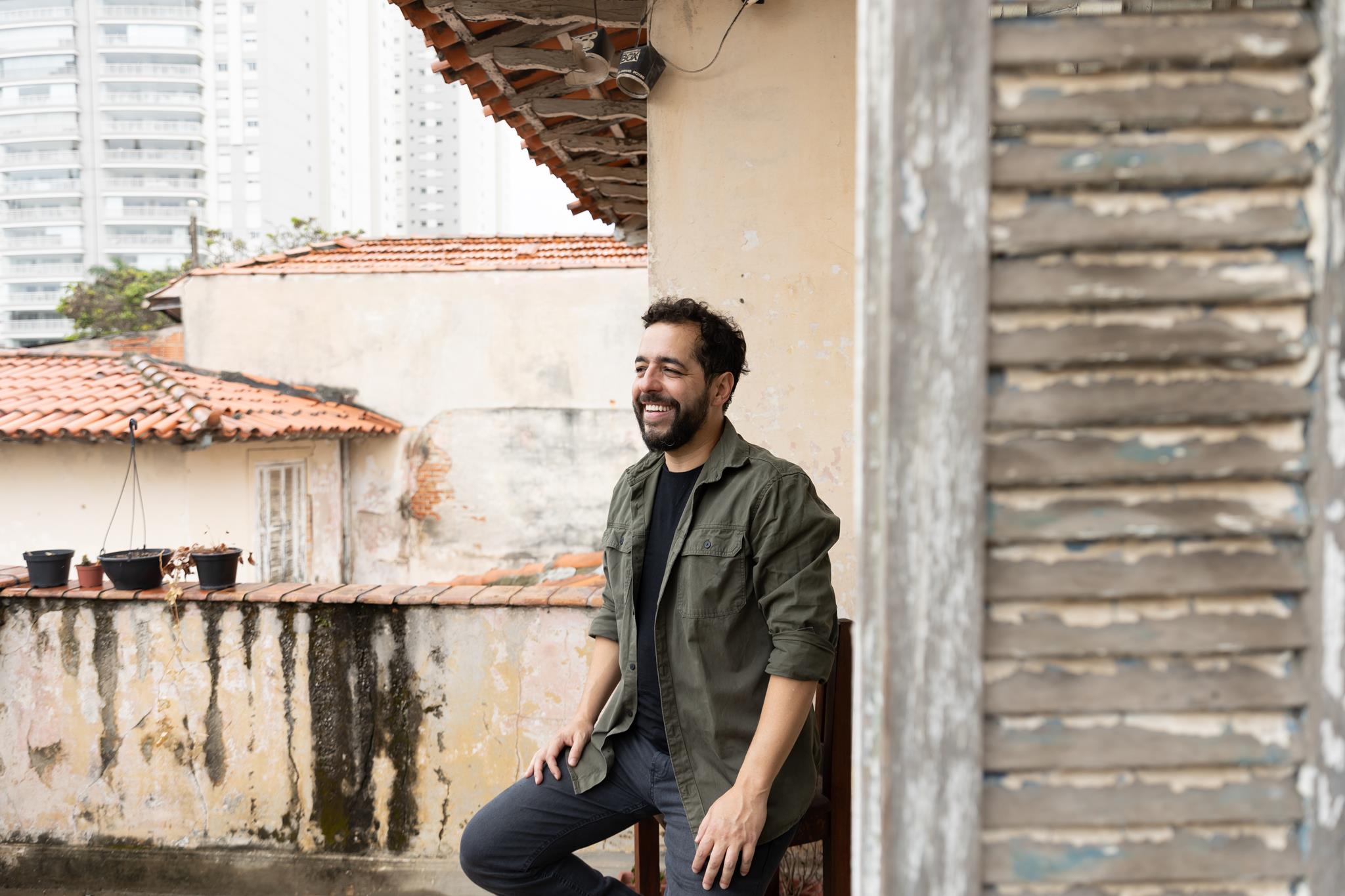
I live in São Paulo, in Vila Mariana. After I composed “Lamento,” I sent a demo version to Thiago de Mello, my friend who is a photographer, and he suggested we make a music video. I agreed, and he asked me what I wanted to tell in the video. That day I left home, and the block in front, which used to be full of terraced houses, was destroyed; it looked like war rubble, the kind you see in newspaper photos showing bombings. The house where I live, an old mansion with a haunted look where many people also live, is sold and will be demolished next year to make way for an apartment building. That’s when I came up with this idea: to tell the story of this house while also leaving an air of, okay, let’s move on. I find demolitions very sad because if you stop to think about it, one day someone built a house there, dreaming of living there with their family. Then time passes, the person gets old, dies, another family comes and occupies it, and so on. There are many stories, many experiences, until one day real estate speculation decides it’s over, and another skyscraper goes up. I’m not very critical of verticalizing the city; I think that, often and with the right studies, it can even be necessary. The problem is the method, the profit at any cost, the pressure put on people who often don’t even want to sell and leave. But anyway, it was this feeling of neighborhood destruction happening in front of me, which probably won’t solve housing issues in the city, that made me want to document this slice of the world.
A estandThe aesthetics of folk and protest ballads evoke names like Bob Dylan and the…iThe Live Aid ritual. In what way did these…imbolos influenced their visionthethe art and politicsiethics—and whichandthe protest that“I’m sorry“Try doing it today?
The intention behind “Lamento,” or the very physical sensation I was feeling while writing the song, is more of a lament than a protest. It’s a somewhat autobiographical song that speaks of how the world hasn’t turned out to be what I imagined it would be, what they promised us when we were young and naive. But, despite that, we can keep singing, and if it hasn’t happened yet, it doesn’t mean it never will. There are many battles, and humanity still has a long way to go, I believe. I think composers like Bob Dylan, who also sang about a world with wars, offer this example, this will not to surrender, not to give up, to say, despite everything, we will still create beautiful things, period.
Youandwrote amusica while via noticompanies about the UcrtheIn the United Kingdom and Gaza, while carnival echoed through the streets. Feeling collective joy in the face of a world in conflict produces guilt, alivia or something else difficultieasy to name?
I think I’ll answer that question by talking about a couple of friends I made a few years ago. It was 2022, I had a job opportunity in Portugal and decided to go. When I arrived in Lisbon, I rented a room in a temporary housing complex where many foreigners lived—people from various places, other Brazilians, a Dutchman, a group of digital nomads from Latin America, and also Igor and Irina, who were refugees from Ukraine. She left before him because, theoretically, being a man, he would have had to stay and serve in the war, but he didn’t want to and found a way to cross the border and meet her. They chose to live in Lisbon. They were a very young couple in their early twenties. One of the first nights I was there, we went to a street party, and they were dancing, singing, and having fun. Two refugees, far from home, their country being destroyed, people they love dying, but they could, without letting go of the pain, find moments to laugh and have fun in their new home. That was a lesson for me. What’s perhaps unacceptable is ignoring what’s happening in the world, remaining silent in the face of barbarity, but going out into the streets and being able to say “despite everything, we are here” is also an act of political resistance. And I think, going back to your question, that having fun in the face of a world in conflict generates all of that at the same time; it generates guilt, it generates relief, and it generates things that are difficult to name.
The video is born from an urgandncia: entering a demolished site with almost no time to ask permissiontheo. Vocandfeels that art,theSometimes, too.andDoes it have to be a clandestine act in order to survive?
Art can’t ask for permission; art has to kick down the door, because art is the act of transforming, and those who want to transform encounter those who want to preserve, and it is these people who hold the rulebook. To film a music video in the ruins of a demolished house, you can’t just ask whoever demolished it; art is clandestine by nature.
A muSica talks about a“world that ntheit was“Which onestheo, for youand, signs that a new world may still be—and where youandfinds hopewToday?
I find hope in the people I meet along the way: those making music, those taking ships to deliver food to Gaza, those dancing and celebrating Carnival, those who, despite the setbacks, continue to believe that the world can be different. Hope isn’t just a concept; hope is action, and the world is full of people taking action. That’s what keeps me believing.
Follow Thiago Romaro on Instagram