Full of positivity and marked by an atmosphere that blends pagode, jazz, pop, and R&B, singer-songwriter Vandin releases the single “Tô de Boa” on December 12th, available on all music streaming platforms through Marã Música. The track arrives as a necessary breath of fresh air amidst the pressures of daily life, transforming into song the artist’s journey of persistence and his vision that happiness and success should not stem from pressure, but from lightness and gratitude. Created during a personal turning point, the song expresses Vandin’s rediscovery of his own strength and his decision to believe in his dreams without losing his center—a smooth, modern manifesto full of identity, reflecting both his history and the new chapter he is inaugurating in his career.
“Tô de Boa” (I’m Feeling Good) was born as a manifesto of lightness in a world full of pressure. At what point in your life did you realize you needed to transform that feeling into music?
The moment I managed to break through that bubble of pressure, I felt like it was a mission to show that regardless of where you’re from, you need to believe that things will work out, you just need to always be grateful and keep believing.
The track blends pagode, jazz, pop, and R&B—a combination that’s not common in the current scene. How do these styles relate to your identity and the story you want to tell as an artist?
All these styles are present in my life, they all touch me in different ways, and when I combine them in a song, I feel a perfect blend. In a society where you see so much of the same thing, with this versatility, people will always see Vandin bringing this mix of sensations and feelings into a single song.

You mentioned that the single emerged from a significant moment, when you rediscovered the strength to believe in your dreams. What was that turning point?
From a young age, I was always very hardworking and pushed myself to achieve excellent results. However, when my efforts seemed to have no effect, I began to question why things weren’t going as expected. I entered a vicious cycle of searching for answers. The turning point came when I stopped caring about the reasons for things not working out and started to be grateful for everything I was going through, embracing it as a learning experience. Soon, I realized that I would achieve all my goals with faith and determination.
The song is about gratitude and recognizing small victories. What personal achievements are you most grateful for when you look back on your journey so far?
Without a doubt, I am very grateful for having received wisdom at such a young age. That was the starting point for pursuing my dreams. Today I know what I want, I know where I want to go, and I know what I have to do. In terms of material achievement, it was being able to get my parents out of renting and give them a house.

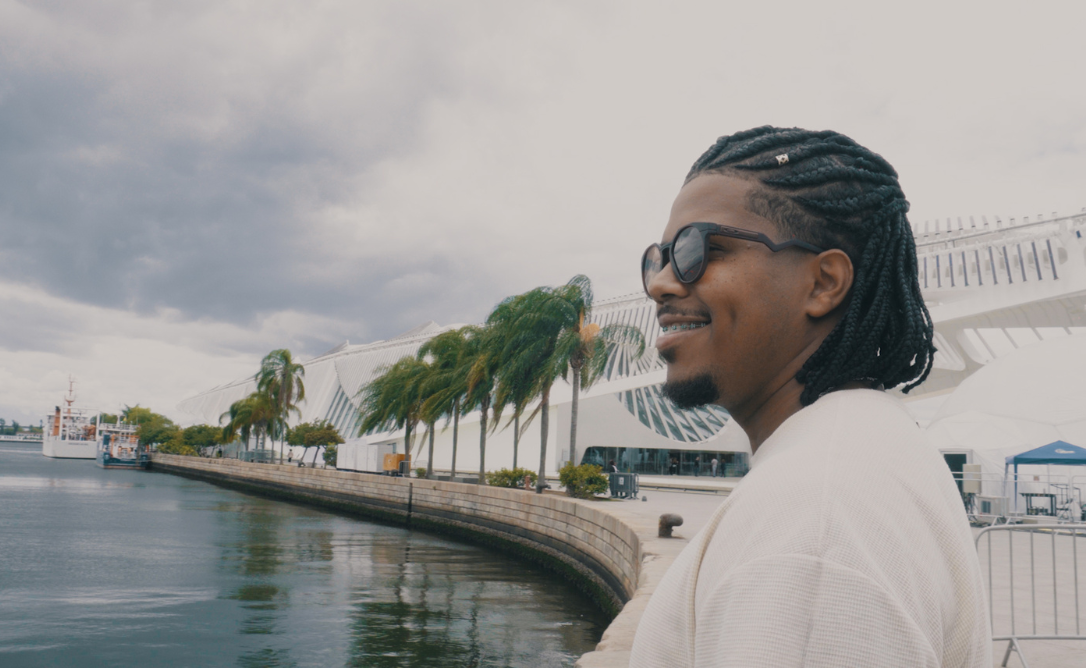
In the visualizer, recorded in Praça Mauá, there’s this idea of connecting music to urban life and the fast pace of daily life. How do you see this relationship between art, city, and movement?
Art is the street. It’s on the street that we learn life’s lessons and adapt to each day. Therefore, the goal is to be closer to those who truly feel this pressure and identify with it.
You grew up in a humble neighborhood, and that shaped who you are. In what ways do your origins continue to influence your artistic creation and your worldview?

Knowing about my past experiences and where I come from motivates me to give my best every day. Today, I feel I am a resilient person because of my experiences and the experiences of those close to me. So, giving my best will always be a legacy of my roots.

His international influences—such as Usher, Ne-Yo, and Jason Derulo—appear in the melodic sensibility of his music. What have you learned most from observing the trajectory of these artists?
What impresses me most about these artists is their ability and versatility to reinvent themselves for decades, in addition to delivering high-quality work. This is exactly what I strive for; I want to deliver authenticity, quality, and performance to my audience.
“Tô de Boa” marks the beginning of a new chapter. What can fans expect from you after this release? Do you already feel like you’re entering a new phase as an artist and as a person?
This release marks the realization of a dream; in future releases, I aim to deliver even more connection and performance. Next year, we are already preparing an EP that will feature a lot of performance and promises to bring something different to the national scene.