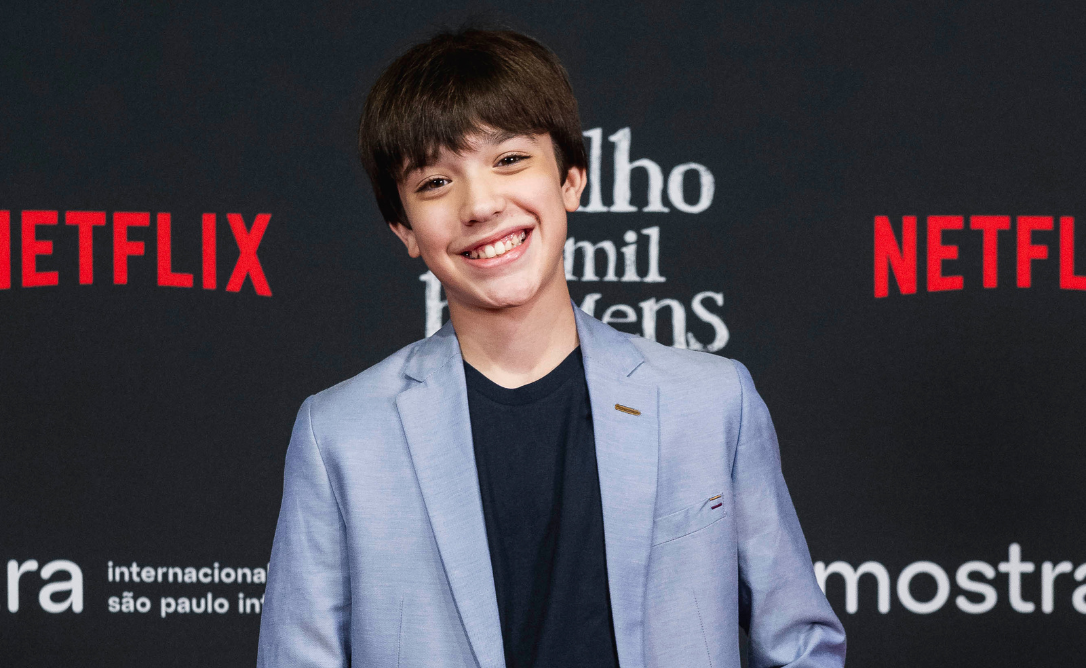
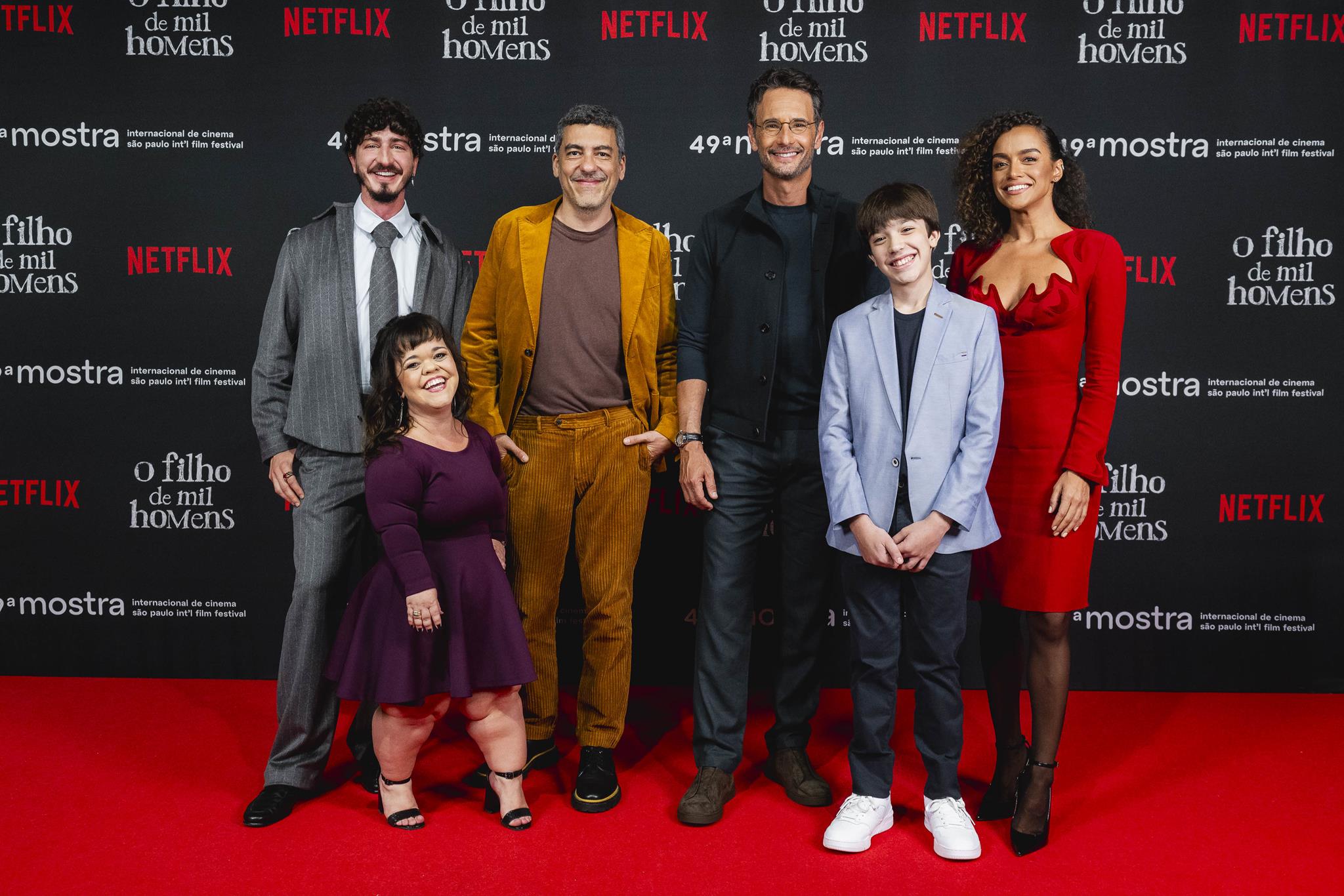
At just 13 years old, Miguel Martines takes a decisive step in his artistic career by making his Brazilian film debut as one of the protagonists in *O Filho de Mil Homens* (The Son of a Thousand Men). In the film, directed by Daniel Rezende, the young actor plays Camila, an orphaned boy taken in by Crisóstomo, a character played by Rodrigo Santoro, in a sensitive narrative about affection, belonging, and transformation. Filmed in Búzios (RJ) and Igatu, in Chapada Diamantina (BA), the film marks the first cinematic adaptation of a work by the writer Valter Hugo Mãe and reveals a new talent in Brazilian audiovisual media in a role that demands emotional maturity and on-screen commitment.
Miguel, making your film debut as a protagonist at just 13 years old is something very special. How did you feel when you found out you had been chosen for the role?
It’s impossible to even explain the emotion I felt. My agency always makes a video call to announce who’s been accepted, and when that call came, we were trembling, laughing, and crying. It was my dream! I never imagined I’d be accepted, since I have no experience. I thought it wasn’t possible.
Your character, Camilo, experiences delicate and emotionally charged situations. What touched you most about his story?
The power of transformation! Camilo had a closed-minded, perhaps prejudiced, personality, which he judges at the beginning of the story. Not because of him, but because of the environment he was raised in and the things he learned in life—I think even because of his own suffering. But contact with Crisóstomo gives him a new perspective on the world. That was beautiful!
This was your first experience on a film set. What surprised you most during filming?
I think when the clapperboard rings and they say “action,” everything becomes kind of magical: the characters arrive, the emotion comes! Another incredible thing is that anything is possible on a film set. They put lights where they need them, injuries appear, and even when a character dies, it looks like they really died!

You had to juggle school, acting studies, and filming. How did you manage that routine, and what did you learn from it?
During filming, I took classes with teachers from the production team and followed the same curriculum as my schoolmates. I maintained the same school routine: I did assignments, tests, classes, all the activities. School activities were always at the opposite time from filming—if I filmed in the morning, I studied in the afternoon. And everything worked out! I had the full support of the film production team, the teachers who mentored me, my school, and my mother. I learned that you need to be organized and committed, but that with willpower, everything works out!
Acting alongside an experienced actor like Rodrigo Santoro must have been remarkable. What did you learn from watching and working with him?
Rodrigo is incredible! We always joked around and had so much fun. Being by his side was a learning experience. I got to see how he concentrates on scenes, how he prepares for the character, how he respects the crew, and how he listens to the director. Every detail was a learning experience. I didn’t feel the weight of him being who he is; I felt safe being by his side.
In fact, everyone in the cast and crew made me feel safe to do the scenes. It was great! A privilege to be able to film with Rodrigo and such special people.
The film was shot in very different locations, such as Búzios and Chapada Diamantina. Which of these settings impressed you the most and why?

Both places are beautiful! Chapada Diamantina seems like it was designed: the rocks, the houses, the paths… But what struck me most was the blue house on Búzios beach. That house in the middle of a deserted beach, with a marvelous landscape, is impossible to forget.
Even at such a young age, you had to deal with strong emotions on set. How did you prepare yourself emotionally for filming?
We had a month of preparation. Our acting coach was Estrela, Estrela Straus, and she’s a wonderful, very sensitive actress. We started to experience the emotions of each character and also to create bonds between the cast. Our director was also there and provided all the security and support. I “lent” my body to Camilo, and he was in a lot of pain, so it was just a matter of letting it come. I also had the support of my mother throughout the filming and of my psychologist.
After this film debut, what do you dream of doing as an actor in the future — on or off screen?
I want to record more! And more, and more! I don’t know what the future holds for me, but I want to continue living experiences like the one I had!
Follow Miguel Martines on Instagram