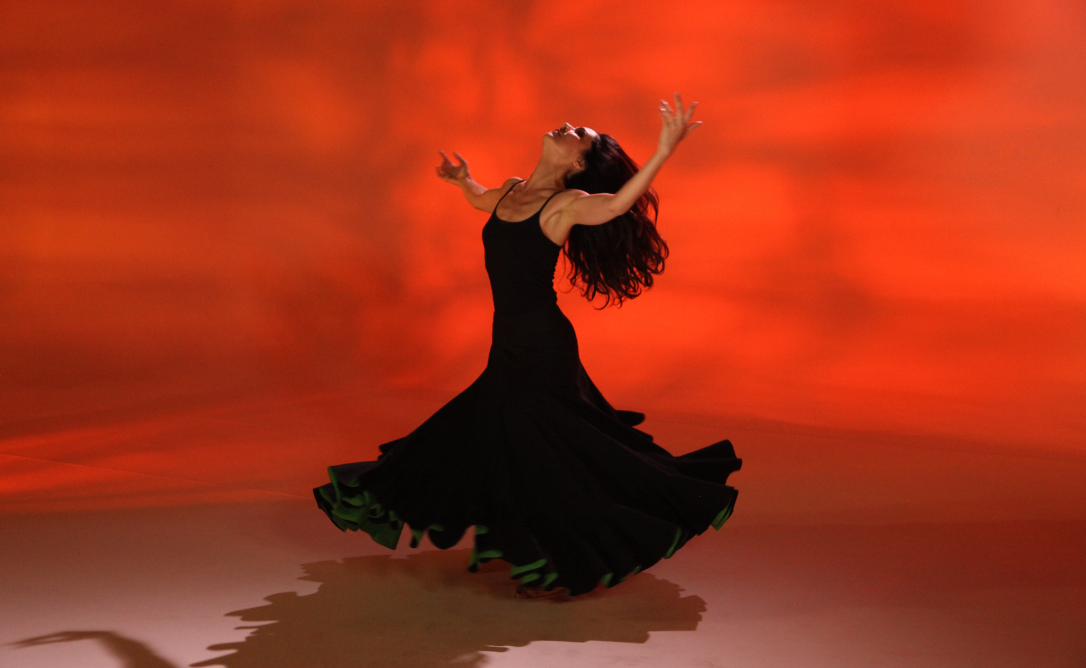
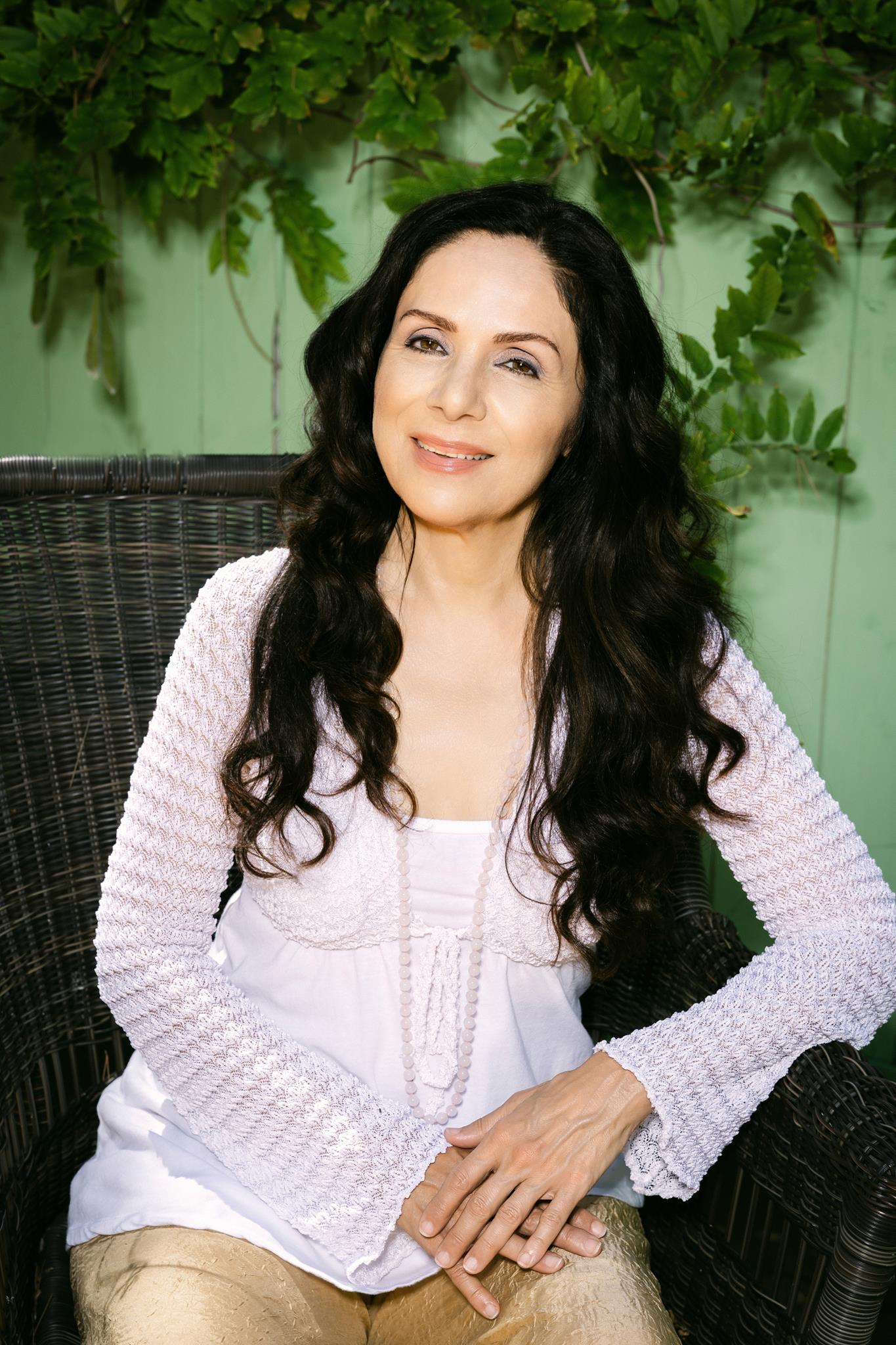
Dancer and embodiment teacher Banafsheh Sayyad — daughter of legendary Iranian filmmaker and cultural icon Parviz Sayyad — turns artistic legacy and the lived reality of exile into a movement-based spiritual practice rooted in presence, joy, and inner freedom. The creator of Dance of Oneness® reflects on the body as language and sovereignty, how her father’s uncompromising artistry shaped her path, and what readers can expect from her upcoming book Dance of Oneness (out March 2026), a powerful invitation to reconnect with the body as a source of wisdom and awakening.
You grew up behind the scenes of Iranian cinema as the daughter of Parviz Sayyad. How did that early artistic environment shape your relationship with the body and creative expression?
Yes — I spent a great deal of my childhood behind the scenes on my father’s film sets and in the world of his theater productions, immersed in his pioneering creative spirit. I idolized him; to me, he was a kind of superhero. Parviz Sayyad isn’t only a beloved actor and filmmaker—he is a cultural force: a visionary storyteller, writer, director, and satirist whose work has helped shape modern Iranian cinema and theater, and whose commitment to artistic truth has remained unwavering even through exile.
To grow up in that atmosphere was to breathe in imagination and creativity as a daily practice. There were always artists everywhere—actors, musicians, writers, designers, poets, technicians—each carrying a distinct way of seeing, moving, speaking, and inhabiting space. I was captivated by the sheer range of expression around me, and I learned early that creativity isn’t an abstract idea; it is embodied. It lives in gesture, timing, tone, rhythm, breath, and presence.
That environment shaped my relationship with my body in a profound way. On set, I witnessed how a single shift in posture could change a character’s entire emotional world, how a pause could speak louder than dialogue, how the body could become language. I began to understand the body as an instrument of meaning—one that could tell the truth, reveal nuance, carry memory, and transmit feeling without explanation. Being around performance and storytelling gave me an intuitive education in somatic intelligence long before I had words for it.
Just as importantly, the artistic world I grew up in offered me a lived sense of inner freedom—permission to let my mind wander, to ask questions, to improvise, to play. It showed me a way of inhabiting my body that wasn’t confined by the “proper” rules of conduct shaped by Islamic strictures and inherited patriarchal mores in my culture. And beyond the sets and theater, in the creative spaces my parents cultivated, aliveness was not something to hide or shrink—it was something to honor. That early education gave me an inner compass: a felt understanding that the body could be a sacred vessel for truth.
And then, when I later announced that I would pursue dance as my profession, that choice was met with real resistance—rooted in cultural and religious stigma around the dancing female body, and the idea of dance as a “serious” calling. But the inner freedom I experienced in childhood—nurtured by my parents—helped me meet that pressure without abandoning my path. I had to become self-reliant—cultivating self-authority and a deep inner yes that didn’t depend on external permission. In many ways, that became a crucial part of my artistic training: learning to trust my instincts, to inhabit my body as a source of wisdom, and to claim my creative voice even when it wasn’t validated. That process profoundly shaped both my relationship with my body and my creative expression—it taught me that embodiment isn’t only expressive; it’s sovereign.
Exile and your father’s political artistry played a major role in your upbringing. How did those experiences influence your understanding of inner freedom, resilience, and truth?
My father has always been passionately dedicated to his artistic and humanitarian vision, living as an activist for peace and justice. Watching him, I learned what inner freedom actually looks like in practice: a creative mind that refuses the oppressive shackles of dogma—political, religious, or cultural—and insists on telling the truth even when it costs. He has never compromised his values for fame, status, wealth, political power, or even personal safety. That kind of integrity shaped my moral compass. It made “truth” feel less like an opinion and more like a vow—something you embody, protect, and live from.
Exile did teach me resilience in the most concrete ways: how to become self-sufficient in an unfamiliar world, how to rebuild identity and community, and how to keep going when your roots have been pulled from the soil. As painful as it was to leave my homeland, it also taught me to find my true home within myself—to carry what I love across borders without losing it.
And it taught me how to hold polarities: the grief of separation from my country and loved ones, the anger at the ongoing atrocities committed by those who seized power in Iran, alongside the simple, profound joy of being alive and the gratitude of having basic freedoms in a new country. Experiencing exile has also given me a deep compassion for anyone who feels cut off—whether from their homeland or from their own essence and authentic self. That sense of inner “displacement” is something I recognize in many people, and it’s part of what has fueled my devotion to helping others come home to themselves.
Dance of Oneness invites the body to be seen as a source of joy, wisdom, and spiritual awakening. When did you first realize that the body would become your primary medium for teaching?
I was first a dancer and choreographer, and I toured internationally with my dance company and musicians. As more and more audience members began requesting instruction, it became a natural progression to teach—at first to share the choreography and technique, and shortly after, to guide people into the deeper experience of what movement can reveal.
I’ve also always been aware that so many of us don’t fully inhabit our bodies. We’re often somewhere else or living in our heads, and over time that shows up as collapsed posture, shallow breathing, chronic tension, and patterns of moving through life that are detrimental to our bodies—and to our spirits. A passion emerged in me to help people re-enter the body as a sacred home, not just a vehicle to get through the day.
That impulse is at the heart of Dance of Oneness®: a Divine Feminine lineage of embodied spirituality that weaves dance, breath, and presence into practices that awaken joy, wisdom, and inner aliveness. For thousands of years, the body has been undervalued or mistrusted by many spiritual teachings and religions, and it has been important to me to dedicate my life to helping people honor the body as a sacred gift—the very vessel through which we evolve on every dimension.
Your work transforms cinematic storytelling from your childhood into embodied storytelling through movement. How do you see the relationship between storytelling through images and storytelling through the body?
Cinema tells stories through images, rhythm, and what is often unspoken—framing, light, pacing, silence, and the smallest nuances of gesture. The body tells stories in a similarly wordless way: through posture, breath, emotion, timing, texture, and energetic tone. You feel what’s true before you can articulate it.
Growing up around filmmaking taught me how a single image can hold an entire emotional universe. Embodied storytelling carries that same power, but from the inside out. Movement makes inner experience visible—grief, devotion, longing, resilience—without needing explanation. It’s immediate and universal, because it bypasses intellect and speaks directly to the human nervous system and heart.
And while film can create intimacy through the lens, the body creates intimacy through presence. In my work, the invitation is to let the body become a truthful storyteller again—so what we’ve lived is not only remembered intellectually, but integrated, expressed, and transformed through movement.
Dance of Oneness® draws from Persian artistic and mystical traditions while speaking to a global audience. How do you balance honoring tradition with creating a contemporary, accessible practice?
I hold this balance through devotion and discernment. My life has been shaped by both deep roots in Iranian culture and the experience of exile—living in different countries and translating my inner world across cultures. In that sense, I’ve come to see my role as a kind of cultural ambassador: to honor the beauty and depth of Iranian artistic and mystical traditions while also revealing their universality and their relevance for people everywhere. Iranian culture has offered extraordinary gifts to the world—especially through poetry, music, movement, and the mystic understanding of love—and I feel called to help those gifts be seen, felt, and received.
At the same time, I’m very clear about what it means to “honor tradition.” For me it isn’t about preserving a form as a museum piece; it’s about preserving the essence—its spiritual intelligence, its ethics, its refinement, and its reverence. I stay true to the lineage by keeping the roots visible: naming the origins, holding respect for the cultural context, and ensuring that what I share is transmitted with integrity rather than diluted into something generic.
What makes the practice contemporary and accessible is the way it’s translated into lived experience. We live in a time when so much that was once hidden or reserved for a few is now being opened and shared—and humanity genuinely needs the great mystical traditions to help guide our evolution. Dance of Oneness® offers an entry point that doesn’t require someone to share my culture; it simply asks for sincerity, presence, and willingness. It is imperative to me to remain authentic to the tradition while opening the doorway to anyone who is called—so people can receive these teachings not as an exotic “other,” but as a path that helps them awaken love, sovereignty, and inner freedom in their own lives.
Carrying such a powerful artistic legacy can be both inspiring and challenging. How did you navigate forging your own creative path as the daughter of a cultural icon?
Yes—it has been both inspiring and challenging. My father was—and still is—a cultural icon, so for a long time I was “known” before anyone knew me. Before the Islamic takeover of Iran, and later in exile among Iranian communities, I have experienced the privilege of being associated with someone so beloved. But after the Islamic takeover, when I was living in Iran with my mother and sister, that public affection flipped into something far more painful: I went from being admired as his daughter to being officially ostracized for the very same reason.
Those early years made me determined to build an identity that couldn’t be granted—or taken away—by politics, public opinion, or anyone else’s projection. Over time, that became the way I forged my own creative path. I took the courage and originality I inherited from my father’s example, but translated it into a different medium—embodied art. I stepped out of the shadow of celebrity and into the rigor of practice, training, creating, touring, and ultimately developing a body of work that is unmistakably my own. In many ways, my father gave me a blueprint for artistic integrity; my task was to turn that inheritance into my own voice—one grounded in the body, in lived experience, and in a devotion to truth.
With the upcoming release of Dance of Oneness in March 2026, what kind of transformation do you hope readers will experience—especially in how they relate to their own bodies?
More than anything, I hope readers experience a profound shift in the way they live inside their own skin—moving from a relationship of judgment, numbness, or “getting through the day,” to a relationship of reverence, intimacy, and trust. I want them to feel the body not as a problem to fix or a vehicle to manage, but as a living sanctuary—an intelligent, responsive field of wisdom that continuously guides them back to wholeness.
I also hope they realize, at the deepest level, that everything we experience in this lifetime happens in and through the body: our capacity to love, to create, to grieve, to heal, to serve, to stand in truth. Even the greatest feats of the mind and the most transcendent spiritual experiences are ultimately embodied—they are received through breath, sensation, nervous system, and presence. When we come back into the body, we don’t lose spirit; we become able to live it.
So the transformation I’m hoping for is simple and radical: that readers learn to inhabit themselves—more fully, more compassionately, and more courageously—and from that place, meet life with greater freedom, vitality, and love.
Follow Banafsheh Sayyad on Instagram