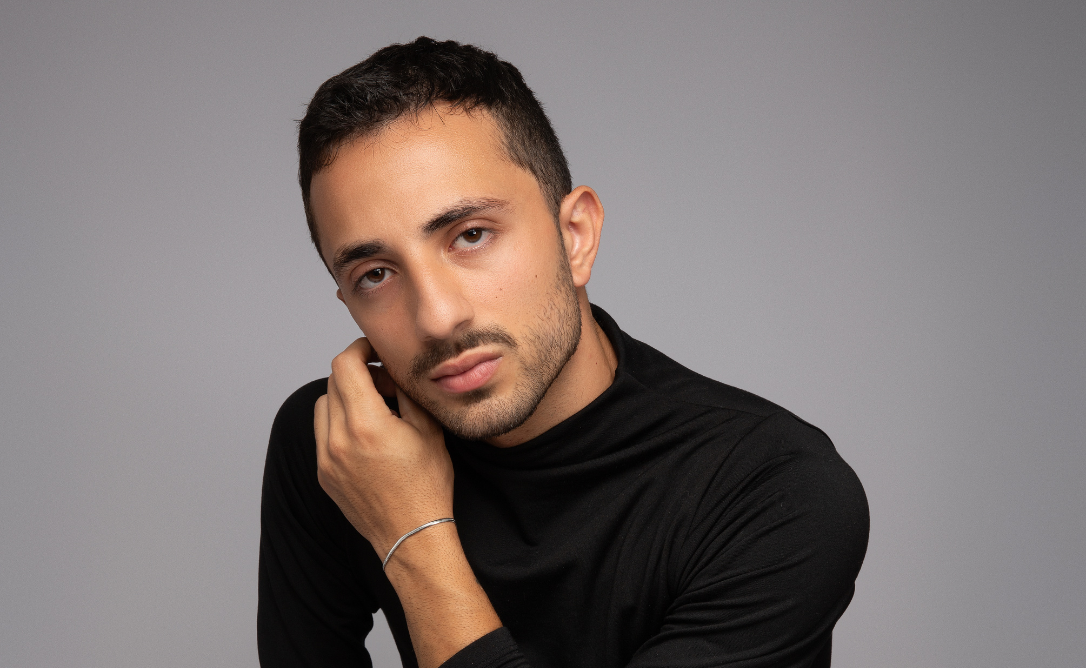
After establishing himself in complex roles in drama and suspense, Lucas Tors decided to switch gears—and return to where it all began. Originally from Santana do Livramento, on the border between Brazil and Uruguay, the actor known for Garota do Momento (Globo) and the film Metástase returns to the South of the country for two new projects: his first comedy in the children’s series “2C,” filmed in Porto Alegre, and the psychological thriller short film “The House on Second Street,” shot in his hometown and with a script entirely in English. Between humor and tension, this moment marks not only an artistic expansion but a symbolic return.
After “Girl of the Moment” and the emotional weight of “Metastasis,” what inside you asked for a comedy now? Was it weariness of drama, artistic curiosity, or a desire to see yourself lighter?
Metastasis was very demanding, especially in terms of character preparation. So yes, I definitely missed a lighter role, something that showed I can laugh and have fun too…
You say that returning to the South with recognition has symbolic value. Who were you when people said that “acting isn’t a profession”—and who do you feel you’ve become today, returning to film there?
Before, when I still lived here, I remember being that annoying, activist student that everyone thought was a drag because I wasn’t interested in parties, drinking, or dating. I wanted to talk about deforestation, social inequality, I wanted to go out into the streets with the school to help homeless people, and guess what? Almost no student cared about that, most just wanted to party and the rest only cared about the ENEM (Brazilian university entrance exam). And that’s okay, I couldn’t force anyone to think like me, but I knew that in the world of art, cinema, and theater, I would find people like me, who care about exactly what I care about. Today I return to the South with a congratulatory message from my city’s mayor. I was honored as a cultural producer and representative of Santana do Livramento in Brazilian audiovisual media. This is more than just an honor. It’s a direct link to politics, so that I can use political power to do good, to finally try to change something about the scarcity of art in my city, the lack of support… Today I am an artist with more respect, I am already seen as someone who has a purpose.
In 2C, you play Maikão: a “random” adult in a school setting. What interested you in this role? Have you ever felt “out of place” in real life—and did that translate into the character?
Maikão is hilarious from beginning to end. He’s one of those characters that should have a sequel and appear from time to time to break the ice, haha. He definitely has nothing in common with me, because I’m very extroverted and love the audience, unlike Maikão who is completely unsociable and quite apathetic. Which makes him funny.
You admit that comedy made you insecure. What is your specific fear about comedy? Is it the timing, the risk of “going too far,” or the fact that humor exposes the actor in a different way?
I used to be afraid of going too far, of not being funny, and of exposing myself in a way I might not want people to see me. But with professional maturity, I started aiming for comedy. There comes a point when drama gets a little too heavy, and we crave something more comedic.
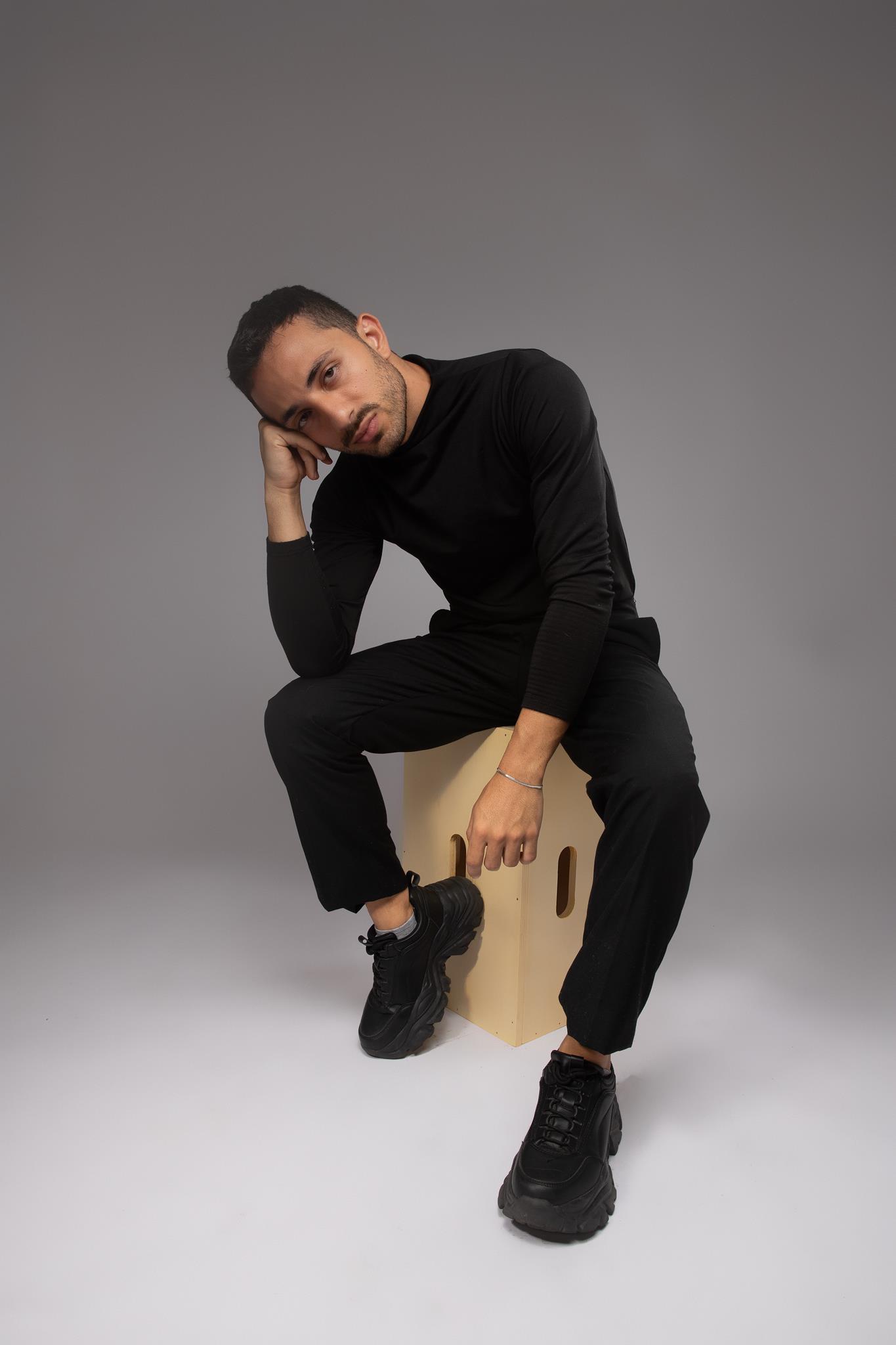
Your audition was almost a “mini-artwork”—with editing, zooms, and background laughter. Where did that courage to take a risk come from? And what does this choice say about the kind of artist you want to be (even when it might go wrong)?
I took a total risk. The courage came from the reference the casting director gave me. When she told me that one of the references was iCarly, I could only remember the laugh track from the show, Sam pressing the button and making the audience laugh. I thought: if I don’t edit it, the video won’t be as funny as it should be. And I remember hearing Lorena Comparato talking, in a lecture, about how she takes risks in the auditions she does and how it always worked out very well for her, because it showed versatility and authenticity as an actress.
You conceived and starred in “Metastasis,” dealing with abuse, trauma, and psychological breakdown. How do you protect yourself emotionally when you spend a lot of time immersed in dense stories? What helps you “come back to yourself” afterward?

Spirituality is what has always helped me through the worst moments. I don’t have a religion, but I have a faith and a mediumistic ability that are impossible to ignore, so every day I go to my little altar at home, close my eyes, and raise my thoughts until I feel that my energy field has healed from that negativity, from that emotional density brought by the story and the character, or even until I remember Lucas. Until I understand again that Lucas Tors doesn’t think that way, that that’s not his life or his reality. This helps me come back to myself.
“The House on Second Street” took three years and was remade almost from scratch. At what point did you almost give up—and what made you keep going? Was there a particular line, person, or small scene that sustained your faith in the project?
Director Thiago Dornelles’ talent made me stay and persevere. The difference in the cinematography made me insist. I graduated in Audiovisual Production in 2025 and I can say clearly: in college I didn’t see any student, including myself, who had the talent that Thiago has and the ease he possesses to create a work of such high quality with so few resources. This aspect of independent cinema is what attracts me, the relentless pursuit of improvement, the drive to win, to do it 10 times and have it be better each time. After all, productions with a lot of money, if they make a mistake, they go back and do it again, pay again, hire someone more experienced… In independent cinema, there’s none of that. Made a mistake? Redo it as many times as necessary until it’s the way it’s supposed to be. And Thiago would show me the results of the post-production while we were filming, and that gave me a lot of energy to continue. I’m an actor who works behind the camera, and the production is right there with me; seeing the process fascinates me.
In the short film in English, your character Dean is an unstable man facing irreversible decisions. What was an irreversible decision in your journey (even a small one) that brought you to where you are today? And today, do you feel more fear or more peace with the choices you’ve made?
Going to Rio de Janeiro alone at 18, without knowing anyone, and dropping out of psychology school to focus on acting were, without a doubt, decisive choices in my journey. Rio is a concrete jungle, and when you don’t have family or friends there, you’re completely alone. You have to be extra careful; the relationships you build must be approached with great caution when opening up to someone, sharing secrets and desires. I believe that all choices lead you down paths, whether good or bad, and all paths will give you something. I could regret many things, but the relationships I’ve created from these experiences allow me to learn even from the worst ones. As my father would say: some bad things happen for a good reason. And certainly, having the maturity to recognize the good that comes from bad is to elevate spirituality.
Follow Lucas Tors on Instagram