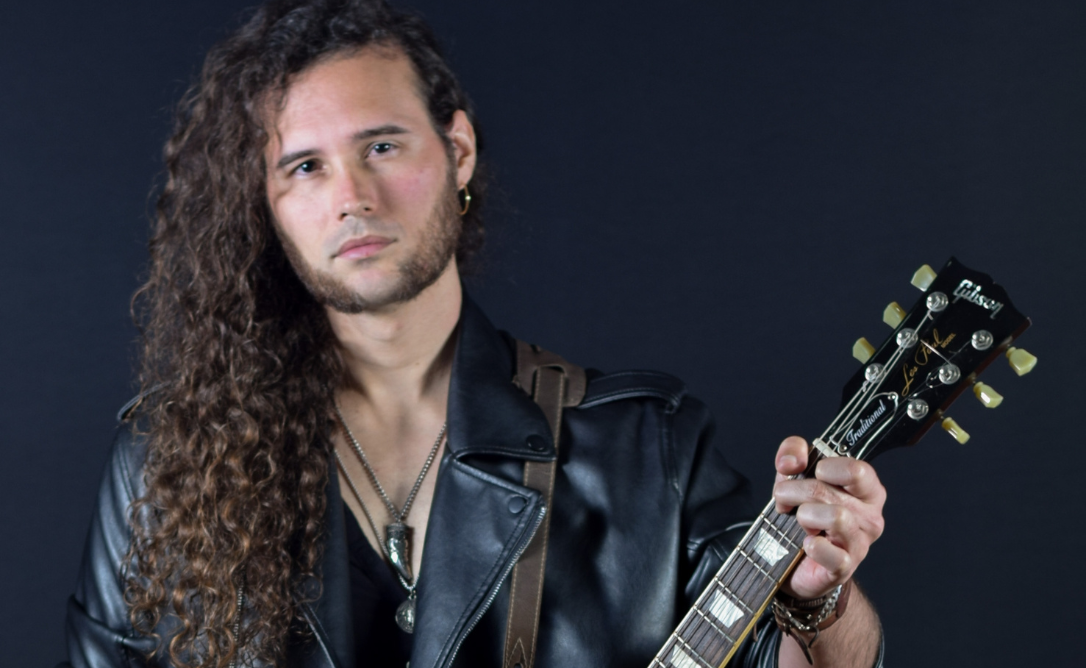
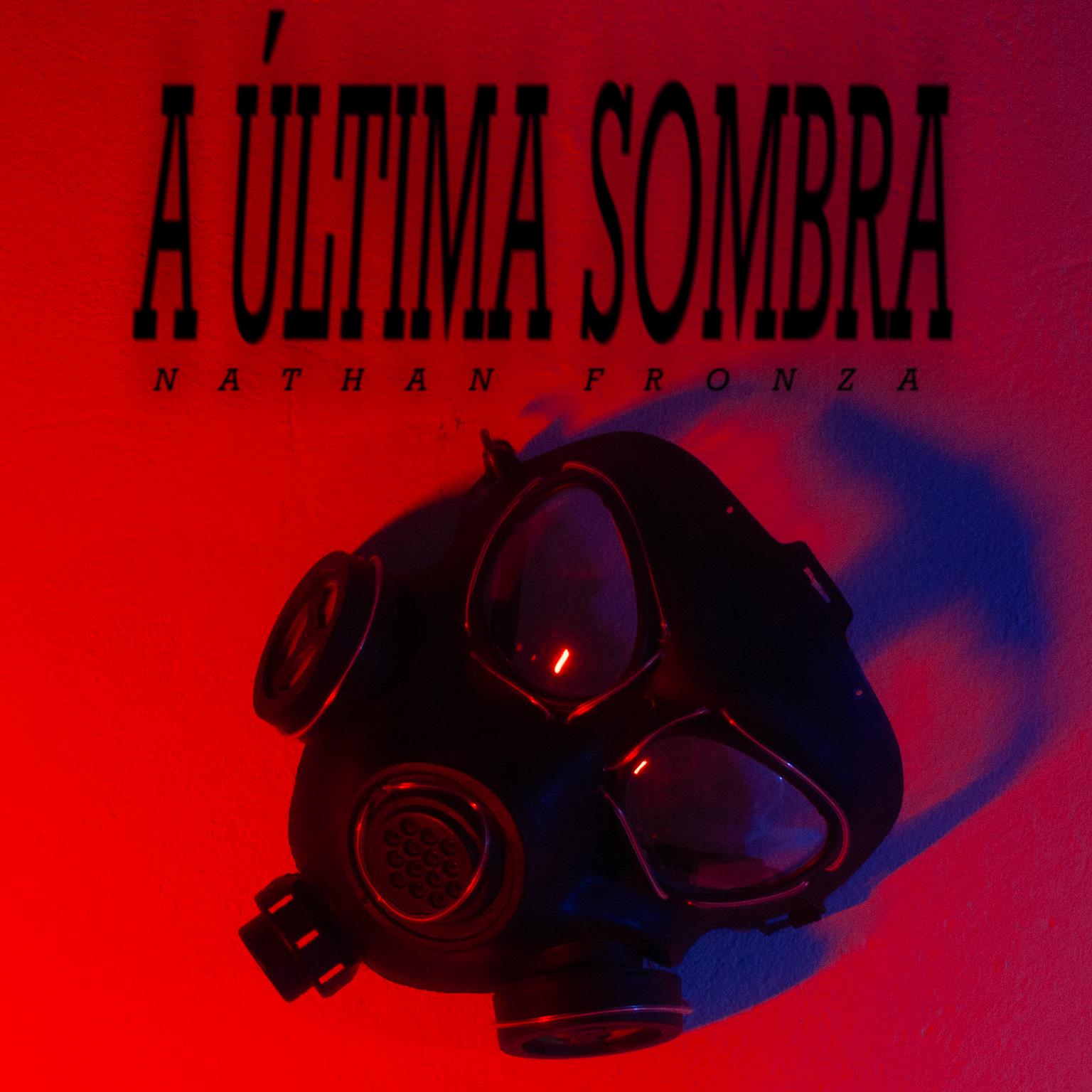
On January 30th, singer, songwriter, and guitarist Nathan Fronza releases “A Última Sombra” on all music streaming platforms via Marã Música, opening a new chapter in his career as he also performs as an interpreter. With raw rock, spiritual symbolism, and a critical look at social and environmental collapse, the track emerges as a manifesto in song form—a call for transformation, inside and out.
“The Last Shadow” begins with a “battle cry.” What kind of war were you fighting there—more against the outside world (climate, system, apathy) or against something within yourself?
Actually, it’s both. That riff simply came out of me in a moment of great anguish; it was like I was going to explode, I needed to let it out, and from the beginning I knew it was meant to be sung with many voices at the same time and that it had a lot of power. Throughout the composition process, I understood that it invites you to adopt a fighting stance, which is already a great challenge in itself, because if you let it, you end up living on a kind of “autopilot” and give up on things that were important. Speaking like this, it even makes me think of Cazuza singing “that young man who wanted to change the world… change the world…”, but the difference is that today we are in a moment where we need to change the world, and fast! People are destroying everything. So something needs to change within us so that we can perceive what is happening, and from this moment on, stop normalizing absurd things like the climate crisis.
You speak of fire as transformation, but also as a warning about wildfires and climate collapse. At what point did you realize that this song needed to be a statement, and not just an expression?
It’s crazy how the music just pops into my head, and only then do I understand what it means. It was born out of a need to express myself, but there’s no way to talk about the climate crisis without taking a stand; this song confronts you and makes it impossible to continue in an illusion of “neutrality.” Fire has a very strong symbolism within various beliefs, because nothing passes through fire without being transformed, in addition to representing what we call spirituality, and in this case, fire also represents the fires that were happening artificially and arbitrarily, aiming only at the profit of a small group of people. This issue is very urgent; we need to do something.
The phrase “they sold the sky and nobody will pay me” is very powerful. When you wrote that, what exactly hurt you: the environmental destruction itself, the inequality in the right to a “blue sky,” or the feeling of collective powerlessness?
Without a doubt, it was all of that at once. You know that situation where you have to laugh to keep from crying? There’s even a certain sarcasm in that phrase, seeing as we lost the right to have a blue sky because some guys made this decision to profit even more. Remember, I’m referring to a specific moment when the sky was gray for several weeks in a row. It was desperate not being able to see the sky, besides smelling that smoke, and that dry air that made your throat scratch, and most importantly, the news showing what was happening in the forests… The feeling was one of powerlessness, like: Is this really going to happen? Is nobody going to do anything? Has the blue sky become a thing of the past?
There’s a spiritual layer to music: facing one’s own shadows. What was the hardest “shadow” to admit during this process—and what changed in you after facing it?
I first encountered the term “shadow” when participating in shamanic rituals, which refer to those inner parts of yourself that frighten you the most. I understood that in our society, we tend not to confront our shadows; we simply ignore them and move on, doing the same with our anxieties and even our traumas. In contrast, some other cultures believe that you need to face your shadows, looking into the eyes of what haunts you most and feeling that pain to its fullest extent. After all, there’s nothing wrong with feeling this pain; it’s there, and you need to accept it. From that moment on, I began to analyze my existence from a new perspective, especially within a society organized according to a capitalist mode of production that conditions us to think in a certain way from birth. I saw many things that needed to change in myself, and many that still need to change, but I think the main point was that I became a more sensitive person in relation to myself and others, including nature and even people I don’t know.
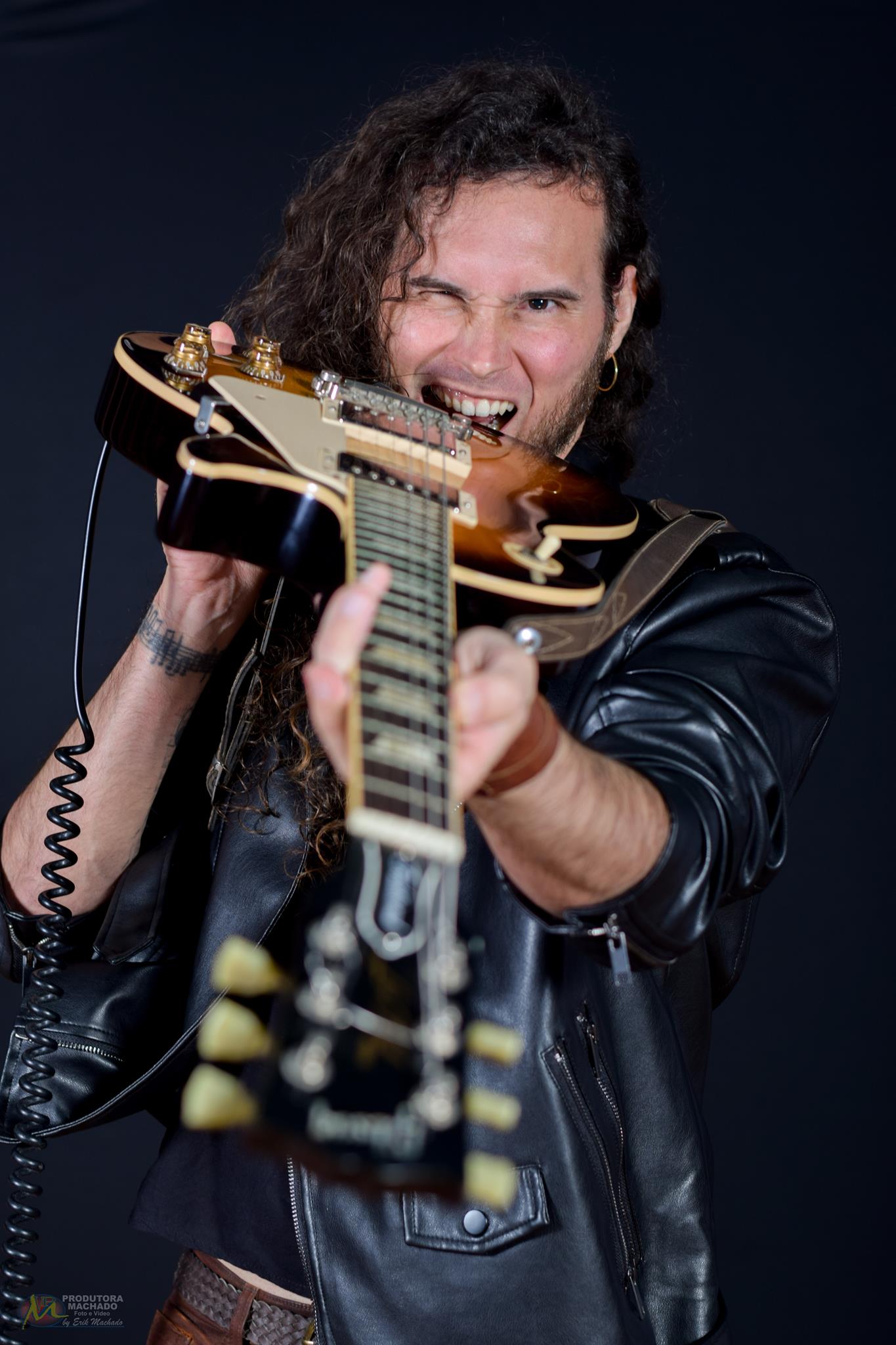
You became known to many people as a guitarist and YouTuber, and now you’re taking the microphone as a performer. What scares you more: hitting a wrong note on stage or exposing yourself emotionally in a song?
This work I do on YouTube is a crazy thing because it’s put me in contact with people from all over the world, and many people I would never have met otherwise, despite always traveling a lot to do shows. Besides that, I’ve been able to talk a lot with people and break down that barrier that often exists between artist and audience. A good portion of the people who follow me also play guitar, and often the conversation revolves around our instrument. It’s quite common for someone to come up all excited saying they’ve formed a band and are going to do their first show, and then ask me for advice. I’m very happy because I know how special this moment is, and the main advice I usually give is: “Don’t be afraid to play a wrong note!” I always say this for several reasons, from the fact that it will probably happen due to probabilities, and mainly because I believe that if you go on stage with this fear, you’ve already lost. You won’t be able to enjoy the moment, and the show won’t have been good, even if you hit all the notes. In a show, you need to interact with those on stage and also with those watching. The stage is a sacred place. So I’ve never had that fear of hitting a wrong note, but I can’t say the same about exposing myself emotionally in a song; it leaves me totally vulnerable and unsteady. But I’ve learned that we must face our shadows and our fears, right? So let’s go for it!
The introduction was born after a shamanic ritual and only became a complete song years later, when the sky was gray for a month. Do you feel that some ideas “wait” for life to happen to gain meaning? What was it like to recognize that that seed from 2020 had become an urgent matter?
Yes, I believe things have their time to happen, and you can’t force a situation. When things are at the right moment, they just flow; it’s like the idea comes fully formed in your head. But of course, it’s not enough to just wait for inspiration to strike; you have to work. I already had that introduction ready and didn’t know where to use it, until one day I started thinking about putting together an original work and I started sketching out some ideas and revisiting some of my compositions. This introduction was there, but I had no idea what would come next, until the sky stopped being blue and the rebellion hit. Then I went there and finished the composition, and Rodrigo managed to create a drum line that was exactly what the song needed, because it has to have something kind of tribal to express its idea, and he nailed it. He’s been my musical partner for many years now. Actually, when I look back, I think the music just emerged; it’s something much bigger than me and would have happened differently. I just felt it and recorded it; it’s as if the songs have a life of their own. It was simply born.

In the video, there are two “yous”: the rock ‘n’ roll Nathan and a post-apocalyptic Nathan. If these two characters could talk for 30 seconds, what would one say to the other—and which one do you think is closer to reality today?
I believe that at least half of those 30 seconds would be just looking into each other’s eyes without saying anything. That “Nathan” Rock N’ Roll would probably be a much younger version of myself, before going through the rituals and starting to compose this song. I believe that today I am a being who is halfway between the two, as if I were consciously walking towards the slaughterhouse. That’s why the song says “on the way to the funeral” at a certain point, and there’s a sarcasm there, like, what can I do? And I believe that many people will identify with this feeling. The “Nathan” Rock N’ Roll in the video was still beginning to understand while watching the news. Today I see myself closer to the post-apocalyptic world than to the Rock N’ Roll character, and I’m sure he would tell me to enjoy every second I have left, hug the people around me as much as I can, and keep fighting. The two characters are exactly the same, on the same timeline, but at different moments, and this isn’t about me but about each person watching the clip. Each of them has their own version, and I’m curious to know which one they identify with more. I hope this message helps people prepare; who knows, maybe we can even avoid this apocalypse?
You mentioned that the first take of the music video was lost, which almost made you give up—and that the team helped you start over from scratch. What did this loss teach you about persistence, and what do you want the audience to feel when they realize that this work was born “by force,” despite the tiredness and exhaustion?
Man, I just didn’t have the strength anymore, but the project is something much bigger than me, you know? When I reached my limit, my team pulled me back and found a way to make things happen. I’m immensely grateful to the people who were with me in each of these moments; it was a real team effort. When we finished the first recording of the music video, the guy simply lost all the files, and those were very exhausting recordings where we gave our all. Then I was simply left without the video, and then my friend Leo said he’d like to make the video and that we’d figure something out. Then more people started embracing the idea: Yuri and his wife, who have already made some really cool videos with some bands; Lari and my wife Cris in charge of costumes and makeup; my parents, always supportive even in the worst moments; and some other people who helped me in various ways throughout this process. Nobody does anything alone. So it seems like there was a greater force at play, and suddenly giving up wasn’t an option. I hope this work inspires people in some way, both in terms of taking a stand and in terms of persisting in pursuing what nourishes your soul; otherwise, we end up abandoning the things we love and suddenly find ourselves in that graveyard of dreams. Of course, things aren’t easy, but I hope to inspire other artists to express what’s inside them, one step at a time.
Follow Nathan Fronza on Instagram