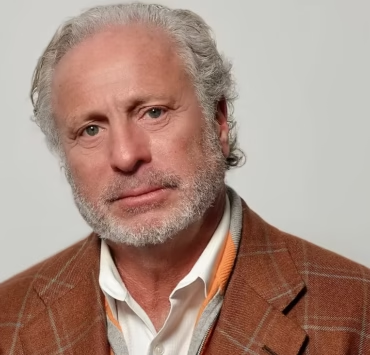
Inspired by the stories, pains, and traditions of the Pernambuco backlands, journalist and writer Samuel Britto debuts in literature with *Maria Caminhoneira Sertania* and its heroic, romantic, and backlands tales, a work that unites regionalism, memory, and identity in a narrative constructed in the rhythm of cordel (a type of Brazilian folk poetry). Set between the 1970s and 1990s, the book follows the journey of Maria Sertania Ferreira da Conceição Ventura, a woman who transforms her dream of driving a truck into an instrument of survival and resistance in the face of sexism, racism, and the adversities of life in the interior. Amidst losses, challenges, and encounters, the character drives not only a tanker truck along the backlands roads, but also stories that reflect the strength of a people and the silent struggle of so many women. The work, which has already reached readers in several countries and has given rise to a feature film script approved by cultural incentive programs, marks the beginning of Britto’s literary career and reaffirms his commitment to valuing Northeastern culture and promoting respect for regional diversity.
The story begins and ends in the style of a cordel (a type of Brazilian folk poetry), almost as if someone were telling it “by word of mouth.” At what point did you realize that this narrative needed to be born with the sounds of the sertão (the Brazilian backlands), and not in a more traditional novel format?
From the initial idea for the story, I imagined it with a format, characteristics, and elements that were very much from the Brazilian backlands, from the settings to the characters and dialogues. I am a writer from the backlands with over 25 years of experience in television journalism. Like every writer, I have my own style, my own particular way of writing; I consider myself a chronicler of adventures, dramas, and romances, because my stories mix real-life events with fiction, all woven together with very human and compassionate characters.
Maria Sertania is a very strong character, but also very human, full of pain, loss, and vulnerabilities. Was she based on a real person you knew, or was she built from several women from the backlands who crossed your path?
Maria Caminhobeira Sertania, a woman from the Brazilian backlands, embodies a bit of my mother and other women from the backlands, represented in over 50,000 characters I’ve interviewed for more than 23,000 productions and scripts I’ve developed for local, regional, national, and international television. I think that’s why both the physical book and the e-book about this truck driver from the backlands are so popular, already available for sale on about 15 literary platforms in various countries, including Spain, Portugal, England, France, the United States, Canada, Mexico, Japan, and India.
You grew up in the backlands of Pernambuco. What memories from your childhood or youth do you feel are hidden between the lines of the book? Is there a scene you wrote and thought, “I lived this”?
Yes, the main plot of the book has a lot to do with some situations I’ve experienced firsthand. For example, the character of Maria Sertania, a Black truck driver—a strong, determined, and resilient woman from the Sertão region, especially when it comes to achieving her dreams and desires, without ever forgetting to take care of four children alone, rain or shine—this reminds me a lot of my mother, who lived through very similar situations in the heart of the Northeastern Sertão during the 70s and 90s, a time of dictatorship and strong repression. Another part of the story addresses the situation of one of Sertania’s sons who likes another boy, facing a lot of external sexism and prejudice. On the other hand, the courageous young man receives a lot of affection and understanding, especially from his mother and family.
Maria faces sexism, racism, poverty, and grief, but never loses her dignity. What did you learn most emotionally from living with this character during the writing process? Did she transform you in any way?
Yes, absolutely, with each page, each dialogue, each word written in this inspiring and magnificent story—and I think everyone should read it to better face life’s problems and adversities—I learned even more to live with differences, with difficult grief, and I became even more human, inclusive, understanding, and compassionate.
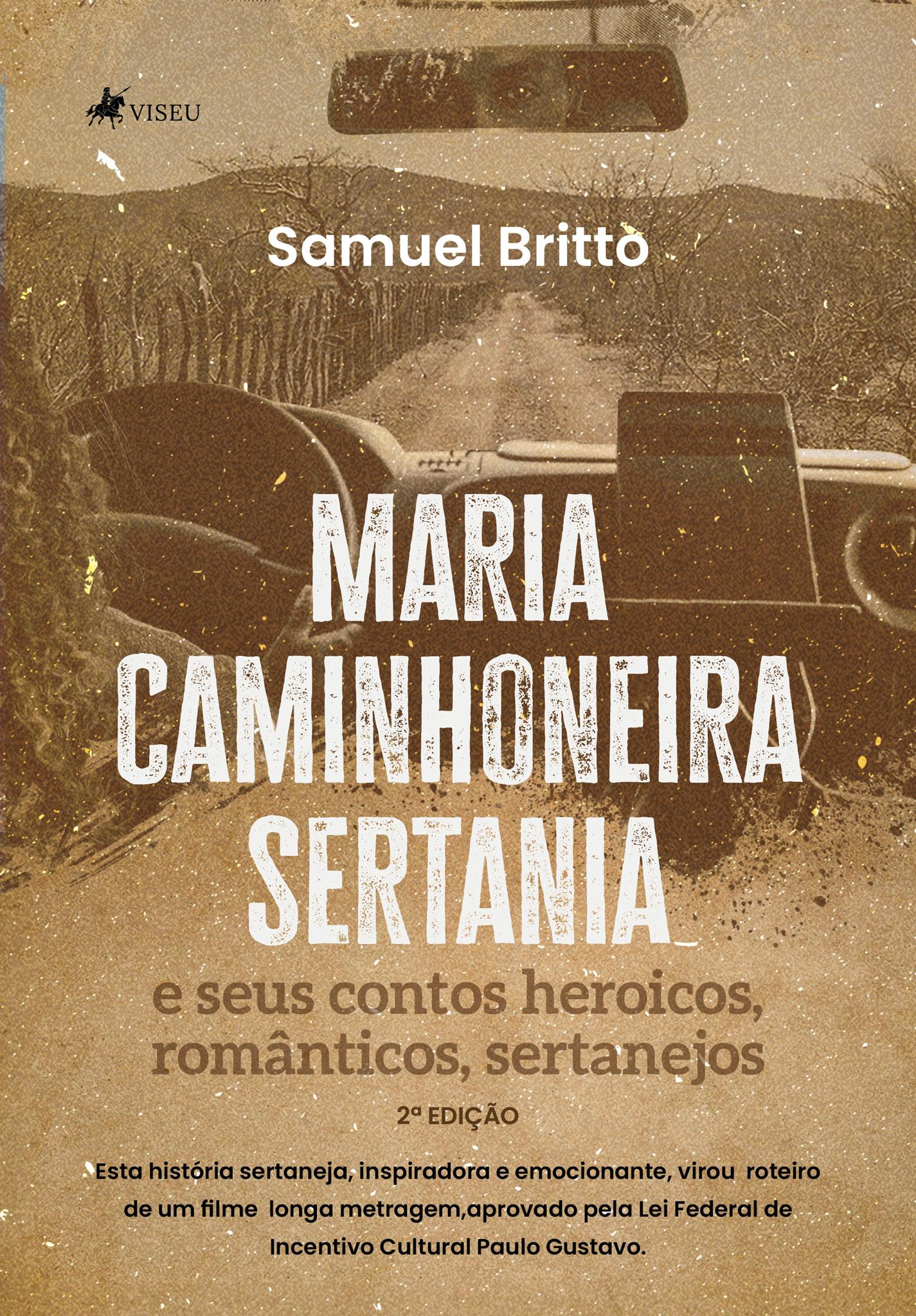
The water tanker truck “Trovoada” seems almost like a character in the story, as if it were home, shelter, and a companion on the road. Why was it important that this object had so much soul within the narrative?
Driving a truck had always been Maria Sertania’s dream since childhood, and it became her most important reality through the old gears and steering wheel of Trovoada, a faithful companion, her second safe haven, second only to her home and family. In one passage of the book I talk about Maria Sertania’s affection for her partner Trovoada; its cab has a very special decoration, all made by the country girl herself.
I thought it was important to give this special emphasis to the water truck; the idea was to stimulate the reader’s imagination, making an inanimate element of the story come to life as a real character, due to the emotional importance it has for the truck driver Sertania, and the important social role it plays in the rural backlands between the 70s and 90s, bringing water to those who really needed it, in addition to being, along with the black truck driver and single mother, powerful symbols against sexism and various types of prejudice.
Even amidst the harshness of the Sertão (Brazilian backlands), there is much affection, humor, and solidarity. Did you want to show that the Sertão is not only suffering, but also poetry? How do you balance this harshness with beauty without romanticizing the pain?
That’s right, I wanted to show exactly that the Sertão, like all regions of Brazil and the world, has its side of adversity, pain, and battles, but it also has its side of overcoming, achievements, and accomplishments. This can be told clearly and in detail, without any need to romanticize the pain. In the Sertão, as everywhere, there are pessimistic people, but on the other hand, there are people with beautiful, generous, and supportive hearts, like the truck driver Maria Sertania. The Northeastern Sertão is a region with a strong and structured culture, as well as being a beautiful place in every sense.

The book has already been adapted into a film script. What was it like to see this story, so intimate and literary, brought to life with image and sound? Did you imagine Maria on screen while you were writing, or did that come later?
Yes, from the very first moment I wrote the first words and dialogues of the book, I already imagined the narrative of the Black, single, resilient, and hardworking truck driver from the Brazilian backlands, with images and sounds on the big screen, because it’s a story that describes an inspiring journey full of truths, lived in a harsh and real backlands region between the 70s and 90s. In fact, I have the screenplay for the feature film ready, looking for a film production company that wants to produce it, because the story, besides deeply touching the reader’s imagination with its sensitivity, trajectory, and richness of detail, is also a screenplay entirely developed in Pernambuco, by a screenwriter from Pernambuco. Pernambuco cinema is at its peak, thanks to its prominence at the Golden Globes, Oscar nominations, and international awards won by the film “The Secret Agent”.
If Maria Sertania could sit across from you today and read the book about her own life, what would you want her to feel when she closed the last page?
That a woman’s place is wherever she wants to be! That all the effort and struggle she put in was well worth it! That the battles she fought against sexism, racism, and misogyny in relation to her and her profession were crucial for the information below to exist:
Being a truck driver is a reality for many women in Northeast Brazil and across the country. According to data from the Ministry of Transport, Brazil currently has around 32,000 women working as paid truck drivers, a 58% increase in the last ten years, when that number was approximately 20,000.
Follow Samuel Britto on Instagram