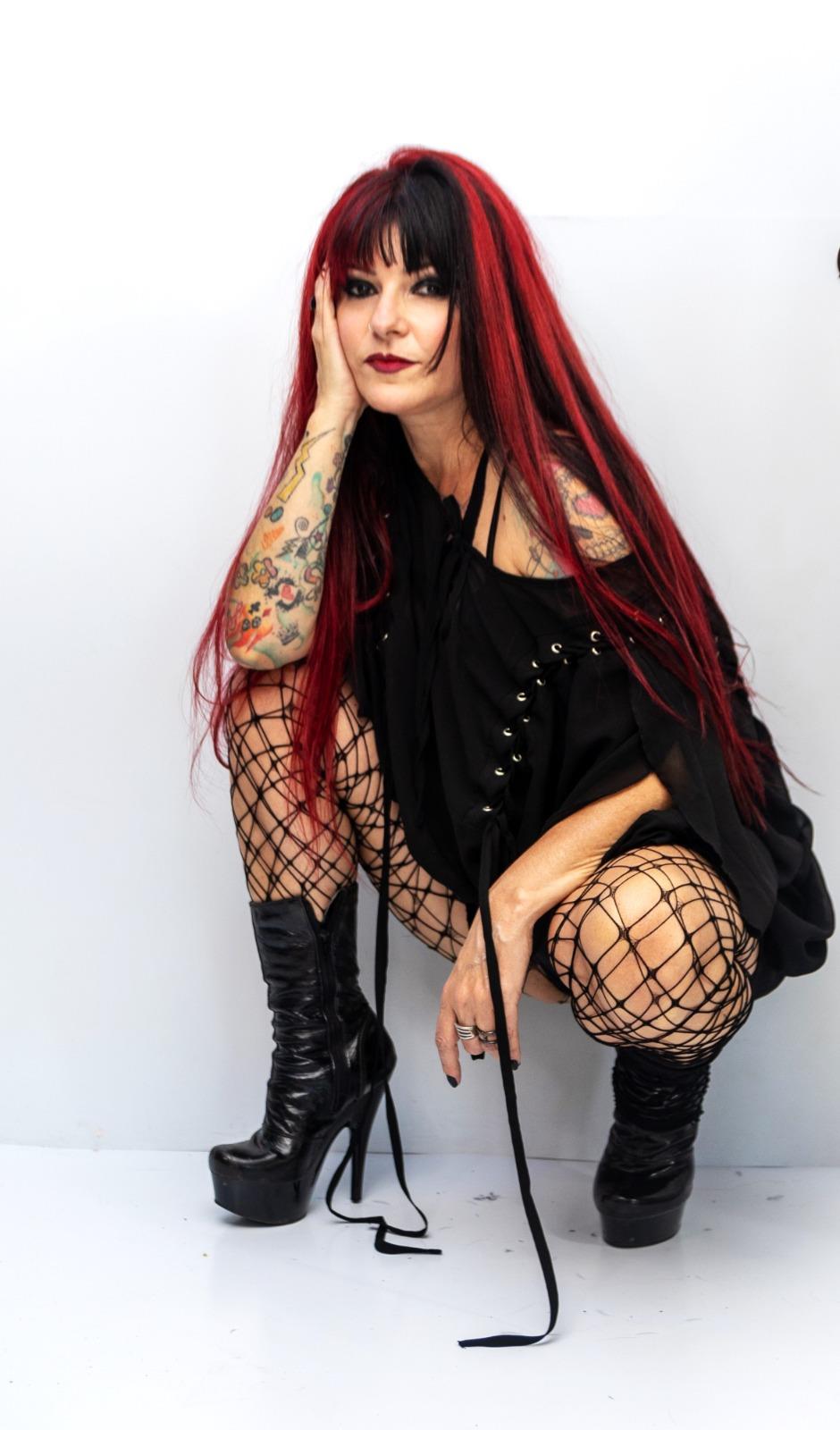
Singer-songwriter Ju Kosso released the single “Sofisalma” on March 20th, marking a new phase in her artistic career by combining industrial aesthetics, sonic weight, and a profound reflection on identity and self-deception. Recorded in Los Angeles, the song presents a sound that moves between rock and pop, while addressing the collapse of idealized personas and the internal contradictions that often remain hidden. With a visceral and autobiographical creative process, the release consolidated the artist’s return to original compositions and paved the way for a new series of projects.
The single “Sofisalma” stems from a reflection on social masks and self-deception. At what point did you realize that this theme needed to become a song?
In society, we need to survive, and to survive within social rules, it seems a certain “perfection” is required. And I realize that this perfection makes people sick, because nobody can truly sustain it. I started noticing this conflict between what we show and what we really are. So I wrote “Sofisalma” based on a melody that came to my head.
The reference to the Sophists of Ancient Greece is quite interesting for a contemporary song. How did this philosophical idea find its place within your composition?
I think there are cycles that repeat themselves over time. There have always been—and still are—people who hide out of fear. It’s like we’re playing a broken record. The Sophists already talked about discourse, about persuasion… and today we continue to do that, often out of fear of not being accepted within the rules of society.

You describe the creative process of making music as a “creative vomit,” something visceral that came after a period of writer’s block. What happened inside you when that creativity finally started flowing again?
It felt like my soul fit perfectly into my body. It wasn’t something planned, it was kind of out of control. There was no pressure, no obligation—it was something very intimate with myself. I reclaimed my space and reaffirmed my profession, especially because it’s a way of expressing how I feel about the world.
The decision to record the single in Los Angeles also seems to have been very symbolic. What did this experience abroad bring to the sonic and emotional construction of the track?
The most important thing for me was the final result: arriving at a sound that truly represented me, with more weight, more identity, and an aesthetic that I’ve always sought. I already had a clear idea of the music, and this partnership with AJ Oliveira at Lounge Studios gave me confidence and made everything even more vibrant. I felt very artistically respected throughout this process.

Musically, “Sofisalma” blends industrial rock, heavy metal, and pop elements. How did you find the balance between these influences to create the song’s sonic identity?
I grew up listening to emerging Brazilian rock bands like Barão Vermelho, Paralamas do Sucesso, Titãs, and Kid Abelha, which have this more melodic and accessible quality. At the same time, I’ve always had very strong vocal influences, like Elis Regina and Cássia Eller, who bring a great deal of truth to their voices. And, on the other hand, I really like the heaviness, the repetition, the denser aesthetic of bands like Rammstein and Nine Inch Nails, as well as electronic influences like Kraftwerk.
The music video, directed by Arnaldo Belotto, promises an aesthetic inspired by graphic novels and an industrial atmosphere. How was it to transform the essence of the music into a visual narrative?
When the music was finished, I already envisioned something like comic books, kind of dark, but at the same time comforting. I saw some of his work and thought it made sense to me. He agreed to develop the visual concept, and we talked several times, adjusting many things together.
He came to understand the idea and the characters I asked for. “Sofisalma” is about the mind, about how we carry personas based on self-deception, with untruths to ourselves and to others. The graphic novel aesthetic reinforces this—it’s drawing, it’s fantasy, it’s not real.
You began your artistic journey as a child, in television and music. Today, looking back on that journey, what has changed in how you see yourself as an artist?
Maturity. Before, I believed in fame, today I believe in myself.
You describe “Sofisalma” as a semicolon marking a new phase in your career. What paths and emotions do you intend to explore in your upcoming releases?
Every part of this work was deeply felt by me. I crumpled up a lot of paper until I achieved the result I wanted. There’s still a lot to explore in my mind.
I already have other songs with a beginning, middle, and end, in the pre-production phase, and now I’m going into the studio—and I’m loving this process. I’m in a very free moment artistically, without deadlines, without pressure, without that logic of functioning like a robot. I’m being honest with myself.
I’m enjoying my creativity because I’m able to transform it into my reality. I don’t care if it’s trendy, if it “fits,” or if it might seem irrelevant. I have nothing left to lose.
“Sofisalma” was released on the 20th, featuring an incredible bass collaboration with Felipe Andreoli, and more songs will follow — all made with emotion and, who knows, perhaps with future collaborations as well.
Follow Ju Kosso onInstagram