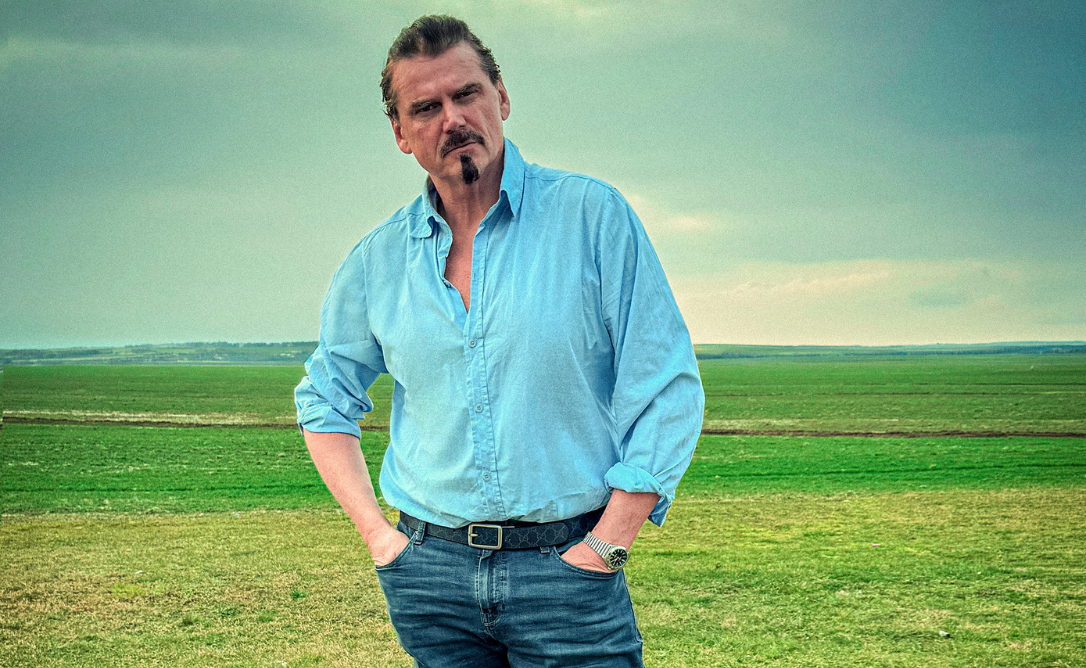
After years of developing a deeply personal story, Neb Chupin brings Storm Rider: Legend of Hammerhead to the screen, an ambitious action-adventure film rooted in his own family heritage in Croatia. Inspired by his relationship with his grandfather, the project began as an intimate story of legacy and identity before evolving into a large-scale production. In this interview, Chupin discusses balancing spectacle with emotional depth, his dual role in the film, and his commitment to preserving the story’s human core within a broader cinematic scope.
Your journey to Storm Rider: Legend of Hammerhead began long before Hollywood, on a small fig island in Croatia. How did your roots and your relationship with your grandfather influence your decision to bring this story to the screen?
My journey with Storm Rider started on a small fig island in Croatia, where I grew up with my grandfather. He was a strong, quiet figure who shaped my understanding of resilience, tradition, and identity. Those early years stayed with me. This film is, at its core, a tribute to him and to that way of life—something authentic and deeply personal that I felt compelled to preserve and share with the world.
The project started as an intimate story about a grandfather and grandson. At what point did you realize it could evolve into a large-scale action-adventure film?
Initially, it was a very intimate story about the bond between a grandfather and grandson. But as I developed it over time, I realized the emotional depth had the potential to live within a much larger cinematic world. The themes—legacy, survival, identity—are universal. Expanding it into an action-adventure allowed me to bring those emotions to a wider audience without losing the heart of the story.
Even as the film expanded in scope, you fought to preserve its original emotional core. Why was it so important for you to maintain that family-centered essence within a blockbuster setting?
Because that emotional core is the truth of the film. Spectacle can draw people in, but it’s the human connection that makes them stay. I was very intentional about protecting that relationship and those early moments on the island, because they ground everything else. Without that, it would just be another action film. With it, it becomes something people can feel and remember.
What was it like balancing your role as both producer and key supporting actor in the film? How did those responsibilities complement — or challenge — each other?
Balancing producing and acting was definitely a challenge. As a producer, I had to think about the big picture—financing, logistics, long-term vision. As an actor, especially playing a character inspired by my own family, I had to be present and vulnerable. In a way, those roles complemented each other, because I understood the story on a deeper level—but it also required a lot of discipline to switch between the two mindsets.
Your entrepreneurial journey, particularly with Dalmatia Fig Spread, reflects a deep connection to your heritage. How did your experience as a business leader help you navigate the production of this film?
Building Dalmatia Fig Spread taught me persistence, patience, and how to navigate uncertainty—skills that translated directly into filmmaking. Both journeys require long-term vision and the ability to push through setbacks. My connection to heritage through that business also reinforced my commitment to authenticity in the film. It’s all part of the same story, just expressed in different ways.

The project faced setbacks and nearly fell apart. What kept you motivated to continue pushing it forward during uncertain times?
There were moments when the project almost didn’t happen. What kept me going was the personal nature of the story. This wasn’t just a film—it was something I had carried with me for years. I had already invested eight years into it, and I believed deeply in its potential. That belief, combined with the reactions we saw from early audiences, gave me the strength to keep pushing forward.
Storm Rider grew from a very personal story. What do you hope audiences take away from the film — especially regarding legacy, family, and cultural identity?
I hope audiences walk away feeling a deeper connection to their own roots and to the people who shaped them. The film is about legacy—what we inherit and what we pass on. It’s about family, identity, and remembering where you come from, even as you move forward in life. If people leave the theater thinking about their own story and their own relationships, then we’ve succeeded.
Follow Neb Chupin on Instagram