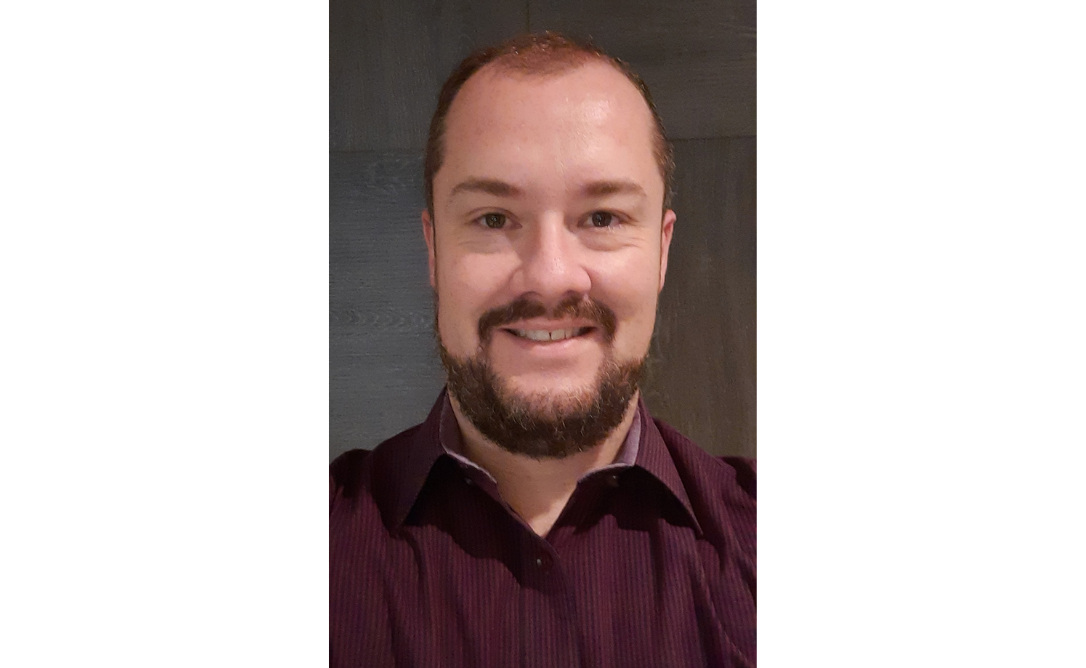
In the second volume of the Benedicite trilogy, author Rodrigo Erthal delves deeper into the journey begun with investigative journalist Johnny Deal Halberty, the protagonist who finds himself at the center of a revelation capable of transforming humanity’s perception of the universe. In Benedicite 2 – The New Home, the character faces the global consequences of first contact with an extraterrestrial civilization, becoming the spokesperson for a space mission surrounded by political disputes, international interests, and questions about the future of Earth. Blending science fiction, historical references, and reflections on collective responsibility, the work leads the reader through a narrative of discoveries that challenges the limits of science, power, and human identity itself.
In Benedictine 2 – The New Home, protagonist Johnny Deal Halberty finds himself at the center of an event that could completely transform how humanity views the universe. What inspired you to imagine this story of first contact from the perspective of an investigative journalist?
The book tells the story of humanity finding intelligent life beyond Earth, which led to a journey to reach it, as suggested by the title of the first book, “The Search for First Contact.” But for this to happen, we would have to be certain of its existence. On a normal workday for this journalist, he encounters an event that prompts him to begin investigating. This eagerness to investigate is something intrinsic to him; the desire to discover something new, a global conspiracy, for example, is ingrained in Johnny. Throughout the investigation, facts emerge that lead him to delve deeper and deeper, following the unfolding story—something that, perhaps, if it were someone outside this field, wouldn’t happen as it was told.
The work blends science fiction with historical references, such as the space race and secret post-war military projects. What was the research process like to balance real facts with the construction of the fictional narrative?
Since my school days, during classroom conversations and discussions, some facts have stuck with me, such as the Cold War, where whenever there was a conflict, the US and the Soviet Union never fought directly against each other, and in the Space Race, both always had the same objectives. These facts were used as a backdrop throughout the story. None of these facts mentioned in the book were invented, but the way they are described raises the question of whether the relations between these nations at that time were as we know them or if there was something behind them. The details used in the book in both cases were researched from sources, both on the internet and in books and documentaries. The idea, the backdrop used and described in the book, is plausible and perhaps it was what really happened.
Johnny goes from observer to protagonist of a global change, becoming the spokesperson for one of the greatest events in human history. What most interested you in exploring this transformation of the character?
Johnny is a person like any other; he does his job, pays his bills, but he was in the right place at the right time, or the wrong place at the wrong time, depending on one’s perspective. But something appeared in front of him, something he could ignore and move on with his life, or he could pursue it and see what would happen. Johnny was placed in front of an adventure, using that term, as in many stories, but if he didn’t have an investigative bent, would he have fully embraced the adventure presented? The choice of this character with these characteristics was intentional; his curiosity and investigative experience made him enter the story without hesitation, growing with each page, transforming into the protagonist, but above all showing the reader that even someone without Johnny’s journalistic experience, but with a little curiosity and determination, could be and become the protagonist of the story.
Throughout the plot, the story suggests that space exploration has often been more linked to political interests than purely scientific ones. Why did you decide to bring this reflection into the narrative?
Government conspiracy, secrets of scientific technologies, alien discoveries—these have always intrigued people, and I believe they always will. So, within a story where historical facts have been told in a distorted way to everyone, these subjects couldn’t be left out, and showing that the scientific evolution of humanity wasn’t purely scientific, but rather politically driven, is something I find intriguing.
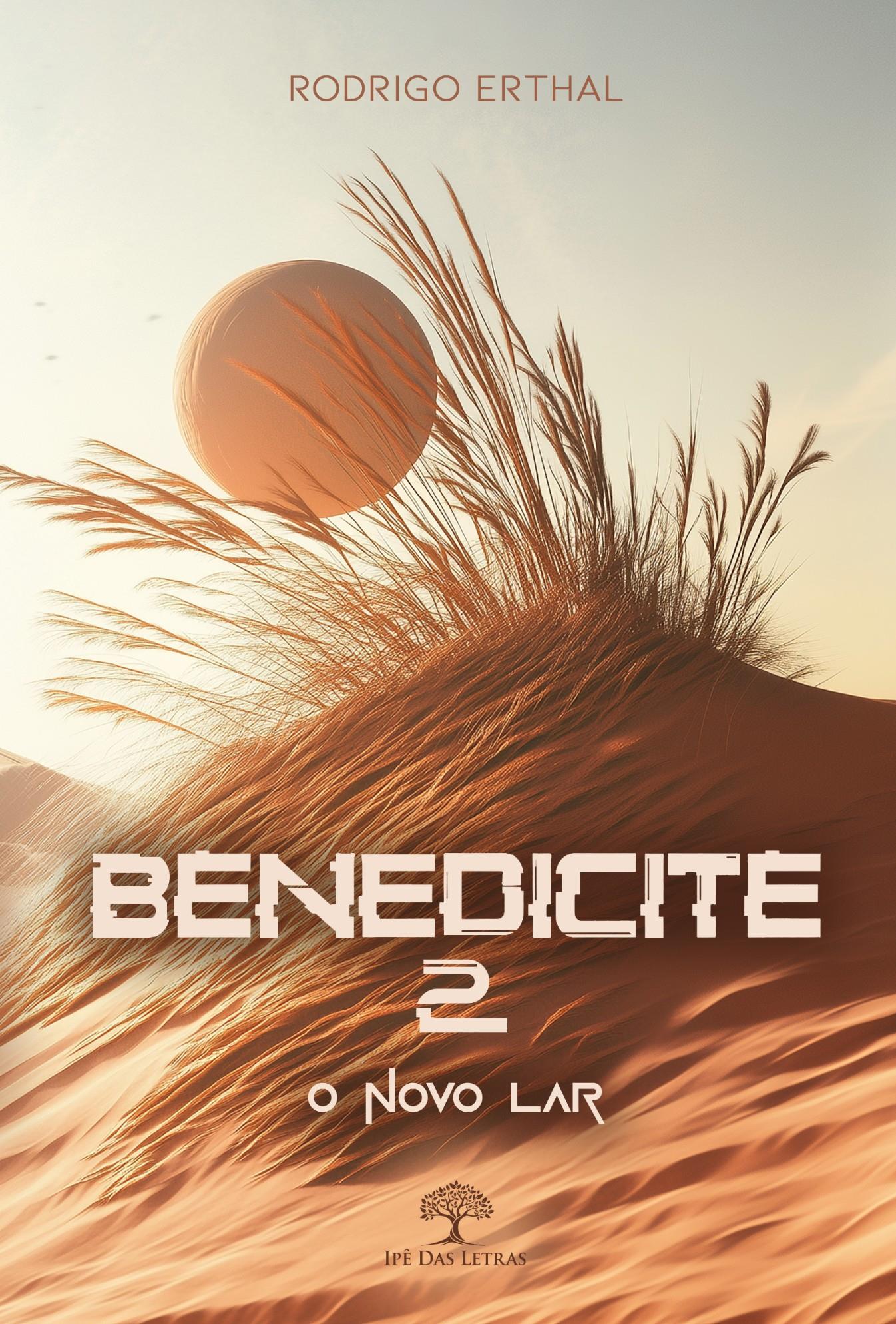
The title “The New Home” can be interpreted in several ways—not just as a physical place, but also as an idea of belonging and transformation. What does this concept represent within the characters’ journey?
The book’s title is revealed during the story, with one chapter named after it. However, throughout the reading, the question remains: What is this New Home and whose New Home is it? This was intentionally chosen. If we read the title directly, it’s “Benedicite – The New Home,” but is the spaceship Benedicite the New Home? If so, whose is it? But what if it’s something else, for example, a planet? Would that be the New Home? The idea is to make the reader discover what the new home is and whose new home it is. As the question suggests, is the choice of title simply for something physical, or for the growth and transformation of a character, or both? Unfortunately, I can’t answer without giving away spoilers, but the idea is to make the reader search for that answer.
The book also raises a profound question: is humanity truly prepared for extraterrestrial contact? In your view, what would such an encounter reveal about ourselves as a species?

In Book 1, the question of whether we are alone is answered. In Book 2, we will see the consequences of this discovery. I believe many are not prepared for the realization that we are not the only intelligent beings, but our history offers examples such as when they discovered that the Earth was round, that it was not the center of the Universe, and that we went to the Moon. Many people didn’t believe it, and I can say that a few still don’t, but we are still here, we move forward. So, if this happened, it would be very difficult for some and perhaps easy for others. This revelation would change the ego of many. In some sectors, such as religion, for example, it would be very complicated in some aspects. But I think it’s something we need to go through, to look less at our own navel and see that we are all in the same boat/planet and that there are other beings out there. Either we worry about everything around us, or we could be, perhaps, subjugated, or even destroyed.
His background in Biology and Physics, along with his experience as an astronomer, certainly influences his approach to constructing this universe. In what way has scientific knowledge contributed to bringing more realism to the fiction of the trilogy?
I’ve always enjoyed two genres in literature, fantasy and science fiction, and my background ultimately dictated my choice. Some science fiction films and books caught my attention, especially those considered more grounded, but having knowledge in science, encompassing biology and physics, helped in writing such a book. The scientific discoveries used in the book are plausible, or at least almost all of them. Some of these citations, which we might imagine exist today, do exist in the book. So I was concerned with creating sciences that I believe we will one day discover, that perhaps we still lack the technology for today, or even a different perspective on each problem.
By following Johnny through political pressures, cosmic discoveries, and personal conflicts, what kind of reflection do you hope the reader will take away upon finishing the book?
The idea behind writing a book was to try and tell a different story, but with the desire to entertain and amuse the reader, to make them forget about the problems of everyday life while they dedicate their time to reading. Of course, if each person reflects on their role in society and even in the Universe, showing that decisions and attitudes, even small ones, can often make a difference, for better or for worse, and manage to have some effect on the reader’s attitudes, generating some kind of change, perhaps leading humanity to take the next step in its evolution, that would be something extraordinary.
Follow Rodrigo Erthal on Instagram