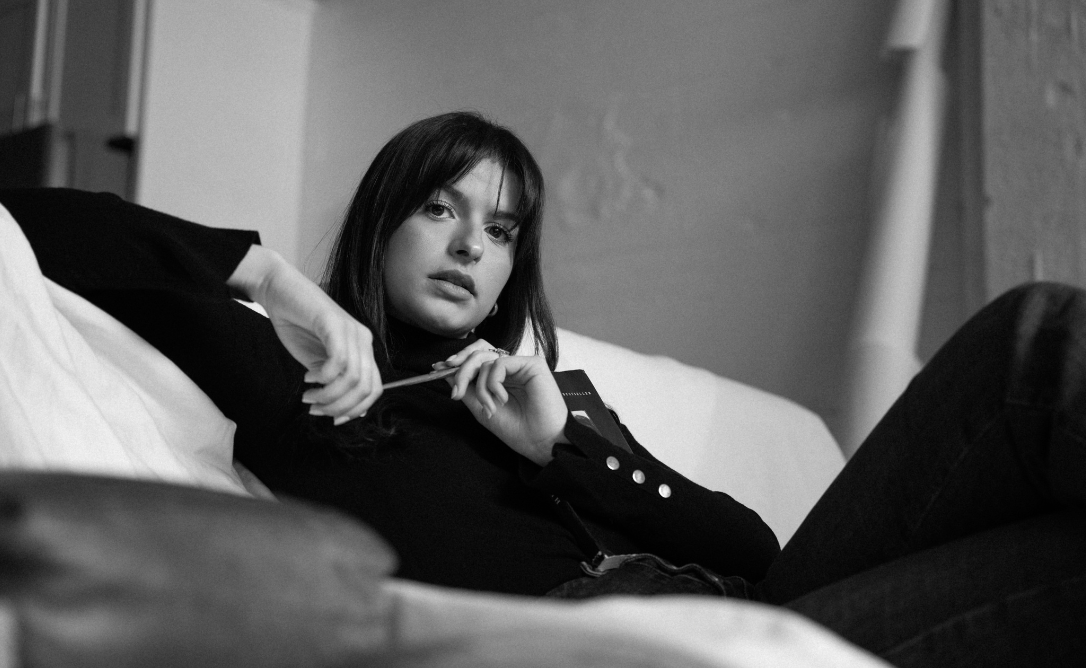
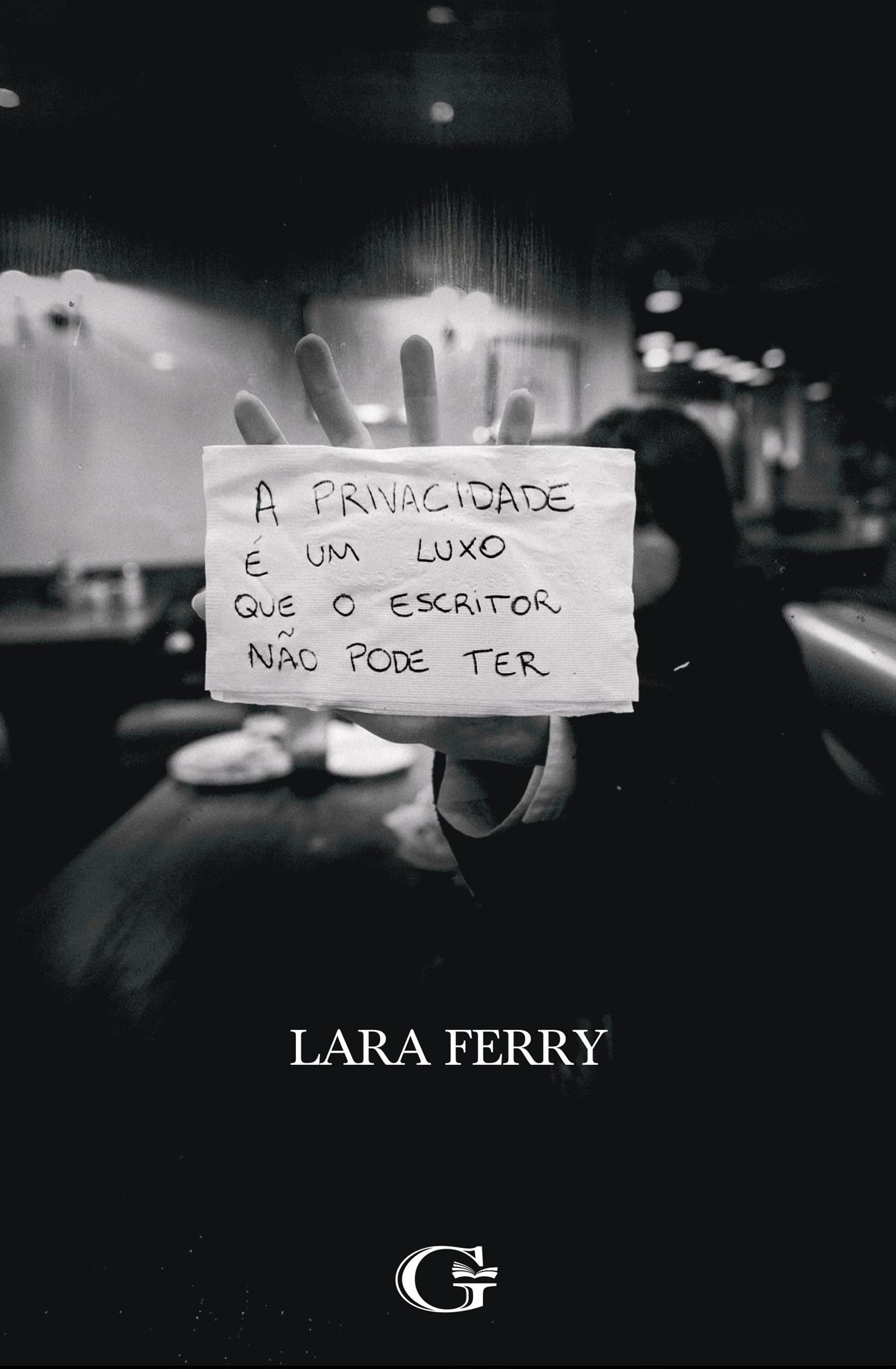
In “Privacy is a Luxury a Writer Cannot Afford,” Lara Ferry invites the reader into a territory where writing functions as both a mirror and a refuge: a hybrid mosaic of poetry, essay, and diary that breaks linearity to record anxieties, silences, and contradictions of the intimate. With a raw, frank, and experimental voice, the author explores themes such as loneliness, self-criticism, love in ruins, and the impulse to continue creating even when chaos reigns—constructing a work that does not seek easy answers but opens a direct dialogue with those who have ever felt displaced from themselves.
The book’s title is powerful and provocative. At what point did you realize that, in order to write truthfully, it would be inevitable to give up privacy—and what was the emotional cost of that?
When I sat down at the table and started writing. Writing is like going to therapy without anyone asking you, “And how does that make you feel?” It’s profoundly uncomfortable. Even when we talk about characters, there’s a very intimate exchange with each one of them—there’s always something of me there. The moment you expose that to the world, you become subject to the interpretation of others, to the loss of your own narrative. My emotional cost was precisely that: giving up control over how what is mine will be read. Losing, to a certain extent, ownership of my own story.
The work is constructed as a mosaic of fragments, breaking with linear narrative. Was this choice a concept from the beginning, or did it emerge as the book took shape?
It emerged as the book took shape. They were texts that came together, interspersed, and I realized I didn’t need to follow a linear path. I wanted them to be thoughts scattered across the pages, because that’s how I wrote. I wanted the reader to have the same experience: to enter a stream of consciousness. And a stream of consciousness, as we know, is not linear.
At various points, the book seems to inhabit a delicate boundary between confession and performance. How do you navigate this fine line between what is lived and what is transformed into literary language?
If you look closely, there’s a lot of me in each character—and vice versa. But little by little I’ve come to understand that I am not my characters, even though they carry enormous parts of me. Today I read the book and clearly see this separation. This doesn’t mean I don’t recognize myself there, but that, to create those people, there was a life context that no longer exists in me. It’s like being the father of different children: you’re never the same father, because you change through experiences. Life is art, and art is life.
Loneliness, self-criticism, broken love, and restlessness permeate the texts. Do you feel that writing was a way of organizing the chaos or of accepting it as part of existence?
Both things. It was accepting that chaos is part of existence and feeling—something necessary, even when painful. But it was also an attempt to organize that internal chaos.
There’s a constant sense of dialogue with the reader, almost as if they were leafing through an open diary. How much was this other person—the reader—present while you were writing?
I hope that happens. I didn’t write it thinking directly about the reader, but I would love for that to be the experience. One of my favorite books is Anne Frank’s Diary, precisely because, even without living through her social and political context, I felt immersed in that life. Through the diary, I was able to see the world from a different perspective. I wanted the reader to feel something similar.
You state that you are not seeking answers, but rather disarming them by offering questions. What kind of questions do you hope the reader will take away after closing the book?

Questions that push the reader outside their comfort zone. A book that disturbs, that makes you think. Is being vulnerable the same as being weak? If I write, does that make me a writer? Do we need another person to have a complete life?
The book speaks volumes to contemporary youth, but also to anyone who has ever felt disconnected from themselves. Do you see this work as a generational portrait or as something timeless?
I feel we live in an age of excess: information thrown at us from all sides. We get lost amidst so much and don’t have time to process our own feelings. This generational portrait of the youth I live in ends up being a mirror. That’s why I wanted to ask more questions. Today we have truths that we believe to be absolute, and the lack of dialogue impoverishes us. Before conversing, I wanted to provoke with existential questions.
After transforming such intimate experiences into literature, what has changed in your relationship with writing—and with yourself?
It gave me more courage to continue and understand my purpose in writing. I don’t write because it’s comfortable—quite the opposite. I write because it’s extremely uncomfortable. If anyone felt sad or uneasy at any point while reading, I probably felt that way too while writing. This made me more flexible in the face of my fears and more faithful to my inner truth. Always searching for it, and not for validation from the outside world.
Follow Lara Ferry on Instagram