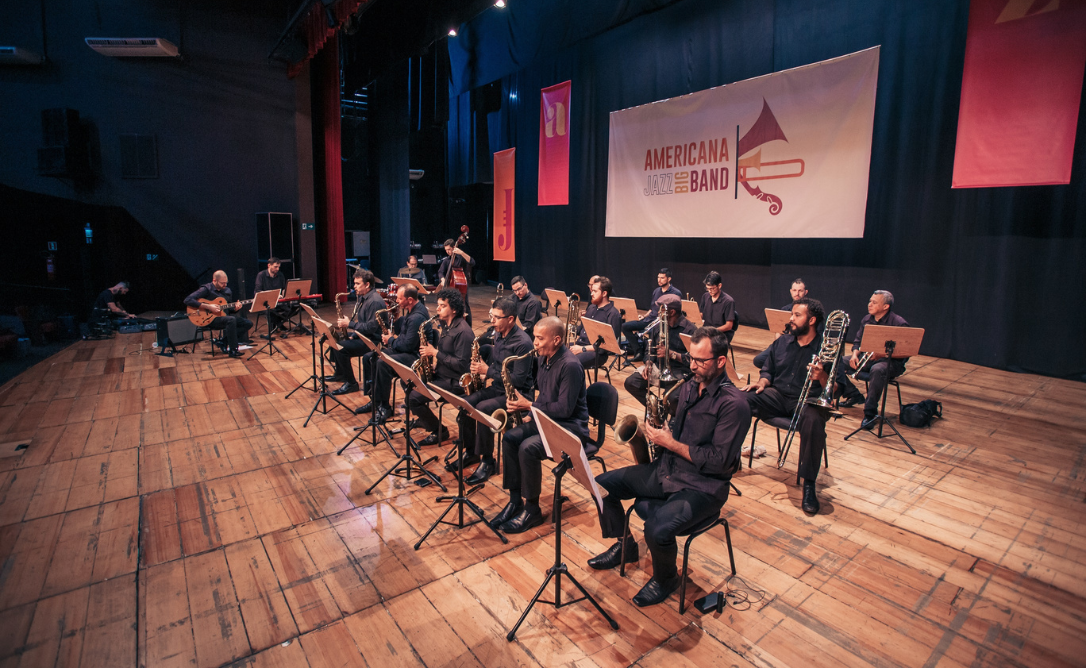
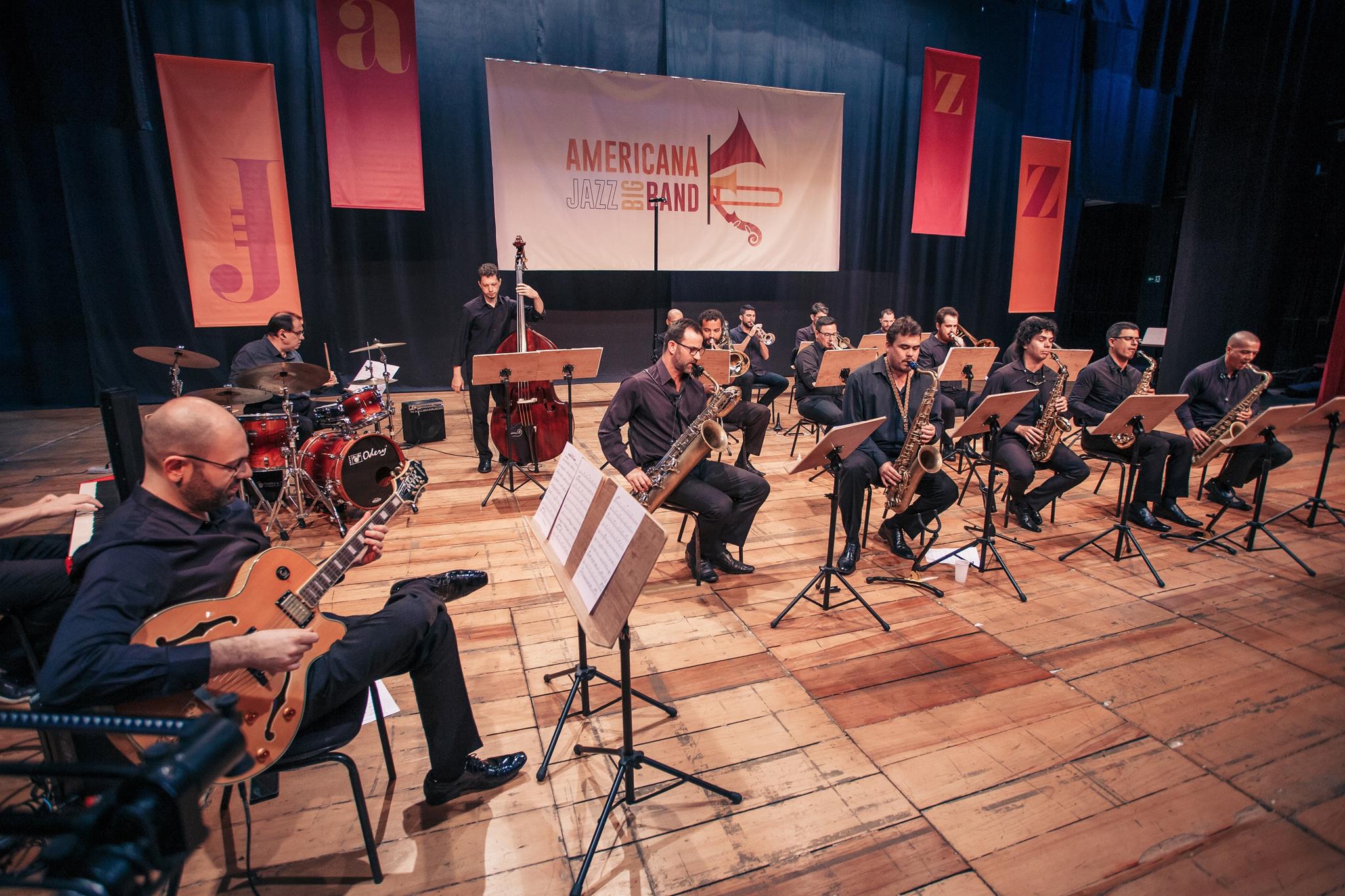
On April 3rd, the Americana Jazz Big Band presented a new interpretation of “Dindi,” a classic by Tom Jobim, in an original arrangement for big band. The release marks a significant moment in the collective’s trajectory, uniting tradition and experimentation and exploring new sonic possibilities without losing the essence of the work. In an interview, the group reflects on the creative process, the importance of revisiting Brazilian music, and the challenge of transforming a song icon into a contemporary instrumental experience.
Re-recording “Dindi,” such a delicate and symbolic classic by Tom Jobim, is also about engaging in a dialogue with a very large part of Brazilian musical heritage. How did you experience this emotional and artistic responsibility?
Re-recording “Dindi” is, above all, a gesture of great respect. We are talking about a work that has spanned generations and has been interpreted by immense artists of Brazilian music. There is, indeed, a great emotional responsibility, but it doesn’t come as a paralyzing weight—it comes as a sense of care. Our starting point was precisely this: to honor Tom Jobim’s work, to understand its nuances and, from that, to find an honest path of interpretation within our big band language. For us, it is also a way to contribute to the continuity of this story.
You talk about preserving the essence of the original work, but also imprinting your own identity on the arrangement. Where does reverence end and boldness begin in this new interpretation?
Reverence lies in what is non-negotiable: the melody, the song’s structure, the power of the lyrics. The audacity begins in how we choose to tell this story with the resources we have. In our case, this largely involves writing for big band—the textures, the internal movements of the sections, and the harmonic choices. We create more intimate moments during the lyrical exposition, with a more delicate foundation, and then expand upon this with resources inherent to the language, such as the wind instrument solo. It is in this balance that we strive to exist: deeply respecting the work, but allowing it to breathe in a different way.
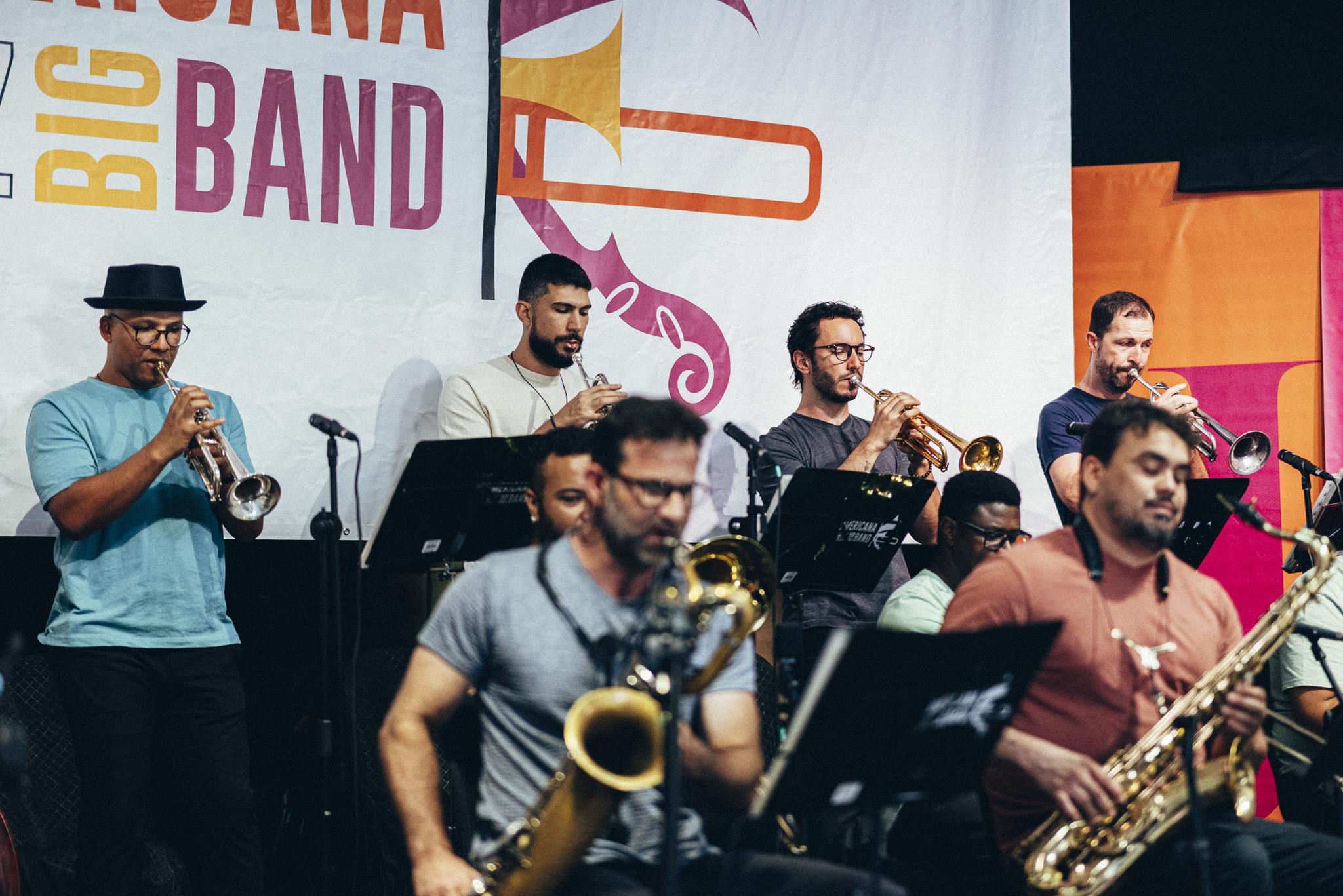
The big band formation greatly expands the possibilities for color, texture, and sonic impact. What did this format allow to be revealed in “Dindi” that might have gone unnoticed in a more traditional interpretation?
A big band allows for layering in a very particular way. In “Dindi,” we were able to explore more evident contrasts between moments of intimacy and expansion. The song begins with a more restrained atmosphere, highlighting the voice and the lyrics, but throughout the arrangement we reveal new colors—whether in the counterpoints of the wind instruments, the harmonic movements, or the responses between the sections. The solo, for example, is a moment where the big band takes center stage collectively, creating a new narrative within the music. This type of construction rarely appears in smaller ensembles.
The choice of song also stemmed from the partnership with Manda Moraes. What did her presence bring that was special to this version, and how did this collaboration help shape the single’s direction?
Manda was instrumental. The choice of “Dindi” was largely due to the possibility of having her interpretation within this context. She brings a very unique sensitivity, a very natural relationship with Brazilian music, which directly dialogues with the universe of Tom Jobim. The way she conducts the melody, with delicacy and intention, helped define the character of the arrangement as a whole. From this, we were able to build a version that respects the song and at the same time creates a space for real dialogue between the voice and the big band.
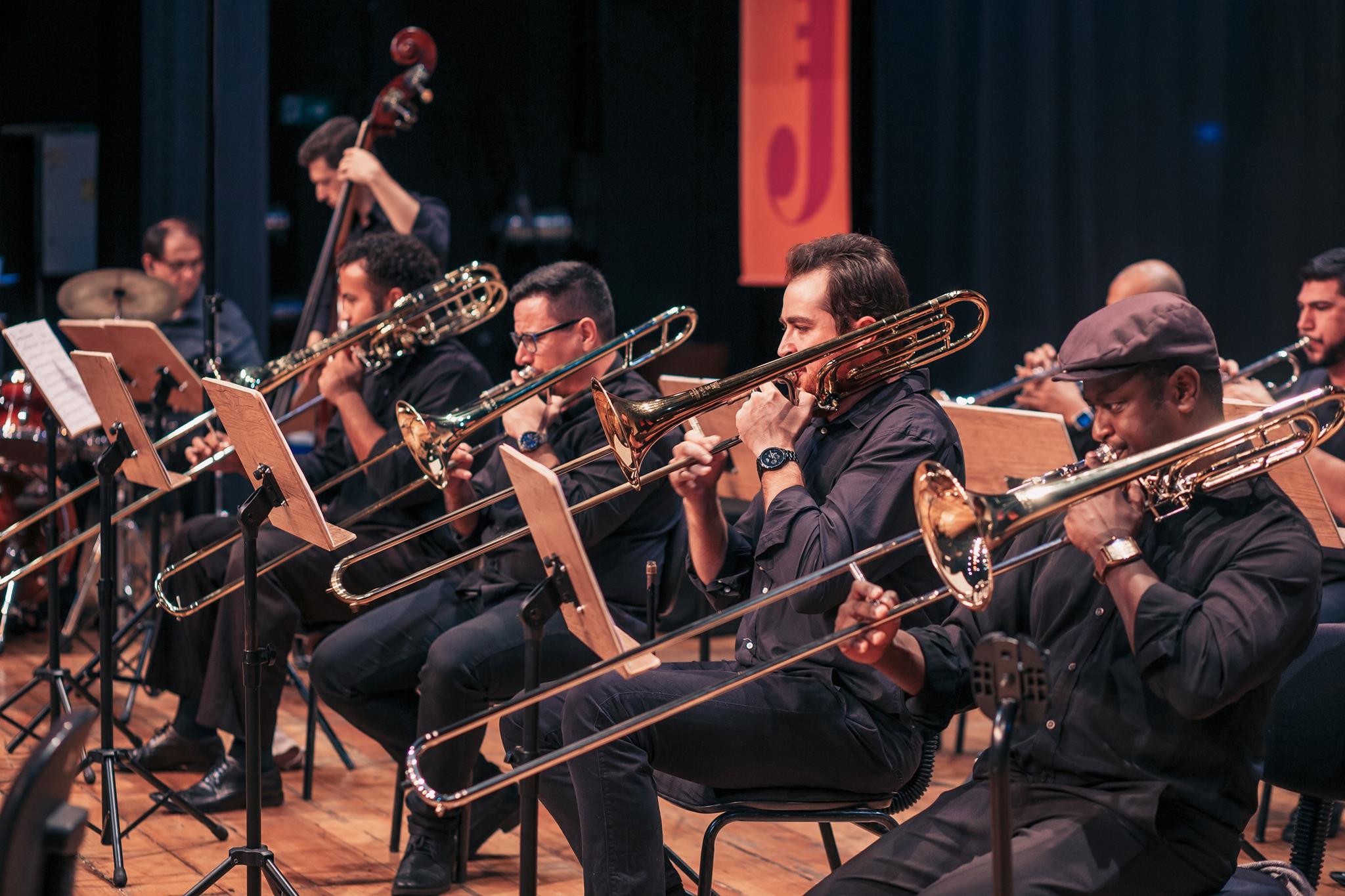
Receiving the support and authorization of Tom Jobim’s family certainly adds enormous emotional weight to the release. What did this gesture represent for you as musicians and as admirers of his work?
It was a very significant moment for us. Tom Jobim is a fundamental reference, and knowing that his family supported and authorized the release brought us a great sense of belonging. Of course, there’s always the awareness that he couldn’t hear this version, but this gesture gives us the impression that we’re on the right track—that we’ve done a respectful job that engages with his legacy. For us, this has enormous value, both artistically and emotionally.
The live video seems to reinforce the idea of musical truth, of a real encounter between musicians, arrangement, and emotion. What was important for you in showing “Dindi” in this almost documentary format as well?

The idea for the live video came precisely from this desire to record the moment as it happens. Recording audio and video simultaneously brings greater tension, because everything needs to happen there, in real time, but it also brings a truth that is difficult to construct under other conditions. We wanted to show not only the final result, but the process, the interaction between the musicians, the energy of the collective. A big band is that: a large group of people creating together at the same time. The video ends up functioning as a document of this encounter.
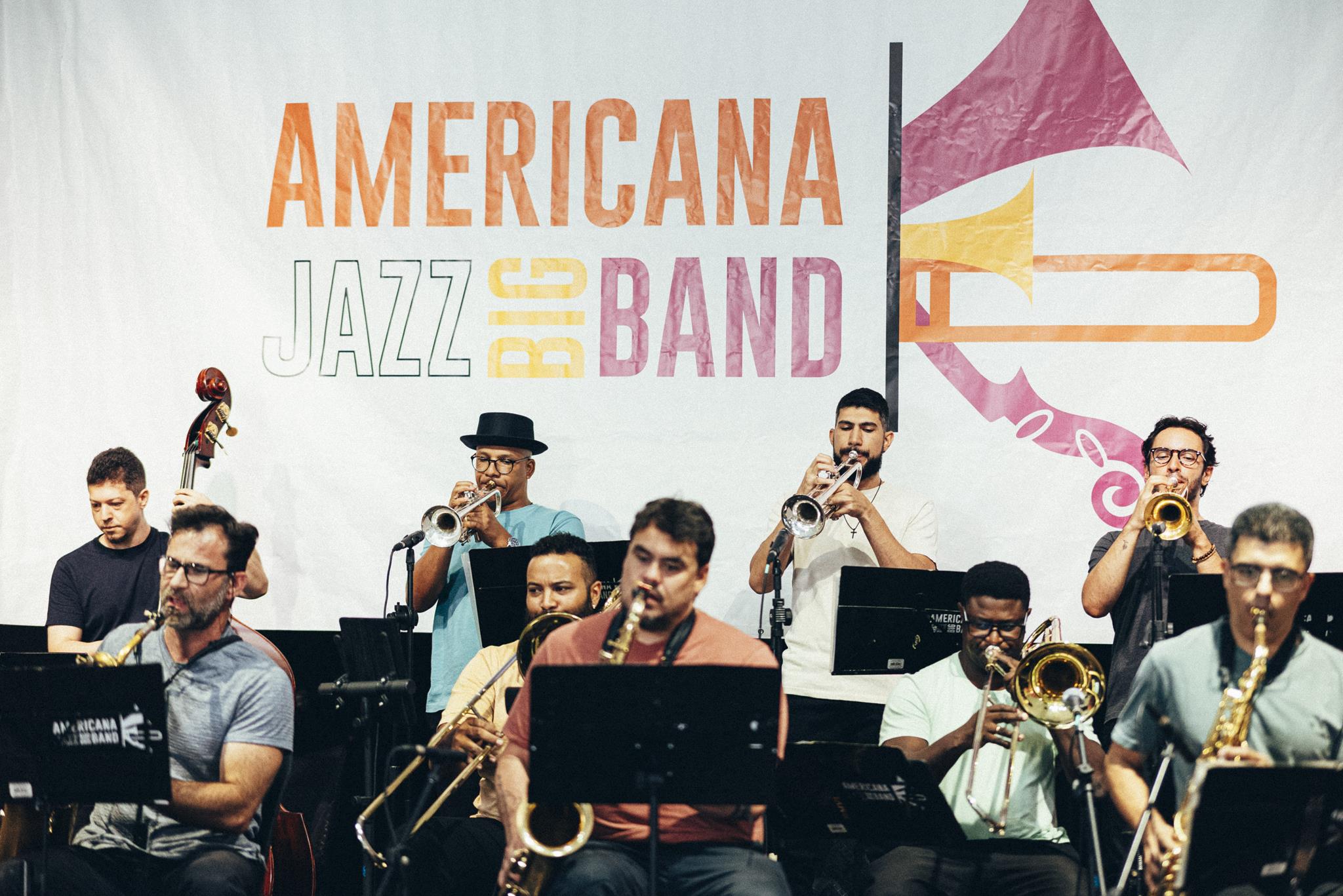
The Americana Jazz Big Band was born in the interior of São Paulo, outside the more traditional axis of large instrumental ensembles. What strength lies in building this type of work far from the major centers?
There is a very strong force behind it, because it comes from a real need. The interior of São Paulo state has significant proximity to training centers like Campinas, São Paulo, and Tatuí, which means there are many extremely qualified musicians in the region. At the same time, there is a lack of structured spaces for these large-scale ensembles to exist continuously. The big band is born precisely from this gap—as a space of belonging, of collective creation. Building this outside the major centers is also affirming that this production can exist in other territories, with its own identity.
With the release of “Dindi” and the preparation of your debut album, what place do you feel the big band wants to occupy within Brazilian music today: preservation, reinvention, or precisely the bridge between the two?
We strongly believe in this idea of building bridges. There’s a clear commitment to preservation—in the sense of keeping alive a language, a tradition that is very important. But this only makes sense if it comes with a contemporary perspective, a desire to reinvent and engage with the present. Our work attempts precisely to balance these two things: respecting history and, at the same time, proposing new ways of listening. Perhaps this is the place we seek to occupy today.
Follow Americana Jazz Big Band on Instagram