On April 1st, singer-songwriter Ju Kosso released the music video for “Sofisalma,” expanding the intense narrative of the previously released track into visuals. With an aesthetic inspired by graphic novels and the symbolic use of artificial intelligence, the project constructs a visual experience that questions social masks, validation discourses, and the multiple ways of existing. In an interview, the artist reflects on the creative process behind the video and the invitation to self-observation present in the work.
In “Sofisalma,” you start from a very contemporary concern: the distance between what we show and who we really are. At what point did this reflection become music?
I’ve always been very observant. After leaving Velhas Virgens, I regained the desire to write, to compose… various ideas, reflections, and a deeper understanding of myself emerged. I began to look more honestly at what I do, what I’ve stopped doing, and also at the illusions I’ve created along the way. It was in this process of self-observation that this restlessness took shape and ended up becoming music.
You construct the music video from a “trinity” between body, soul, and AI. How did this idea originate, and what does each of these dimensions reveal about how we exist today?
I’m very connected to the human psyche; it’s fascinating and liberating. This idea of the “trinity” emerged as a kind of dogma, a representation of the context of this music video: body, soul, and AI… And that’s where the conflict arises: who do you support? The body that performs, the machine that projects, or the soul that needs silence? As if it were something like: this is how you should exist! I thought of 3 characters in the video to represent their hidden personas.
External validation is something that makes human beings sick…while the soul, for those who believe, takes a back seat, is left aside, a last resort, so as time goes on the soul cries out for help, for truth, removing the mask is a relief. This trinity in the music video is precisely this conflict: what we show, what we artificially construct, and what, deep down, we truly are.
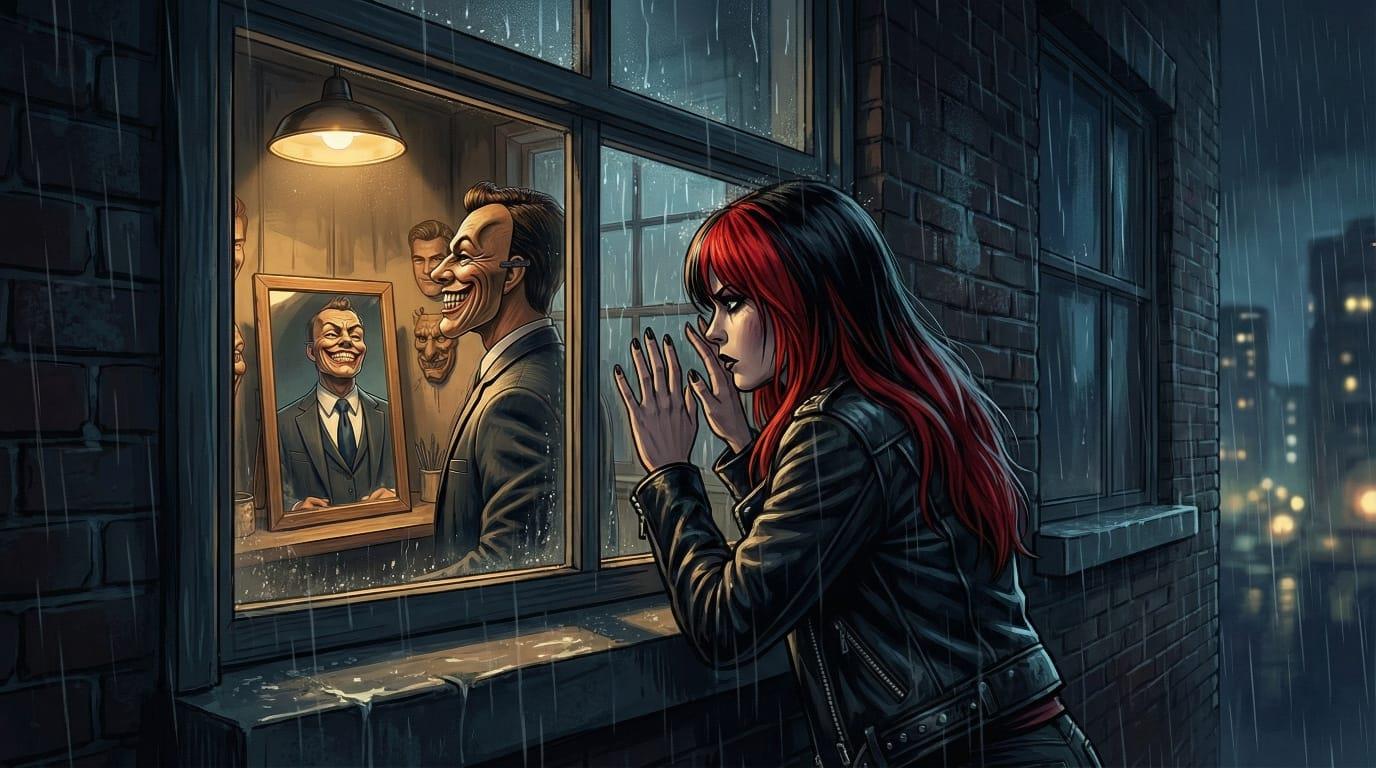
The characters in the music video seem to represent very human contradictions, such as repressed desire, staged happiness, and the search for transcendence. What were you most interested in exploring emotionally in these figures?
Happiness doesn’t exist… what exists are a few happy moments… this search for happiness is a crazy obsession… We’re neurotic about proving what we’re not!
Yes, repressed desire exists, and sometimes this desire remains hidden within this egoic pursuit… and self-deception is a defense mechanism to avoid being discovered; the fear of what others will think can open the door to something more exciting to do in secret… When there is repression, rules, morality, or fear of punishment, the desire doesn’t disappear… The issue is the person’s ego believing they are transcending, because if a person lies to themselves, they are already alienating themselves, even if no one knows the truth about them… maintaining a social status weighs heavily within them…
And the hidden becomes almost a secret stage for this desire… the person constructs an image opposite to what they feel or desire in order to live in society… all to be well-regarded, in the family, in the eyes of religious doctrine… then, the person reveals themselves in secret, in untruths, in lies with a face of perfection… There are people who laugh loudly at parties, buy drinks, seem happy… but when they get home, they collapse. Alone, they are a different person… And yes, it hurts, because sometimes, we are not just that beautiful image we show to the world.
You mentioned that the first brainstorms were psychological, not visual. How was it to transform feelings, internal conflicts, and social masks into such symbolic images?
I once read that thoughts generate emotions, emotions generate words, words generate behaviors, and so on… so, for me, it wasn’t that complicated to create the images from what the person emanates.

The graphic novel-inspired aesthetic gives the video a very unique identity. What did this visual universe allow to be expressed that a more conventional music video might not have achieved?
The idea of making the music video in the style of graphic novels came about because I have some comics at home, I saw them and thought… why not? And since the collaboration was with Felipe Andreoli, I wanted to surprise him with what he represents. Then, I developed the characters within this theme, which gave me the freedom to exaggerate, symbolize, and delve deeper into the conflicts in a way that a more conventional music video might not have been able to achieve.
There’s another interesting thing, which is the fact that I’m returning artistically after my dedicated departure from Velhas Virgens. It’s a new comeback for me, so that people can get to know my art, my sound, my style, who I am… This is the debut of my first original single, and I wanted people to first feel the weight of the sound, the message of the lyrics. That’s why I trusted Arnaldo Belotto’s work to transform this emotional charge into visuals. He’s already created music videos for Titãs, Lobão, and other big names in rock, so there’s a sensitivity there for this universe.
Artificial intelligence appears in the project not only as an aesthetic resource, but as a symbol of a quest for perfection. What most intrigues you about this blend of human and machine?
I’m not against machines, but for creators, there’s a very clear difference between what is human and what is artificial, and that has everything to do with “Sofisalma.” Music is born from experience, from conflict, from mistakes, from truth. When it’s 100% made by AI, for me, it loses that essence of the real, the human, the creative. Using it as a tool, 10%, 20%, even to unlock a process, can be valid, but it can also addict the ego and lead to the temptation of needing to be important… it’s that thing, the machine can do everything 100% and you think it’s your merit and tell others that you put your soul into it, to receive applause… you have to be very careful not to become an artificial artist, everything being too robotic, when the person relies too much on that and ends up losing in order to be validated… Now, in the music video, I think it makes sense, because it’s a complement, that’s where the playful, the fantasy, the construction of images comes in… it’s a viable way to produce without needing a millionaire structure and my life is real, hahaha… I’m not a Hollywood superstar.

For me, rock is visceral, it comes from the heart, from the soul itself, even from human imperfection… if a person clings to something 100% artificial, it becomes a crutch, they lose themselves in the pursuit of fame… but what about talent?
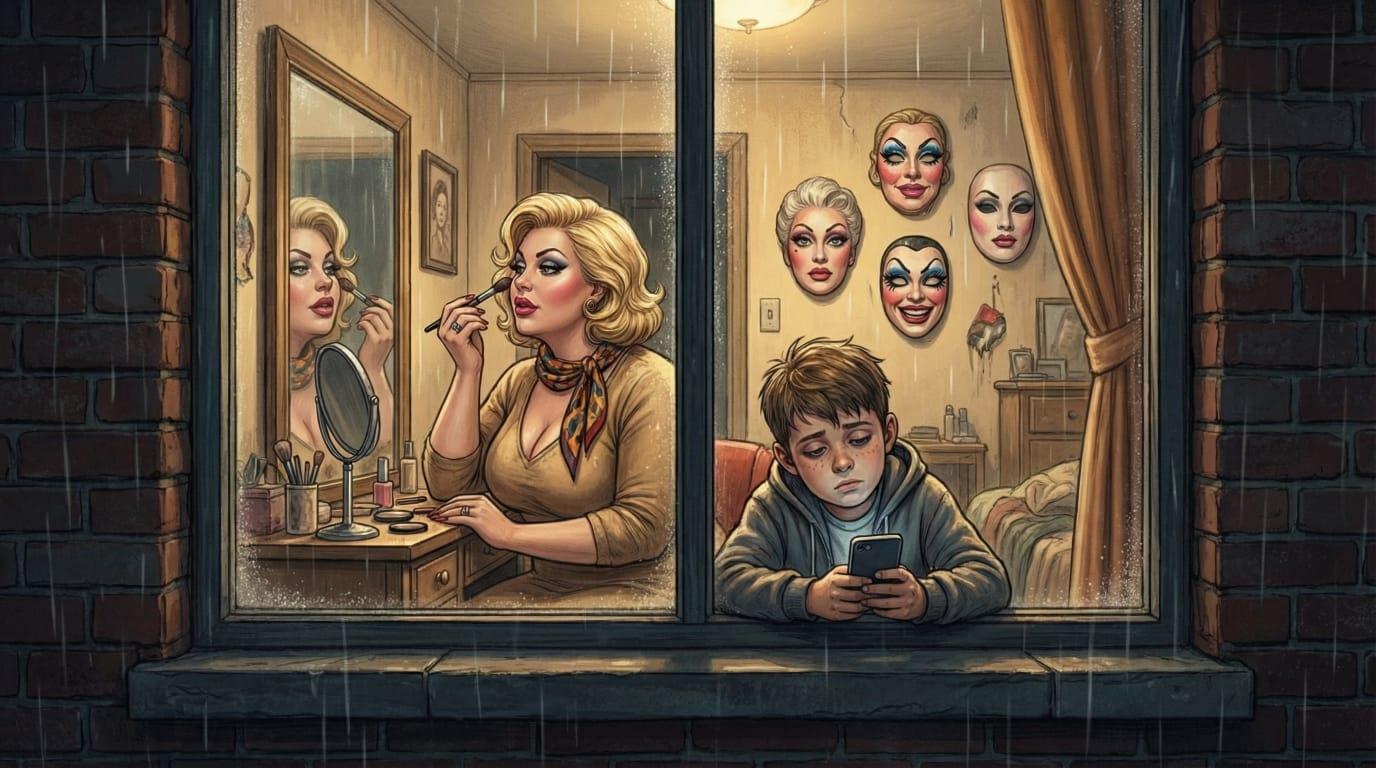
“Sofisalma” seems to offer fewer answers and more mirrors. Do you feel that this work stemmed more from a desire to express yourself artistically or to provoke the audience to confront themselves as well?
Of the two…but… Remembering that I was featured on Velhas for 15 years playing “a” very daring character…and today, exposing myself is something that is already ingrained in me and in itself any provocation.
Now, when someone sees themselves in the video, even if they don’t want to accept it, the confrontation happens… Sofisalma might be a little unsettling, unless the person is truly numb… but when it’s unsettling, that’s when we start to truly see ourselves.
In the end, the question “who isn’t you?” keeps echoing very strongly. After creating this song and this video, what truths do you feel you also needed to confront within yourself?
Who isn’t you? Wow, it’s almost a trick from the unconscious, because we’re not just what we show, we’re also what we hide, light and shadow, we’re what we repress, what we pretend doesn’t exist. I face myself every day, I’m still discovering and reinventing myself, there are things I’m afraid to face… that’s me; in process, under construction, maybe we can call it…transcendenceUntil my last breath!
But “who am I not?”, I delicately try to be less critical and perfectionist… a truth I don’t negotiate: I never needed to screw anyone over to feel superior. The rest I’ll gradually fall apart… but I never intentionally harmed anyone because I felt threatened… and so, the game goes on!
Follow Ju Kosso on Instagram