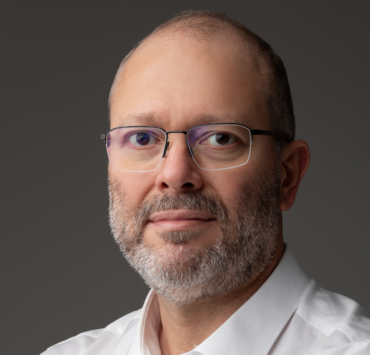
In “My Father Lied to Me,” writer and psychoanalyst Daniel Lirio follows Tomás, a 12-year-old boy who begins to question his relationship with truth after discovering a small lie told by his father. From this seemingly simple episode, the work constructs a sensitive narrative about trust, ethics, imagination, and maturation, intertwining references from science, philosophy, psychoanalysis, and literature. In an interview, the author reflects on how growing up also means learning to live with doubts and understanding that reality can be seen from multiple perspectives.
“My father lied to me” starts from a very simple, almost everyday situation, but one that causes a huge shock to Tomás. What interested you in showing about childhood through this seemingly banal discovery?
Childhood and adolescence are sensitive periods in which perspectives can change rapidly. Unlike adulthood, where changes are slow, small events have intense implications for young people. During this period, it is very beneficial when parents and educators are present, not to offer answers, but to make the young person feel safe to explore their own path without fear of disappointing these figures and confident that they will be supported when things don’t go as expected.
The father’s lie acts as a crack in the protagonist’s worldview. At what point did you realize that this small episode could open up such a broad reflection on truth, trust, and reality?
This story is based on a true event, when my son caught me in a lie. As is common for parents, one feels guilty and then needs to do something about it. As a psychoanalyst, I already knew that truth, trust, and lies are complex issues. Connecting the dots, the book emerged naturally.
Throughout the book, Tomás begins to distrust not only people, but also the certainties that organize life in society. What most motivated you in constructing this restless awakening of the character?
Here we need to return to the broader social context in which it was written, marked by the spread of lies and fake news. I saw that a part of society reacted by defending what was scientific truth, the importance of research, of fact-checking. Although this stance is extremely important, we cannot lose sight of the fact that the human field also encompasses the capacity to play with reality and lies, to invent, to fabricate, to create. The book deals with this delicate theme of being able to recognize and submit to a shared reality, to scientific research important for our quality of life, without giving up our capacity to create new narratives, new paths for our existence.
The narrative brings together figures like Ulysses, Marie Curie, Einstein, Freud, Kafka, Clarice Lispector, Fanon, and Milton Santos within the universe of a 12-year-old boy. How was it to transform these figures into living presences within Tomás’s experience?
It was extremely fun and thought-provoking as well. In the process, I immersed myself in each of these characters, watched videos, listened to speeches, read their academic and literary works, and imagined how each one would speak and behave in a given situation. Especially when these figures were children, I wondered what they would be like if they lived in the space and time defined in the book. Whenever we invent a character, we need to give them a unique voice. In this case, along with the name came a great deal of information, and it was up to me to refine the content to produce a voice that matched the context and resonated with the original person’s work.

The book seems to show that growing up also means learning to live with doubts, without completely definitive answers. Do you believe that this might be one of the most difficult—and most human—challenges of maturing?
I completely agree. Growing up means living with doubts, with a lack of certainty. Without taking risks, we remain limited to repeating pre-established formulas and, therefore, we cannot move towards our desires. So on one hand we have the desire for guarantees, on the other we have the desire for freedom, to experience desire. In the middle lies doubt.
As a psychoanalyst, you certainly deal with the layers between reality, fantasy, defense, and perception. How did your clinical listening influence the writing of this story?

Primarily through understanding the dramas of individuals, because the question of truth and falsehood is not limited to everyday events. When we follow this thread, we arrive at very profound existential questions, such as otherness and death. Furthermore, it leads to the understanding that we are complex and contradictory beings. Therefore, seeking a single vision of reality is a failed task, not only because different people have different values, but because each person harbors conflicting truths within themselves.
There’s something very beautiful about the idea that truth and imagination don’t have to be enemies, but can coexist. What did you want to evoke in the reader by working with this tension in such a sensitive way?
With Artificial Intelligence, we are amazed by its ability to create images and videos with perfection. However, this does not surpass the human capacity to invent narratives, to invent worlds, playing with the possible and the impossible. In a world with so much violence, so many catastrophes, it’s normal for us to stop imagining a better world and become pessimistic. Writing this book rescued a part of my optimism.
Ultimately, the book also seems to be an invitation to think about the world without depending on a single frame of reference that guarantees truth. What do you hope children, young people, and even adults will take away from this reading and apply to their lives?
Exactly! We need to expand these reference points, especially if we consider the different frameworks of thought that permeate us, not only European, African, and Indigenous ones, but also a myriad of Asian, Arab, and many other perspectives. Each way of thinking is also a way of feeling and relating. One of the good things about our time is having access to so many different perspectives. It is up to us to take advantage of them.
Follow Daniel Lirio on Instagram