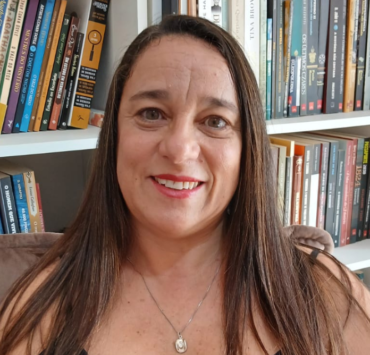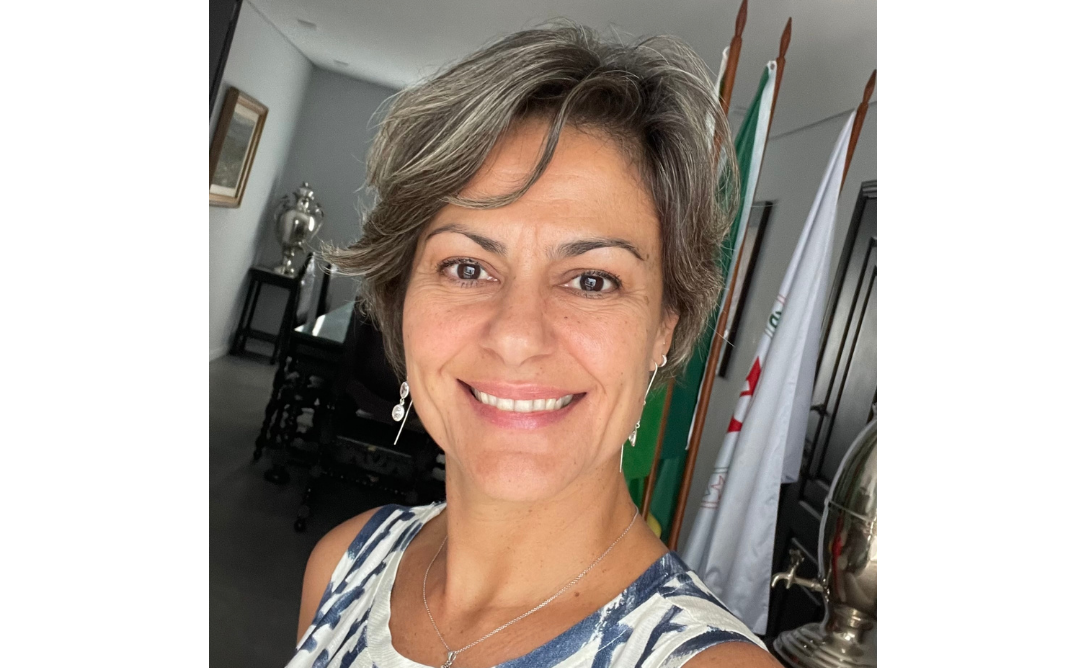
In Fazenda Camélia, author Katia Parente guides the reader through a plot marked by family secrets, legends of Brazilian folklore, and fantastical elements set in the mountains of Minas Gerais. The story follows Pietra, a biotechnology specialist who returns to her family’s origins and discovers that the inherited farm holds mysteries involving ancient deaths, pacts, supernatural creatures, and guardians linked to the protection of nature. In an interview, the author discusses the construction of this universe that unites suspense, ancestry, and sustainability, transforming the Brazilian heartland into a setting for a narrative of discovery, legacy, and reconciliation with the past.
“Fazenda Camélia” is born amidst the mists of the Minas Gerais mountains, blending rural heritage, family mystery, and fantasy. At what point did you realize that this setting could hold such an ancient story?
When I visited my friend’s family farm in Minas Gerais, she and her siblings told many stories, starting with when their great-grandfather bought the land and later divided it among his children. These family stories are very rich, so I combined the ones I heard there with those my parents tell. Furthermore, the region itself is very inspiring, with beautiful landscapes and a simple rural life, the kind that makes coffee and cake taste even better. That’s why I thought it would be the ideal setting for a story like this.
Pietra is a biotechnology specialist who leaves the rational environment of the laboratory to confront the silences of the Poço Fundo farm. What interested you in exploring this confrontation between science, memory, and the inexplicable?
Lately I’ve been hearing a lot about the parallel between science and spirituality. Perhaps the advancement of quantum physics has awakened this in people. And what intrigues me most is that I believe the two shouldn’t be separated. Science and mysticism go hand in hand; they are two ends of the same line. Mysticism brings intuition, science develops it. So, placing the conflict between rational thought and the questions of the human mind seemed to belong to this narrative, so absorbed by the beliefs and superstitions of the population.
The Ferrazzo family’s property remained a secret for 28 years and is now revealing uncomfortable truths about the past. How was it to build this mystery around an inheritance that is also emotional and symbolic?
For me, writing is always an adventure. Creating a setting like this wasn’t easy. I confess I needed a lot of paper and pencil to jot down dates and names, otherwise I would have gotten lost. It’s not the first time I’ve written about a family drama with ancestral events. I did it for the first time in the book Dark Inheritance, but this one, about Camellia Farm, was much more complex. And the experience was incredible. It’s like traveling through time, researching contemporary places and events. Not to mention that I put myself in Pietra’s place; being deceived in this way isn’t easy to accept, much less discovering the evils and other problems she uncovers throughout the pages. Writing this book was like living another life, without a doubt.
Old diaries, records, and family mementos help Pietra suspect that her parents’ death was no mere coincidence. What appeals to you about the idea that the past always leaves traces, even when someone tries to bury it?
I really enjoy technological advancements and new ideas; I’m an Aquarius, after all! However, if we don’t know our past, there’s no way to improve the future. And the past, at least for now, can be known through handwritten letters, notebooks discovered after rummaging through the closets of those who have passed away, old records, newspapers, and magazines. These records are the story of someone’s life. They are part of the family, and there’s a certain magic in this material. Imagine discovering a diary of a family member you never even knew. Surely, reading that diary will make you travel back in time and learn where you came from, what happened to bring you to where you are today. And it may be that some of these discoveries aren’t so good. Someone might want to keep the secret buried, but the struggle to unearth it is what makes the adventure more interesting.

The figure of “Cabeludo” emerges as a concrete threat, linked to ancient pacts and family tragedies. Why did you want to bring Brazilian folklore into a thriller with darker and more tangible undertones?
Brazilian folklore is very rich and I think it should be explored. And to reach a wider audience, it shouldn’t be told only as children’s stories. We know Cuca, Saci, and Curupira, for example, from school books. However, they are somewhat sinister characters, if we consider their abilities. Cuca can be wicked, Curupira can end the lives of those who enter the forest to hunt animals. We have potential for suspense books and films as good as any Norse or Greek mythology. I like a good suspense story, with paranormal phenomena and inexplicable mysteries; I think we can explore Brazilian content, with the various legends that circulate, especially in small towns in the interior of the country.
The book also engages with legends like the werewolf and the Cuca, reclaiming elements from the Brazilian heartland. How was it to work with these references not by treating them merely as hauntings, but as a living part of the characters’ identities?
As Father Calan says in the book: “Legends are as important in the lives of these people as the food they put on their plates.” In some regions of Brazil, legends are part of society; they are living characters. They stimulate creativity and even the local economy. For example, the werewolf in the city of Joanópolis, in the state of São Paulo. Therefore, when I started developing the characters who live in the farm region and make their living off the land, I couldn’t leave out the legends. Including the presence of the priest, since the church is part of the community, just like the legends. They are what help build the local culture and can help identify important characteristics. For me, it is fundamental that the stories continue to be told, with good conversations around a table, even if it’s to demystify them.
Crystal mining, enlightened beings, and UFO sightings expand the narrative into a fantastical universe linked to protecting the planet. How did this connection between the supernatural, territory, and sustainability arise?
In the state of Minas Gerais, there are many stories about UFOs, as well as talk of a special energy, since it’s a region rich in minerals. Because my background is in environmental studies, I address this issue in all my books. And I believe that we, human beings, are not separate from the planet. We are part of it and need to live in harmony with it. It was from this concept that the idea of making this connection arose. Besides, nobody guarantees that we are alone in the universe, right? Anyone who has seen a starry sky, sparkling like Pietra in the book, can’t believe that life only exists here on Earth. And if we learn to respect the boundaries between our space and that of others, then we will be able to live in peace with any living being.
By transforming the property into the Camellia Farm, Pietra takes on a mission of protection and reconciliation with the past. After this journey, what reflection would you like the reader to take away about legacy, roots, and responsibility towards what we inherit?
The main reflection would be on the importance of understanding our past. We all have a history; we come from somewhere, and this has contributed to building our lives today. Even if there were difficult events, such as wars and prejudices, emphasizing them is not the way forward. We have to accept that it happened, that it was the thinking of the time, and from there, change. To do things differently, it is necessary to know and understand.
When we inherit something, be it a farm or just a habit, I think it’s necessary to ask: Does this serve me in any way? Can I change it? And then, do what needs to be done, without belittling or demeaning what came before. It’s not by destroying the statues of supposed heroes of the past that we will build a better future. That will only generate more resistance to change and more hatred. We must respect the past, not repeat it.
Follow Katia Parente on Instagram