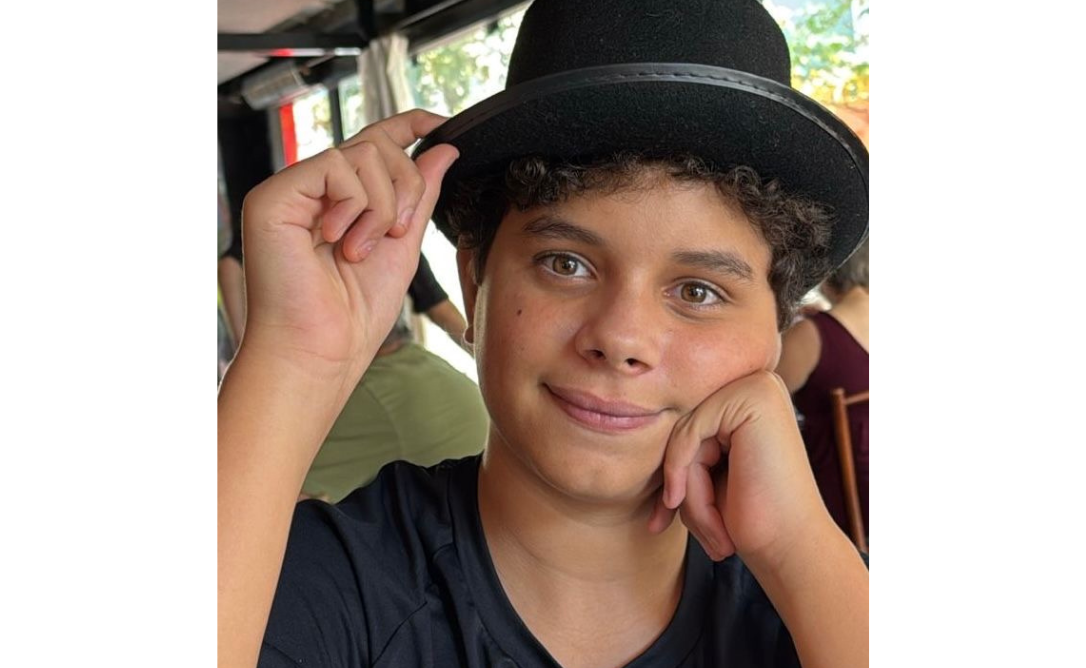
At just 15 years old, writer Antônio Carreira Alvim makes his literary debut with *Joaquim and Call: The Submerged World*, a novel that combines epic fantasy, adventure, and reflections on the emotional challenges of adolescence. Following the journey of two brothers summoned to confront a threat capable of endangering different worlds, the work addresses themes such as loss, bullying, empathy, and acceptance, showing that true strength is born from friendship and the ability to believe in oneself. In an interview, the young author discusses the personal experiences that inspired the narrative, the process of creating his own universe—including the characters he designed—and how he found in literature a way to transform difficulties into hope for other young readers.
“Joaquim and Call: The Submerged World” is born from a fantastical universe, but also from very real feelings, such as loss, insecurity, and the search for belonging. At what point did you realize that this story needed to be told?
I created Joaquim and Call when I was very young. At age 6, I drew the characters representing my own hands. And with them, I spent all my time creating dialogues and adventures between Joaquim and Call. As the years went by, I realized that my characters didn’t live stories and adventures only related to my own issues. And that thousands of children and young people also felt isolated and out of place in the group. So I thought: I’m going to write a book with something to help everyone who, for whatever reason, feels apart from the group.
Joaquim and Call are brothers marked by the destruction of Vila das Mãos and the disappearance of their parents. What was it like to create characters so young, yet already burdened by responsibility, guilt, and fear?
All my art and stories happen spontaneously. They are ideas, realities, events that I see, feel, and put on paper. Regarding Joaquim and Call, I never wanted to create perfect heroes. I knew I couldn’t be too serious, but I couldn’t be extremely shallow either. They lost very early what gives us security: family, home. I thought of Joaquim as that young man who, with the death of his parents, goes through premature and forced growth, and this becomes crucial in the formation of this character’s personality. And Call has a personality trait inspired by me and my experiences. In the part of the boy who suffers but prefers to hide behind laughter and jokes. Writing about these young people is very pleasurable because it’s invigorating to see them overcome and face their fears and insecurities until they achieve their victories.
Call uses humor and irony to hide insecurities, while Joaquim carries the weight of having survived. How much do these emotional conflicts resonate with feelings that many teenagers experience, even outside of fantasy?
I think that’s precisely why many people will identify with them. Despite living in a fantasy world, Joaquim and Call feel things that exist in the life of any teenager. Call makes jokes all the time to disguise his suffering. Joaquim, on the other hand, represents another very common feeling: the burden of feeling the need to be strong all the time. This generates insecurity, anxiety, and a constant tension of failure. Many teenagers feel this pressure, whether at school, among friends, or within themselves. When a young person sees Joaquim confronting insecurity or Call hiding his feelings behind jokes, perhaps they will realize that they do the same. And, who knows, they might understand that asking for help, talking, or showing vulnerability are not signs of weakness.
Felitrix arrives through an interdimensional portal and completely changes the protagonists’ destiny. What does this character represent within Joaquim and Call’s journey?
Felitrix represents a turning point for the protagonists. She shatters the reality that Joaquim and Call knew, showing that the world is much bigger than they imagined and that there is much pain spread throughout the universe. She acts as a kind of catalyst for their journey. Not because she solves their problems, but because she invites them to confront them. She is the one who shows them that there is a way.
It’s a journey that’s possible and shouldn’t be undertaken alone, but rather together. She carries her own emotions and conflicts. She’s not just there to guide the protagonists; she also has a mission, makes difficult choices, and grows throughout the story. This was very important to me because I wanted all the characters to be transformed by the journey. Ultimately, Felitrix symbolizes hope.
The work transforms values such as empathy, friendship, solidarity, and love into sources of power. Why was it important to show that true strength can be born precisely from the purest feelings?
Today we live in a cruel world where selfishness, greed, prejudice, and disbelief plague society like pests. Power is associated with control, violence, and corruption. I wanted to show the opposite: that feelings like empathy, friendship, solidarity, and love are also powerful forces. They can transform people, save relationships, and give courage to face the most difficult moments. In Joaquim and Call, these values don’t appear merely as a moral lesson. They are part of the very rules of the universe. The characters’ choices have consequences because emotions have power. When someone acts with selfishness, fear, or hatred, it transforms the world in one way. When they act with compassion, trust, or love, it transforms it in another. I like this idea because it shows that what we feel and do matters.
You drew inspiration from experiences of bullying you faced to create a story about difference, exclusion, and overcoming adversity. How did writing and drawing help you transform pain into creation?

Writing and drawing made me forget the reality I lived in school for many years. There, I had the opportunity to transform everything I suffered into “heroes” and “villains” battling in a sea of plots, which calmed me a lot. It was in this process that Joaquim and Call were born. They don’t represent my life literally, but they carry feelings that I knew very well: insecurity, the desire to find a place in the world, and the hope that difference wouldn’t be a subtraction but an addition. Art taught me that pain doesn’t have to be the end of a story. It can be the beginning of a creation capable of touching other people. When we transform a difficult experience into something that moves, inspires, or makes someone feel understood, that pain gains a new meaning.
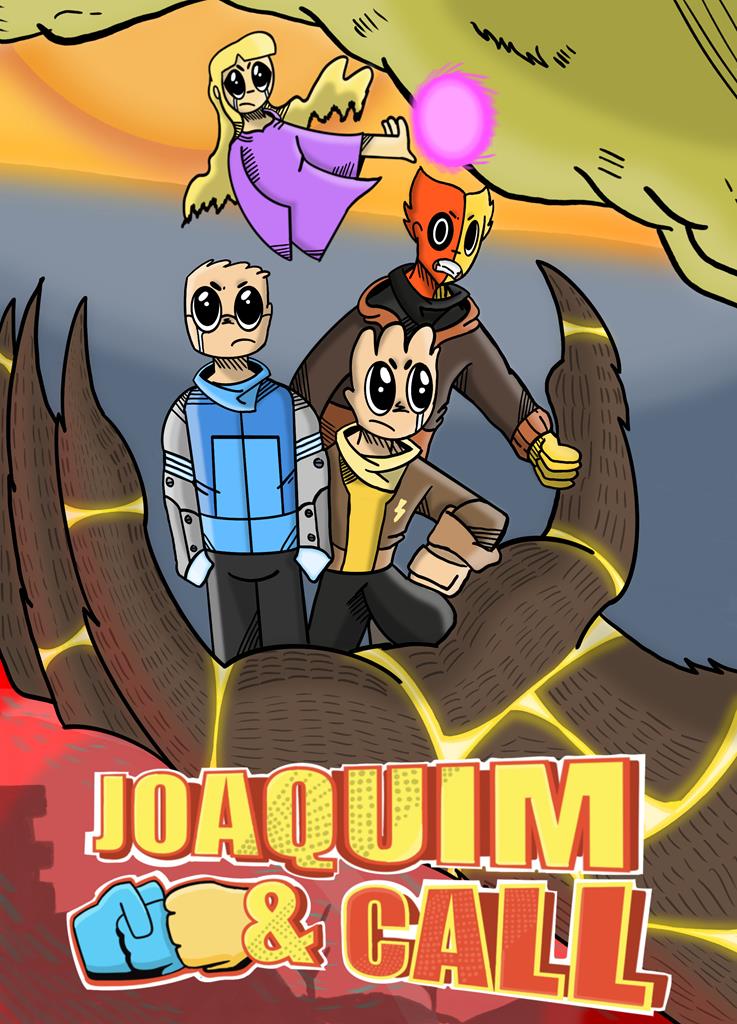
Besides writing the book, you also designed the characters in this universe. What was it like to give visual form to creatures, heroes, and villains that previously existed only in your imagination?
It was one of the most special parts of the whole process because, before there was a book or a script, there were drawings. It was through drawing that this universe began to come to life. Drawing was a way of making concrete what previously existed only in my imagination. It was like visiting this universe and bringing a piece of it onto paper. Many times I would make a drawing and, from it, discover new characteristics of the character or even change parts of the story. I think that’s one of the greatest riches of Joaquim and Call: the universe was built from the inside out. The characters weren’t just created to fulfill a function in the narrative; they were developed over the years, growing along with me. Perhaps that’s why I have such a strong connection with each of them.
The book’s message invites young readers not to let themselves be defined by labels imposed by others. After someone finishes “Joaquim and Call: The Submerged World,” what feeling would you like that person to take away?
More than any specific emotion, I would like the reader to finish the story with hope. Often, we come to believe that we are what others have said we are: weak, different, incapable, or insufficient. But the truth is that our identity cannot be built by the gaze of others, but rather by the choices we make and the values we hold. If Joaquim and Call manage to make a child or teenager believe a little more in themselves, understand that their differences and their good feelings can also be a strength, and realize that asking for help or showing feelings is not a sign of weakness, then the story will have already fulfilled its purpose.
Follow Antonio Carreira Alvim oN Instagram