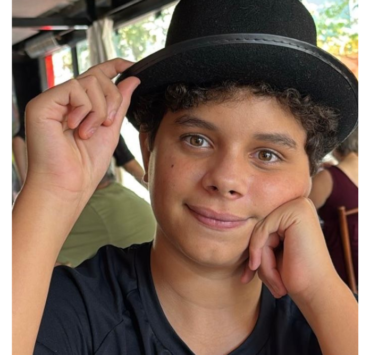
In Chronicles of the Dense Mists, author Rafael Mininel constructs a dark fantasy universe where epic battles, supernatural entities, and an original mythology serve as a backdrop for discussing profoundly human themes. Following the journey of Valek, a soldier trained to obey who begins to question the violence of the regime he swore to defend, the work addresses dilemmas such as authoritarianism, manipulation of memory, persecution, and the price of challenging oppressive systems. In an interview, the author discusses the creation of this vast fantasy universe, the inspirations behind his characters, and how fantasy can become an instrument for reflecting on freedom, consciousness, and the conflicts that traverse different societies.
“Chronicles of the Dense Mists” presents Valek as a soldier trained to obey without question, until the moment when violence surpasses any possible justification. At what point did you realize that his moral breakdown would be the heart of the narrative?
The origin of Valek arose when I studied the massacres of the Bosnian War, especially the accounts of soldiers sent to exterminate entire villages in the name of ethnic cleansing. That made me wonder what happens inside someone trained to obey when an order destroys their own humanity. I then realized that the true conflict of history would not be war, but conscience.
The scene in Porthus, with a simple town being condemned for being considered “unproductive,” carries a very human brutality. What did you want to provoke in the reader by contrasting the daily life of the population with the cold logic of the Empire?
I wanted to show that violence becomes more terrifying when it affects ordinary people. Before the invasion, Porthus smells of bread, children playing, and a simple routine. This makes the reader realize that statistics, speeches, and political justifications always hide concrete lives. When war enters an ordinary home, it ceases to be an idea and becomes a human tragedy.
Valek was indoctrinated to believe in the superiority of his people and to normalize killings in the name of power. How was it to construct a protagonist who begins as an instrument of authoritarianism but ends up confronting what he helped to sustain?
I didn’t want a perfect hero, but someone deeply marked by the environment in which he was raised. People don’t abandon years of indoctrination overnight. Valek’s transformation happens slowly, marked by guilt, fear, and contradictions. For me, breaking with an ideology also requires confronting one’s own identity.
The presence of the two children hidden under the table seems to act as the moment when Valek recovers something essential of his humanity. Why did this encounter become the turning point in his journey?
Because there, all abstraction disappears. Until then, war could be justified by speeches, orders, and ideologies. Faced with two terrified children, no theory remains standing. Valek stops seeing “enemies” and starts seeing people. It is at that moment that conscience finally triumphs over indoctrination.
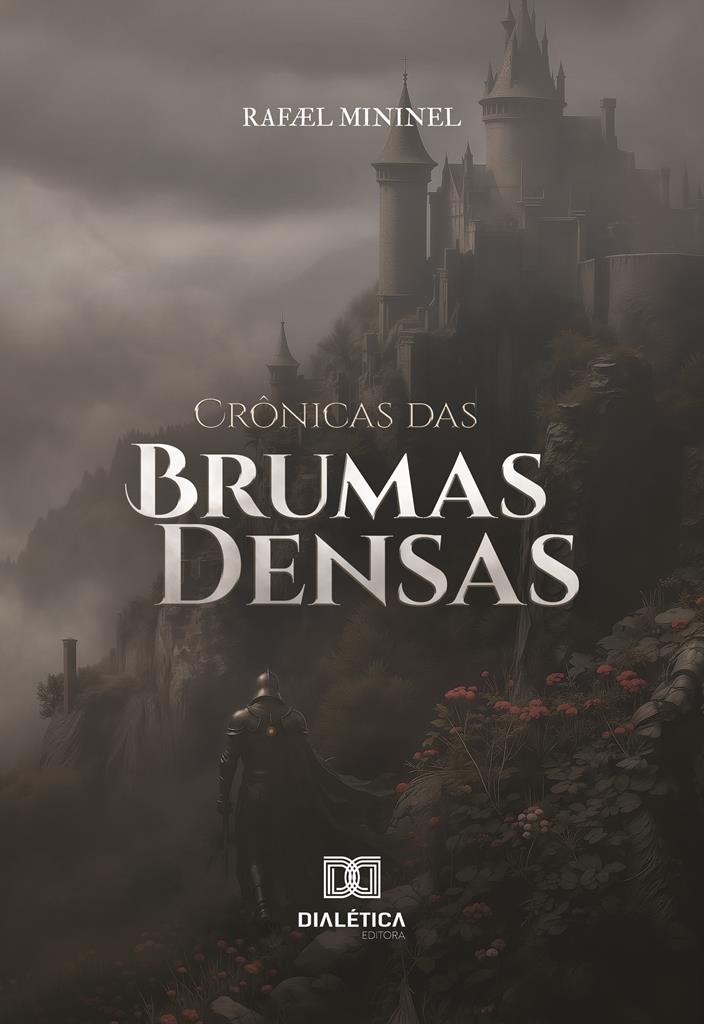
The book addresses state violence, ethnic cleansing, memory erasure, and political persecution within a dark fantasy setting. Why did this genre seem like a powerful way to discuss such harsh and current themes?
Fantasy creates a safe distance for the reader to enter the story without raising defenses, but it preserves all the force of human issues. By inventing a world, I am not escaping reality; I am offering another perspective from which to observe it. Often, fantasy manages to discuss authoritarianism, intolerance, and violence with a freedom that realism rarely achieves.
The Shadow Archivist, who feeds on contradictory versions of the same story, is a highly symbolic figure. What does this entity reveal about memory, truth, and narrative manipulation within the universe of the work?

The Dark Archivist symbolizes a world where truth can be destroyed not only by censorship, but also by an excess of versions, manipulation of information, and fake news. When no one knows what to believe anymore, reality itself weakens. He represents the power to control narratives and transform forgetting into a weapon.
Characters like Mira, Led, and Lyra embody different forms of resistance: leadership, disruption of order, and sensitivity amidst brutality. How do these figures broaden Valek’s journey beyond individual heroism?
I wanted to show that no transformation happens in isolation. Mira is a weaver who goes beyond simply mending her own life to unite people and weave a collective resistance, earning leadership through respect. Led represents absolute sacrifice, erasing her own existence to save the world. Lyra, as a singer capable of anchoring reality, symbolizes art as resistance to authoritarianism. Together, they show that a world is not saved by warriors alone.
The work suggests that lucidity comes at a high price in a world where truth can be erased and heroism is rarely rewarded. After going through this journey with Valek, what kind of unease would you like the reader to feel?
I hope the reader finishes the book wondering to what extent their own convictions are truly their own. But I would also like them to cherish the memory of Led. His greatest heroic act was saving the world at the cost of his own existence, becoming someone who could never be remembered by those he saved. Only the reader knows this sacrifice. Perhaps remembering Led is, in the end, a way to overcome oblivion.
Follow Rafael Mininel on Instagram