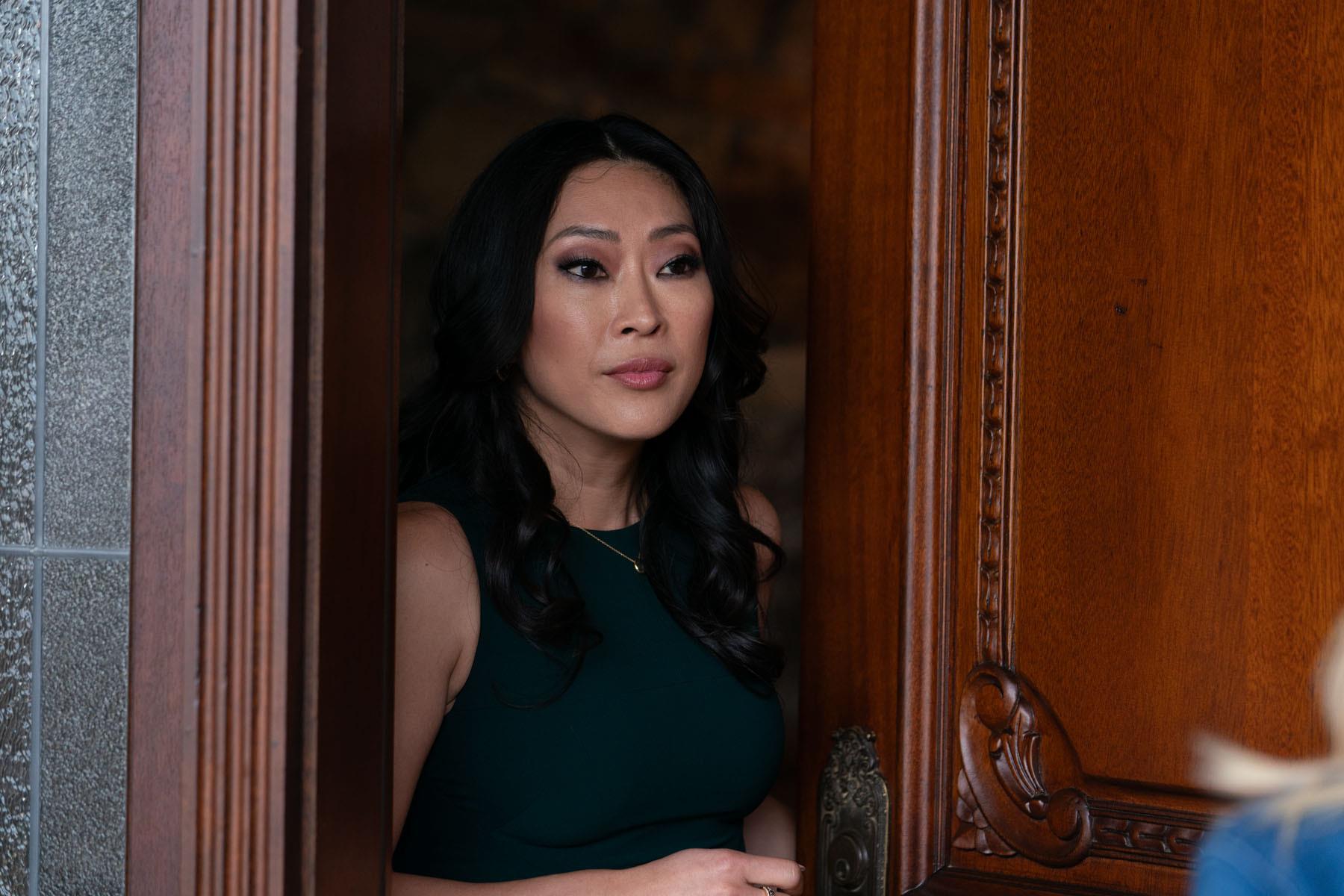
In Season Two of The Hunting Wives, Jackie Dallas returns as Jia-Yi, now moving even closer to the center of the political game driving the series. After spending the first season positioning herself for power, the strategist takes on a crucial role in Jed Banks’ campaign for governor — and begins to discover what happens when ambition, public image, and personal interests no longer unfold exactly according to plan. For Dallas, one of the most compelling questions of this new chapter is: “At what point does their desire to win at all costs overcome their intention to do the right thing?”
In the interview, Dallas discusses discovering new sides of Jia-Yi, exploring the divide between private identity and a carefully curated public image, and drawing on her former medical training to observe the smaller details of human behavior in performance. She also reflects on leaving a stable career in medicine to pursue acting, explains why inner conflict is essential to the characters that fascinate her, and speaks about the importance of women understanding their own bodies and advocating for themselves within the healthcare system.
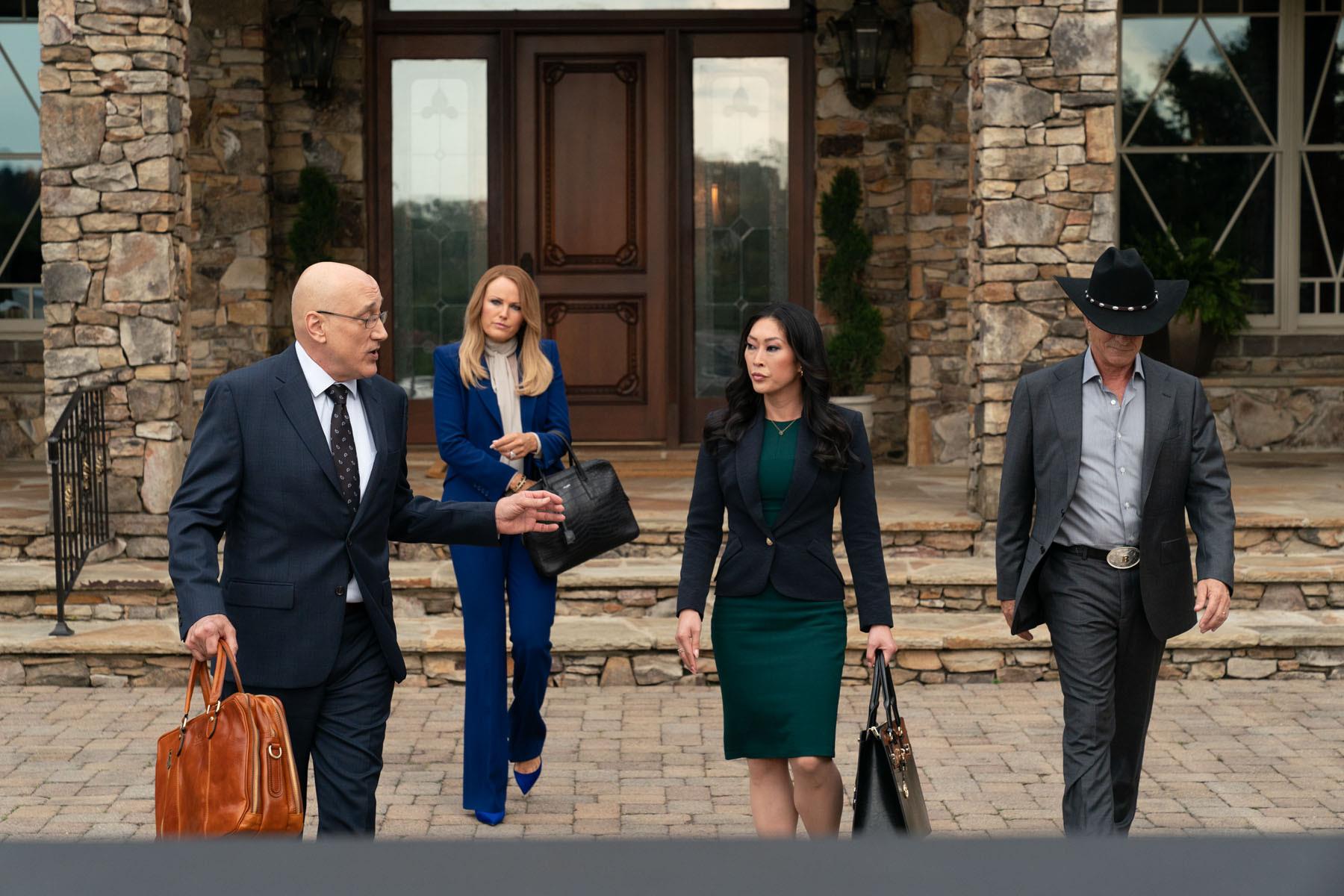
In Season Two of The Hunting Wives, Jia-Yi appears to take on an even more significant role as the story moves into a gubernatorial campaign and questions of public perception. What changed in the way you see her now that she is much closer to the center of the political strategy driving the story?
In season 1, we see Jia-yi positioning herself to be powerful. She is smart, confident, a little bitchy, but very ambitious. In Season 2, we get to see if her strategy pays off. She’s won Jed Banks over, but does she have what it takes to get him to office? It’s been fun getting to explore the nature of their relationship, and how Jia-yi handles herself when things are going according to her plan and when they aren’t.
A political strategist has to understand not only what people believe, but also how they want to be perceived. What interested you most about playing someone who operates right at that intersection of private identity, ambition, and public image?
The most interesting question to me about politicians is: at what point does their desire to win at all costs overcome their intention to do the right thing? And at what point does the human with a personal life, history, and flaws become so covered up by the curated image that they’ve changed as a person? In Season 2, we get to see Jia-yi handle Jed’s public image, and it helps that their ambitions are aligned. But as the audience, we’ve had the privilege of seeing Jed’s true persona in his private life, and it’s been fun to try to figure out who Jia-yi might be outside the office when Jed isn’t around.
The Hunting Wives has already established a world shaped by secrets, desire, power, and complicated relationships. Returning for a second season, did you feel that you already knew Jia-Yi, or did you discover sides of her that only began to emerge when you received the new scripts?
As an actress, I felt that I knew what Jia-Yi’s goal was in Jed’s campaign, and how willing she was to make it happen. But as you’ve mentioned, the world of this show has many secrets, and things can get messy. The writers of this show are so clever that they pushed me to discover new sides to her as she finds herself in situations that she, or I, didn’t anticipate.
Before acting, you spent years studying medicine and completed residency training in general surgery and pathology. Is there anything from that background — observing people, handling pressure, paying attention to small details — that still influences the way you build a character today?
Absolutely. As a doctor, we’re taught to read the signs and symptoms to treat a condition, but you should never forget the fact that you are treating a human being. When you’re a clinician, you see patients on their good days, bad days, and for some, the most devastating days of their life. Some people want to share their life story, while others are just desperate to be heard, and then you’ve got those who put up a stoic front and pretend everything is okay. And you realize that everyone reacts differently and not always in the way that you expect, so you must learn to read between the lines if you really want to understand how that person is feeling or processing information. When I build a character, I think about what kind of person they would be and how they would react to good and bad situations. From there, I try to weave in the nuances of human behavior, like the nervous habits a person might have, the body posture of someone who gets defensive, or how their voice can change based on their mood. To me, it helps me communicate my character’s feelings or intentions beyond the words on a script, and it helps me keep the character grounded in real life.
Leaving medicine after investing so many years in that path was an enormous change. Looking back now, did it feel like you were abandoning one version of yourself, or finally allowing another version that had always been there to take up space?
The latter. I don’t think I ever consider a life change an abandonment of oneself, because we grow and learn so much from every phase of our lives. I wish I had enjoyed medicine more. I spent so much time, effort, tears, and tuition on my medical training, and it certainly would have been nice to stay in a secure and financially stable career. But when you’re creative, there is an irrepressible energy to create that is hard to explain to someone who is not. Every stage of my life, I was inspired to be a performer, or a storyteller, or an artist, and when I was working 80 hours a week in the hospital, I had very little time to do much else, and that spark in me just struggled. When I finally made the decision to walk away, it felt right. As crazy as I must have seemed to everyone around me, I felt at peace with it because I knew I was pursuing something that really made me happy.
You are also passionate about women’s health advocacy and the importance of knowing your own body and speaking up within the healthcare system. Having experienced healthcare from the inside as a physician in training and now from outside the profession, what do you wish more women understood about advocating for their own health?
After I graduated from medical school, I had the privilege of being able to focus a year on clinical research. Most of it was outcomes-based, such as how many people or procedures had good outcomes vs. complications, and one of the most eye-opening things I observed was how much of a gap there was in healthcare disparities. In fact, since then, many different research studies have proven that a man and a woman could walk into the same hospital with the same condition, and the man would get better, quicker, more aggressive treatment. You could chalk it up to sexism, and I’m sure there is some truth to that as well, but the biggest reason, in my opinion, is because women’s health was never prioritized to be taught in our medical training. Hardly any teaching curriculum is dedicated to menopause, women’s sexual health, mental health, or the lasting effects of pregnancy on the body. Then you consider that nearly all the pathophysiology that is taught about the human body was derived from studying male bodies; it’s no wonder that many general practitioners are underprepared to properly discuss and diagnose women-specific issues. So, my advice to women is to know your own body, what is normal, and to speak up when it is not. And if you are simply told that your symptoms and discomfort are just a reality of getting older or having children, understand that there are still treatments that can help manage or fix those issues. If your doctor dismisses you, seek out a second opinion, preferably with a women’s health specialist who will take your concerns seriously. It’s frustrating how many times that even I have gone to a doctor, been disregarded, and had to demand specific screening tests and referrals, only to confirm that there was indeed something wrong. We must be our own biggest health advocate.
From Stranger Things to The Hunting Wives, your career has already taken you into very different characters and worlds. Today, what does a role need to have in order to spark that same curiosity about the human experience that ultimately led you from medicine to acting?
As my career has advanced, I’ve been fortunate to get opportunities on bigger roles on bigger shows, and the most interesting roles to me are the ones that try to hide their struggles in their world. Everybody has something that they are dealing with, and well-written characters should be the same. Conflict is what draws our interest to a story, and inner conflict is what draws interest to a person. I love getting the chance to play a character who is trying to deal with personal issues in a world that is continuing to throw life curveballs at them because it’s like I get to learn how to navigate these challenges alongside my character. It gives me the chance to really immerse myself in another person’s decisions and consequences, which is cool, and learn more about them and myself at the same time.
Follow Jackie Dallas on Instagram