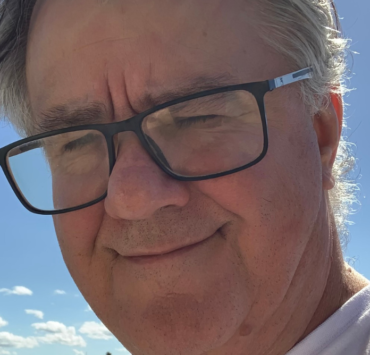
In *Inescapable Modality of the Visible*, Arnaldo Rocha Filho invites the reader to see Ouro Preto beyond its historic hillsides and centuries-old churches. The work brings together chronicles, poems, and pieces of literary journalism that intertwine autobiography, observation, and reflection, composing a sensitive narrative about time, belonging, and the search for meaning in everyday experiences. Between Minas Gerais, Dublin, and other affective geographies, the author constructs a journey that transforms the visible into poetic material and the invisible into a constant presence.
More than a collection of texts, the book presents itself as an encounter between languages and memories. With photographs by Eduardo Tropia, illustrations by Chiquitão, and poetic translation by Adriana Iennaco de Castro, the publication expands its aesthetic dialogue by incorporating different artistic perspectives. The participation of names such as João Bosco, Carlos Bracher, Guilherme Mansur, Angelo Oswaldo, and Edvaldo Pereira Lima reinforces the plural character of the work, which consolidates itself as a cultural mosaic deeply connected to the identity of Ouro Preto.
By transforming personal memories, urban scenes, and human encounters into literature, Arnaldo Rocha Filho offers an invitation to contemplation and listening. Inescapable Modality of the Visible proposes an exercise in paying attention to the world and the human condition, where each word seeks to reveal what often goes unnoticed—a lyrical tribute to the city, to time, and to the act of observing with wonder and gratitude.
The book presents Ouro Preto beyond the postcard image. When you write about the city, what are you trying to reveal that usually goes unnoticed by tourists or even residents?
I experienced Ouro Preto in a way that was different from the typical tourist postcard image. I arrived with my family unintentionally, as my father had been transferred for work and I was almost 17 years old. I found a city with dim streetlights and very little activity on the dark weekday nights. This was my first contact with the city, and what seemed somber and sad became the light that would sprout from the hidden side of the streetlights, revealing within me the avid and multifaceted flame of creativity and life. And this light could not be perceived by tourists.
In Inescapable Modality of the Visible, autobiography and contemplation intertwine. At what point did you realize that your own story was also a key to interpreting the world – and not just to recounting it?
Even though I had lived since childhood with an eclectic curiosity and an intrinsic desire to do things differently – and this should be translated as a way of interpreting the world – it was in Ouro Preto that I received the key that would open my world to the world and vice versa. I couldn’t fail to mention the happiness of existence contextualized within the still incipient era of high technology.
The work traverses different geographical locations – Ouro Preto, Dublin, and others – but maintains a very strong emotional unity. How do these different spaces interact within you and transform into literature?
Generally speaking, when people travel to places outside their daily routine, they love to capture moments to share with friends and family, just like me. Because I have a personal preference for a unique way of interpreting the world, coupled with a special fondness for literature and literary journalism, the true pleasure in discovering new places lies in provoking and allowing them to engage in dialogue as I describe them subjectively, using the poetic alternatives and creativity that literature allows.
The text “The Hostel and I,” which connects your time in Dublin to the memory of James Joyce, seems to condense time, space, and literary references. What kind of encounter did you seek between your experience and the world literary tradition?
This text is a natural result of my relentless search for raw material for literary travel journalism. The idea of writing “The Hostel and I” arose when I was already back in Brazil. Recalling that intense trip in such a short space of time—exactly thirty-six hours with two nights in a shared hostel room—the events and happenings with guests of various nationalities during the rotation of those two nights, Dublin as the land of James Joyce and the setting of Ulysses, the condensation of time in the book’s plot, and the possibility of traversing the city in two distinct time periods, 1904 and 2016, sparked in me the idea of writing a literary chronicle. The journey through the text, while writing, was more pleasurable than the physical presence itself on the streets of the emblematic Irish city.

The book brings together chronicles, poems, and pieces of literary journalism. How do you balance these languages so that they coexist without hierarchy and, together, construct a sensory and affective narrative?
The idea for the book arose during the exhibition “Igrejas Ouro Preto” (Churches of Ouro Preto), selected for the 2017 Ouro Preto Literature Forum. Initially, the curator and graphic artist Guilherme Horta, responsible for creating a box-frame where the pages of the work could be alternated as a cover in a dynamic exhibition, suggested publishing a booklet. However, since I had other writings ready and some in progress, I opted to work on all of this in a book. The difficulty was really knowing how to balance diverse languages in a single book, and this was the subject of several meetings with Horta himself and the layout designer Flávio Vignoli. Finally, we arrived at a balance through positional order without this suggesting a hierarchy of importance or preference. I, personally, felt more pleasure in writing “O hostel e eu” (The Hostel and I).

The book features photos, illustrations, and contributions from names like João Bosco, Carlos Bracher, and Angelo Oswaldo. What was it like to create this collective work? How do these other perspectives broaden the universe you created?
The photos and illustrations were commissioned from two great artists from Ouro Preto: the photographer Eduardo Tropia and the illustrator and expert on Ouro Preto’s culture and history, Chiquitão. The translation of Ouro Preto 75/85 and Igrejas Ouro Preto could only have been done by the translator Adriana Iennaco de Castro, and sometimes I think that this version was already in the creative conception and the only person capable of expressing it as a poetic translation of the chronicles and poems would be Adriana, both because of the complicity of ideas and because of her participation in the events at the time, even if, in some cases, not physically.
After the project was finished, I thought: I need a blurb, preface, and introductions to complete the book. I showed it to those I considered most suitable to write about each part of the book. And so… the singer and songwriter João Bosco wrote the blurb or second cover; the poet Guilherme Mansur wrote the introduction to Ouro Preto 75/85 and named the short neo-chronicles as entries; Angelo Oswaldo introduced Igrejas Ouro Preto; and the writer and professor Edvaldo Pereira Lima, from whom I learned and applied his Total Writing technique, validated Cartografias.
In this way, these diverse perspectives, appropriate to each part of the book, contributed to expanding the universe created with the texts and, at the same time, making it unified and coherent with the poetic vision I bring to my creative process and understanding of the world.
You write that each word is an attempt to make the invisible visible. What still remains invisible to you – and perhaps literature is the only way to reach it?
The book’s title comes from a phrase in James Joyce’s Ulysses, and the search for the visible in the invisible was present throughout my wanderings through the streets of Dublin, sometimes in 2016, sometimes in 1904, sometimes with God, sometimes with James Joyce, sometimes alone and invisible. This same feeling or rapture guided me to the words of the poems about the churches of Ouro Preto and culminated in the privileged perception of the visual artist Carlos Bracher when he named me a poet of the invisible. This can occur at various times and in different forms of contact with an object or being, but literature is, for me, the only form or means of expression.
Follow Arnaldo Rocha Filho on Instagram