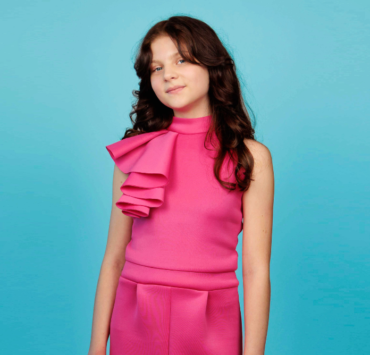
Letícia Tomazella, who plays Poliana in the series Tremembé – A Prisão dos Famosos (Prime Video), reaffirms her versatility in a career that spans theater, television, and streaming. The actress — also present in the third season of DNA do Crime (Netflix) — has established herself as a creative force that combines intellectual depth, technical mastery, and a human touch, reflecting a consistent trajectory both on and off screen.
In “Tremembé – The Prison of the Famous,” you play Poliana, an intense and layered role. What most intrigued you about this character, and what was it like to immerse yourself in such a unique world within Prime Video?
I think what interested me most was really immersing myself in true crime as a spectator. I didn’t consume this genre, and I started researching it intensely. And regarding the character, although we’re talking about horrific crimes, the human psyche and its many layers is something that deserves our study.
Your academic background in Literature, combined with a master’s degree in Literary Theory and Brazilian Theater, gives you a very deep perspective on narrative. How does this more analytical viewpoint influence your choices as an actress?
I can no longer separate one thing from the other. For me, acting and writing are parts of the same job. And I think understanding dramaturgy gives me great tools as an actress, in the construction of each scene and the uniqueness of each character.

You’ve moved through various formats—theater, television, and now streaming—always with great ease. What does each medium offer you emotionally and artistically that the others don’t?
Theatre gives the actor the opportunity to do everything in the here and now. There are no second chances, no mistakes that can be corrected. The moment is sovereign, and I find that wonderful.
Audiovisual media provides us with other things, such as the readiness to perform under pressure (due to set time constraints), meticulous work with the camera, etc. I love all mediums.
Arlete, from “The Adventures of Poliana,” was an important milestone for children and young adults. What did you learn from working so closely with this audience that you still carry with you in life?
This audience is very sincere and affectionate. I will carry with me for life the affection I received and still receive on the streets because of this character. I learned a lot about how to deal with the visibility that only a work with a large audience offers.

In “Genesis,” your performance as Leora sparked debates about aesthetics, aging, and the standards imposed on actresses. How did you experience that moment, and what did it teach you about the relationship between art, image, and exposure?
It was painful dealing with the haters. It seems simple from the outside, but when it’s us reading about ourselves, it hurts. But I learned a lot about many things, including how to use this to stand up for myself fearlessly on social media, and to fight more for women’s liberation in relation to the many standards that pressure and hurt us.
You returned as Detective Vendramin in the third season of Netflix’s “DNA of Crime.” What challenges and discoveries does this role bring you as an interpreter of such dense and complex authority figures?
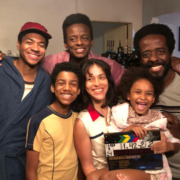
This character is very significant to me. I entered a previously unknown world, which was challenging, but I learned a lot and developed an admiration for these female police officers. I am proud to have met women in positions of power and authority who inspired me in the creation of this character.
Besides acting, you’ve also distinguished yourself as a screenwriter and producer. What motivates you when you’re behind the camera—and what do you discover about yourself when you write your own stories?
I’ve always loved writing. And my degree in Literature shows that. Telling stories allows me to channel a creative energy that, if repressed, is harmful to me. Haha! It’s healing to be able to tell stories. And recently I was selected for the Franco-Brazilian Screenwriting Lab, with my first feature film project. It was wonderful to be able to participate in this immersion. It strengthened the project and taught me a lot as a screenwriter.
Her book “Stepmother is the Mother” and her recent outburst about pressure on social media show an artist who is not afraid to talk about vulnerability. How do you balance public exposure with preserving your mental health and your humanity?
It’s always a challenge… Balancing trays. I’ve become someone who doesn’t post all the time. I try to live life in the present, in the moment. This has been good for my mental health.
Follow Letícia Tomazella on Instagram