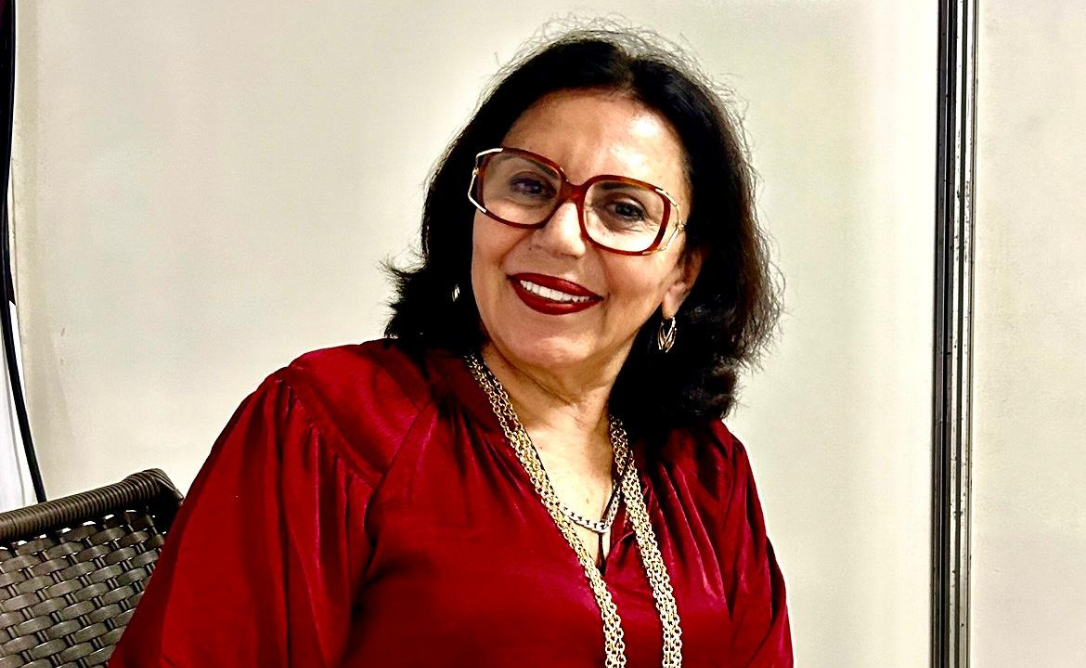
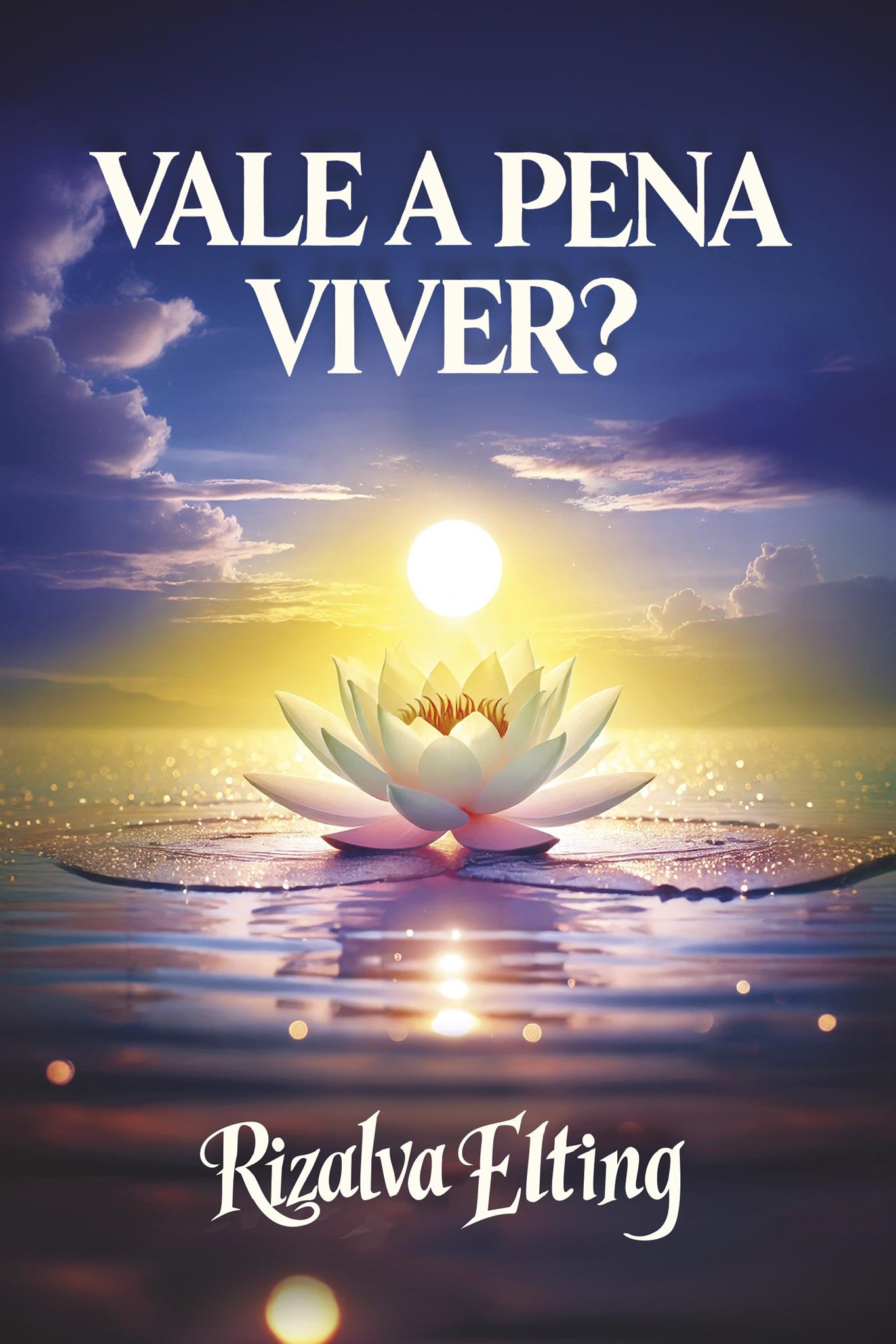
Marked by abuse, rejection, and domestic violence, Rizalva Elting learned early on to grapple with the question that gives her autobiography its title, *Is Life Worth Living?*. In the book, the author revisits a life marked by loss, immigration to the United States, prejudice, and her son’s difficult involvement with drugs—until she found, in Buddhism and the recitation of the mantra Nam-Myoho-Renge-Kyo, a path to inner reconstruction. In an intimate and confessional tone, Rizalva narrates how she transformed despair into strength, witnessed her son Allan’s turning point as he sought discipline in the army, and faced health challenges such as uterine fibroids and a Parkinson’s diagnosis, reinterpreting wounds as learning experiences. The result is a story of faith, resilience, and self-knowledge that invites the reader to conclude, along with her: yes, life is worth living.
Your book begins with a very direct and powerful question: “Is life worth living?” At what point in your life did this question become most urgent for you?
This question has always been a constant in my life, because I questioned God about being born Catholic. I asked: why did I have to be born? Why do I go through so many problems? And, above all, why am I forced to live? I couldn’t find an answer. I always asked God why He wasn’t fair to me, since I was a good person, doing everything right. So, this question became urgent. Now, I found the answer at a certain point, when I started reciting that I am no better than anyone else. Then, everything became very clear.
There’s a basic Buddhist principle that says everything is cause and effect. Everything we experience, everything we call a problem, from our perspective, is the result of a cause. When that cause originated in past lives, it comes into this existence as immutable karma, like an illness, like Parkinson’s. Today I understand that I acquired Parkinson’s through so much tension and suffering in this life. But it could be genetic, stemming from other existences.
So, the answer to that question made me reflect and find meaning, and tell myself and others that life is worth living.
In revisiting such painful episodes from childhood and adulthood—such as abuse, rejection, and domestic violence—what was the most emotionally challenging aspect of writing this autobiography?
It was all because I lived in a constant state of suffering. Sometimes, joy on one hand, to alleviate the pain that existed on the other. As I am a TRG emotional therapist, in this therapy, we work on the painful experiences of the past, reprocessing each one. And when I wrote this book, I became very ill. I felt so bad. I vomited many times. I had a lot of headaches. There were nights I didn’t sleep. So, it was during the time I was studying TRG therapy to become a therapist that I worked on myself, reprocessing all these experiences.
For me, when I finished the book, when I saw the boxes arrive with the books, it was such a great relief from all that weight I was carrying, that I burst into tears. I cried as if I were cleansing my soul. As if I had completed the mission and purpose of this existence. It was very gratifying, it was very good and beautiful to suffer and live this victory.
Many people believe that starting a family is synonymous with protection and a new beginning. When that expectation was also dashed for you, what made you move forward instead of giving up?
Faith transcends any limit of what we believe. It is infinite. And I trust in the mystical law and believe in my potential. When I pray in my Rorengueki, I activate the inherent potential for great strength, courage, overcoming, and resilience. So, what made me move forward was the faith to never give up.
There’s a passage in Buddhist studies that says if you need 12 days to travel from Kamakura to Kyoto, Japan, then if you give up you won’t see the beautiful moon over the capital. So, I applied that to my life in such a way that I only give up when all possibilities are exhausted. This has been a constant exercise in my life. Through struggle, and in the end I was able to experience victory as a result. But why? Because I never gave up.
Immigration to the United States appears in the book as an attempt at reconstruction, but it also brought new obstacles. What types of prejudice and loneliness most marked this period of your life?
In life, they say that the bigger the goals, the bigger the obstacles. The bigger the obstacles, the bigger the victories. So anywhere in the world, not just in the United States, we’re going to have problems and have to think a lot.
My whole life has been marked by joys, sorrows, and problems. It’s very common for human beings, for all people. So I face this kind of prejudice and loneliness in the same way, anywhere in the world. The problem isn’t what they do to us, but what we do with what they do. So I will only suffer from these problems, prejudices, and loneliness depending on how I see, face, and feel them.
Ultimately, there will always be a prejudiced person, a person who despises others, in our lives. Even though I’ve overcome those who have passed, I now have the wisdom to continue dealing with those who are still present until the last day of my life.
The story of your son Allan occupies a very strong place in the narrative. What was it like for you to watch his downfall and then witness such a significant turning point through the army?
First of all, I want to mention how proud I am to have brought such brilliant human beings into the world as my children. Allan has given me carte blanche to say whatever I need to about him, about his life, so that it can help people. This is very important to me.
I saw Allan go through this whole drug process and this significant turning point through the army; it was part of his life. I understand that in some way he contributed to causes, and I contributed to causes, to having a son going through this situation. And for him to choose to go into the army at that moment was what his heart was asking for.
Today he says he thinks everyone should serve in the army to develop a general sense of organization. But he speaks for himself, not for other people. There are people who already live with such discipline without needing to go through the army.

So I see this as truly significant. He, on his own, is able to draw his own conclusions, and nothing more and nothing less is what he learned from me. Therefore, my responsibility is very great before all of humanity, before all those who listen to me and who read what I write based on my experience.
Buddhism and the recitation of the mantra Nam-Myoho-Renge-Kyo appear as pillars of your inner reconstruction. How has this practice transformed, in practice, the way you dealt with pain and fear?
When I chant Nam-Myoho-Renge-Kyo, I feel empowered because I activate the inherent forces within me, such as courage, compassion, determination, etc. Nam-Myoho-Renge-Kyo is vital energy that I use for what I need in terms of determination. Everything contained within that determination I can act upon with vital energy.
Neither saints nor sages are free from suffering and pain. Pain is inevitable, but suffering is a choice. Once I learn how to cope, I only need to act. And with the vital energy emanating from Nam-Myoho-Renge-Kyo, I confront fears and all kinds of feelings that are contrary to my path towards happiness. And another thing, fear is necessary; it propels me to act correctly, with courage and determination. We learn to be happy by facing pain as a normal factor of life.
In addition to emotional wounds, you faced significant physical challenges, such as uterine fibroids and a Parkinson’s diagnosis. How did spirituality help you navigate these physical battles as well?
To strengthen my faith, to activate my inner self, the understanding that being born, growing up, getting sick, and aging are all part of life. The important thing is to study to gain knowledge, because it liberates. I don’t feel condemned by Parkinson’s; I’m grateful for the opportunity to encourage people to face life in a different way. That’s what we call happiness. So if it’s not Parkinson’s, it will be another type of illness.
I’m already 71 years old and I feel super healthy because my body responds to my mind and my heart. At this point in my life, I’ve eliminated any and all heavy and dirty feelings that aren’t worth carrying. And I can say with complete certainty and experience that being this way is the best way to have a life of peace, joy, contemplation, gratitude, and absolute happiness.
In closing the book with the affirmation that, yes, life is worth living, what message would you like to convey, especially to those who today feel the same despair you once felt?
The message I want to convey to people is that by reading the book, listening to or watching this interview, they will feel encouraged to live this kind of life, because it is possible. With the recitation of Nam-Myoho-Renge-Kyo, we break through the barriers of the impossible. The possible is within everyone’s reach. So you recite Nam-Myoho-Renge-Kyo and you will surely come to the conclusion that life is worth living. Add faith, practice, and study to understand that you will be immensely happy. That is my wish, because the lamp that illuminated my path will illuminate yours as well.
Follow Rizalva Elting on Instagram