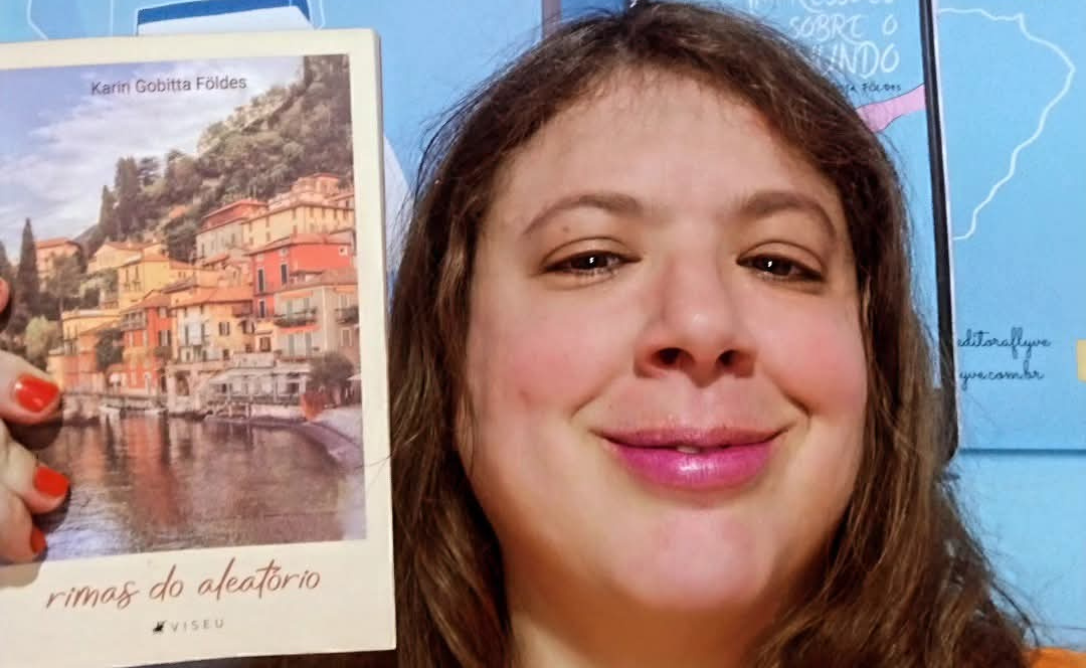
In the novel “Rhymes of Randomness,” writer and Master of Literature Karin Gobitta Földes follows the journey of Luísa, a botanical biologist living in Italy whose present is intertwined with encounters with people and feelings from the past. Through everyday conversations, shared memories, and reflections on life choices, the narrative explores the paths of maturation, the transformations of relationships, and the different ways of understanding adult life. Set in Italian cities that resonate with the protagonist’s emotional journey, the work offers a sensitive look at the unexpected and invites the reader to view life as a constantly evolving process, far from offering definitive answers.
In “Rhymes of Randomness,” Luísa revisits important connections from the past at a mature stage of life. What motivated you to explore this specific moment—when we are no longer who we were, but are also still becoming who we will be?
It was my own life experience. When I started writing the book I was over 30, and when I reread and rewrote it I was over 40. That made a big difference. Maturing brings new perspectives on ourselves and our lives, and that, of course, shows in our writing. I spent my life working, studying, traveling, and all these things made me mature, see the world and people in a different way. So, when I reread what I had written, I found it too childish; it didn’t belong to me at the stage I was at later in life. Only after this rewriting did I finally decide to publish the book.
The reunion with Fernando and Renato doesn’t emerge as a romantic ideal, but as a reflection of the transformations of time. Do you believe that revisiting the past is more a gesture of nostalgia or of self-knowledge?
I believe it’s more about self-knowledge. As we get older, we look back and see everything that has happened. It’s not nostalgia, it’s self-knowledge—being aware of what we did right and what wasn’t so good for us, and how our experiences have brought us to the present moment. It’s like a test for ourselves, a way to assess what we’ve learned, what was good and what wasn’t. We don’t need to be that old for this; after 40 or 50, it ends up happening naturally.
The Italian setting seems to directly relate to the protagonist’s emotional state. How did her own experiences in those places influence the construction of the book’s atmosphere and reflections?
My maternal grandfather was Italian, and that influenced my life. In 2018, I went to Italy, where I spent 15 days traveling from north to south. From Milan to Rome, passing through well-known cities and smaller ones, I visited almost 20 cities, experiencing a lot of history, culture, art, and nature. Having already studied the Italian language and culture, I felt right at home. My maternal grandmother was German, but curiously, she always passed on more Italian culture than German to me. So, all this experience prior to the trip and the fact that I truly felt what the place was like greatly influenced the atmosphere of my book. I ended up transferring that experience to my narrative.
The relationship between Luisa and her sister Lilian sparks discussions about generations, choices, and female identity. What do these conversations reveal about the pressures and expectations that still weigh on adult women today?
They reveal how women are and their place in society today, making the female audience reflect on their own role and the changes necessary for many things within that role to change. We are in the 21st century and there is still a certain difference between toys, for example, that are for girls and boys. Incidentally, I talk about this in another book of mine, *Uma menina muito maluquinha* (A Very Crazy Girl), a parody of *Menino Maluquinho* (The Crazy Little Boy), but written so that girls know they can play with everything and become great, independent women with free choices. As a Social Worker, one of my degrees, I worked in an NGO against gender violence and realized how much we have to change, especially to move out of 5th place in the world ranking of violence against women.
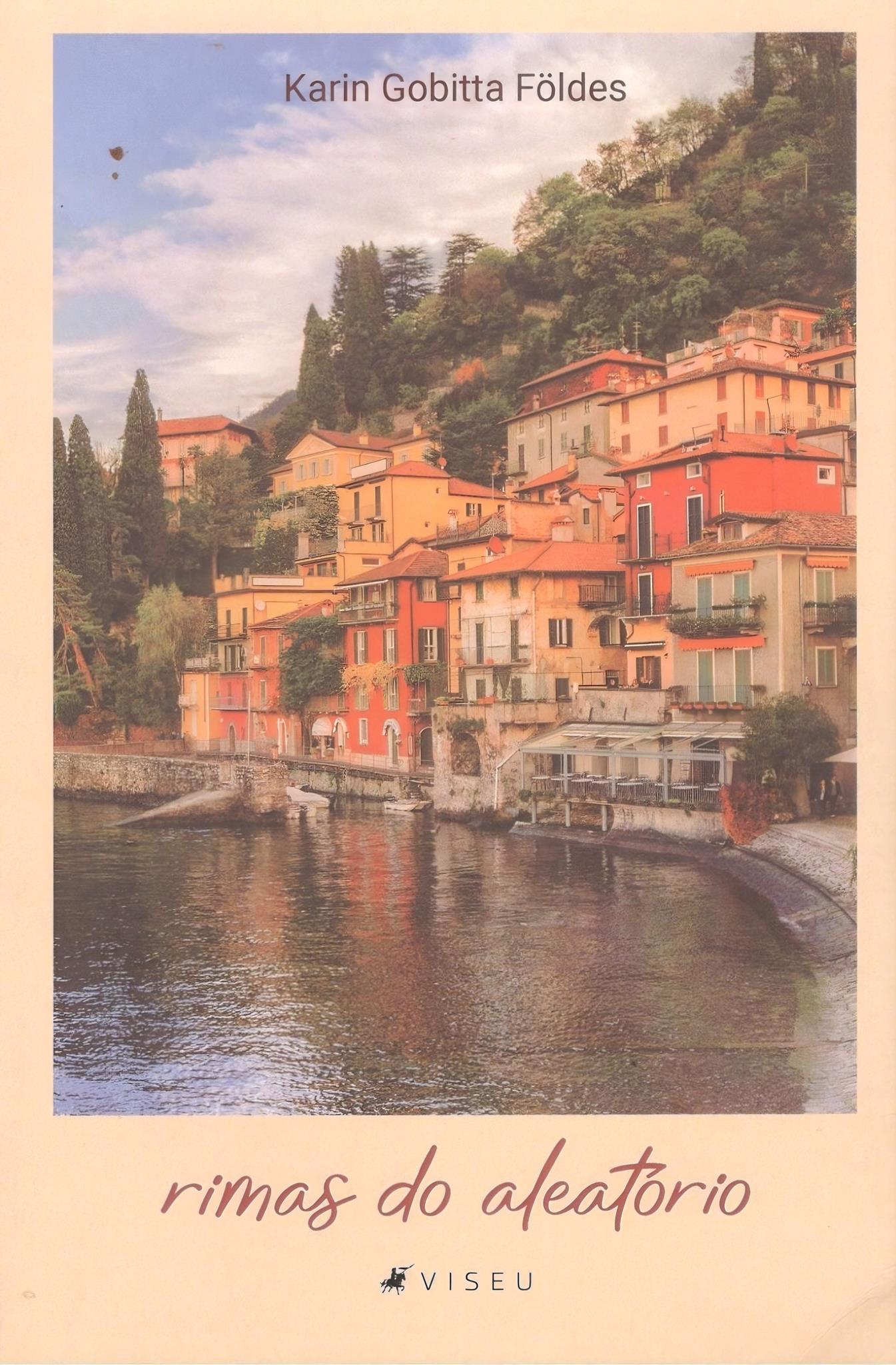
The title “Rhymes of Randomness” suggests that there is a kind of poetry in the unpredictable. At what point did you realize that the unexpected could be not an obstacle, but the very meaning of the narrative?
From the moment I started writing this book, I wanted to show this to the reader. Life isn’t a pre-defined script; we build it ourselves with our experiences and life events. Each step taken is towards a path we choose, one that will lead us somewhere. We don’t know the future, and the past consists of experiences that shape us. Life isn’t a scripted movie. It’s surprising. As the saying goes, life goes in cycles. Naturally, everything is dynamic. Stars are never in the same position, plants are born in one place and die in another, the waters of a river are never the same. And human life is no different.
The book seems to reject the idea that adult life needs to follow a defined script. Do you believe that literature can help people break free from such rigid social expectations?
Yes, literature is very powerful, more powerful than people imagine. It doesn’t just entertain; it teaches, makes us reflect, transforms, and heals. It’s a space for expression that shows us so many things and moves us. Just think of classic authors whose literature has never lost this power. It’s knowing that art itself is beneficial, healing, like art therapy, music therapy, and the more recent, but no less important, bibliotherapy, which is therapy through books, whether in poetry or narrative, and which has been gradually growing in the world and in Brazil with the creation, for example, of the Portuguese Association of Bibliotherapy and the Brazilian Association of Bibliotherapy, created last year. In short, it’s no coincidence that literature is still present in school curricula.
During the writing process, was there ever a moment when you yourself were surprised by Luísa or by the choices she made? What was it like to emotionally follow this character’s maturation?
I don’t think so, because I’m a bit like Luísa, the woman she is and portrays herself in the book without labels, without traditions, following her own life and placing herself at the center of her own story. Therefore, emotionally witnessing her maturation was enjoyable, it made me feel good, especially because of the direction she takes her life. She has always been a strong and independent woman, and this has allowed her to mature incredibly and create a future outside the expected standards of society. The character’s unconstrained development is simply surprising.
Upon finishing the book, what kind of feeling or reflection do you hope will remain with the reader—especially those who are also going through phases of change and personal redefinition?
I hope the reader reflects on the themes explored in the book, especially in the conversations between Luisa and her sister. I also hope they can look back on their own lives and see that nothing was in vain; these are paths each person chooses in their own life that lead to where they are today. There’s no way to change everything, but there is a way to think about how to move forward, leaving the past behind as a turned page that brought a life lesson, without fear of change at any time. Life is meant to be lived; every minute, every hour, every day counts and are treasures left by a time that passes very quickly. Nothing should hold us back—not prejudices, not social models, not successes, and not mistakes. A bird, after learning to fly, discovers new territories, and so it is with our lives.
Follow Karin Gobitta Földes on Instagram