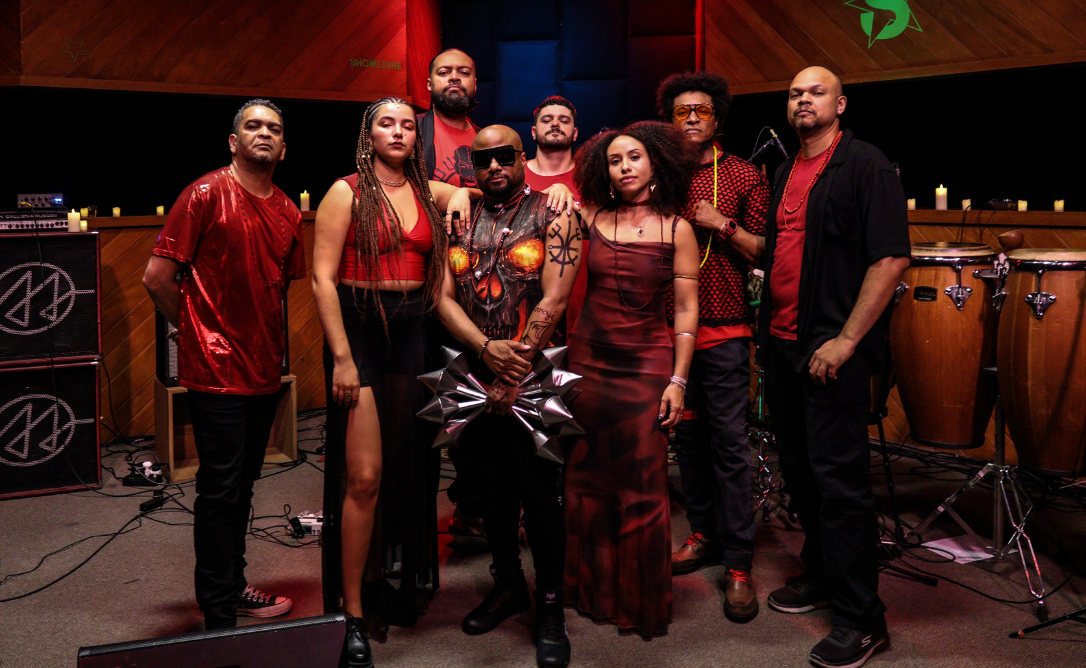
On March 13th, the band Ki’MBANDA released the album Ao Vivo no Showlivre, a recording that highlights the group’s strength, identity, and positioning within Brazilian rock. Recorded without filters, the work presented the public with a sound marked by Afro-rock and powerful messages about structural racism, ageism, and ancestry. Featuring the previously unreleased track “Respeita os Nego… Véio!”, the release solidified Ki’MBANDA as an active voice in the contemporary scene, uniting music, activism, and experience in a project that reaffirms its roots and artistic maturity.
The album “Ao Vivo no Showlivre” seems to function almost as a manifesto of Ki’MBANDA’s identity. What does this live recording reveal about the band’s essence that perhaps doesn’t appear in the same way in the studio?
It might sound pretentious on our part, but we’re better live. In that unique moment, in the instant of emotion. The characteristics of a xire (the festival of the orixás) can only be captured live, the spirit of the music, and that won’t come across in a studio. The way it’s played, sung. These are unique emotions.
The song “Respeita os Nego… Véio!” (Respect the Black People… Old Man!) carries a direct message against structural racism and ageism. How was it to transform such personal and real experiences into music?
It’s painful, but necessary. We recently suffered this, and worse, from our peers as well. But we must mention other important points: belonging, ancestry. It has become our calling card; yes, we are Black and we are very proud and wise.

You define the band’s sound as Afro-rock, a fusion between Afro-Brazilian tradition and the heaviness of rock. How has this musical language been built throughout Ki’MBANDA’s trajectory?
It had been there for a long time, the structures of rock, soul, blues, even that thing called MPB (Brazilian Popular Music)… Everything there has the presence of Afro-Brazilian culture. People sing Caetano Veloso’s “Odara” or Gilberto Gil’s “Tempo Rei,” and ignore that these songs speak of orishas, they hear the rhythm of “Sympathy for the Devil,” and don’t hear the drums of Bahia.
We simply bring Afro culture to the surface, removing the layers that racism tries to erase. Over these years, we have also been discovering it ourselves. Everything is Afro drumming and rock, Afro is pop, Afro is everything.
The band also raises an important discussion by stating that “rock is black.” Why do you believe there is still an erasure of black roots within the genre?
This isn’t a discussion, it’s a statement: does erasure still exist? It’s the most prevalent thing. Look at the structures of music, of the music market, how they didn’t even allow Black artists to sing their own songs live, and they were replaced by long hair and Nordic meta-language.
Man, it’s tough, people sing and praise Viking stories but me talking about my Orisha is just whining… no, my friend, that’s blatant racism, if you know what I mean. And why suffer so much if I say that rock is black? It’s as if they’re stealing the rock star dream from the leather-clad tough guys. You need a lot of talent to be on par, or like some helium balloons did, steal… right?
The live recording process often involves risks and spontaneity. What moments from that Showlivre session were most memorable for you during the recording?
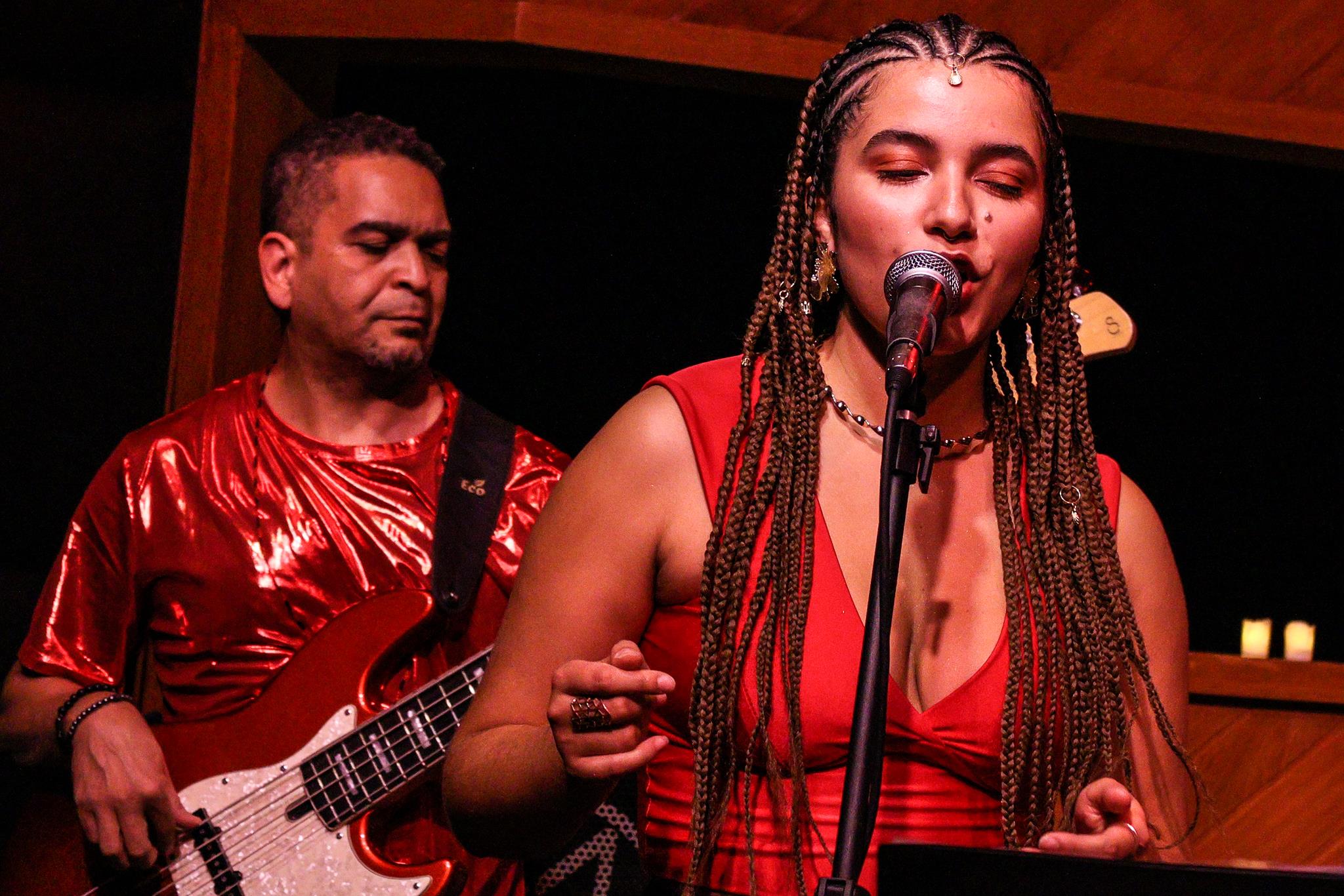
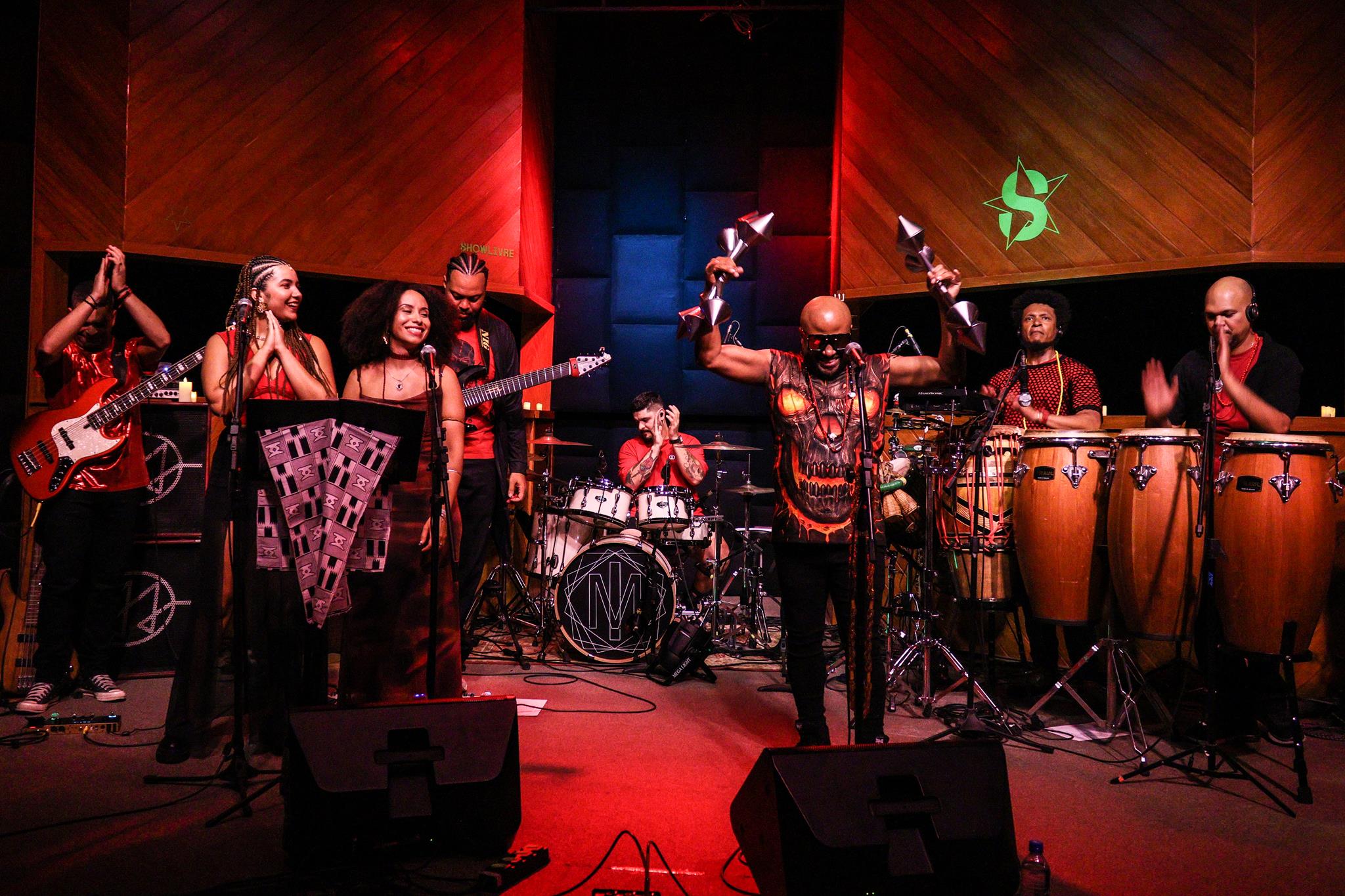
Having to control Krisx (the vocalist). He’s unpredictable. That was a terrible risk that was successfully overcome. And the participation of the female singers for the first time, which wasn’t a risk but a gift.
The presence of backing vocalists Nissa and Mayra Costa brought new layers to the band’s sound. How has this collaboration broadened Ki’MBANDA’s musical experience?

It was a gift and a challenge. Krisx is known for interpreting songs in shows in a unique way, always adding situations, lyrics, and phrases. With the girls, he behaved perfectly, and we brought a brilliance to the show that is only possible with the female presence. Today we are more audible; there is a strength in the voices that has been enhanced by two powerful and talented Black women.
You all have more than two decades of experience in the music scene. How does this artistic maturity influence the way you compose, position yourselves, and approach the market today?
First, there’s no vanity in the band, and that’s already putting us 100 steps ahead of many bands out there. There’s no vanity among us, nor within us; there’s no conceit, only the desire and obligation to make good music, for ourselves and for those who came before us. We’ve been through a lot: closed doors, backstabbing, treacherous pats on the back, and today we know that not everything that shines is from Oxum… and not every Black person in motion is the Black movement. Our compositions are a mix of everything we’ve experienced, so it can’t possibly turn out bad.
Ki’MBANDA always seems to unite music, ancestry, and social stance in their work. What kind of reflection or feeling do you hope to provoke in the audience with this new album?
That Rock is truly Black, and why this has been and still is erased and denied by many. This reflection alone is enough to raise a lot of questions. Afro Rock is beautiful, and we can and should talk about other non-Eurocentric cultures.

Follow Ki’MBANDA on Instagram