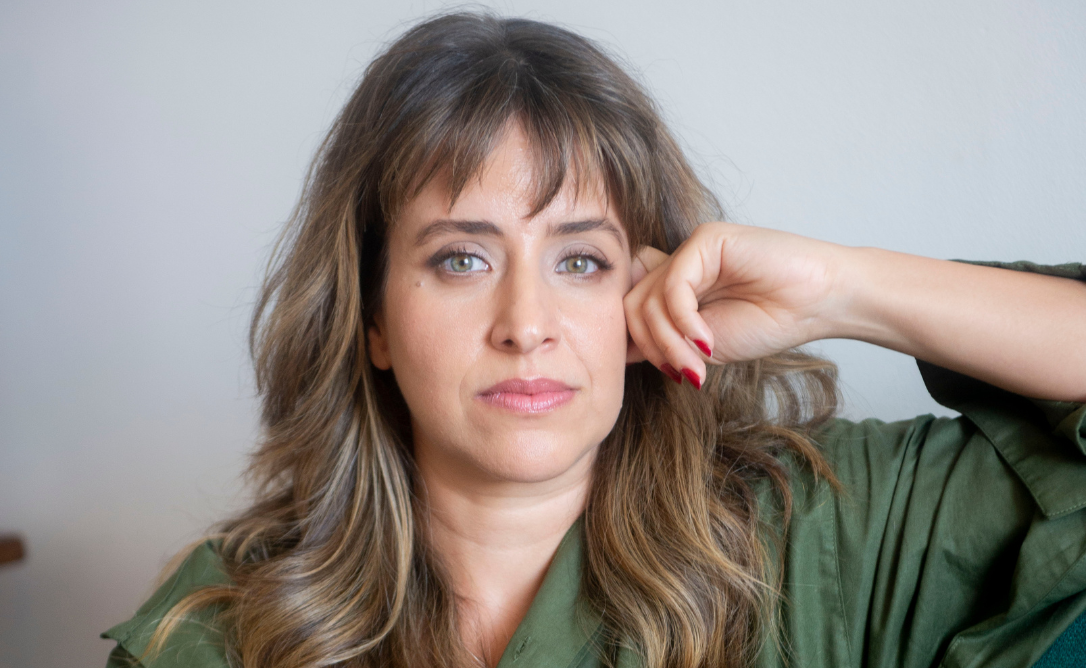
With the premiere of “Cansei de Ser Nerd” in theaters on May 28th, actress, director, and creator Ana Carolina Sauwen presents a new facet of her career by playing Amanda, a magnetic, strange villain marked by discomfort. Known for transforming contradictions of everyday female life into humor and reflection, Ana talks about the challenge of provoking laughter through strangeness, her partnership with Fernando Caruso, and her own projects, such as the solo show “Da Mama ao Caos” (From Breast to Chaos). In an interview, she reflects on motherhood, imposter syndrome, women’s work, and the power of art that is born precisely from the unresolved layers of life.
In “Cansei de Ser Nerd” (I’m Tired of Being a Nerd), you play a character who seems to provoke more unease than immediate identification. What attracted you to this more uncomfortable and less obvious side of Amanda?
I find it very interesting to work with characters that aren’t flat, characters that, when you look at them, you can’t immediately define who they are. I like this approach that leaves room for doubt, opens up layers, and keeps possibilities open, instead of delivering such an immediate interpretation. This greatly expands the possibilities of my work as an actress and can also spark greater interest in the audience.
Amanda embodies exactly that. She’s very quirky, has an extremely penetrating gaze, and at the same time, speaks as if she’s constantly seducing. But you never quite know if it’s seduction or a threat. And this ambiguous territory seems very intriguing to me, both for the actress and the viewer.
You mention that you’re interested in a type of laughter that arises from disorganization, not comfort. How does this idea influence your development as an actress and also your vision of humor?
I’m much more interested in humor that provokes than in humor that simply comforts. I find it interesting when laughter shifts perspectives, provokes new interpretations, and makes us see things in a less obvious way.
In my development as an actress, this also comes through quite a bit. I like characters and situations that create some kind of tension, strangeness, or contradiction, because I feel that’s precisely where the power lies. Humor that provokes more than it calms ends up opening up space for reflection. It doesn’t deliver everything ready-made; it stirs something up. And that interests me a lot artistically.
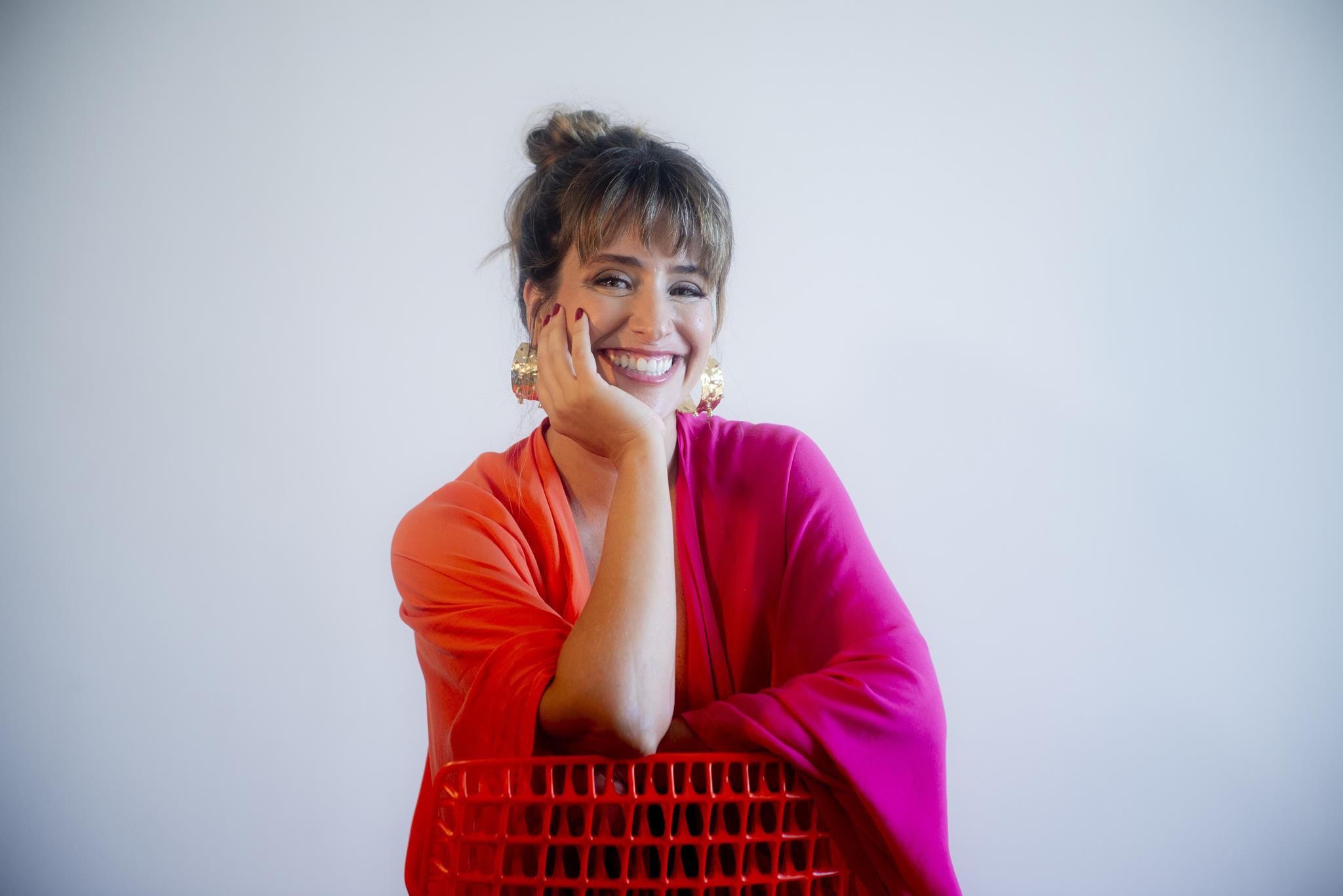
Amanda speaks as if she’s always seducing someone, but in a strange, almost out-of-place way. How did she find the right balance for this presence that is as magnetic as it is unsettling?
Finding that right balance was a collaborative effort between myself and the acting coach, Marcello Bosschar. And I confess that, until I saw the finished film, I was unsure about how the character would come across on screen.
I joke that it was the kind of construction that could go wrong, it could easily become too exaggerated. So it was quite a delicate process, trying to find that balance between seduction, strangeness, and threat without turning the character into a caricature.
I think we managed to reach a very rich territory, but it’s precisely because we worked with risk that the construction became so interesting. Amanda inhabits a very disconcerting place, and I like that about her.
Throughout his career, humor, critique, and personal experience appear deeply intertwined. What changes when you move away from more recognizable everyday humor and enter a more unsettling territory, as in this film?
I find it very interesting to be able to work within various artistic territories and languages. In stand-up comedy, for example, I often start from everyday situations, especially those related to motherhood, which generate a very immediate connection with the women and mothers who watch.
But entering a universe like that of “Cansei de Ser Nerd” (I’m Tired of Being a Nerd), a sci-fi comedy that goes to a completely absurd and unsettling place, fascinates me in the same way. What changes is precisely the path by which the humor arrives. In this case, it arises more from strangeness, from bewilderment, from a less recognizable territory.
And I really enjoy the possibility of exploring such different paths. I think the most interesting thing about my profession is precisely being able to move between languages, between tones, between different universes — not only within comedy, but also in drama and other forms of narrative.
Her discourse on motherhood is noteworthy precisely because it avoids idealization and affirms that motherhood also exists beyond mere caregiving. At what point did this perception become central to her artistic creation and public discourse?
I think this came from a process of maturation in my relationship with motherhood, greatly influenced by critical reading, study, and also analysis—I’ve been in analysis for many years, so I’m always thinking about my own existential journey.
As I became a voice for many mothers, I began to feel a great responsibility to say something that was truly relevant. I am very studious: when a topic interests me, I like to delve deeply into it. So I read a lot about motherhood, gender, and social structure, and this sharpened my critical perspective.
At the same time, there was a very personal shift. At a certain point, I realized that motherhood had completely consumed me and that I was tired of existing only within that framework. I began to want to reclaim my own interests, desires, and dreams. And when I started talking about it publicly, I realized how much this feeling resonated with other women.
I also came to understand that there is a social interest in keeping women solely at the service of caregiving. So I thought, “something is wrong here.” And I deliberately began to reconnect with myself and share this process with other women.
What really touches me is realizing that, often, what I create through art, reading, and reflection ends up functioning as a voice for women who are feeling all of this but haven’t had the time, space, or opportunity to process these issues. And this also involves very important intersections of class and race. Many women are completely absorbed by survival and raising children. So being able to transform these experiences into collective reflection is also a way to broaden the debate and create identification.
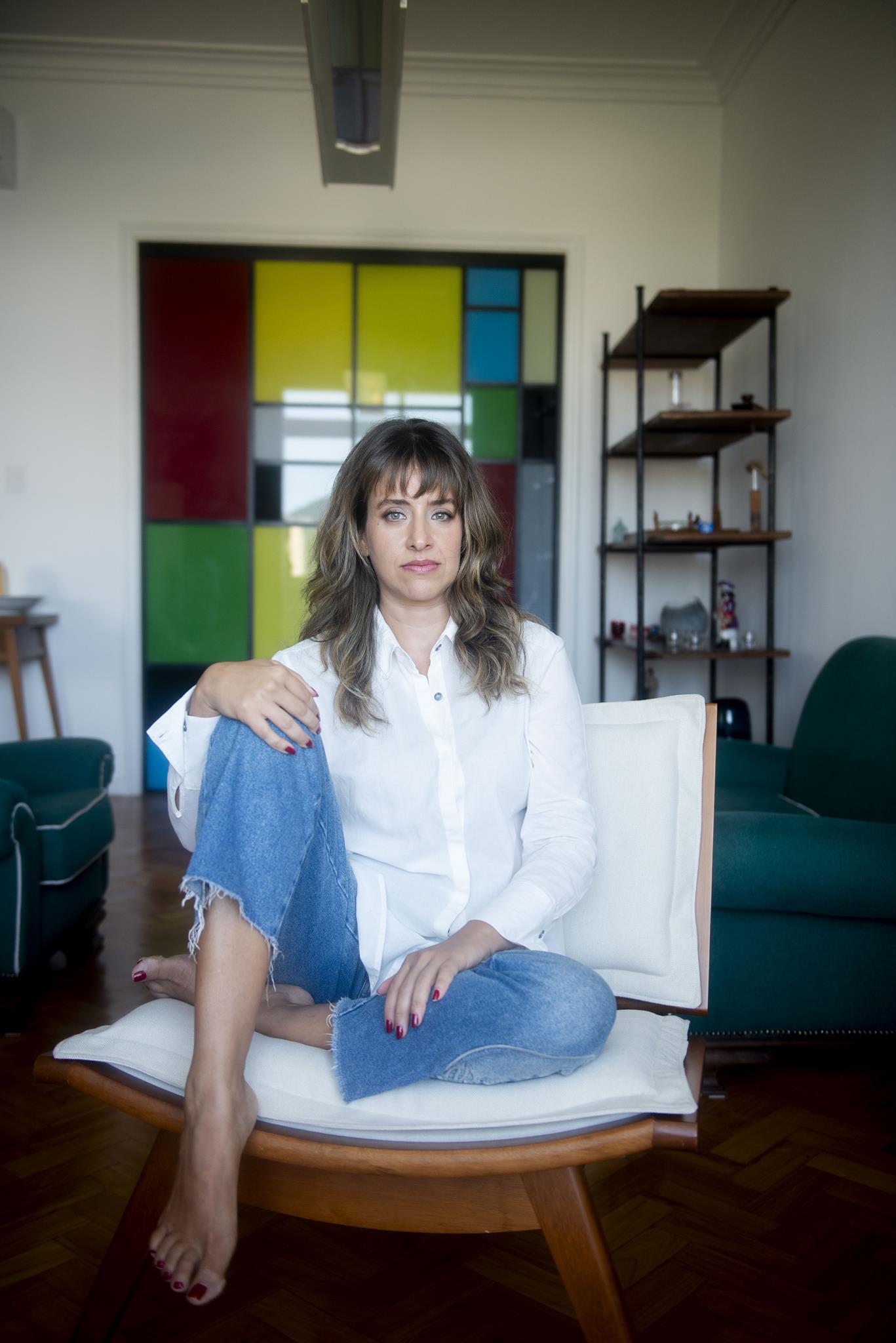
In works like “From Breast to Chaos” and the lecture “Much More Than Congratulations,” you transform intimate experiences into collective reflection. How does it feel to realize that what was born from your own experience also serves as a mirror and encouragement for so many women?
I think that’s precisely what motivates me most to continue delving deeper into these topics. I’m very interested in understanding where certain feminine behaviors come from, how much they are the result of socialization processes, and how we can begin to look at them critically. In the lecture, for example, there’s a strong desire to help more women recognize certain patterns and, from there, build a fuller and happier life.

I am very moved by the feedback I receive from women. I get many messages online and also at the end of shows, telling me how much my work positively impacts their lives. And I think this happens because motherhood is very much permeated by guilt. There is always a great deal of pressure on mothers, and we ourselves end up easily falling into that place of maternal guilt.
So I feel that my work also offers a certain relief. An understanding that “it’s okay to feel what I feel,” that other women also go through this. And realizing that can be very liberating.
You mention having faced imposter syndrome and, little by little, understanding the importance of your own voice. How has this process of allowing yourself to speak changed you as an artist and as a woman?
I think that, as an artist, this process has made me lose some of my fear of diving deeply into things. Understanding that the risk of being misunderstood or of being too daring cannot outweigh the desire to investigate what truly moves me. Today I’m much more interested in creating from truth, complexity, and even discomfort than in trying to fit into external expectations.
And, as a woman, that was also very transformative. I think society constantly tries to make women diminish themselves to fit into relationships, jobs, social dynamics. There’s always pressure to occupy less space, to be more palatable, more agreeable. But agreeable to whom?
So finding my voice has a lot to do with being myself. Being able to express myself in a way that makes sense to me, without constantly trying to fit in. And it’s beautiful to realize that when I do that, I find an echo in other women too. I think there’s a great power when a woman allows herself to speak and, without realizing it, ends up empowering others as well.
Today you move between film, theater, social media, playwriting, and public speaking with great coherence. When you look at this journey, what do you feel unites all these facets of Ana Carolina the creator?
I think what unites all these aspects of my artistic creation is, primarily, the desire to produce work that is consistent with the issues that truly move me internally and that I feel need to be discussed.
I seek to be where my heart understands there is some urgency, some important truth to be investigated. And this truth is not fixed—it changes, transforms, follows the movements of life and my own perspective on the world. I think it’s important to allow this constant transformation.
So, in every choice I make, whether in film, theater, comedy, drama, or social media, I try to be deeply connected to what is truly affecting me at that moment. Because I believe that when we create from a true experience, it can also powerfully affect other people.
Follow Ana Carolina Sauwen on Instagram