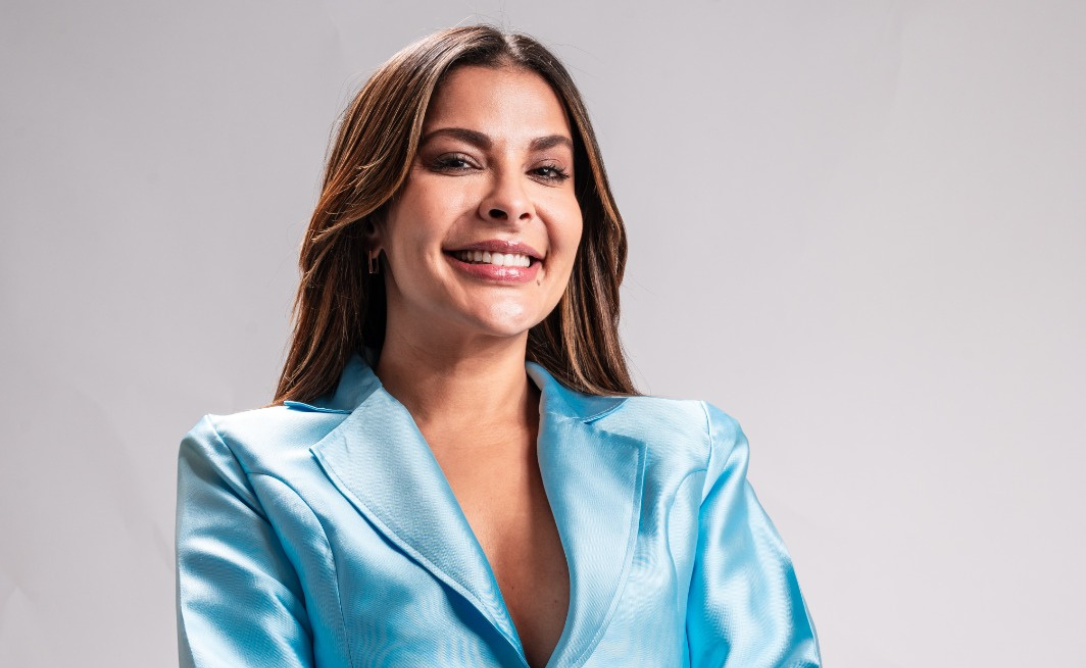
After building a career marked by television, entertainment, and international acting, Gyselle Soares begins a new phase by expanding her work in communication and the public sphere. A former finalist on Big Brother Brazil 8, artist, and presenter, Gyselle is now focusing on social projects, motivational speaking, and her pre-candidacy for federal deputy in Piauí as a way to defend issues related to social inclusion, combating violence against women, and creating opportunities for marginalized communities. In an interview, she discusses the challenges of this transition, the personal experiences that strengthened her stance, and her desire to use her trajectory as a tool for social transformation.
You’ve experienced many public reinventions—from art, television, and international experience to communication and now politics. At what point did you feel your trajectory was naturally leading you to this new place of speaking and acting?
Coming from the outskirts of the city and the community, this reality has always been very strong and latent within me. And this intensified even more being here in my state, Piauí. Today, unfortunately, we occupy third place in depression and suicide rates, in addition to facing a lack of self-esteem and extreme social inequality: people are either very rich or very poor, there is almost no middle ground. Thinking about doing more for those who need it most, more than three years ago I conceived the social project ‘Recreating Your Reality’. It is a work focused on inclusion, which welcomes atypical families, people with disabilities, and young people from the outskirts who only need an opportunity and training to succeed in life. This project opens doors for those who often have nowhere to turn or nothing to do. With this, politics entered my life naturally. After all, I have been involved in politics for over ten years using my public image through the arts. The difference is that now, with party politics, I will be able to reach and help even more people. As a pre-candidate for federal deputy for Piauí, I want to expand this work. Our state is still very sexist: of the ten federal seats we have, none are occupied by a woman. We need to balance this scenario. The female presence in the plenary brings balance, representation and, above all, a keen eye for accessibility and social projects.
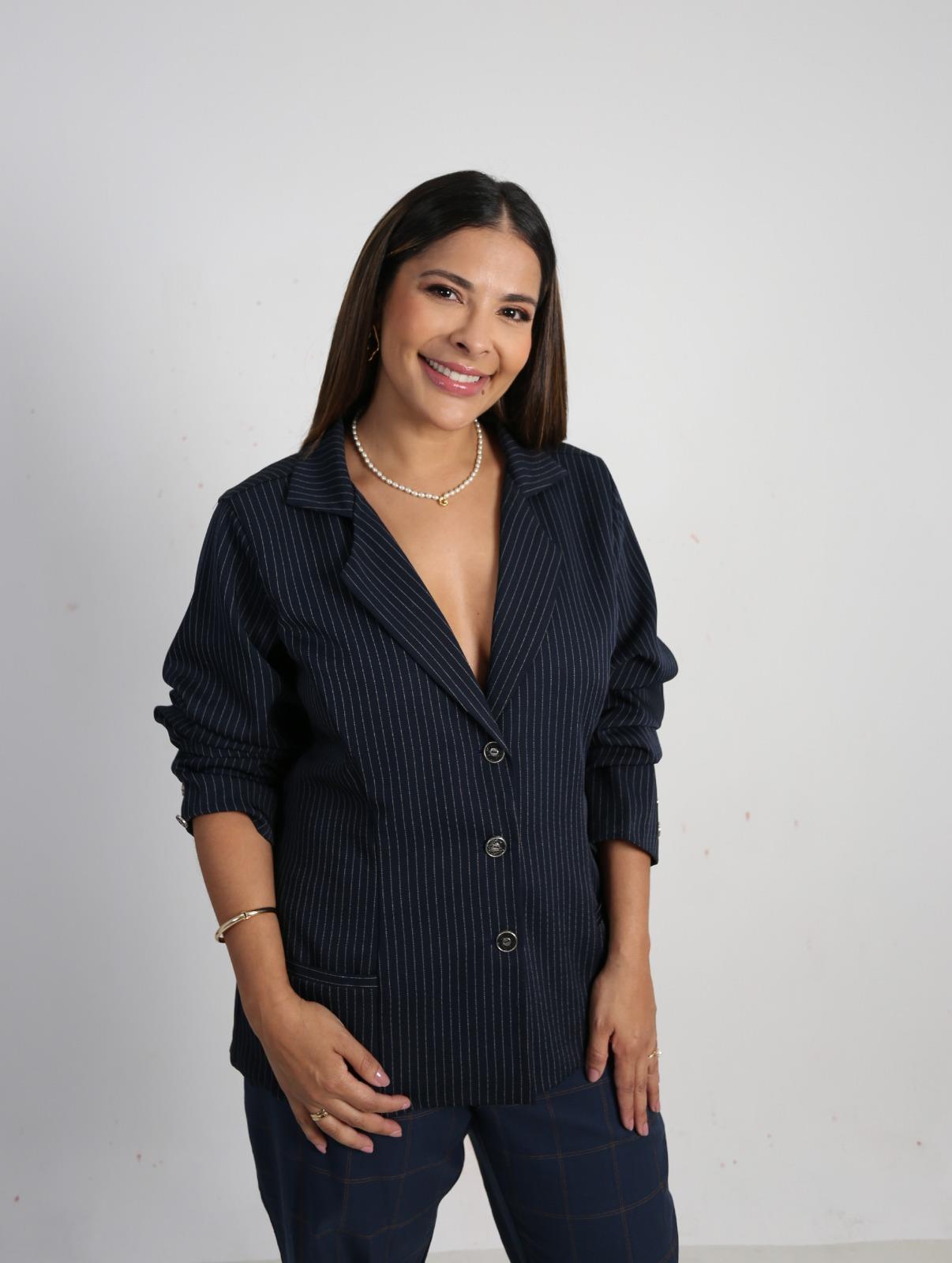
Her decision to enter politics also stems from her own background and the perception of a lack of opportunities for those from the periphery. How does this girl from Piauí, who dreamed of broadening her horizons, relate today to the woman who wants to represent her state?
I want to reach people so they can get out of the place where they often feel trapped. I know that many women here don’t have the prospect of a better life. But, just as I had to seize opportunities with all my might to shake up my own life, I want to shake up their lives and say: yes, anything is possible!
How did a girl who came from the outskirts of Piauí manage to build a national and international career and achieve such great visibility? It didn’t start at the top. It started with washing dishes in Europe and working as a maid.
My journey began at age 14, here in Piauí, helping my mother with general chores. I studied in the morning and, in the afternoon, worked at Varejão, a store in downtown Teresina that still exists today. I cleaned the entire floor and served coffee to customers; I was a young apprentice in general services. I want to show these women that everything is a process. Today, with the internet, it seems like everything is easy, but social media also brings a lot of illusion and affects self-esteem, because people look at the perfect lives of others and think that success happens overnight. I want to bring them back to reality and show that there are, indeed, real paths and serious projects, like our social project ‘Recreating Your Reality,’ which empowers women for the job market. I know I can’t change the whole world or everyone’s life, but I do my part with great pride.
You transformed very personal pain, such as the experience of domestic violence, into a public defense of other women. How did you find the strength to convert such a difficult experience into a collective cause?
The first thing we need to make clear is: when a woman suffers domestic violence, it is never her fault. The fault lies with the aggressor, with whoever commits this malicious act of possession. This is extremely serious, and the transformation needs to begin in education, in schools and at home, combating sexism from the ground up. After all, today Brazil loses four women a day to femicide.
I grew up seeing the strength of women who broke that cycle. My grandmother supported six daughters by selling pastries outside hospitals to escape violence. Today, at 85, she continues working at the market, selling her fried cakes, because she says the work keeps her from getting depressed. The same thing happened to my mother. In 1989, she fled home with four young children to escape a marriage marked by violence and alcoholism. To prevent my father from finding us, she had to move to a distant neighborhood and adopt a fictitious name: her real identity is Josélia, but to the world she became Silvana. Years later, in 2008, after my participation in Big Brother Brazil, she fulfilled her dream of graduating in Law at age 55. She studied to defend the Maria da Penha Law and worked for 13 years at the Women’s Police Station.
These women recreated their realities and showed me that it was possible to build a new future. And I needed that same strength in 2019, when I suffered domestic violence from my then-fiancé in Europe. I decided I wouldn’t accept that. That Christmas, I abandoned everything and fled back to Brazil. I paid an exorbitant price for a ticket, four times the normal price, but I chose to save myself and seek the support of my family. Since then, I have transformed my pain into purpose through my artistic projects and, especially, the social project ‘Recreating Your Reality’. I want to tell every woman who listens to me: you are not alone. Don’t be ashamed. There is a way out, there are support organizations like the 180 helpline, the Casa da Mulher Brasileira (Brazilian Women’s House), and support networks like ours. When a woman with my visibility breaks the silence, it’s to give voice and strength so that others can also save themselves.

Over the years, you’ve built a career marked by visibility, but now you’re choosing a path that demands listening, preparation, and public responsibility. What has changed most in you as you’ve moved from being a well-known figure to someone who wants to directly impact people’s lives?
I come from the outskirts of the city; I’m one of the people. I’ve always been a down-to-earth person. Neither an international career nor the art world went to my head. I’ve always maintained my humility and the certainty that life is one day at a time, that the world turns. This social vein and this generosity have always been very strong in me. I love being with the people, I love talking to people, because we truly learn when we step outside our comfort zone. Sometimes we think we have a huge problem, but when we stop to listen to others, we realize that our problem is nothing. I’ve always had this sensitivity. Today, I understand that everything I experienced in art was a preparation that brought me to party politics. And I am very grateful for everything. The people embraced me back then, on Big Brother Brazil. I almost made it, I lost first place by tenths of a percent, it wasn’t even one percent difference, I came in second. It was a huge boost in visibility for Piauí. From then on, my state became even more recognized for having a representative from Piauí, which I am proud of. Now, what I want is to represent my people in the Federal Chamber. I want to be an engaged voice, a woman with a clean history, strong and very trustworthy. This attitude of listening to people is something I have practiced for a long time; my desire to listen and help has never changed.
Your training at RenovaBR seems to have been an important step in that preparation. What did that process show you about real politics, leadership, and the weight of representing other people seriously?
This journey taught me something very important for anyone who wants to occupy a leadership position, whether they are women or anyone who, like me, comes from the periphery: we don’t need to be the children of mayors, daughters of senators, or married to the governor to make a difference. We can break down this barrier and change this paradigm that politics belongs only to traditional families. It was seeking this preparation that I joined RenovaBR.
The school helped me understand public administration in depth, learn how to structure an ethical campaign, how to lead a team, and master the major issues impacting our country today. It’s an extremely intense and respected program: there are around 50,000 applicants per year, and only 150 leaders are selected. I was proud to be one of those 150 people chosen from all over Brazil. To get in, I went through three rigorous stages of testing, where I had to prove why I wanted to be there, what my projects for society were, and what I intended to do for my state. I strongly defended my work as an activist and my social inclusion projects. RenovaBR was a watershed moment and a fundamental milestone in consolidating my pre-candidacy for federal deputy for Piauí.
The “Recreating Your Reality” project carries a very strong message of transformation and overcoming challenges. What do you notice, as you travel through Piauí, about the dreams, pains, and urgent needs of the people you meet along the way?
What I feel most when I visit communities and travel through my state is a lack of hope. It breaks my heart to arrive with enthusiasm, with concrete projects, and realize that people are sad, no longer believing in anyone. And they are right: there is a lack of real public policies and much stricter laws for serious crimes. Brazil is still very lenient in its punishment. Our laws against domestic violence, for example, are still very mild. This is extremely serious! I myself, who went through this and suffered persecution from someone who was in another country, know how much bureaucracy leaves the victim unprotected. Imagine the reality of women who suffer this here, every day? We need to create more severe protection mechanisms and, at the same time, act at the root of the problem, bringing the fight against sexism into schools as part of young people’s education. There is so much we can change through the classroom!

That’s why new leaders, like myself and others who are emerging, are so necessary. We need to rekindle the enthusiasm of the population and prove that there are, indeed, good people willing to engage in serious politics. We can’t lump everyone together. Bringing that hope back and working for the people is the great mission of my life.
After 17 years in Europe, returning to Brazil permanently and reconnecting with family and home state, what Brazil and what Piauí did you rediscover upon your return?
I have a lot of love and gratitude for my family for supporting me when I decided to go abroad to pursue my international career. When I left the reality show, I suffered a lot of xenophobia and prejudice because of my artistic work here in Brazil. Instead of giving up, I saved the money I earned on the show and went to study at the most respected acting school in France.
From there, my career took off. I built a 17-year career in Europe, specifically in France, participating in films shown at the Cannes Film Festival, Netflix productions, TV series, and working as a presenter on important programs. I managed to build a strong story abroad and become an inspiration for my state and for Brazil, being one of the few Brazilians with a consolidated artistic career on French soil.
After experiencing all of that, being able to return, overcome my homesickness, and share my victories up close with my family is the best thing in the world. I always planned that I wouldn’t live permanently in Europe past my 40s. So much so that, during the five years I was married there, I decided not to have children so as not to put down permanent roots abroad. Europe was the place where I earned respect and space for my talent, but my heart has always been in my country, where I returned twice a year to see those I love.
Your story encompasses stage, television, radio, books, activism, and now public life. When you look at this multifaceted journey, what do you feel has never changed about you, despite all the transformations?
The sparkle in their eyes, the positivity, the enthusiasm for change, the generosity towards others—that has never changed. On the contrary, it has only grown stronger.
Follow Gyselle Soares on Instagram