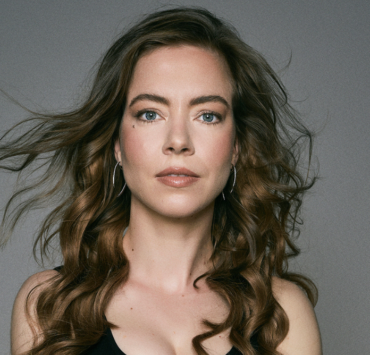
After winning over audiences on TV, actor Pedro Goifman is experiencing a transformative moment with his film debut in Eclipse, directed by Djin Sganzerla, which hits theaters on May 7th. In the film, he plays a character marked by disturbing behaviors and far removed from any search for empathy, revealing new layers to his acting. In an interview, Goifman discusses the challenge of immersing himself in complex characters, the role of art as provocation, and the paths of a career increasingly focused on intense and auteur-driven narratives.
After winning over audiences with such a beloved character in Girl of the Moment, you arrive in cinema with Felipe, in Eclipse, someone much more unsettling and difficult to love. What attracted you to this abrupt dive into such an uncomfortable place?
The possibility of playing different characters really appeals to me. Each character is a deep dive, and Felipe was that journey into horror, but not in a caricature way, rather very palpable.
You said that Felipe is an “abyss of horror,” but at the same time something very palpable. What interested you most in investigating this character: the violence itself or the structures that produce this type of behavior?
The structures. Felipe carries violence as an inheritance. He is a product of patriarchal society and specifically of a family culture that spans generations. Investigating the structures is fundamental. Portraying violence solely for the sake of violence doesn’t seem to make much sense to me.

Eclipse seems to be a film that doesn’t want to anesthetize the audience, but to provoke reaction, discomfort, and even a desire for change. What was it like for you to participate in a work that so clearly embraces this political power of art?
Art is political. If a film says it’s not political, that’s already a political stance. And I’ve been trying to make works that provoke the viewer to act, not just react. Films that raise more questions than answers, and thus produce movement.
Your statement about wanting to denaturalize what has become naturalized is very powerful. Today, what kind of tension do you feel the need to provoke through the characters and projects you choose?
Simply accepting reality is a serious problem. Many mechanisms of oppression are so naturalized that we no longer see them. Denaturalizing them points to the process of revealing these invisible structures.

In The French Teacher, you enter another dense universe, with a production traversed by various cultures and languages. What did such a diverse set awaken in you as an actor and also as an artist in constant development?
Being with creative artists from different cultures is very enriching. Admiration fosters growth. I am very grateful to have made this film and I am sure that this plurality and cultural complexity will show on screen.
Even with the openness to international projects, you talk much more about creative encounters than about career as a status symbol. What really makes your eyes light up in a project: the character, the team, the process, or the possibility of human and artistic displacement?

All of this makes my eyes light up; there’s no point in creating a hierarchy. And don’t even think of an acting career as a “status.” I’m a worker and a creator. There’s no glamour in it; often it’s even very distressing and difficult. I feel that being an actor is, in some way, a condemnation. It’s who I am.

Besides acting, you’re also writing, directing, and participating in the creation of projects. At what point did this need arise to not only interpret stories but also create them?
I am an actor, and as an actor, I am a creator. When I write, direct, or occupy any other role on set, I remain an actor, but one occupying a different space. Directing and writing were natural processes. I have always written, and filming my creations is very enjoyable.
You say that the theater is still a place where you feel “alive and whole.” Amidst so many paths in audiovisual media, what does the stage continue to give you back that is most essential about yourself and about art?
Although my marriage is to cinema, the stage has something unique. The magic of the unpredictable, of the immediate exchange with the audience, is irreplaceable. And the ephemerality. What was done there can never be revisited. There is no record that can capture what the theatrical experience is.
Follow Pedro Goifman on Instagram