Healing Begins When We Stop Waiting for Someone Else
Most of us spend some part of our lives looking for someone strong enough to protect us, compassionate enough to believe us, brave enough to tell us that what happened was not okay. Someone who makes us feel safe and sees the frightened, wounded, exhausted parts of us while reminding us that we are still worthy of tenderness, dignity, respect, and love. For some people, that search lasts years. For others, it lasts decades. I know because I was one of them.
My earliest understanding of love and safety came from my grandparents. We did not have much materially, but I did not know we were poor. Their home felt rich in all the ways that mattered to a child: warm, familiar, protective. I knew what it felt like to be watched over, fed, loved, and cared for without having to earn it. My grandmother was fiercely protective. She wanted me safe.
Then my life changed. I experienced sexual abuse as a child, and what happened did not remain confined to childhood. Trauma has a way of seeping into places you do not recognize until much later. It settles into your self-esteem, changes the way you interpret affection, and distorts what feels normal. It can make chaos familiar and safety strangely uncomfortable. I became the girl who acted out, the teenager desperate to escape, the young woman searching for validation, and eventually a wife who would learn that leaving one painful situation does not automatically mean we have learned how to recognize a safe one.
Later, I joined the United States Air Force, which gave me structure and a world far larger than the one I had known. I traveled, learned, and became disciplined, resourceful, and relentless. Eventually, I became a military training instructor responsible for shaping civilians into airmen. I wore the uniform, carried authority, and could command a room with my voice. From the outside, I looked formidable. Inside, I was carrying wounds I had never learned how to name. That contradiction has become one of the most important lessons of my life.
Functioning Is Not the Same as Healing
I could be powerful in uniform and powerless in a relationship. I could command others while tolerating treatment that was destroying me. Later, when I experienced military sexual trauma, I responded the way I already knew how. I worked harder, pushed through, achieved, took care of other people, and kept moving. From the outside, survival can look similar to strength. That is why I encourage people to ask themselves a different question. Instead of asking, “Am I functioning?” ask, “Am I healing?”
You can excel professionally while suffering personally. You can be the person everyone depends upon while quietly falling apart. Competence can even become camouflage. Some of the strongest-looking people among us are exhausted from carrying invisible weight. I know this particularly well among women because we are so often conditioned to become the caretaker, the fixer, the one who holds everyone else together. But this does not belong to women alone.
Parents, partners, veterans, leaders, caregivers, educators, and high achievers of every kind can become so practiced at meeting other people’s needs that they lose touch with their own. We become so efficient at taking care of everyone else that people stop wondering whether anyone is taking care of us. Sometimes we stop wondering, too.
I did not begin truly healing until well into adulthood. By then, I had endured failed relationships, destructive patterns, distrust, anger, self-punishment, and years when I felt as though I were living by a thread. Then I met the remarkable man who became my husband. He did not arrive as a rescuer. No person can repair another human being simply by loving them enough. He introduced me to something unfamiliar and profoundly important: consistency, safety, patience, respect, and healthy love.
Over the years, his support created room for me to breathe differently. I continued my education, found new professional direction, built a business, and began imagining a future that was not organized around surviving the next crisis. That taught me another lesson.
Pay Attention to How Safety, Not Just Excitement, Feels
When chaos has been familiar, consistency can feel unfamiliar.
Do words and behavior match?
Can you disagree without being frightened?
Can you have boundaries without retaliation?
Can you succeed without threatening the other person?
Can you be vulnerable without having that vulnerability used against you?
Emotional safety changes what becomes possible in a human life.
Slowly, I began to understand something that changed the trajectory of mine. I had spent years waiting for certain people to protect me, defend me, believe me, validate me, apologize, or love me differently. Eventually, I had to ask a harder and more liberating question:
What if I could become the woman I had needed all along?
For me, healing meant becoming the woman I needed most. For someone else, it may mean becoming the adult, parent, partner, protector, mentor, or advocate they once desperately needed. The question underneath it is universal:
What did I need then that I can begin giving myself now?
This does not mean we should have had to protect ourselves as children; we should not have. It does not mean trauma was necessary to make us strong, or that pain should be romanticized as a prerequisite for purpose. It means refusing to let pain own everything that comes after it.
For me, that meant learning to protect my peace with the same intensity I once used to protect everyone else.
Love without respect is not love.
Most importantly, endurance is not healing. A boundary is not something we impose on another person; it is a decision about what we will permit in our own lives.
I had to confront another uncomfortable truth: helping others can be beautiful, but helping others can also become hiding. Some of us become indispensable because focusing on everyone else keeps us from confronting what hurts inside ourselves. My instinct has always been to help, fix, organize, support, and ask, “What do you need?” I have had to learn that caring for others does not absolve me from caring for myself.
Service is most powerful when it comes from wholeness rather than self-erasure.
Over time, my instinct to serve became something healthier. It became purpose: advocating for others, particularly women veterans and survivors. Too many women leave military service carrying wounds that do not fit neatly into the stories our culture tells about veterans. Their trauma may never have occurred on a battlefield, but invisible wounds are still wounds.
I know now that I was not protected in every season of my life, so I became someone who protects others. That realization transformed the way I understand leadership as telling the truth when silence would be easier, asking for help when competence has become your armor, leaving something that is hurting you, learning to trust after betrayal, and deciding that the worst thing that happened to you does not get permanent ownership of your identity.
Healing, in that sense, may be one of the most courageous forms of leadership there is.
Becoming the person you once needed does not mean becoming invulnerable. I still have memories. There are wounds that have healed enough to stop bleeding but can still ache when touched. Healing did not erase my history. It changed my relationship with it.
My past is no longer the definitive authority on who I am.
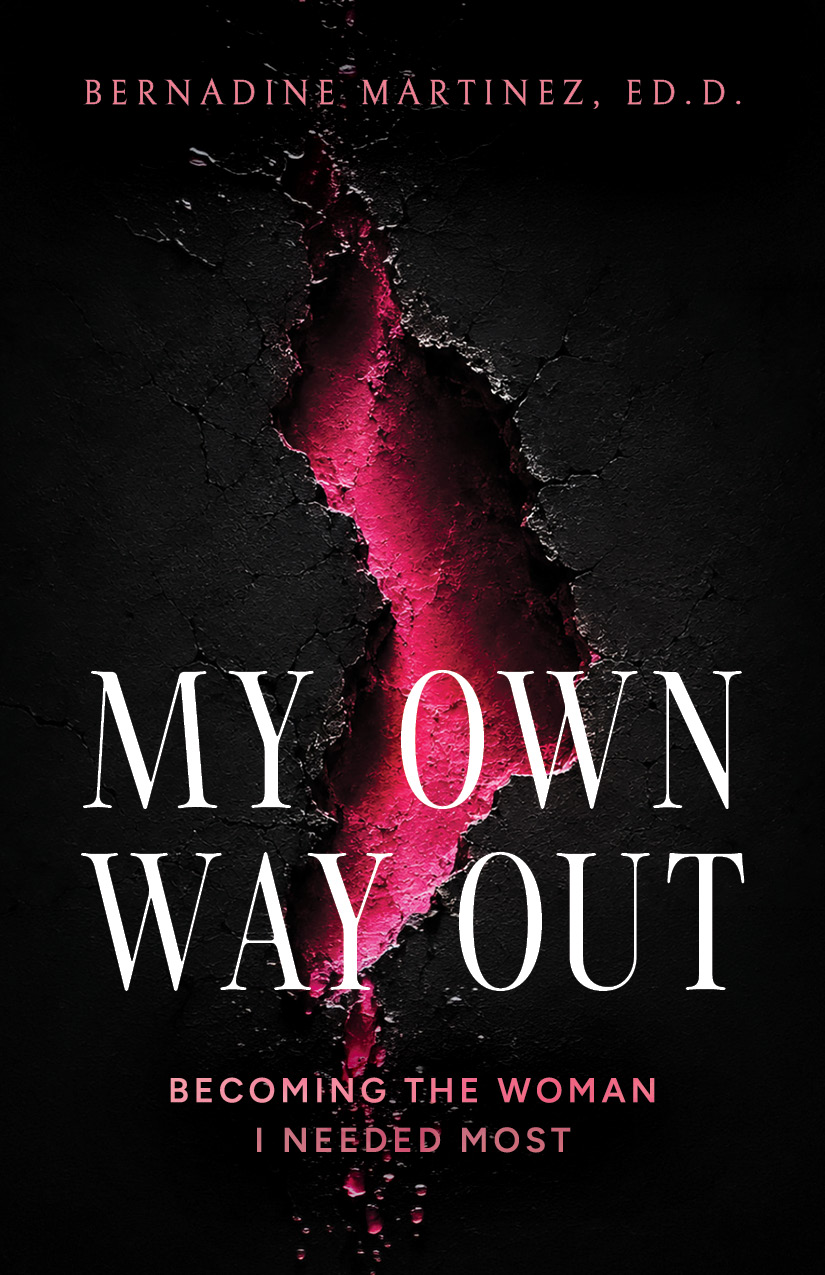
That is why I am finally telling my story in my forthcoming memoir, My Own Way Out: Becoming the Woman I Needed Most.
Surviving was only the beginning.
What if the person you have been waiting for is the person you are becoming?
Protect that person. Believe them and speak for them. Forgive them for choices they made when they did not yet know another way. Give them permission to want far more than survival, and one day, you may discover something even more powerful:
By becoming the person you once needed most, you may become living proof for someone else that there is a way out.
About the Author
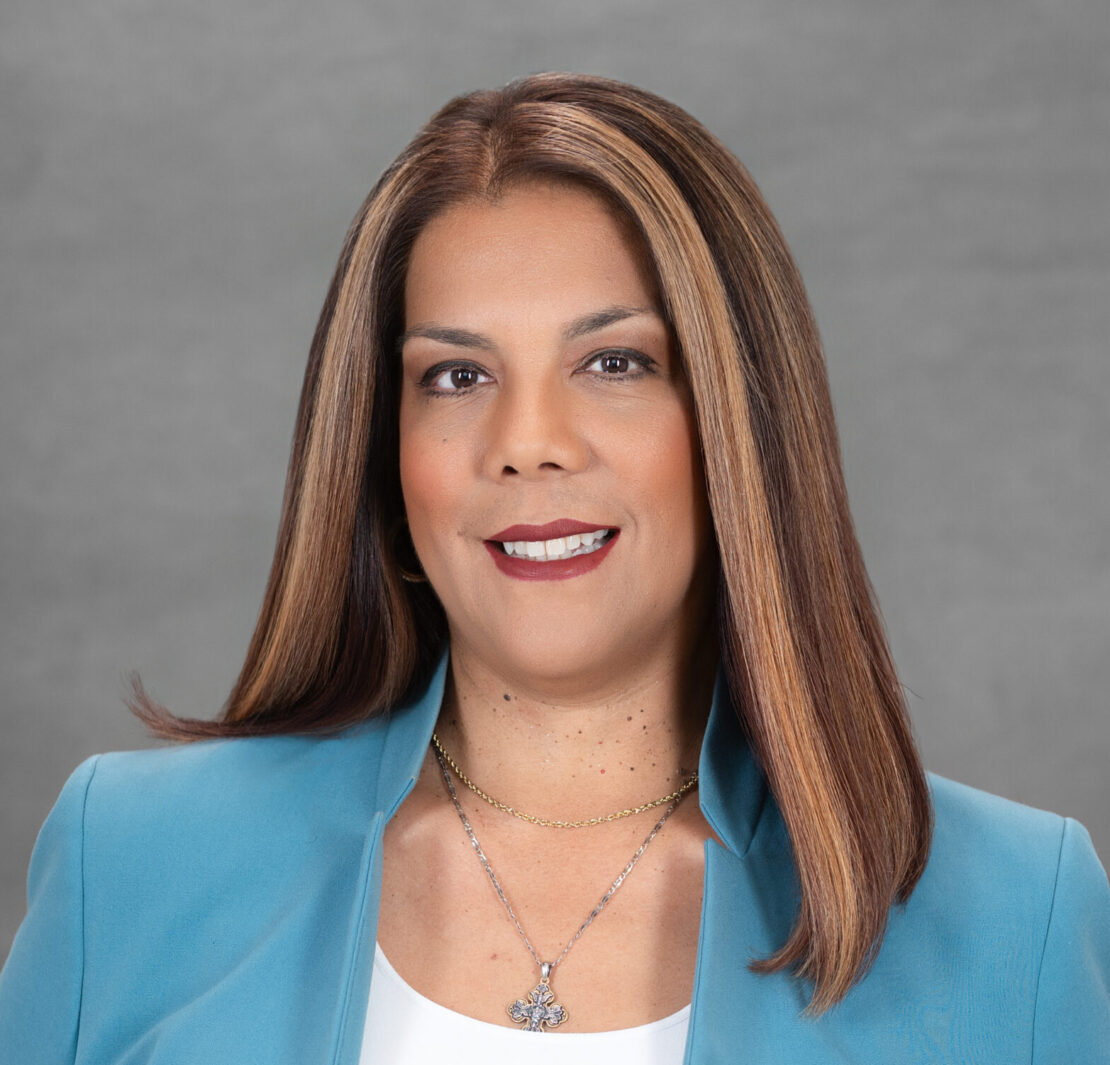
Bernadine Martinez, Ed.D. is a U.S. Air Force veteran, educator, entrepreneur, and advocate whose work focuses on helping others move beyond survival to reclaim their worth, voice, and purpose.
Her forthcoming memoir, My Own Way Out: Becoming the Woman I Needed Most, explores her extraordinary journey from silence and survival to healthy love, leadership, service, purpose, and the hard-won realization that our past can shape us without defining who we become.
For more information, visit www.powerpotential.net.

With over 30 years of experience in television, Claudia has worked as a reporter, producer, and editor. One of her books was publicly endorsed by the President of Brazil, earning her lifetime seats in literary academies in Brazil, the United States, and Europe. Having lived in Cuba, Mexico, the United States, and across Europe, Claudia speaks fluent English, Spanish, Italian, and Portuguese. With a career involving government, media and education, Claudia believes that communication is a bridge, and her mission is to make it human, strategic and transformative. She possesses BAs in Journalism and Advertising, an MS degree in Political Science and International Relations, and an MBA in Marketing. She was a UN fellow at the Hebrew University of Jerusalem and an alumna of Brazil’s Superior War College. She is currently doing a Ph.D. in Strategic Communications.