Since beginning her acting journey as a child, Amber Lily Butterworth has learned to see an artistic career less as a succession of defining moments and more as an ongoing exercise in persistence. After starring in It Goes on All Fours, the New Zealand-born actress experienced the high of carrying a feature film — and then the reality of returning to auditions for roles of every size. The experience reinforced one certainty: “I’m not here for one role or one moment.”
In the interview, Amber opens up about imposter syndrome, rejection, what she learned from leaving Kaiah behind, and how executive producing Borghese changed the way she views collaboration on set. She also discusses the America’s Cup documentary she is developing through a story connected to her own family history and explains why, even as she explores producing and directing, acting remains at the center of her artistic identity.
You began acting at four after developing a stutter, and those classes ultimately became the beginning of your entire artistic journey. Looking back, how do you think finding acting so young changed your relationship with voice, confidence, and self-expression?
It all happened so early on in my life, I feel like I’ve almost always been this way, but I know for sure it helped shape me. I’ve always been someone who follows my gut and is naturally very expressive, so being able to pursue a career that actually celebrates those parts of me is incredibly rewarding.
I also think it gave me a confidence that has transformed into having very little fear of rejection, which has been so important in my career. No matter how many no’s, “maybe another times,” or setbacks I get, I’ve always had this instinct to just keep going. I think that resilience has become a huge part of who I am, both as a person and as an actress.
You have said that films always made you feel less alone in your own emotions. Today, when choosing a project, how much does a story’s ability to make audiences feel seen influence your decision to take on a role?
It has a huge influence. I’d like to think that every role, no matter how big or small, has the ability to affect an audience in some way. I think being an actress means taking responsibility for whatever role you’re given. I’ve never really connected with the idea that actors should only choose roles based on what they consider to be artistically fulfilling. I’m an actress. I’m meant to be able to morph, to step into completely different people and understand what they want and what they’re fighting for. And ultimately, if my performance makes even one person in the audience feel seen or understood, then I feel like I’ve done my job.
With It Goes on All Fours, you describe a strange sense of grief that comes with leaving Kaiah behind after living so deeply with the character. How do you emotionally close that connection without carrying too much of her into your personal life?
The beauty of living with a character for a certain period of time is that, in a strange way, I don’t think they ever completely leave you. I always try to take the qualities I admire in a character, learn from them, and carry a little bit of that into my own life. Playing someone else can also reveal things about yourself that you perhaps hadn’t recognised before.
With Kaiah, I would say that her instinct to nurture her surroundings and the people she loves is something I really took from her, or maybe she just made me realise that it was something I already had in me.
You mentioned that going deeply into Kaiah brought imposter syndrome, “ego deaths,” and new discoveries about who you are as both a woman and an actress. What was the most unexpected thing you learned about yourself through that process?
I learnt two things from the experience. During filming, I definitely struggled with imposter syndrome at times. I was starring in a film, suddenly having people constantly checking in on me, and having to command a scene in a way that was completely new to me. But no matter how much of an imposter I might have felt in certain moments, I always doubled down and did what I needed to do. If anything, it reinforced why I’m in this industry and reminded me of what I know I can bring to the table.
The second thing came after filming. You leave a project like that on such a high, especially when you’ve just starred in a film, and there’s a part of you that thinks, “This is it, this is the beginning of a career starring in films.” But the reality is that it doesn’t always work like that. Coming down from that high and going straight back into auditioning for smaller roles, bigger roles, and everything in between really solidified my determination. It reminded me that I’m not here for one role or one moment. I’m here because I genuinely want a career in this industry, and I’m willing to keep working for it.
Executive producing Borghese gave you a much closer view of all the moving parts required to make a film. Has that experience changed the way you behave on set or the way you think about responsibility and collaboration as an actress?
Most definitely. As an actor, you constantly have an AD or 2nd AD following your every move and keeping a close eye on where you are. At first, I found it quite flattering, but I quickly realised that time is money on a film set, and there’s a reason you’re kept on such a tight schedule.

It made me far more punctual and gave me a much greater understanding of how every department relies on one another. If a crew member is asking something of me, it’s because the whole machine of a film needs it in order to keep moving. I think that experience made me a much more considerate actor on set. I’m always happy to provide whatever is needed from me because ultimately, everyone is there for the same reason: to make the film the best version of what it is meant to be.
You are now developing a documentary about the America’s Cup, a project connected to your own family history. What changes creatively when you move from interpreting someone else’s story to directing something that touches your own identity so personally?
What’s really interesting about this project is that it’s based on a story that shaped a huge part of who I am without me even realising it. Through developing it, I’ve learnt so much about my family, but in turn I’ve learnt a lot about myself as well. Because I’m still discovering new things about the story every day, I think it’s actually allowed me to approach the storytelling in the most unbiased way I possibly can.
Creatively, I’m also trying to stay true to what I know my voice and instincts are, no matter how many times this industry might tell you to change them. It’s a controversial story and it hasn’t always been easy to get it on its feet, but I think those are often the projects most worth fighting for. They’re the stories that challenge people, start conversations and, hopefully, leave an impact on an audience.
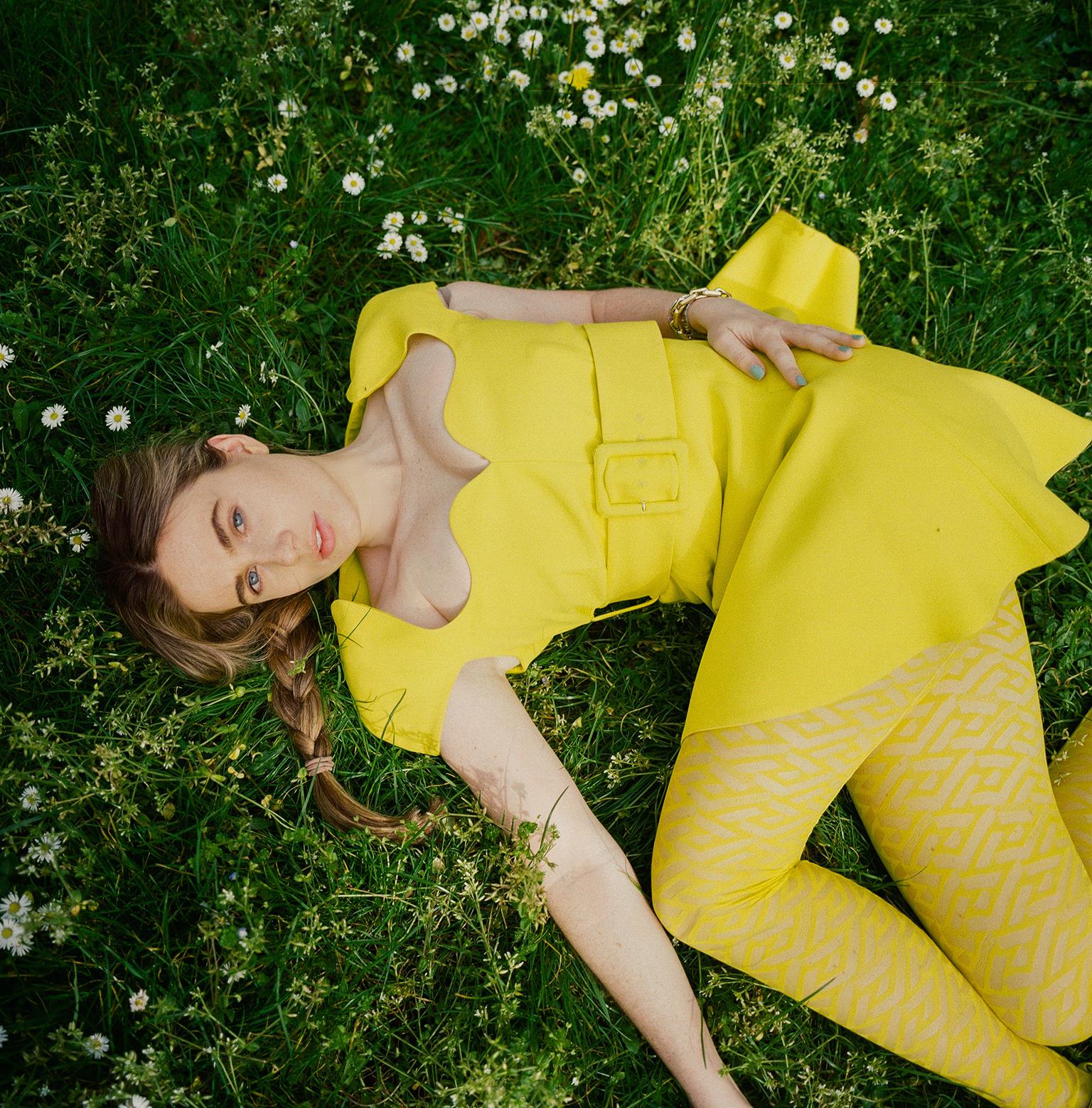
Acting, producing, and directing seem to be different paths toward the same obsession with storytelling. In the future, do you see yourself prioritizing one of those roles, or is your goal to build a career where you can continue moving freely between all three?
In a perfect world, I’d love to move between all three, and maybe even add a few more things into the mix. There’s no doubt that my greatest passion in all of this is acting. As difficult as it can sometimes be to simply act and then let the film go into other people’s hands, if acting was all I ever had, I would still be the happiest woman in the world. Everything else allows me to explore different sides of storytelling, but acting will always be the thing I love most.
Follow Amber Lily Butterworth on Instagram