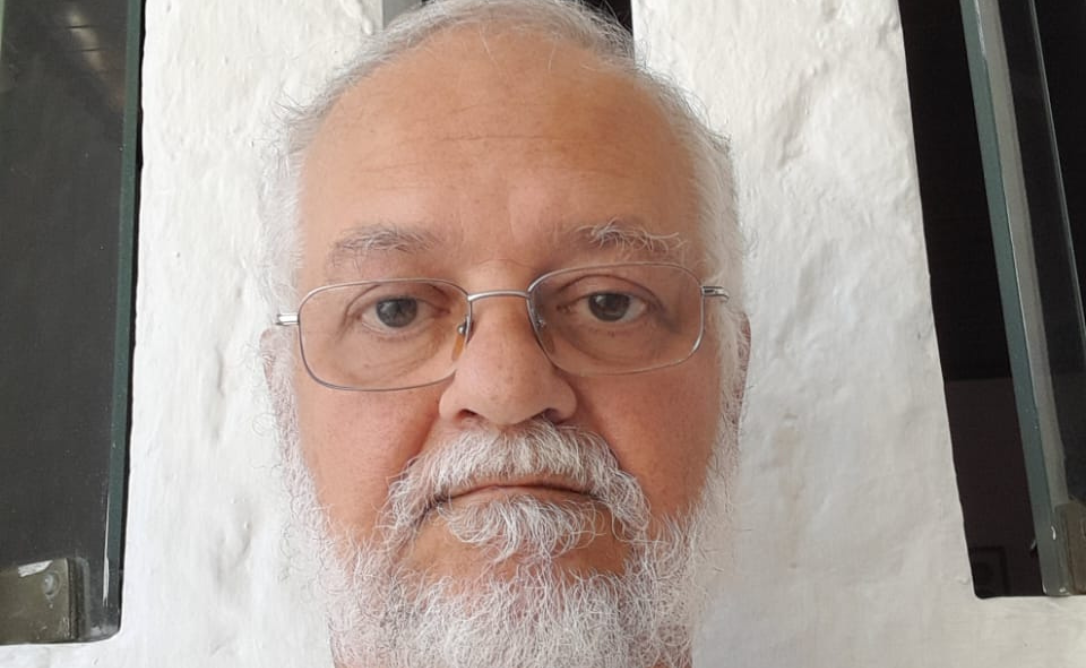
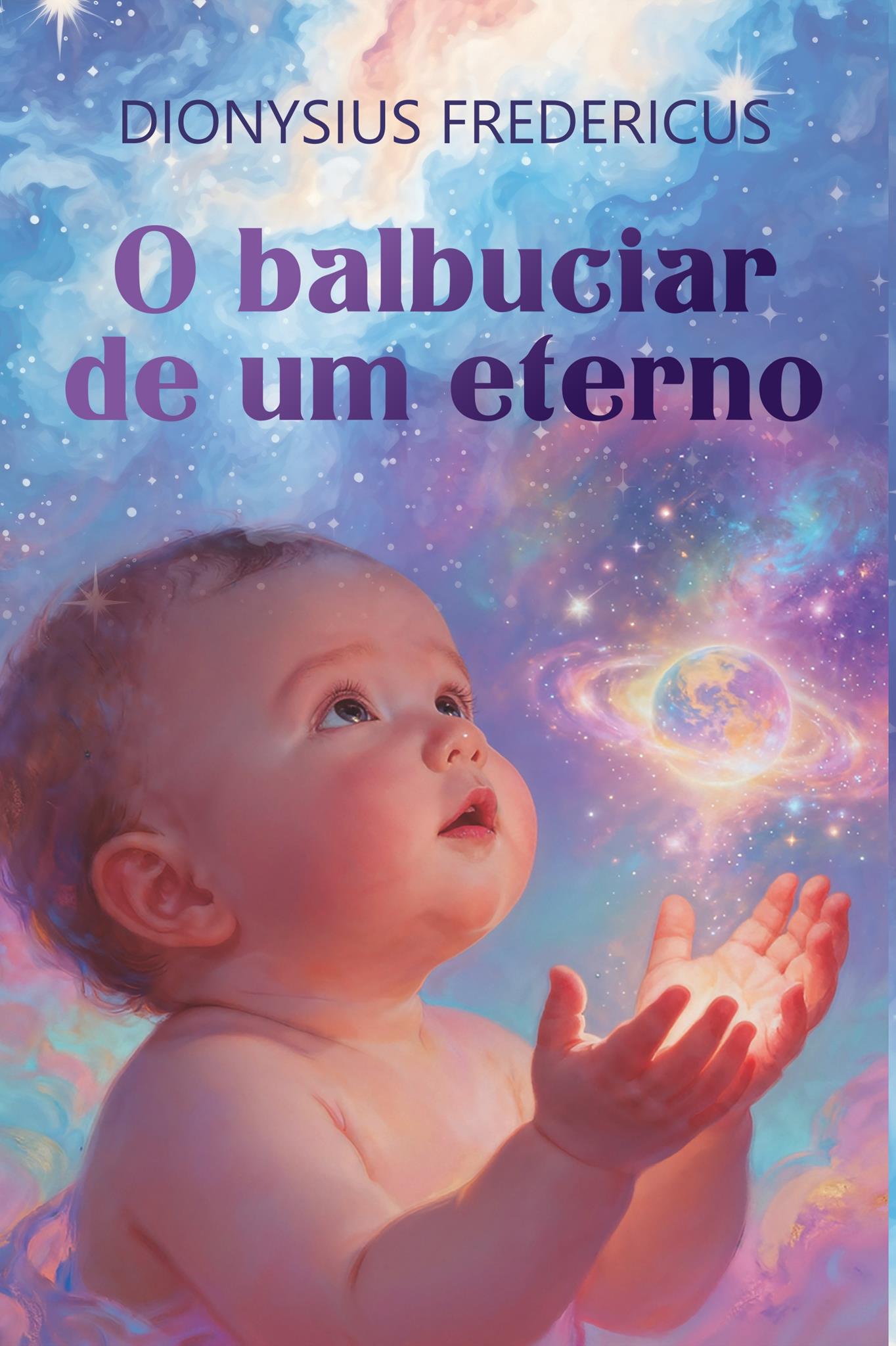
In “The Babbling of an Eternal,” author Dionysius Fredericus proposes a poetic immersion into the great questions of existence, bringing together reflections that move between philosophy, spirituality, and human experience. Divided into fragments that dialogue with thinkers such as Plato, Nietzsche, and Sartre, the work transforms language into an exercise of sensitive investigation into being, time, and the invisible. In an interview, the author comments on how poetry can transcend the limits of logic and open space for new ways of understanding reality.
The title, “The Babbling of an Eternal,” already suggests an attempt to say the unspeakable. At what point did you realize that this idea captured the heart of the book?
For decades I have written and published books of poetic-philosophical content, and all their contents do not escape the boundaries of a limited number of ontic and ontological concepts and ideas – of Being and the individual, of the Point and the Whole, of the outside and the inside, of endless reflections – in short, they are determined scenarios for the representation of roles and plots, the same ones, which only repeat themselves. But these are our stories in which, having emerged from the caves and still crawling through long and immense intimate distances, we seek ourselves, and despite doing so much to know the universes outside, we still know or feel little about the universes within each one of us – individual beings. And so I can, poetically, for example, affirm that: if ninety-two elements construct an entire universe, the entire alphabet can also do so! The babbling of an eternal being emerged, as an idea for a title, at some point during its writing, when I glimpsed the union of my attempts to always and again speak of the same Eternal Being – always waiting for us, always awaiting (on our part) a greater growth in our capacity for inner understanding. But the babbling of an eternal being can also represent the opportunity to mine gems amidst seemingly homogeneous, sterile deserts of grains of sand, or days that seem only to fill lost time.
Your writing stems from very old and profound questions, such as the origin of existence, Being, and the destiny of the soul. What personally drives you toward this kind of restlessness?
A certain spiritual weariness moves me. I often say that weariness is the father of wisdom (among so many other fathers that could be pointed out). Likewise, I have always been bothered by the complete and widespread lack of curiosity people have regarding these scenarios that contain us, framed within constant and fantastic occurrences of conjunctions of the microcosm and the macrocosm, of synchronicities and transgenerational consequences, and of so many other phenomena of a mysterious, yet perceived, totality. Oh! But is Thaumazéin no more? Are there no more grandiloquent wonders of arts so surprised when they open their eyes and discover themselves inserted in the midst of the Whole, made Points of totalizing and unknown consciousness? Ah! Yes! I am moved! And I know, for sure, that I will never stop my endless searches for unknown destinations, despite all the places already reached!
You propose a poetry that doesn’t try to offer closed answers, but rather touches upon that which escapes definitions. For you, why is poetry able to reach places where logic often fails to go?
Poetry is synthesis and intuition, reason is analysis and science. Both are part of the same One, Perfect, and Wholly Being – which unfolds, manifests itself, and makes itself available to us – either through emanation (e.g., Plotinus and Neoplatonism), transcendent immanence or immanent transcendence (see Huberto Rohden), or through any other pertinent philosophical supposition. Historically, Poetry is the mother of Philosophy and the grandmother of the sciences. Poetry, moreover, possesses poetic liberties that can contain infinite meanings around the same concentric point, and does not have the limiting commitments of a conservative Aristotelian logic. The Whole is intuited, not explained. The Point participates in the Whole, without yet understanding it. Art tells the artist everything, for it does not need to have already reached its destination, but only to have already departed, for the ends are already there, in its endless means. Apollo is the pacifying reason, of ataraxia and apatheia, and Dionysus is the poetic impulse in the ecstasies of delirium. In Will Durant’s beautiful figuration, when philosophy conquers ground, it yields it to the sciences, and thus we can also say that when philosophy cannot proceed to a further level, even if starting from what it already feels (though not enough yet), then the endless search, and the conquests, of poetry will prevail.
The work brings together forty parts made up of fragments, thoughts, and images. How was it to construct a book that seems to respect precisely the interrupted and restless nature of human thought?
I write at night, in a prepared environment: silence all around, soft music that fills everything (Wagner, Philip Glass, Hans Zimmer, Pink Floyd, Vangelis, Jarre, Enigma and so many more) and I, there, still and attentive, await the endless inspiring fluids, the inspirations of spirits in harmony, the words that tell me to say. And thus I attest to Og Mandino’s proposal, accepting it! – I cultivate, through good companionship and in the habits of poetic writing, the presence and perseverance of those good masters who enslave me in their repeated attempts, and which thus become coercive and healthy habits. Yes, we are slaves to habits, and we must cultivate these good masters of whom we will be slaves. But the poetic aphorism is still, in my style. And, with Spinoza, I am polishing lenses daily so that, not so distracted by the things of the outside world, I may occupy myself more with the things of the inner world. But I don’t possess enough breath to be an author of novels. My breathing is a sudden, rapid, and intense gasp. Ah! I love aphorisms! I say that beauty is directly related to synthesis. The Big Bang was immense all of a sudden! Poems gasp! But we smile.
Philosophers such as Plato, Heraclitus, Nietzsche, Kierkegaard, and Sartre appear as echoes in the work. How do these voices dialogue with yours, without erasing the singularity of your own perspective?
In truth, I must say, I do not respect the original integrity of the concepts that those names (mentioned in the question) constructed, for I adapt them to my feelings, which are reworked personal understandings. For example, from Descartes I can appropriate and rewrite: if I feel, therefore I exist! From Shakespeare: To be and not to be! – that is the true question! From Nietzsche I have borrowed my own Dionysus, but the same one of ecstasy, of splendor, and, sometimes, so reckless, the same one of orgies and paths of excess (in the style of William Blake – leading me to the supposed palace of wisdom). From Kierkegaard, I have borrowed, for example, the survival of the spirit despite all the pain and hells experienced, proving that the Spirit is eternal, for it never dies from its illnesses, which hurt so much. From Plato, the reminiscences of all knowledge. From Heraclitus, the All flowing into All, and the All is One, always. From Wagner, my frequent use of the notions and charms of leitmotifs and of a supposedly “Continuous Melody” in my writings, which I dare to grant rhythms in united cosmic dances. And so I go, hitching rides on the chariots and universes of others…
The book also brings together philosophy, modern science, and spiritualist currents. How do you see this coexistence between fields that, for many people, often seem opposed?
In the One-All there are no oppositions. Absolute truth is given by the sum of relative truths. I am described in the palms of my hands (palmistry), in my childhood (psychology), in the stars and their conjunctions (astrology), in past lives (spiritism and Abyssal Psychology), in my genes (biology, genetics and karma), in my name (numerology) and so on, successively and concomitantly, without end. The illusion of separateness arises because any field of knowledge is infinite in itself, and can provide all the answers to all possible questions and queries, and thus we take each field, in isolation and relative, as if it were absolute in itself, and we disregard other knowledge as if it were merely epiphenomena. Cosmos is only within, and within, everything is organic and complementary, and even if different from each other, yet still one, there. Everything adds up, nothing excludes (and this is the conclusion).
The tension between Apollo and Dionysus runs through the book in a symbolic and very human way. Do you feel that this struggle between reason and impulse, measure and vertigo, also permeates your own writing?
Yes, certainly. Dionysus struggles to survive as an eternal ascending being, desperately tossing between dual opposites, enveloped in the ardent passions of ultimate, yet gentle, poetry. Apollo is also a survival, in the salvific mirages of Fatas Morganas that attract Dionysus as if to a Nathanael, of Gide: And you will seem, Nathanael, someone who follows a light that he himself holds! Dionysus is the passions that expel art and are inspired by butterfly winds, which are the refreshments of caterpillars that crawl across our lands eternally, in search of themselves, towards the dreamed and imagined metamorphoses of Being in which, and finally, Apollo is redeemed, saved and finished, in this endless finally still here.
At the end of the reading, one is left with the feeling that the book is less of a conclusion and more of an opening to new facets of perception. What do you hope to awaken in the reader by inviting them into this universe?
Ah! I intend that Spirits may be glimpsed and seen! For, eternally surviving and always evolving, forgiving ourselves and climbing paths to paradise, may we shed tears and sweat from our eyes and skin, our senses overflowing with divine fraternities, which we will reconquer. We have always been advised to know thyself within ourselves! – and it is there, in our inner selves, that we will finally see ourselves in the other – in this other who, for Sartre, would be hell, but who for Jesus always was, is, and will be Paradise. The path of the One-All necessarily passes through the Other, for all evolution is nothing more than the Union (Re-Union) of the dispersed consciousnesses in individualities that are totalitarian in themselves. We are One! And here, again, the symbolism of Hegel’s Mirror (where the Whole saw itself in individual, and infinite, beings): Whole and Point are the same, dual, however – let us close our eyes and break the magic mirrors – and then, the Two is also One, only. Ah! But behold, here, at last, everything is worthwhile! – right here and now! where birds are fingers, winds, endless, and, open cages, our eternal beings that we will not leave – but let us liberate the poems!