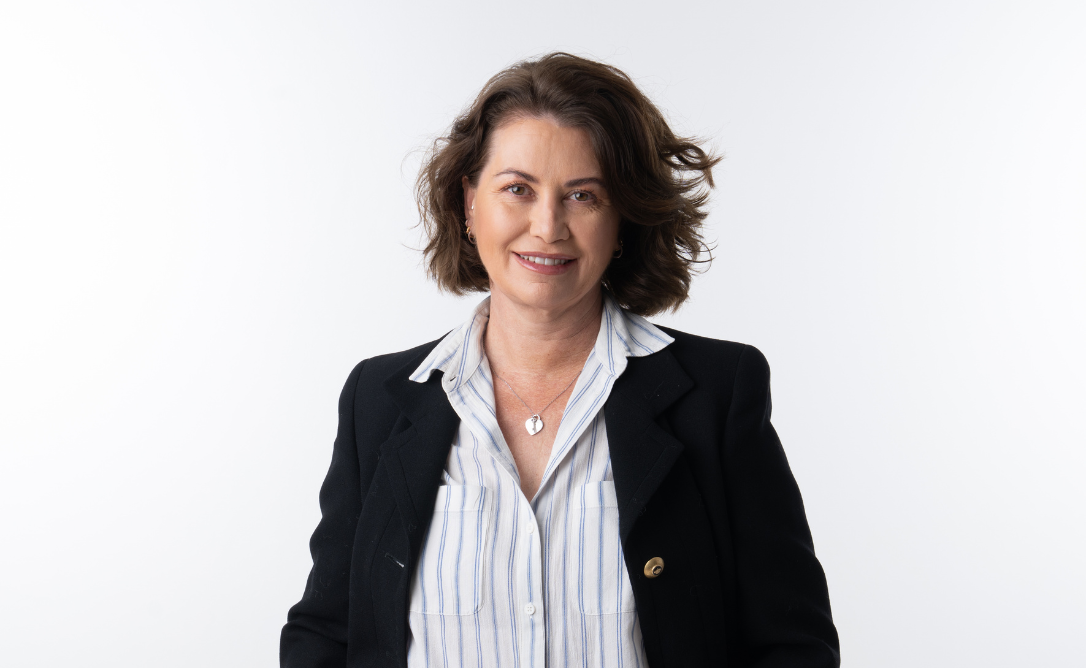
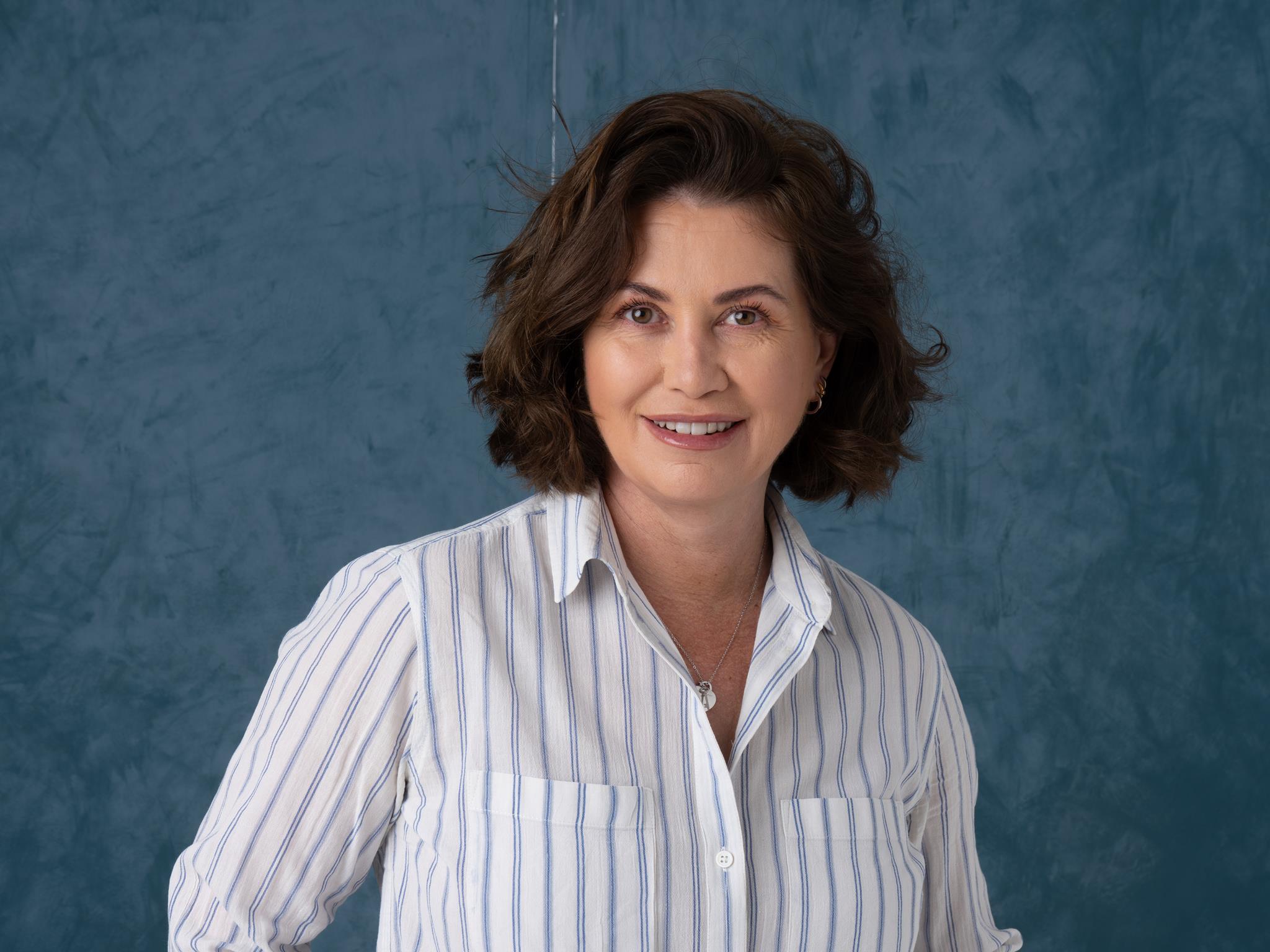
In Hidden, Luise Noring transforms her analytical understanding of systems, inequality, and power into a dystopian narrative deeply connected to the present. In this interview, the Danish author reflects on building Saskia, the symbolic force of the underground space, and the way fiction allows her to expand her reflections on institutional erosion, motherhood, and the limits of freedom in societies under pressure.
Hidden begins with a powerful idea about the fragility of the systems that organize society. When did you realize you wanted to turn that reflection into fiction?
I live in Denmark, a country where state systems and structures are omnipresent. It has one of the highest shares of public sector employment per capita and among the highest tax levels in the world. At the same time, politicians have steadily expanded the scope of criminal law, creating a justice system that prosecutes and convicts large numbers of citizens, leaving a significant share of the population with a criminal record.
Taken together, these realities point to a society where systems are deeply embedded, even as they remain inherently flawed and ultimately inadequate in the face of human complexity. On one hand, there is a growing reliance on systems to organize and control society. On the other, there is a persistent human cost those systems cannot fully account for. That tension, combined with the widening gap between rich and poor across much of the Western world, pushed me toward storytelling. Fiction allowed me to explore not just the critique, but the consequences.
In the novel, this tension becomes central. When the rulers of an underground society are given the opportunity to build something new, they face a fundamental choice: do they pursue control, replicating the systems they sought to escape, or remain faithful to the ideal that all people are equal and equally valuable?
Through Saskia, the story becomes personal. As she navigates this new world, she is pushed to her limits, forced to test her resilience and her ethics, and to decide what she is willing to sacrifice to save her children and herself.
Ultimately, the book grows out of a simple realization: systems may shape our lives, but they cannot replace the human choices that define them. At its core, the book asks an unresolved question: what is freedom? Is it freedom from poverty, from control, or something more elusive?
Your academic background includes research on urban governance, economics, and public institutions. How does that analytical perspective shape the way you build tension and conflict in a dystopian narrative?
My long-standing research career allows me to anchor the narrative in reality. Though Hidden is fiction, it draws on deep research and a nuanced understanding of how societies operate, how money moves, and how power is secured. This grounding makes the stakes feel real, because the forces driving the story are the same ones that shape our world.
Saskia is a protagonist driven by survival, but also by motherhood. What interested you most about exploring the story emotionally through her?
I wanted to explore survival through the lens of motherhood, because across the world, mothers are often the backbone of families, quietly carrying the responsibility of keeping everything together.
At the same time, the traditional idea of the nuclear family no longer reflects reality, as many mothers today are the sole providers and protectors of their children. Yet our societies have failed to respond fairly, often stigmatizing and structurally disadvantaging them.
The conversation about mothers is often reduced to a discussion about women alone, when in reality, mothers are inseparable from the lives they sustain. It is not only a question of gender, but of the future, of the children who depend on them. I wanted to center that invisible labor and ask what it really means when a mother is pushed to her limits. How far will she go, and what is she willing to sacrifice? Through Saskia, the emotional core of the story becomes not just survival, but the tension between protecting her children and preserving her own sense of self.
In portraying a society where power and information are deeply intertwined, Hidden seems to speak directly to the present. Which signs from today’s world most influenced the creation of that universe?
That reality is unfolding almost everywhere. In the US, conflicts, both at home and abroad, are fueled by information we cannot fully verify, and even in my own country, Denmark, truth feels increasingly unstable. It is no longer grounded in shared facts, but in conviction, often political, used to drive opaque agendas and shield ourselves from perspectives that challenge our own.
Your novels often explore democracies under pressure and systems in decline. What draws you most, from a literary perspective, to those moments of rupture?
I believe those moments are already here, playing out across much of the world. We are witnessing how societies respond as institutions and democracies come under strain. Hidden may be framed as dystopian fiction, but that reality is steadily catching up with our own. That tension is what interests me. As I said in a recent podcast, with my writing, I want to hold a mirror up to humanity.
Hidden is being positioned as intellectual property available for a feature film adaptation. While writing it, were you already visualizing certain scenes or atmospheres in a cinematic way?
I write in a very visual way, seeing scenes unfold almost as if they were real. Still, I wasn’t writing Hidden with film adaptation in mind. That idea was born later, after I had finished the book and Laura Malin approached me.
The contrast between the world above ground and the underground space seems to carry a strong social commentary as well. What does that “hidden” space represent to you within the story?
Hidden operates on multiple levels. First, it reflects how both the marginalized and the powerful exist in plain sight, yet remain unseen. The poor and homeless are everywhere, yet often nameless, dehumanized, and invisible. At the same time, those who hold power often operate just as quietly, out of view.
As the narrative unfolds, it becomes clear that everyone is hiding in plain sight. The real question is not who is visible, but who belongs to which layer of society, above or below ground. Second, truth itself is hidden, or so elusive that it cannot be firmly grasped. As a result, society rests on a fragile scaffolding of shared belief, something that holds only as long as we continue to accept it. The real question is why we keep believing in it when it so clearly no longer works? Why do we continue to uphold the norms that sustain society when those same norms are beginning to fail?
Across both fiction and nonfiction, your work examines different forms of institutional and social erosion. What does literature allow you to express that academic writing sometimes cannot in the same way?
Fiction is more accessible and therefore reaches a much wider audience. Academic writing, such as research articles, often requires a specialized reader who is already familiar with the field. At the same time, fiction is one of the most powerful tools we have. It engages our emotions and imagination, and when it is grounded in facts, it becomes even more compelling, bringing both feeling and reason into play.
Visit Luise Noring’s official website